
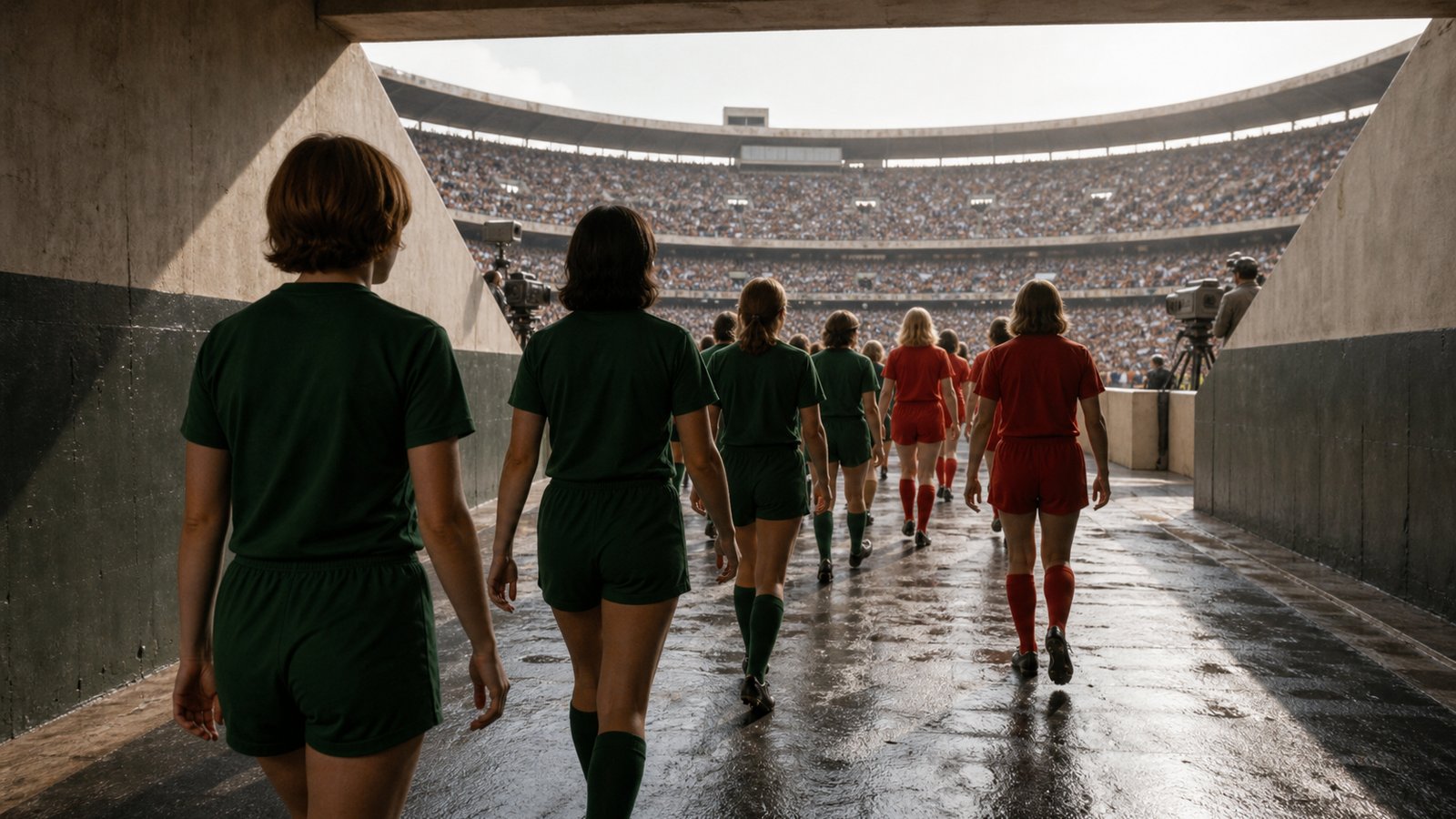
On 5 September 1971, the upper tiers of Estadio Azteca were not waiting for Pelé, Mexico’s men, or another replay of the World Cup staged there fourteen months earlier. They were watching Mexico face Denmark in a women’s international final. The documented attendance was 112,500. Paper tickets had been sold, television cameras were in position, and a vast crowd had come to see who would lift a gold trophy.
Denmark won 3–0. Fifteen-year-old Susanne Augustesen scored all three goals. The scale should have made the match impossible to misplace: six national teams, two major stadiums, international sponsors, merchandise, broadcast coverage, and one of the largest audiences football had seen. Yet the tournament did not become a standard chapter in the sport’s history.
Mexico 1971 sits in an awkward gap between spectacle and recognition. It came twenty years before FIFA’s first official Women’s World Cup. Its success was created by organisers who treated women’s football as a ticketed national event, while football authorities opposed or declined to endorse it. The crowd was real. The continuity that might have carried its meaning forward was broken.
A Ticket Stub Changes the Starting Point
The familiar timeline begins in 1991, when FIFA held its first official Women’s World Cup in China. Copa 71 changes the question. Instead of asking when women’s football first learned to attract a major audience, it asks why evidence of an earlier mass audience became so difficult to see.
Researchers behind the documentary Copa 71 found posters, newspaper archives, programmes, photographs, ticket stubs, and match footage. Those objects matter because they turn an extraordinary number into an organised event. The spectators at the Azteca were paying customers. The Guardian’s archival account gives the final attendance as 112,500; the BBC reports the contemporary estimate as 110,000. Either figure describes a stadium full on a scale that modern football would recognise immediately.
The final was not the only draw. About 80,000 people watched Mexico play England. Matches also took place at Estadio Jalisco in Guadalajara. Six teams travelled to the competition: Mexico, Denmark, England, Argentina, France, and Italy. This was a short tournament, but it was not a private exhibition or a novelty match placed before another attraction.
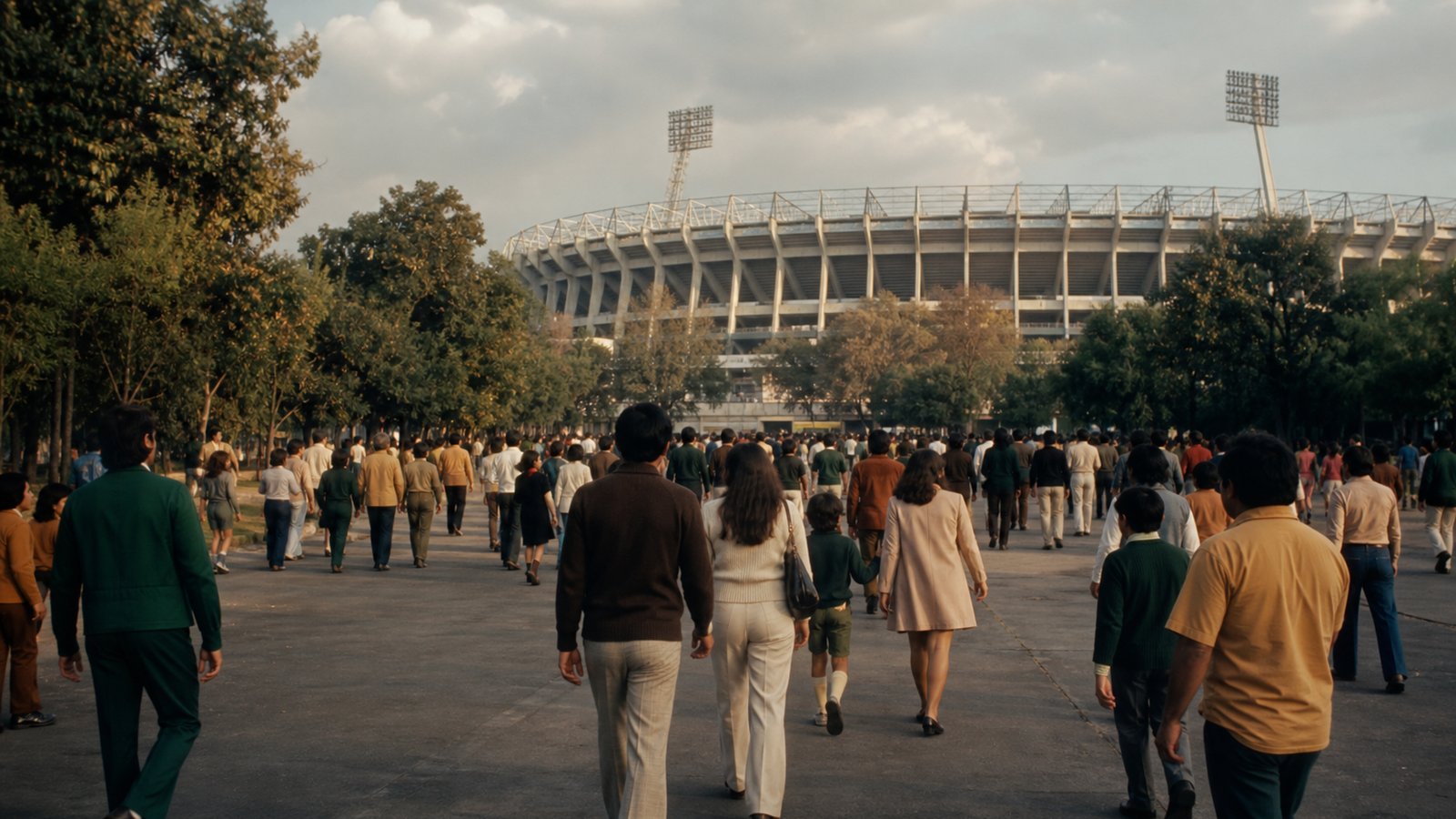
Televisa Used the Stadiums the Authorities Could Not Close
Mexico already possessed the physical stage. The country had hosted the 1968 Olympics and the 1970 men’s World Cup. Estadio Azteca and Estadio Jalisco had turnstiles, broadcast positions, transport routines, and recent experience of moving huge crowds through important matches.
Televisa also possessed something more decisive: control of both stadiums and the media power to fill them. FIFA opposed the unofficial tournament and threatened the Mexican federation with sanctions if affiliated grounds were used. That pressure might have ended the plan elsewhere. Televisa’s ownership meant the organisers could proceed in privately controlled venues and promote the competition directly to the public.
Televisa did not wait for a football authority to imagine the audience. Its stadium access, airtime, publicity, tickets, and host team put the proposition directly to supporters. The marketing sometimes relied on sexist ideas about beauty and novelty, but the event was still sold as football in major arenas.
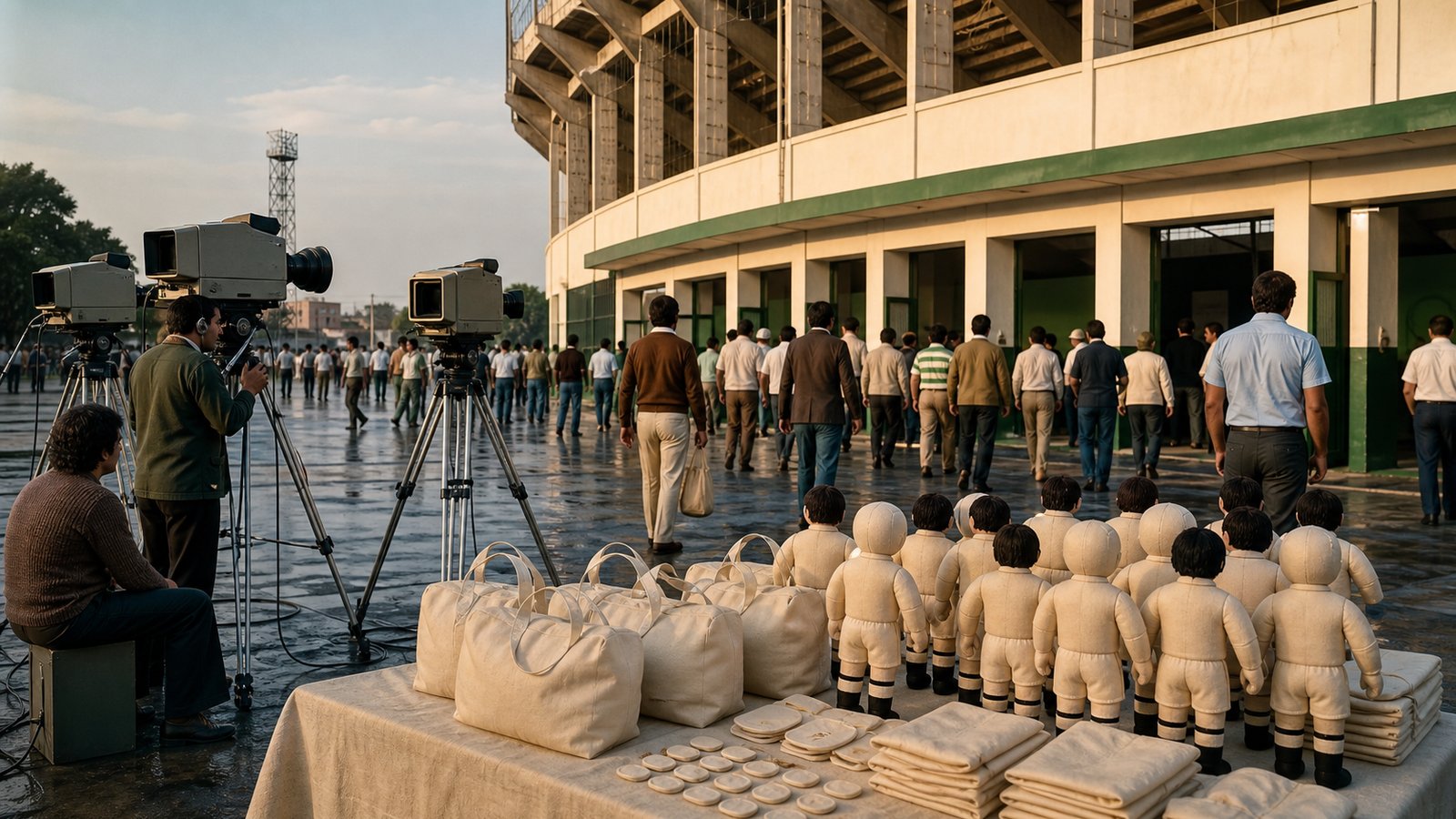
The Spectacle Had Sponsors, Dolls, Cameras, and a Mascot
Martini & Rossi was the principal sponsor. The drinks company paid expenses for the teams, including flights, hotels, and playing kit, and provided the trophy. Carta Blanca beer, Dietafiel soft drink, and Lagg’s tea were among the other commercial backers. Advertising appeared around the Azteca.
The event also had the objects through which a tournament enters daily life. Xochitl, a young girl in football kit, served as its mascot. Supporters could buy pin badges, shirts, bags, dolls, magazines, and programmes. Tickets ranged from 30 to 80 pesos. Television cameras recorded the matches and the movement around them.
England midfielder Chris Lockwood was fifteen. She later remembered arriving from the park-like pitches of a small qualifying event in Sicily and entering a polished, feverish competition that seemed to belong to another world. Her teammate Gill Sayell was fourteen. Leah Caleb, promoted in the British press before the trip, was thirteen.
England’s squad received no official or unofficial payment. The spectacle had commercial value before the athletes were given a stable share of it.
The Matches Refused to Behave Like a Novelty
England discovered the competitive distance quickly. Argentina beat them 4–1, Mexico won 4–0, and France took a 3–2 match. Caleb recalled that the Argentina game was so physical that two England players finished in plaster casts. The results were hard, but the players did not describe the journey as a mistake. They had played on the same stage used by the men’s World Cup and found Mexican supporters embracing them.
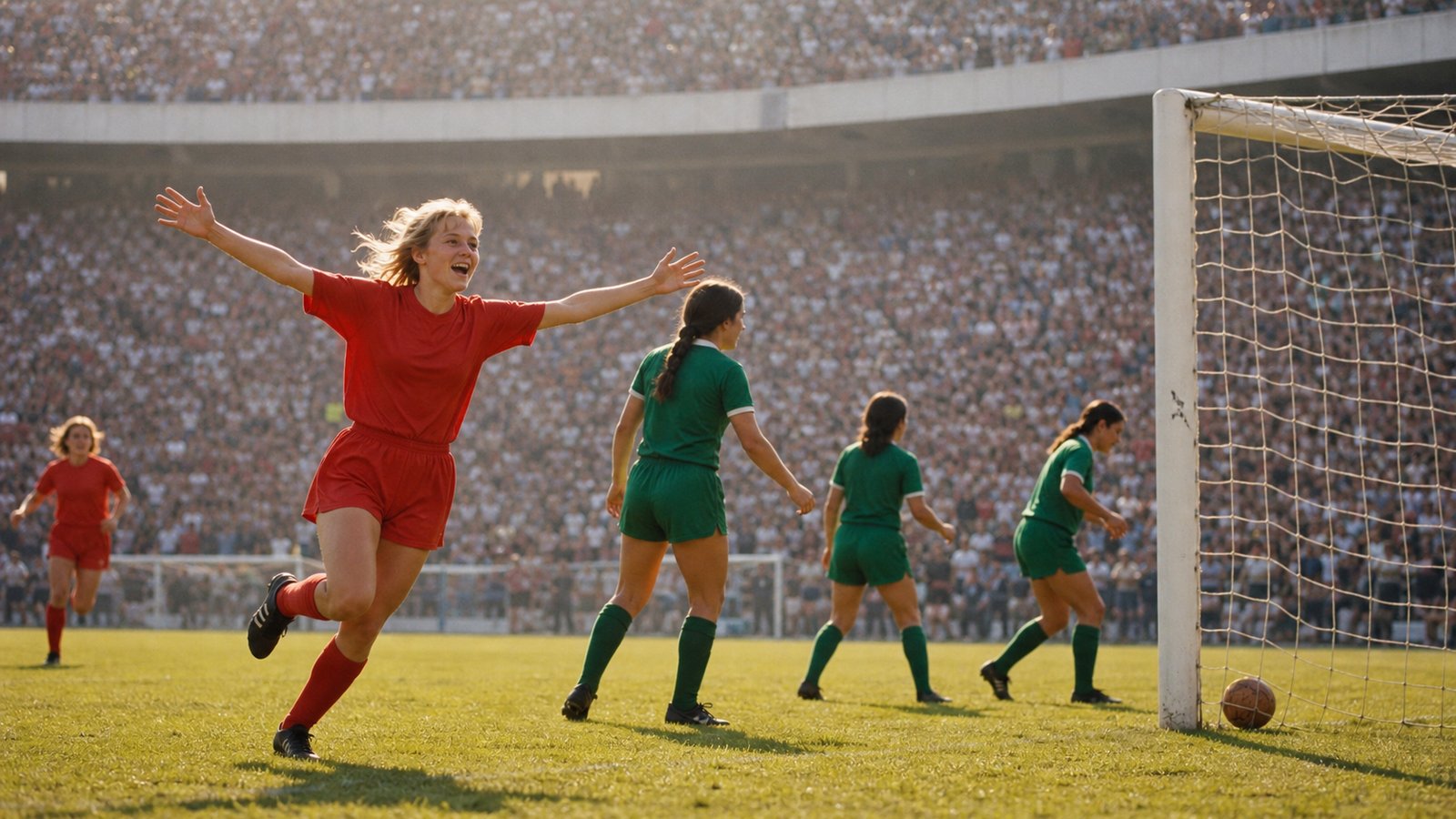
The hosts reached the final, creating the largest occasion of the tournament. Across the pitch stood Denmark, whose women had already won the unofficial 1970 competition in Italy. That earlier final, won by the Danish club Boldklubben Femina, had reportedly attracted 50,000. Mexico raised the scale again.
Augustesen settled the final with a hat-trick. At fifteen, she supplied a clean sporting climax to an event often discussed through politics and commerce. The crowd had not bought tickets merely to endorse an idea. It watched a player decide a final.
The Players Returned to a Smaller Football World
A packed Azteca did not dissolve the restrictions waiting at home. England’s Football Association had not endorsed the team, which was organised by Harry Batt and drew heavily from the Chiltern Valley club. Caleb later said the players were banned for taking part, though the individual bans were soon lifted. Batt was ostracised, and his club eventually folded.
The timing was especially stark. The English FA’s restriction that kept women from affiliated grounds had begun in 1921 and was lifted only late in 1971. The players went from a six-figure crowd in Mexico to a domestic game still emerging from a fifty-year exclusion. The path between those realities had no secure governing support.
This was the same year examined in our account of the meeting record behind England’s ground ban. Copa 71 shows the other side of that institutional history. While officials argued about permission, players and supporters had already created an event large enough to contradict the assumption that women’s football lacked public appeal.
Contradiction did not guarantee memory. Filmmaker Rachel Ramsay said some participants were shamed by media, communities, and football authorities after returning. Some did not tell their own children what had happened. The footage itself survived without being properly logged or cared for. Researchers knew cameras had been present because contemporary photographs showed them, then had to search Mexican archives and personal collections to recover the moving images.
The disappearance was therefore not one deliberate act performed on a single date. It was a loss of custody. No recognised tournament lineage claimed the result. Associations did not build careers around the players. Archives did not make the footage easy to find. Repetition stopped, and without repetition even 112,500 witnesses could be pushed outside the story football kept telling about itself.
What the Azteca Crowd Actually Proved
Copa 71 could not create leagues, contracts, coaching systems, or long careers on its own. Its players still faced sanctions, unpaid labour, hostile institutions, and crude stereotypes.
It proves something narrower and harder to dismiss. When organisers supplied elite stadiums, sustained promotion, television attention, affordable tickets, national stakes, and a genuine tournament structure, supporters came. Men, women, and children filled the stands. They bought souvenirs and followed a host team. Commercial companies covered travel because they expected attention in return.
The lost history changes how football demand should be measured. Empty infrastructure cannot be used as proof of an empty audience. Mexico 1971 put the infrastructure in place and recorded the response at the turnstiles. The later silence says more about who controlled recognition, archives, and opportunity than it does about what supporters wanted to watch.
A paper ticket from the final carries the argument better than a slogan. It records a decision made 112,500 times: on that September day, going to the women’s World Cup was worth the price and the journey. Denmark’s teenage striker delivered the result. Mexico’s crowd delivered the evidence. Football took half a century to recover the file.
Sources
BBC News; The Guardian; British Film Institute interviews with the Copa 71 filmmakers and researchers.