
The last league season of Belfast Celtic did not end with a relegation or an empty bank account. It turned on a late equaliser at Windsor Park and the few yards between the pitch and the dressing room.
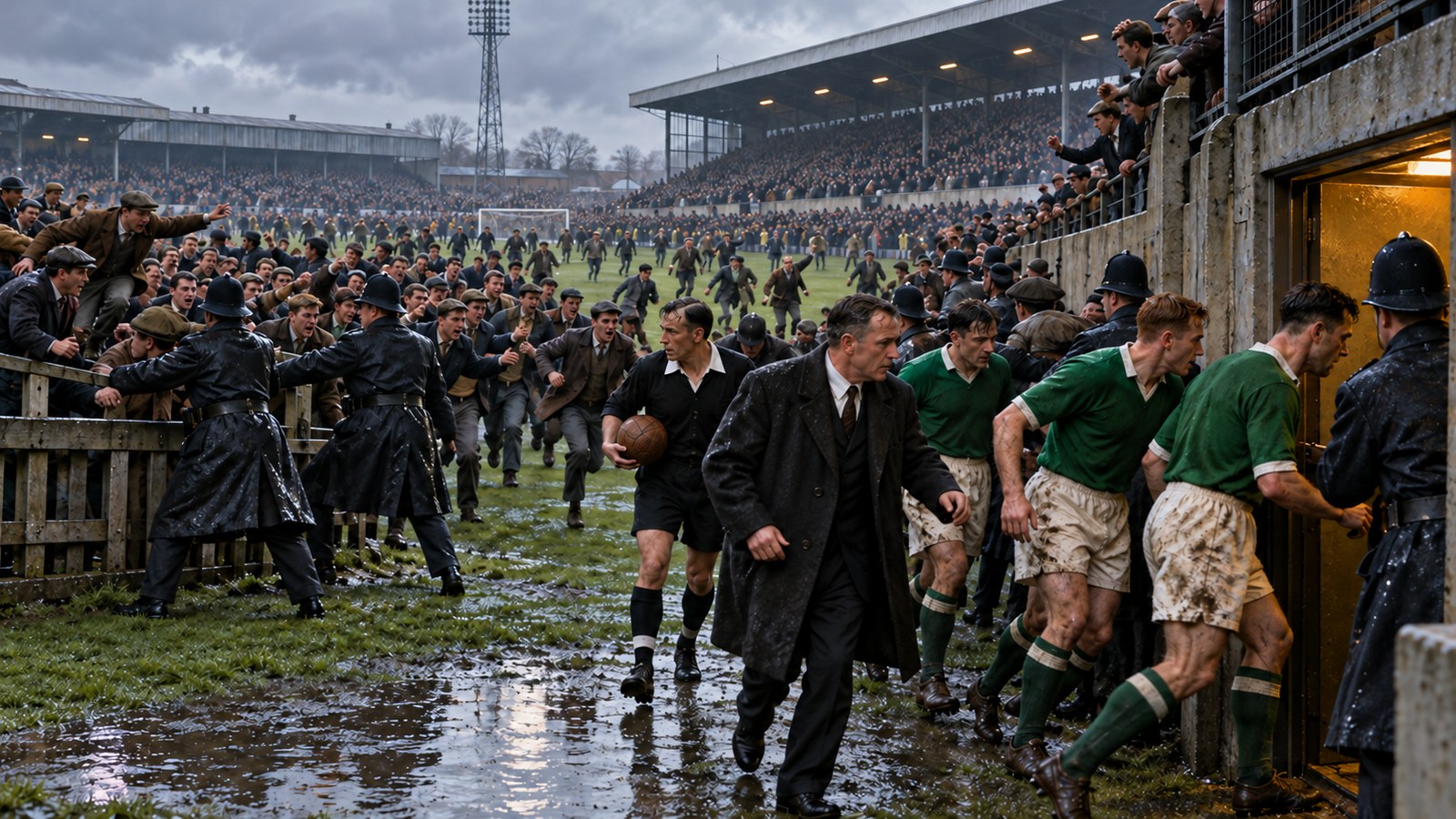
On Monday, 27 December 1948, Celtic led Linfield deep into their holiday derby. Billy Simpson’s equalising header brought the score to 1–1 in the closing seconds. Spectators came over the barriers. Celtic’s players ran for safety, but centre-forward Jimmy Jones was caught on the terracing beneath the South Stand. Hobnailed boots broke his right leg while his friend Sean McCann tried to cover him with his own body.
No one looking at the fixture alone could see the final consequence. Belfast Celtic were the reigning champions, managed by a Liverpool great, and Jones was one of the most productive young forwards in Irish football. Four months later, the directors sent the Irish League a resignation letter. A club at the height of its sporting power had decided that continuing no longer offered its players or supporters enough protection.
A Holiday Derby Arrived With the Title Race Tight
The fixture was called the Boxing Day match even though Boxing Day fell on a Sunday that year, moving the game to Monday. Belfast Celtic and Linfield were the city’s “Big Two,” and about 30,000 people entered Windsor Park. Linfield held a three-point lead at the top, while Celtic arrived with the championship and a formidable recent record.
Elisha Scott had returned from Liverpool in 1934 and built Celtic’s most successful side. By the winter of 1948, he had guided the club to ten league titles. The previous season had included an unbeaten run through every competition and 31 consecutive victories. This was not a fading institution searching for a dignified exit.
Jones made that strength visible. The teenage centre-forward had scored 27 goals in 19 matches during the season, including six hat-tricks. Newcastle United had offered £16,000 for him, and Celtic rejected the bid while waiting for a larger one. He also had six goals in his previous three meetings with Linfield at Windsor Park.
The match became physically unstable before the crowd entered the field. Linfield were effectively reduced to nine players by first-half injuries to Jackie Russell and Bob Bryson. A half-time announcement that Bryson’s leg had been fractured in a challenge with Jones sharpened the mood. Referee Norman Boal then dismissed Albert Currie and Paddy Bonnar during the second half.
The Final Whistle Left Players Outside Their Own Exit
Harry Walker’s 80th-minute penalty gave Celtic the lead. Simpson’s header levelled the match in the dying seconds and prompted the first rush onto the pitch. Celtic winger George Hazlett later remembered seeing uniformed police officers celebrate the equaliser by throwing their caps into the air. To him, it was a warning about what would happen when the game ended.
On the final whistle, another section of the crowd poured in from the Spion Kop. Players attempted to force a route toward the dressing rooms. Jones was chased away from that route and onto the terracing. McCann, an off-duty Ballymena goalkeeper and close friend, jumped roughly ten feet to reach him and shielded him as the assault continued.
Jones’s injury was the gravest, but he was not the only Celtic player hurt. Defender Robin Lawlor and goalkeeper Kevin McAlinden also suffered serious injuries. Newspapers described the attackers as a “savage mob.” The violence converted a heated derby into a question the directors could not contain within football tactics or disciplinary points: who was responsible for making sure their team could leave the field?
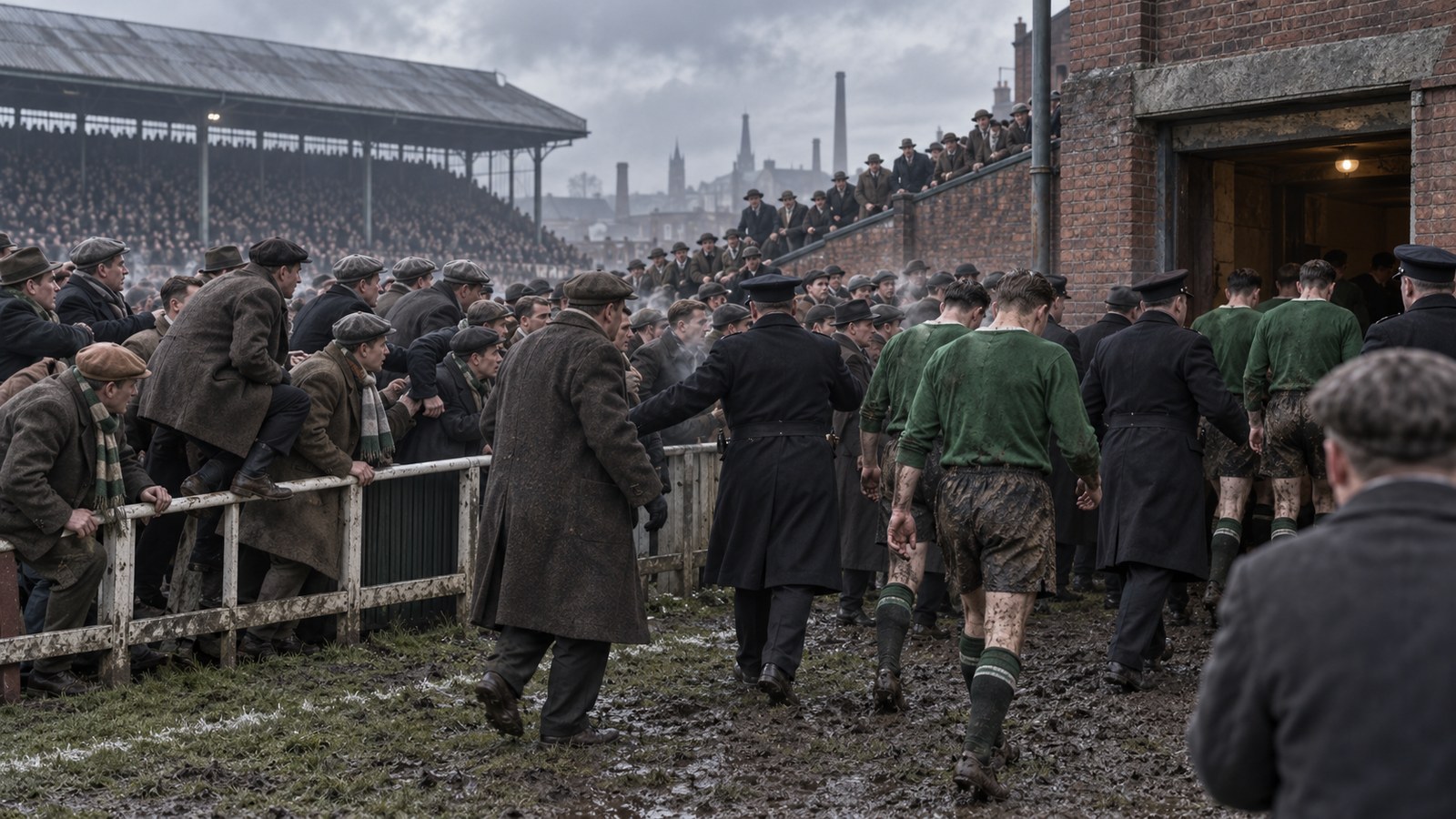
The public reaction was larger than the official sanction. No arrests were made. The Irish Football Association closed Windsor Park for two games, with Linfield’s fixtures against Ballymena and Glentoran moved to the opponents’ grounds. For Belfast Celtic, that response did not match what had happened to its players.
The club’s statement focused particularly on the police presence. It described the protection given to the players as inadequate both before and during the attack. Some Linfield supporters also tore up membership cards, while their organised supporters’ group denied involvement and expressed sympathy for the injured players. The dispute therefore did not fit a simple story in which every person attached to one side accepted the violence. The sharper failure was institutional: a major fixture had ended with footballers trapped in a crowd, yet the authorities produced neither an arrest nor a punishment that Celtic considered meaningful.
Jimmy Jones Faced an Amputation, Then Returned
The story could easily have become the end of Jones’s career as well as Celtic’s league life. Belfast orthopaedic surgeon Jimmy Withers at one stage came to the hospital prepared to amputate the damaged leg. He waited several more days instead. Jones later credited that decision and Withers’s skill with allowing him to play again.
Recovery took close to two years, and his right leg remained shorter than his left. A proposed restart at Fulham was blocked by a registration objection from another Football League club. Jones nevertheless resumed scoring with Larne, Glenavon and Portadown. He finished with 646 career goals, a total the BBC identifies as an Irish League record, and won three caps for Northern Ireland.
That recovery can make the episode seem less final than it was. It should not. The fact that Jones played again did not undo the fear of the terrace, the injuries to his teammates or the failure to arrest anyone. His later goals belonged to other clubs because the team he represented that afternoon was already preparing to leave.
The Board Completed the Season While Dismantling the Team
Celtic’s directors did not abandon the remaining fixtures the next morning. They chose a slower form of withdrawal. Leading players were sold during the weeks that followed, reducing the side while its league obligations continued. The decision was operational before it became ceremonial.
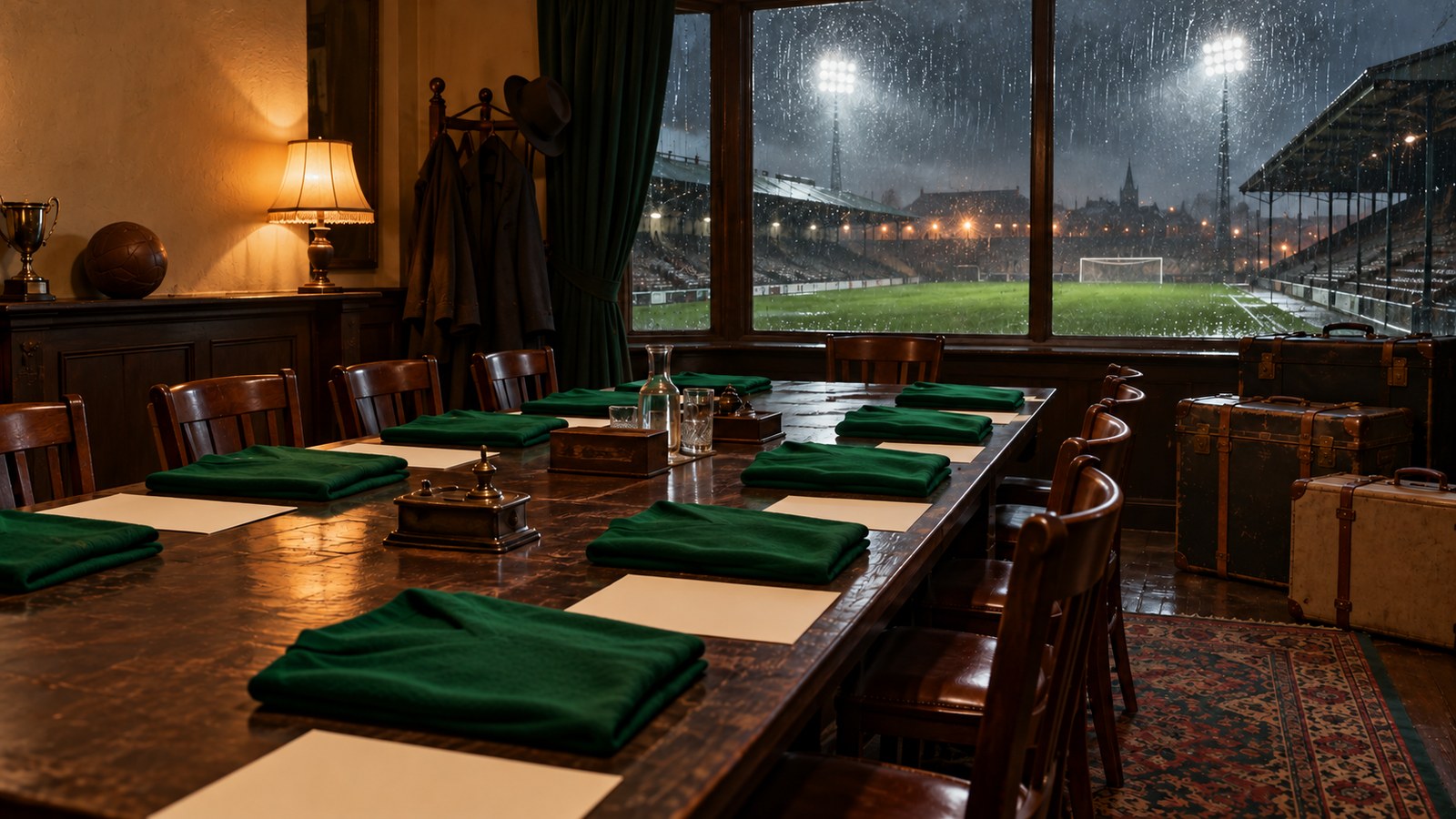
On Thursday, 21 April 1949, Celtic beat Cliftonville 4–3 in the last Irish League match played at Celtic Park. The directors then posted their resignation to the league. The team departed on a previously arranged tour of North America, which became an unexpected farewell rather than a summer exhibition before another domestic campaign.
The touring side still demonstrated its level. In New York it beat a full Scottish international selection 2–0 before a reported crowd of 15,000 at Randall’s Island. The result made the contrast sharper: Belfast Celtic could still defeat elite opposition, yet it had concluded that sporting strength could not repair the conditions around its own fixtures.
The club’s choice differed from the kind of transfer conflict that later surrounded Maurice Johnston, Celtic and Rangers in 1989. That episode redirected one player through a rivalry. Belfast Celtic’s withdrawal removed an entire institution from its rivalry, taking its weekly meeting place and future teams with it.
A Club’s Absence Became Part of Belfast Football
Belfast Celtic had been founded in 1891 and became a central sporting institution for the city’s Catholic community. Its record included 11 Irish League titles between partition and 1949, international players and tours beyond Ireland. The club’s departure therefore created more than a vacancy in a fixture list.
Crusaders took Celtic’s league place. Many former followers travelled by weekend cattle ship to watch Glasgow Celtic or Rangers instead. At the old Celtic Park site, later replaced by a shopping centre, supporter Jimmy Overend recalled the smell of tobacco and oranges and described the closure as a black cloud over Saturdays.
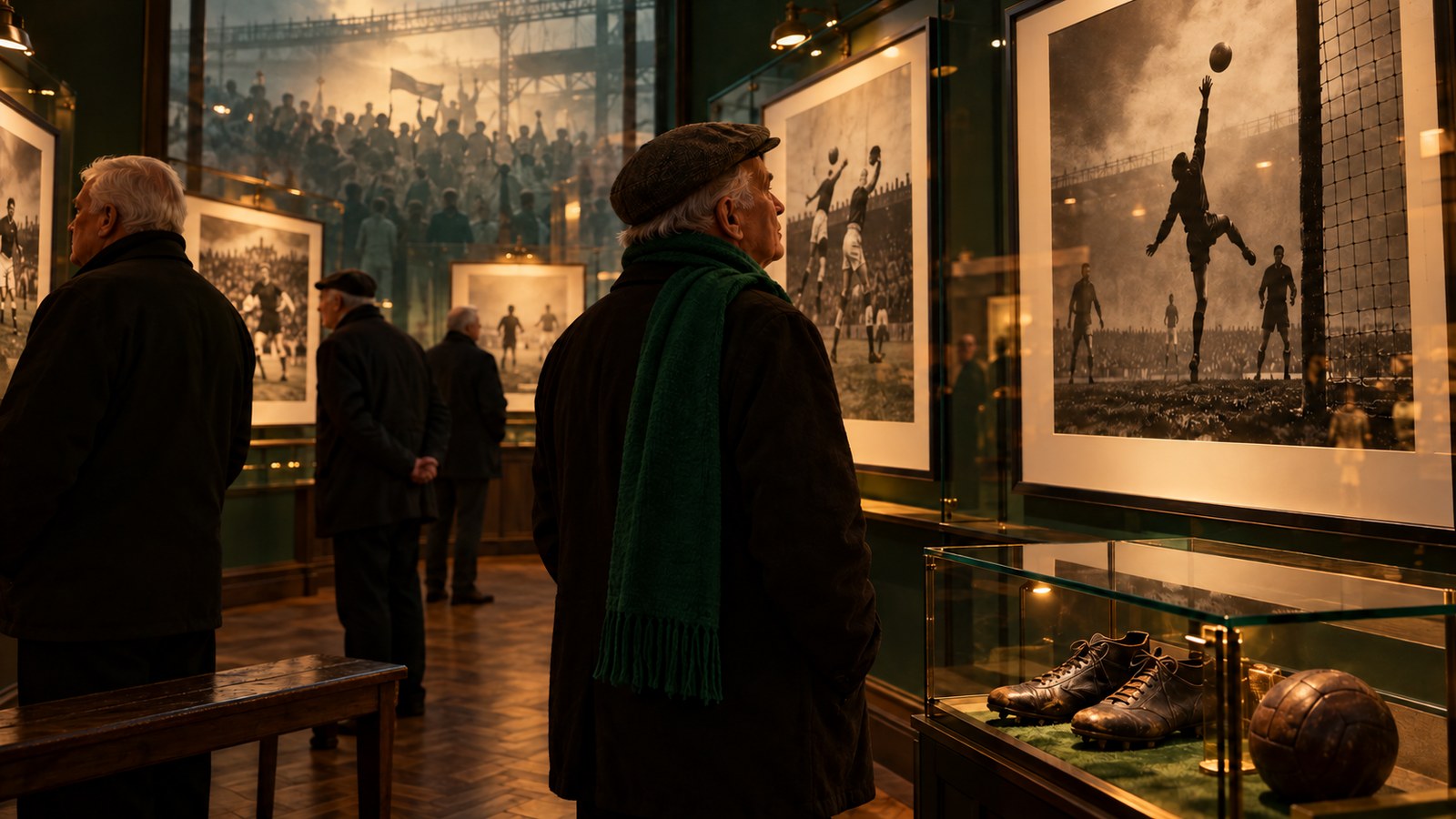
The memory also outlived the silence surrounding the original decision. A Belfast Celtic museum was established on the former ground’s site. Decades later, the Irish Football Association supported performances and discussions about the club’s history. The IFA’s community-relations leadership acknowledged that the governing body had let the club and its supporters down.
The 1–1 score explains almost nothing by itself. The decisive sequence began after Simpson’s header: a pitch invasion, players separated from safety, Jones on the terracing, no arrests, a limited ground closure and directors who no longer trusted the structure around the game. Belfast Celtic completed its commitments, proved on tour that the football remained strong, and still chose absence. Its final act was not competitive surrender. It was a judgment about what competition required and what the league had failed to provide.
Sources
BBC Sport; The Guardian; Belfast Celtic Society archive; contemporary New York Times match report.