
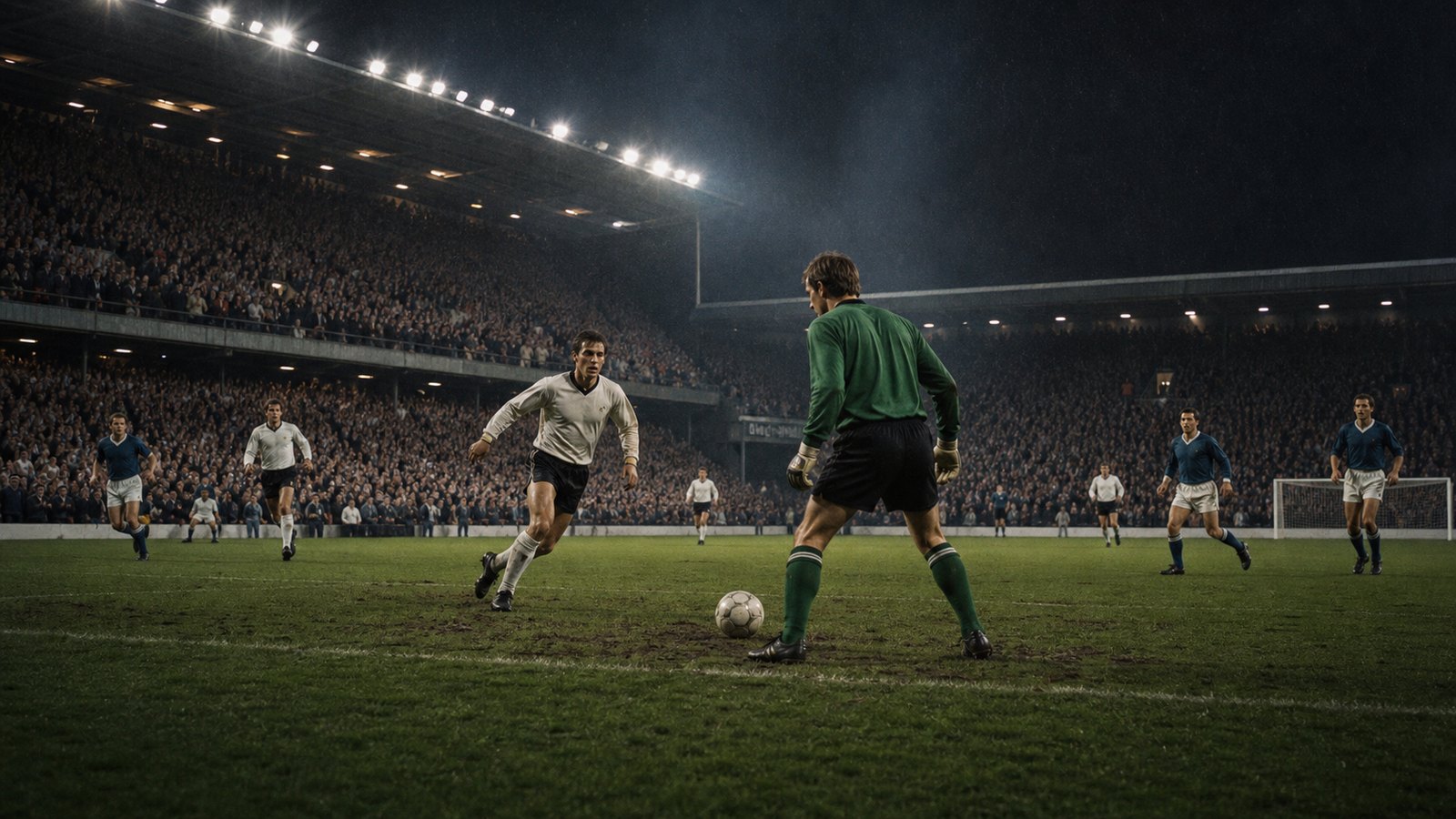
On 24 July 1992, Italy and the United States walked onto a football pitch at the Barcelona Olympics and entered a game whose safest habit had just become illegal. A defender could still turn toward his own goal. He could still roll the ball to his goalkeeper. The goalkeeper simply could not bend down, gather it into his gloves and make the danger disappear.
The first test was messy. Defenders had spent their careers using the goalkeeper as an emergency exit; goalkeepers had been trained to claim the return and wait for pressure to dissolve. In that Olympic opener, Italy fell foul of the new restriction and the United States scored after the resulting indirect free kick. The detail mattered less than the alarm it sent through every defence watching: a routine action now carried the risk of a close-range set piece.
It looked like a narrow law about handling. It became a demand that goalkeepers take part in football with their feet. The transformation did not arrive fully formed that afternoon, but the modern sight of a keeper receiving under pressure, centre-backs splitting toward the touchlines and forwards pressing passing lanes begins with that summer of uncertainty.
When the goalkeeper owned the clock
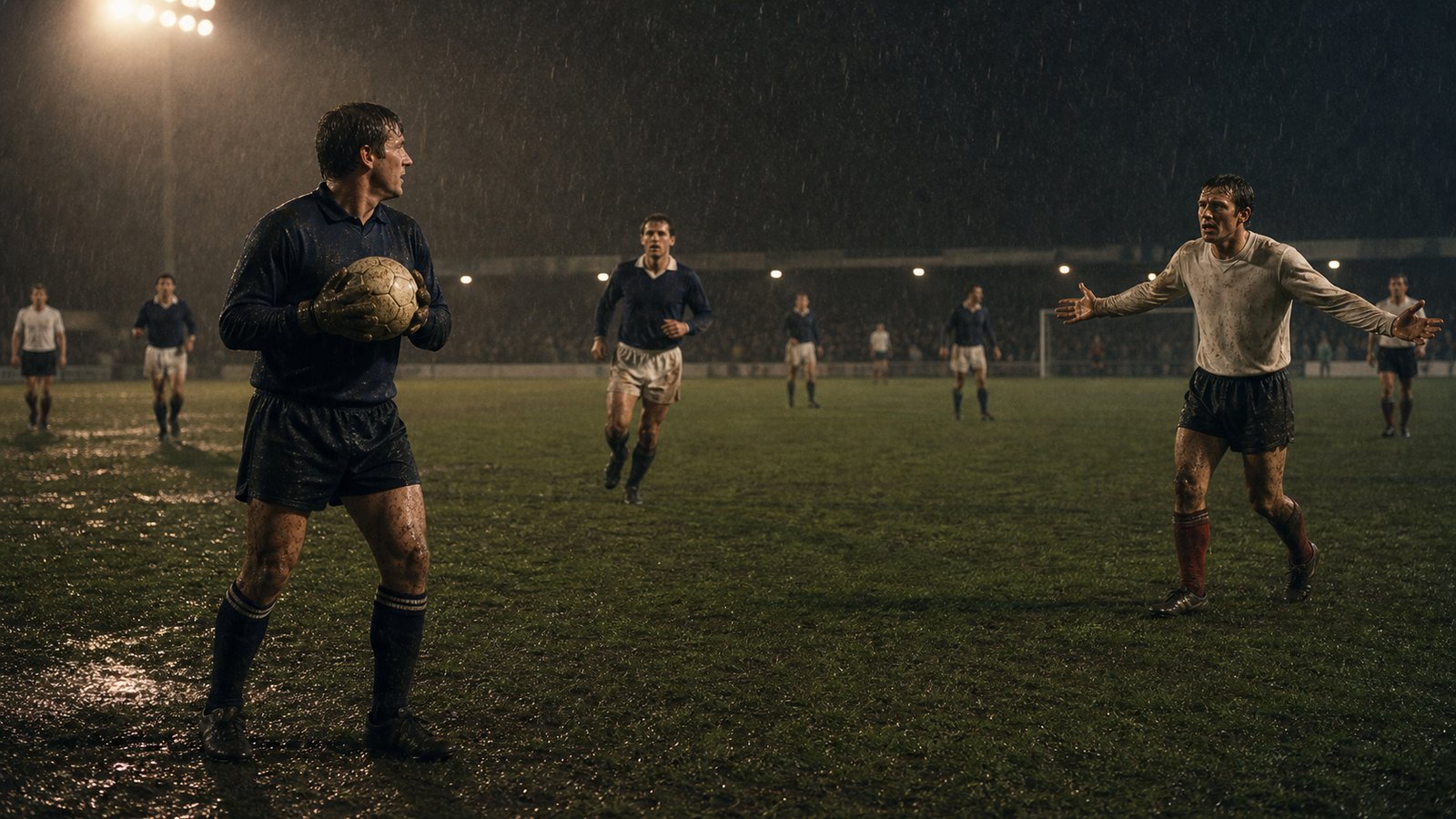
To understand the size of the change, it helps to remember what possession in the goalkeeper’s hands meant. An opponent could not challenge a keeper who controlled the ball. A team protecting a lead could therefore send the ball backward, watch it disappear into two gloves, reset its shape and repeat. The pass did not need to begin an attack. Its value was that it interrupted one.
Italia 1990 made the problem difficult to ignore. The tournament produced an average of 2.2 goals per match, cited by Sky Sports as the lowest in World Cup history. Low scoring alone did not condemn the football, but the rhythm of delay did. In the Republic of Ireland’s group match against Egypt, one retrospective calculation put Packie Bonner’s time holding the ball at roughly six minutes. That is about seven percent of a 90-minute match spent with one player legally cradling possession.
The old sequence was almost frictionless. A defender under pressure turned, played home and moved upfield while the goalkeeper collected. The pressing forward’s run became useless at the instant the ball reached the hands. A defender could then receive again, return it again, or let the keeper kick long after precious seconds had drained away. The law rewarded retreat not because retreat was always tactically clever, but because it offered a uniquely protected pause.
Euro 1992 closed the old world
The final major tournament before the change was Euro 1992. Denmark’s unexpected championship is rightly remembered for late entry, resilience and decisive performances, but the football still belonged to the old legal environment. A goalkeeper could collect a deliberate return from a team-mate, and Sky Sports’ retrospective notes how back-passes and time management intensified calls for reform.
Near the end of the final, West Germany’s Stefan Reuter played the ball to Bodo Illgner, who picked it up legally. The Guardian’s football-history account identifies that exchange as a plausible last high-profile back-pass of the old kind. It is a wonderfully ordinary boundary marker. There was no ceremonial farewell, only a defender using the escape route he had always known and a goalkeeper closing his hands around the ball.
Weeks later the same movement demanded a decision. Should the keeper clear first time? Take a touch and invite the forward closer? Find a full-back? Risk a pass through the centre? The rule removed a pause and replaced it with a football problem. That exchange of certainty for choice is why the change reached far beyond time-wasting.
A simple sentence created a new pressure point
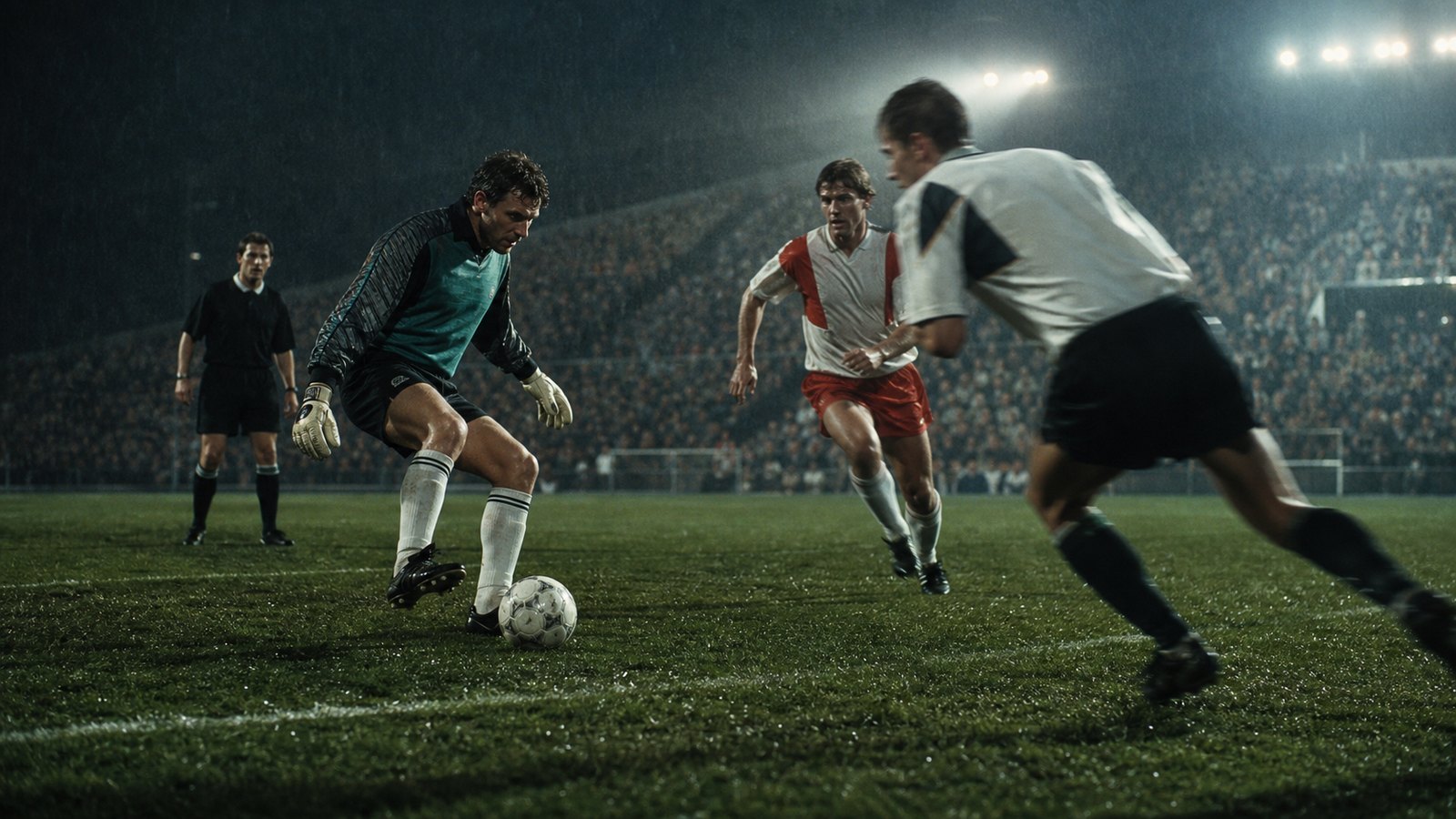
The core prohibition is precise. Under Law 12, a goalkeeper may not touch the ball with the hand or arm after it has been deliberately kicked to the goalkeeper by a team-mate. The punishment is an indirect free kick. Despite the phrase “back-pass rule,” direction is irrelevant: a deliberate kick can travel backward, sideways or even forward and still fall within the restriction.
That precision matters because the law did not ban defenders from involving their goalkeeper. It changed the terms of the involvement. The ball remained live and contestable. A forward who continued a press could now force a hurried clearance, a poor first touch or a pass into a crowded lane. The goalkeeper became a pressure point rather than a protected stopping place.
The early response was often blunt. Keepers accustomed to catching the ball drove it upfield before an opponent arrived. Defenders learned that the pace and angle of a return pass mattered. A slow ball could invite a sprint; an awkward ball toward the weaker foot could manufacture danger without the opponent making a tackle. Communication changed too. “Keeper’s ball” no longer automatically meant “keeper’s hands.”
The timing amplified the effect in England. The new law arrived with the first Premier League season in 1992–93. A competition marketed as a fresh start immediately exposed an old technical assumption. The cameras did not only find faster football; they found keepers and defenders learning in public, with pressing strikers close enough to punish every uncertain touch.
The penalty area grew tactical doors
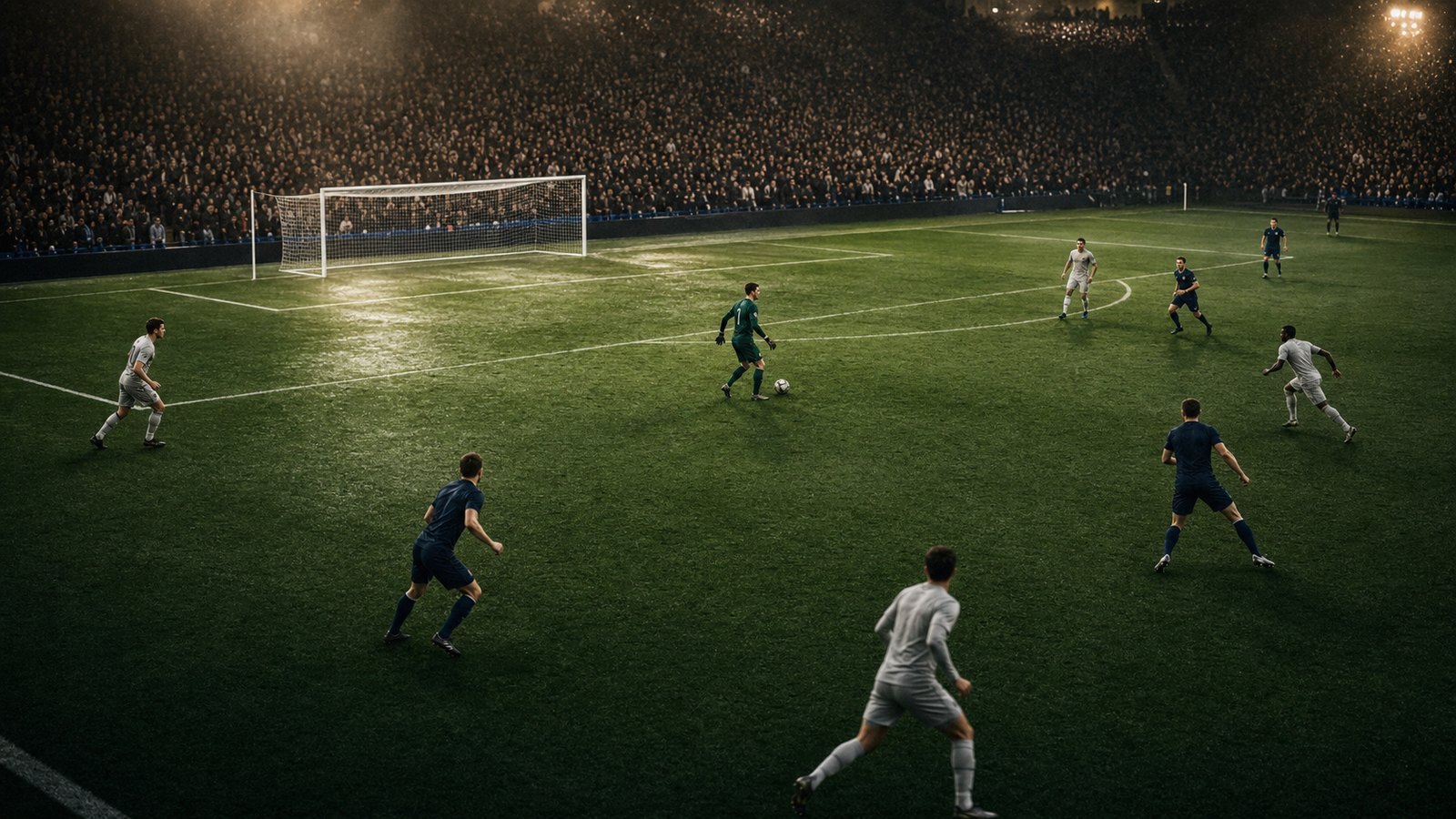
Once the goalkeeper had to solve the ball with his feet, defensive spacing changed. A centre-back could no longer play home and mentally leave the action. He needed to move into a position for the next pass. The other centre-back had to create a second angle. Full-backs could widen. A midfielder might drop to offer a route through the press. What had been a dead end could become the first phase of possession.
For the attacking team, this created choices as well. One forward could chase the goalkeeper while another screened the nearest defender. A whole side could step higher because the old reward for pressing—the defender retreating into a risk-free catch—had vanished. Pressing still demanded timing and coordination, but the law ensured that effort could keep the ball in play and force an error.
This did not instantly invent today’s build-up patterns. Coaches, pitches and player development all changed over the following decades. Yet the legal foundation was essential. A goalkeeper with calm feet gave his team an extra passing option; a goalkeeper without them invited opponents to squeeze the pitch. Recruitment began to value not only reach, handling and shot-stopping, but first touch, passing range, body shape and decision-making under pressure.
The law kept closing its loopholes
Football naturally searched for ways around the restriction. Because a goalkeeper can still handle a ball played by a team-mate with the head or chest in ordinary circumstances, players could try to manufacture that contact. The Laws now punish a deliberate trick designed to evade the restriction, such as flicking the ball up and heading it back. The principle is that a legal technique cannot be staged purely to restore the forbidden catch.
In 1997, the restriction was extended to a goalkeeper receiving the ball directly from a team-mate’s throw-in. Again the target was the protected reset. A throw could no longer be sent to the goalkeeper’s hands as another easy way to stop pressure. Each clarification kept the ball contestable and preserved the choice the 1992 change had created.
The adjustment also changed how goalkeeper quality was understood. Peter Schmeichel later acknowledged, in a FIFA interview quoted by Sky Sports, that some keepers from his era would probably struggle with modern demands and that the overall level had risen. The observation is revealing because Schmeichel himself bridged the eras. The new law did not make handling or shot-stopping less important. It added another job without removing the old ones.
The revolution is now disguised as normal football
The strongest rule changes eventually become hard to see. A young goalkeeper today learns receiving angles and passing options as part of the position. A supporter expects the keeper to offer a route behind the centre-backs. A coach may select a goalkeeper partly because he can break a press. None of those expectations feels like a weekly argument about Law 12.
That normality hides the shock of 1992. The reform did not tell teams to play out from the back, press high or recruit technically ambitious goalkeepers. It simply removed one protected action. Coaches and players filled the space with new techniques, risks and tactical ideas. The change succeeded because it did not prescribe beautiful football; it made delay less safe and demanded another decision.
The lasting image is not a referee explaining the law. It is a forward continuing his run. Before July 1992, that run often ended when the goalkeeper bent down. Afterward, the run had a purpose. The goalkeeper had to look up, set his feet and play. Football had turned its last protected pair of hands into the first pair of feet in an attack.
Sources
- International Football Association Board, Law 12: Fouls and Misconduct
- Sky Sports, “The back-pass rule 25 years on”
- The Guardian Knowledge, “Who was the last goalkeeper to legally pick up a backpass?”
- 99% Invisible, “Unsure Footing”
- IFAB institutional history