
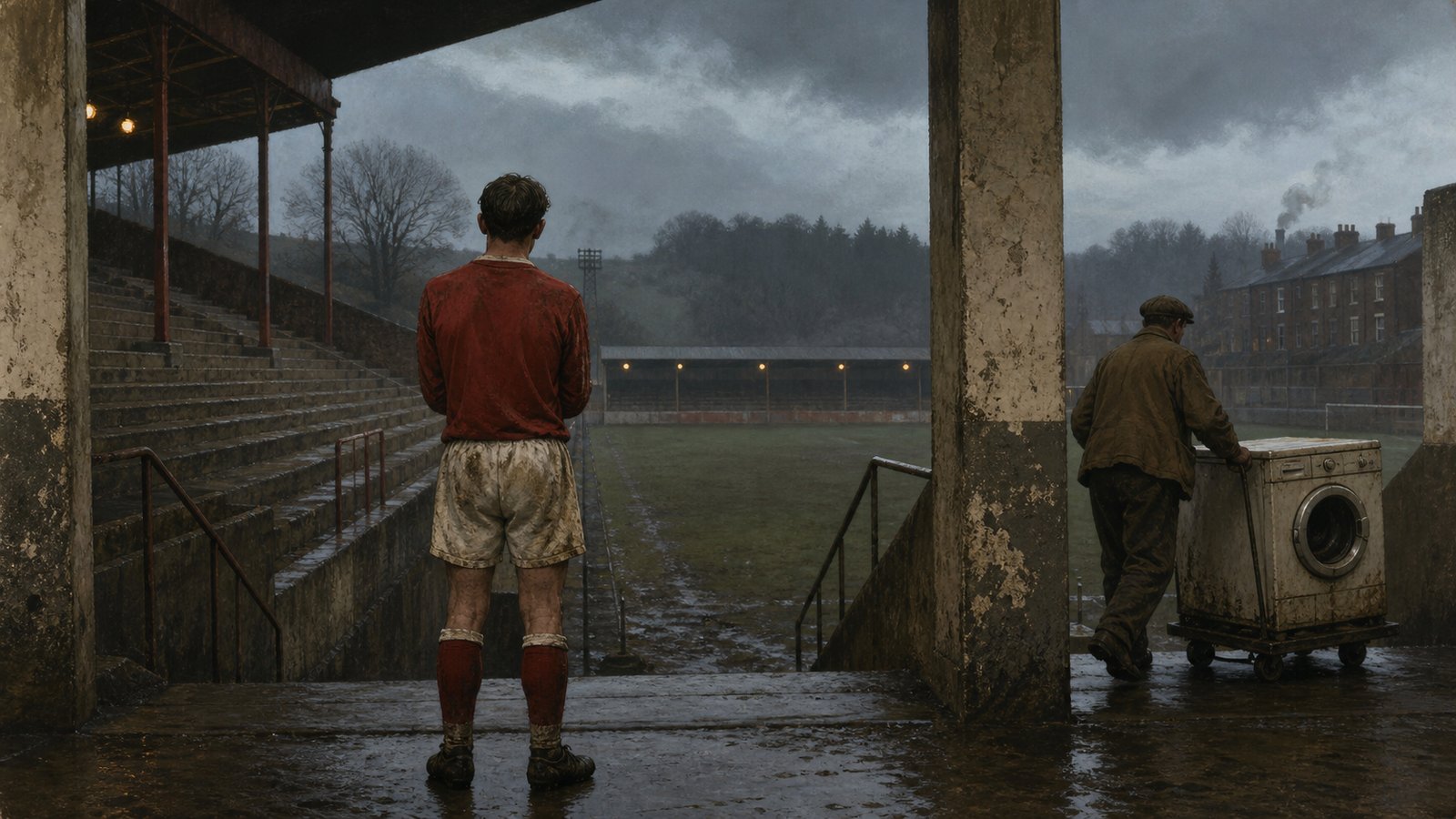
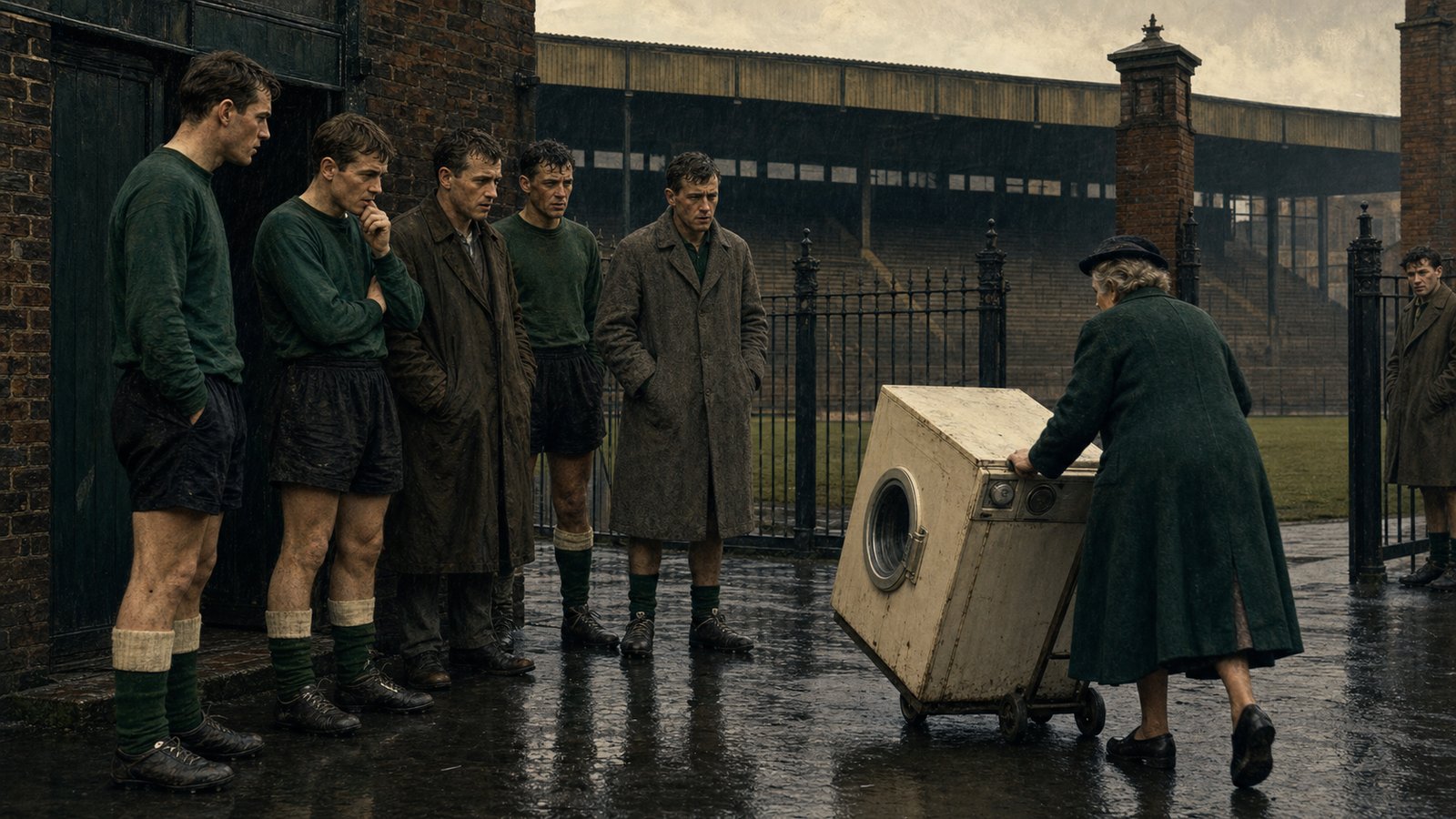
On Tuesday morning, 6 March 1962, Accrington Stanley’s players arrived at Peel Park expecting to train. Instead, they were told that the club had resigned from the Football League. Goalkeeper Alex Smith had joined only before the season, moved into a flat and filled it with new furniture. Now his first professional club had disappeared from the competition while the season was still moving around it. A press photograph caught another domestic detail: Mrs Sarah Dewhirst wheeling away the club’s washing machine as players and staff stood nearby.
The image makes Stanley’s fall look sudden because, for the people reporting to work that morning, it was. The accounts tell a slower story. A costly stand, falling crowds, relegation, unpaid obligations and a frantic fortnight of meetings had left the directors trying to find a few hundred pounds immediately while confronting debts measured in tens of thousands. The decisive act was not a final whistle. It was a letter.
A £15,000 stand with too many empty seats
Stanley had been a Football League club since 1921 and enjoyed their strongest period under manager Walter Galbraith in the 1950s. They challenged near the top of the Third Division North and came close to promotion. That sporting progress encouraged an expensive change at Peel Park. The club bought a grandstand from the Aldershot Military Tattoo and transported it north. The reported cost was £15,000.
The purchase was cheaper than building the proposed replacement, but it did not solve the underlying economics. The stand contained about 2,000 seats and was not perfectly suited to its new job as a football stand. Eric Whalley later gave the problem a blunt description: there were often “no bums to sit on them.” Stanley had increased the fixed cost of their ground without securing the crowd that would reliably pay for it.
Pressure spread to the team. The playing budget was cut shortly before the 1958–59 season, and Galbraith resigned. A club that had been pushing upward fell toward the bottom of the new Fourth Division. Stanley were relegated in 1960. Attendances that had been around 6,000 declined as results weakened, making each attempt to save money more likely to make the football less attractive. The spiral was visible long before it became terminal.
The cold afternoon when 2,000 people were not enough
By December 1961, outstanding debts meant Stanley were barred from buying players. The team dropped to the bottom of the Fourth Division after a 4–0 defeat by Colchester and went five matches without scoring. Selling centre-forward George Hudson to Peterborough brought some relief, but it did not rebuild the club’s finances. The players could see that money was short; they did not know the full scale of the danger.
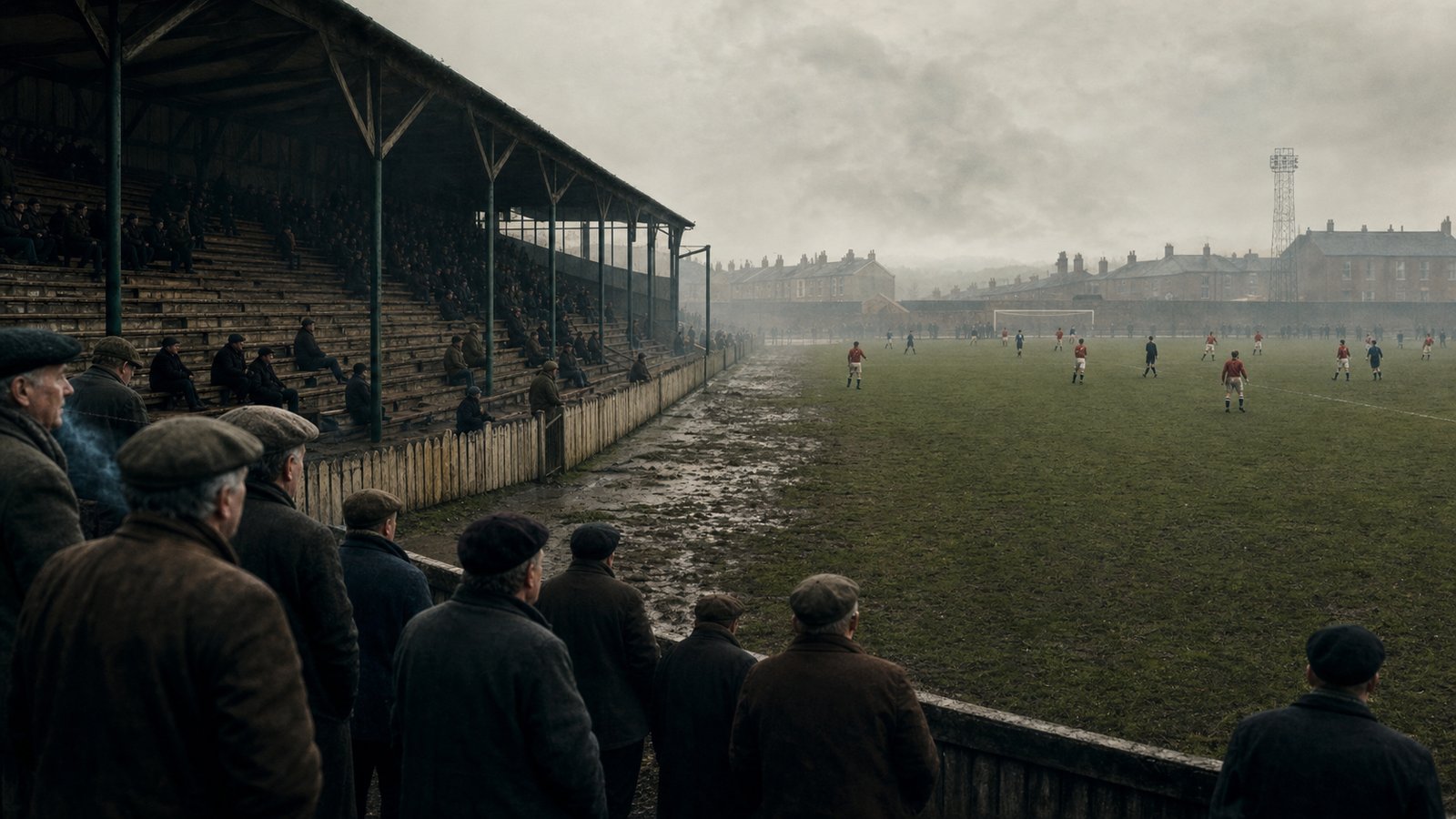
One February afternoon, roughly 2,000 spectators came through the gates at Peel Park to watch Stanley draw with Stockport County in bitter cold. The local Observer calculated what survival might require: crowds of 5,000 or 6,000 for the remaining home fixtures. That was not an abstract target. It meant asking a struggling side at the bottom of the table to almost triple its attendance at precisely the moment local interest had weakened.
The appeal produced a modest lift for the next home match. On 24 February, 2,650 watched Rochdale win 2–0 at Peel Park. It became Stanley’s last Football League home game. Three days later the team drew 1–1 at Doncaster Rovers in front of fewer than 2,000, with young Mike Ferguson scoring Stanley’s last League goal. On 3 March, Crewe Alexandra beat them 4–0. The players returned to Accrington with no idea that they had just completed the club’s final League fixture.
What the creditors saw on 5 March
The financial picture had sharpened during the previous fortnight. The Football League asked for clarification of Stanley’s position. Club vice-president Sam Pilkington sought help, while Burnley chairman Bob Lord became involved in the rescue discussions. Pilkington met League secretary Alan Hardaker on 23 February and offered reassurance that the club could continue. Ten days later, the numbers overwhelmed that confidence.
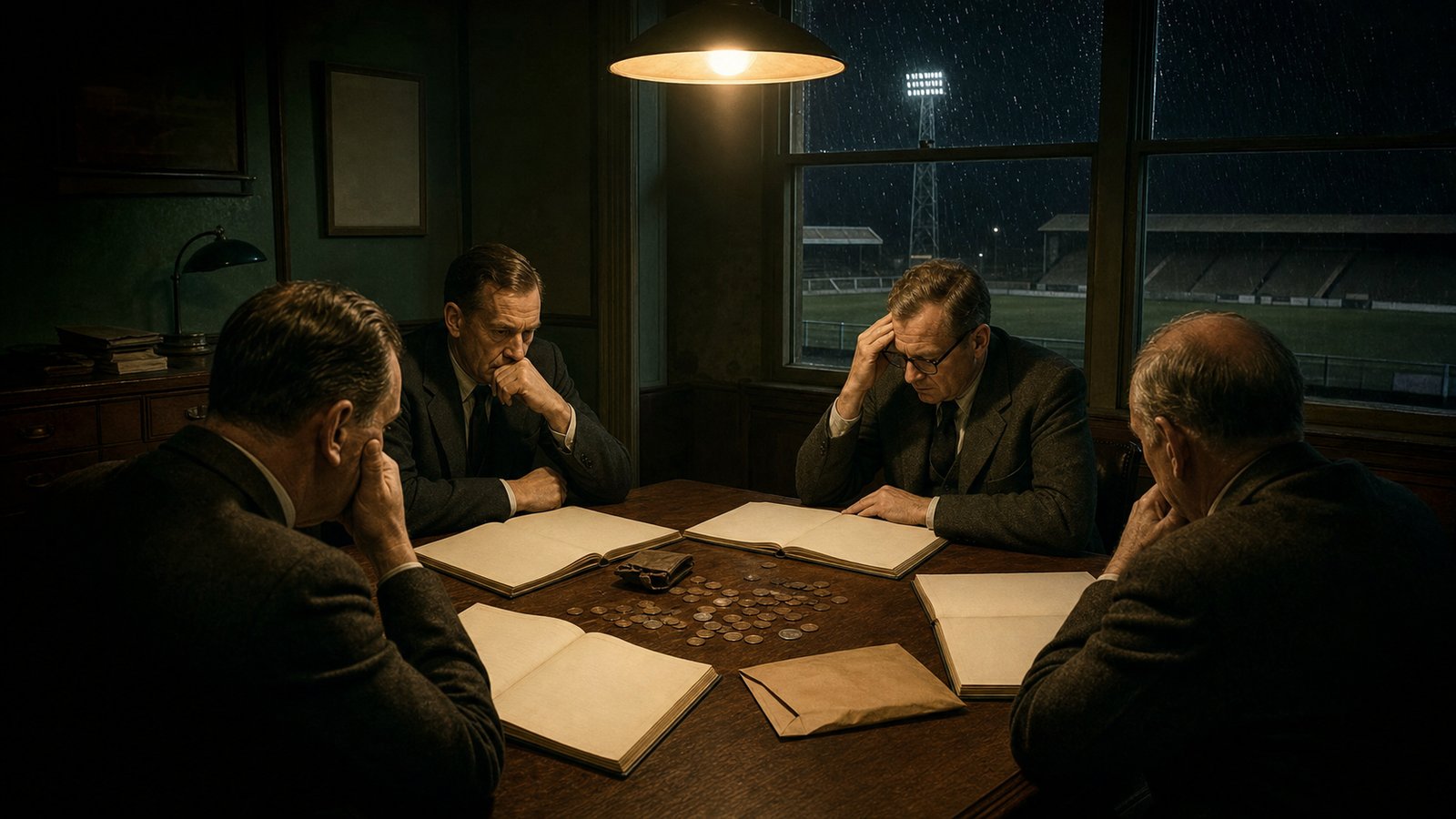
At a creditors’ meeting at Peel Park on Monday, 5 March, the accountants put total debts at £62,000. The breakdown made the crisis tangible. There was a £9,000 bank overdraft and £3,000 owed in transfer fees. About £4,000 was needed in the short term. A utilities bill required £400 immediately. The club had also failed to buy national insurance stamps for its players throughout the season.
Pilkington withdrew his support after hearing the figures. Lord told the remaining directors that resignation was the only course. The club’s solicitors concluded that Stanley were insolvent and faced liquidation. A letter resigning from the Football League was prepared and sent. The local press announced the end on 6 March before the town had much chance to answer the final appeal.
The rescue arrived after the letter
The decision’s speed became part of the wound. Local businessmen discussed possible help, and club president Sir William Cocker asked for the resignation letter to be disregarded. Money was offered after the news became public. But the League accepted the original resignation. Stanley could not simply withdraw it and resume their place.
For the players, institutional language translated into ordinary disruption. Smith had to tell his wife that the wage on which their new home depended had vanished. He remembered that the club had usually found enough money to pay the squad, which concealed how close the organisation was to failure. The sale of Hudson had looked like another temporary patch. The request for Ferguson to move to Workington looked like another attempt to raise cash. Then training became a gathering of unemployed footballers.
The League also had to repair its competition. Stanley’s record for the season was removed from the table, affecting clubs that had already taken points from them and erasing matches supporters had paid to watch. The crisis therefore reached beyond one balance sheet. A mid-season resignation altered the shared sporting record because a club could no longer fund the promise implicit in every fixture list: turn up, stage the match and complete the campaign.
Stanley continued outside the League in the Lancashire Combination for four more seasons before the old club entered liquidation in 1966. The name survived through a new club formed in 1968, but the route back was measured in decades rather than one promotion. The modern Accrington Stanley climbed from non-League football and finally regained League status in April 2006, when Paul Mullin scored at Woking to secure promotion.
A collapse remembered through objects and dates
Accrington’s 1962 fall is often compressed into a piece of football trivia: a famous name disappeared, later returned and acquired a second life in popular culture. The surviving details resist that neatness. A 2,000-seat stand had become an expense without a matching audience. Two thousand people on a freezing afternoon were loyal but insufficient. Four hundred pounds could keep a utility connected, yet £62,000 sat across the accounts. A resignation letter travelled faster than a late rescue.
That chain separates this story from the global share rescue that kept Real Oviedo alive in 2012. Oviedo’s appeal could move through an internet audience and gather small contributions across borders. Stanley’s directors had a local newspaper, urgent meetings and a shrinking number of matchdays. Once their letter was accepted, public sympathy could not be converted into time.
The washing machine being wheeled away from Peel Park remains an unusually precise emblem. It was not a trophy, a turnstile or a player sold for a fee. It was simply something useful that belonged to an organisation which no longer had the cash or authority to carry on as before. Around it stood professionals whose season had stopped on a Tuesday morning.
Forty-four years later, Stanley’s return to the League completed an extraordinary climb, but it did not reverse March 1962. The old club’s results stayed erased and its resignation stayed accepted. What returned was a football identity rebuilt by different people, in a different competition and over a much longer timescale. Peel Park’s final weeks remain the warning inside that achievement: collapse can spend years approaching and still feel instantaneous when the letter is opened.
Sources
Accrington Stanley FC club history; The Guardian; LancsLive; Lancashire Telegraph; BBC Lancashire.