
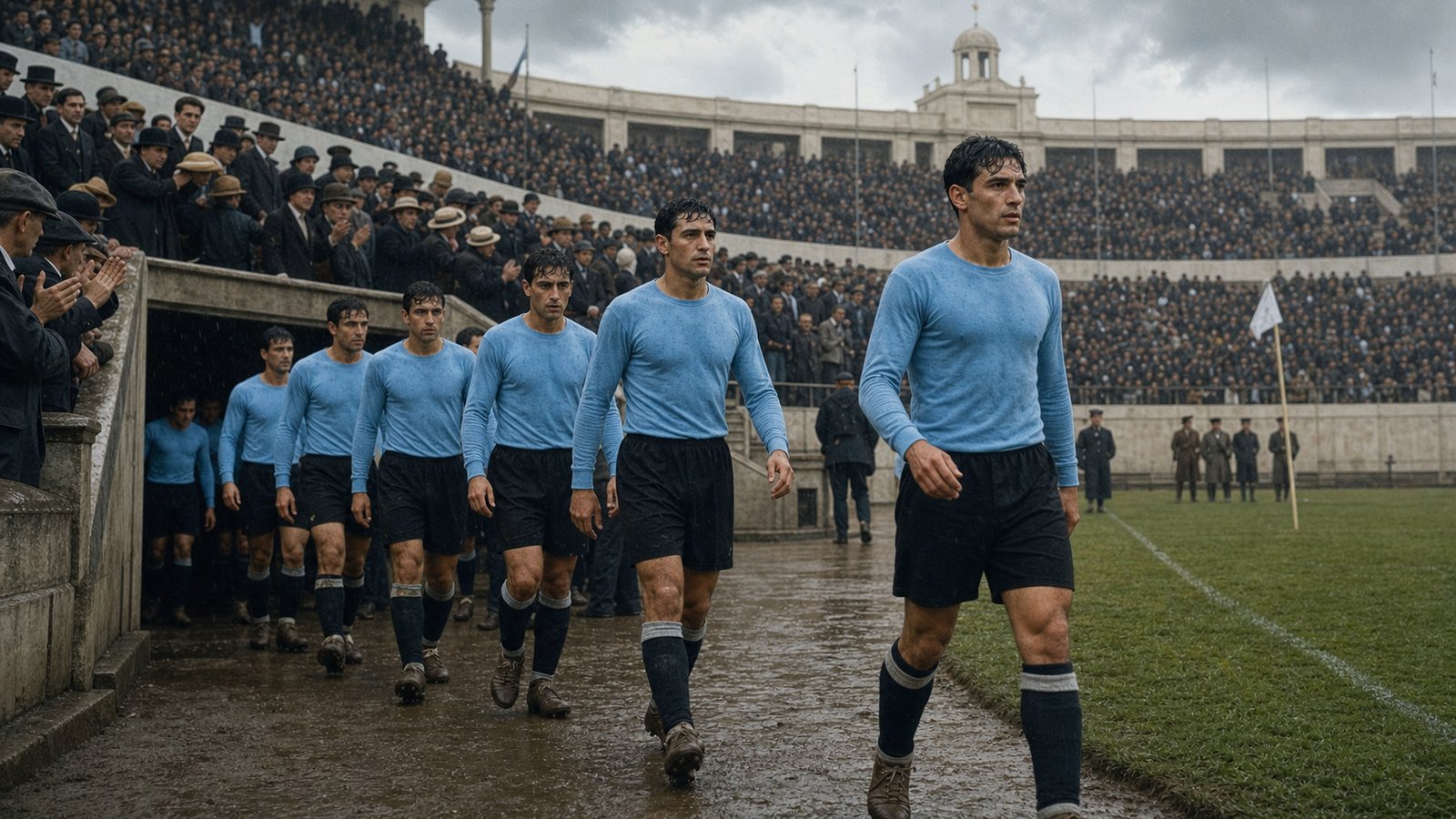
At four o’clock on 26 May 1924, Uruguay walked onto the pitch at Stade Yves-du-Manoir in Colombes for its first Olympic match. Ninety minutes later, Yugoslavia had conceded seven goals. The score announced a new contender, but the more important discovery was how quickly eleven visitors from South America could change the picture in front of a European crowd.
Uruguay did not win by repeating one trick for five matches. It met a different problem in every round: an opening opponent overwhelmed, an American side shut out, the host nation dismantled, a semi-final recovered from behind, and a final controlled. By the time Switzerland had been beaten 3–0 on 9 June, the champions had scored 20 goals. Paris had watched a complete tournament argument, delivered in less than a fortnight.
Paris First Saw the Scoreboard
The 1924 Olympic football event was unusually large for its era. Olympedia records 279 players from 22 countries, four venues around Paris, and a single-elimination bracket running from 25 May to 9 June. It describes the competition as the first major international championship with genuinely serious international participation. There was no group stage in which to recover from a poor afternoon. Every match placed a team one defeat from departure.
Uruguay’s first assignment produced the result that made the rest of the bracket look again. Pedro Petrone scored three of the seven goals against Yugoslavia, while Héctor Scarone, Pedro Cea, José Vidal and Ángel Romano also contributed across Uruguay’s campaign. The names matter because the eventual total was distributed rather than carried by one exceptional finishing day. Petrone finished with seven tournament goals, Scarone with five, Cea with four, Romano with three and Vidal with one.
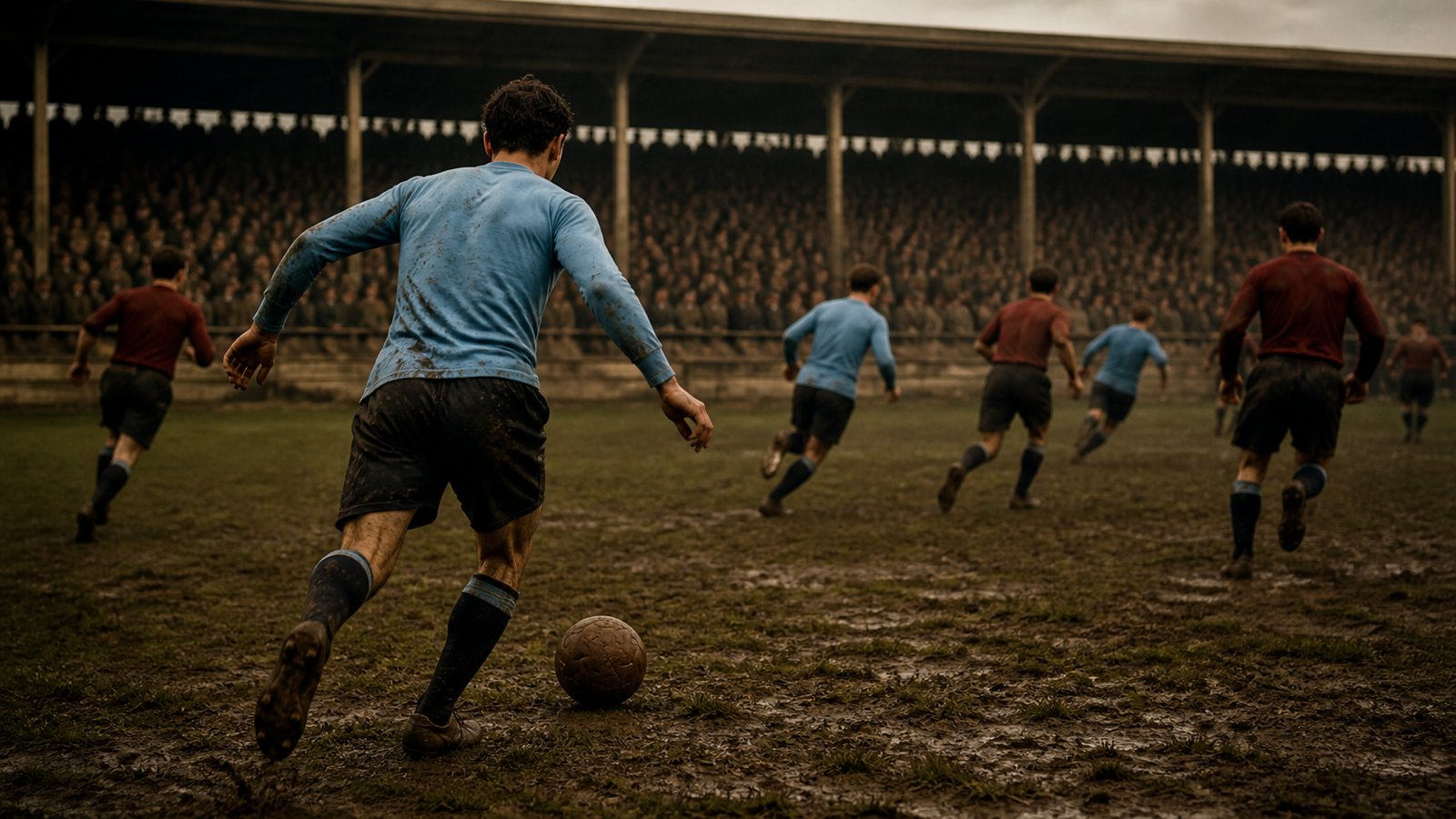
A seven-goal first round can tempt us to treat the competition as a procession. The bracket says otherwise. Switzerland needed a replay to remove Czechoslovakia. The Netherlands later pushed Uruguay to the edge. What the opening did was establish Uruguay’s range: goals from several positions, enough movement to separate a defence repeatedly, and no need for a cautious period of acclimatisation.
Five Matches Asked Five Different Questions
Three days after the Yugoslavia result, Uruguay beat the United States 3–0. The quarter-final then placed the visitors against France on 1 June. This was the host nation, playing at home and arriving after a 7–0 victory of its own over Latvia. Uruguay answered with five goals and conceded only once. Olympedia calls the 5–1 win the performance that impressed the tournament, and the margin explains why: France had looked powerful until its own pitch became the stage for somebody else’s command.
The sequence gives the 20-goal total its proper weight. It was not accumulated against one level of opposition or in a modern league schedule. Uruguay scored seven in an entrance, three in a second-round shutout, five against the hosts, two in a comeback semi-final and three in the gold-medal match. The opponents changed; the scoring did not disappear.
Nor did Uruguay simply chase every game at the same tempo. A knockout side must know when the situation has altered. A big lead asks for control. A level match asks for patience. Falling behind asks whether the players can keep their spacing and judgment when the easy story has ended. Paris learned the answer only in the semi-final.
Andrade Gave the Crowd a New Reference Point
José Leandro Andrade was one of the names European spectators carried away from the event. He played in a side captained by José Nasazzi and coached by Ernesto Figoli, with Andrés Mazali in goal. Their success cannot be reduced to a single celebrity, yet Andrade helps explain the sense of discovery around Uruguay. Here was a footballer operating inside a collective that European audiences had not previously been able to watch across a major international bracket.
Contemporary astonishment is easy to flatten into a claim that Europe had never seen passing or technique. That would be too simple. European teams had their own sophisticated ideas, and Switzerland reached the final on merit. Uruguay’s surprise came from the whole package appearing at once: attractive combination play, multiple scorers, defensive security and the emotional control to survive the one match that went against the expected flow.
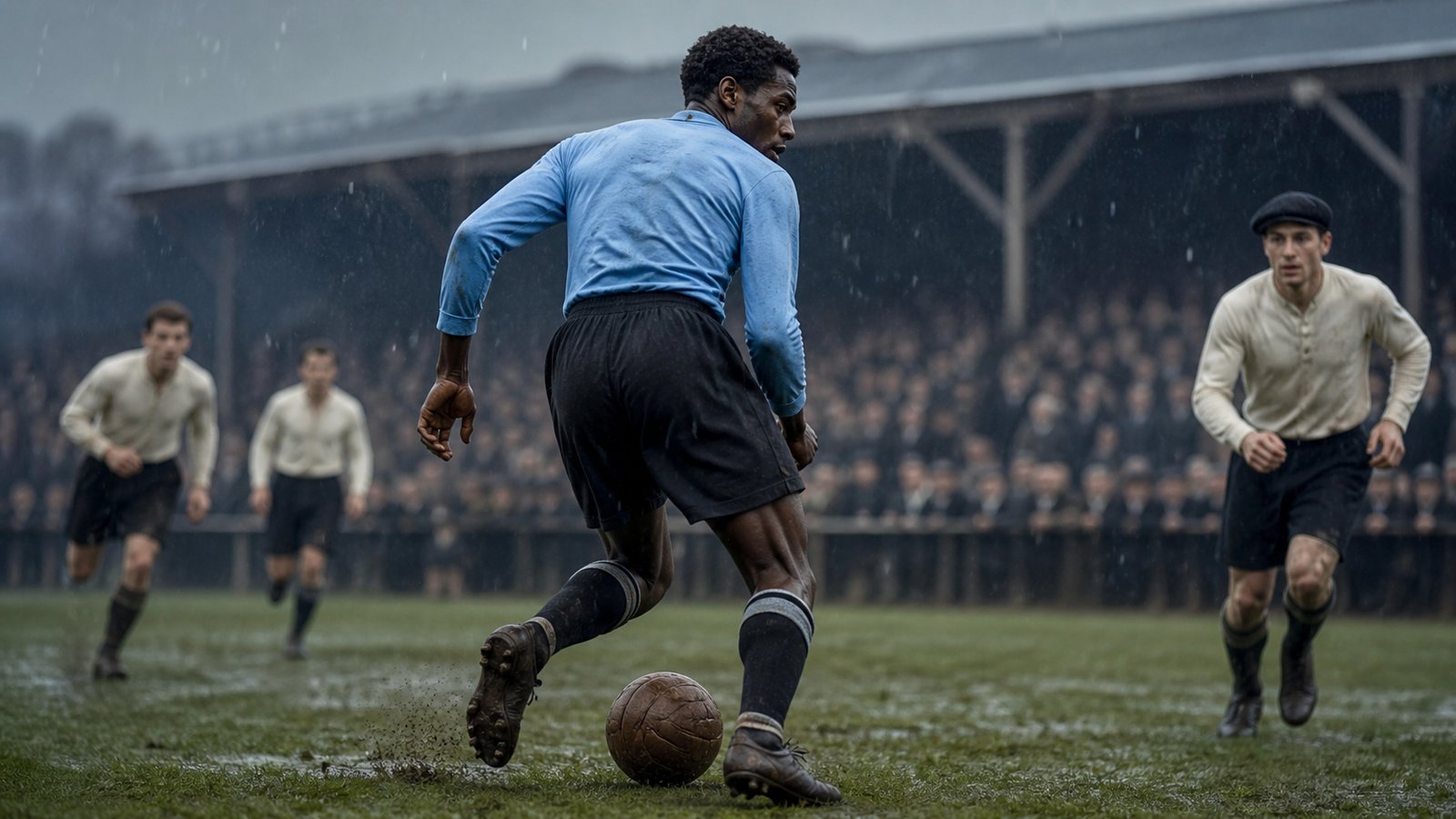
The tournament list shows how balanced the group was. Petrone supplied the highest goal total, Scarone and Cea added nine between them, and Romano contributed three. Behind them, Nasazzi, Pedro Arispe and goalkeeper Mazali formed part of a defence that conceded only two goals in five games. The spectacle had structure beneath it, but the structure was visible through decisions on the ball rather than a slogan drawn after the event.
The Semi-Final Broke the Easy Story
On 6 June, the Netherlands led Uruguay 1–0 at half-time. This was the first moment when the newcomers’ Paris story could no longer be told through large numbers and delighted crowds. Olympedia identifies the Dutch match as Uruguay’s main obstacle. The South Americans came back to win 2–1, with the deciding penalty regarded by many observers as an error by the French referee.
That disputed decision belongs in the story because clean legends are less useful than complete ones. Uruguay’s title was neither invalidated by one controversial call nor made immaculate by the later final. The semi-final showed a team recovering from a deficit; it also left the Netherlands with a grievance. Both facts can stand together.
For the players, the practical consequence was simple: survive and prepare again. Switzerland had beaten Sweden 2–1 a day earlier. The gold-medal match would be Uruguay’s fifth fixture in fifteen days, and it came against a team that had scored fifteen goals in the tournament. The opening 7–0 no longer guaranteed anything.
Gold Arrived Before the World Cup
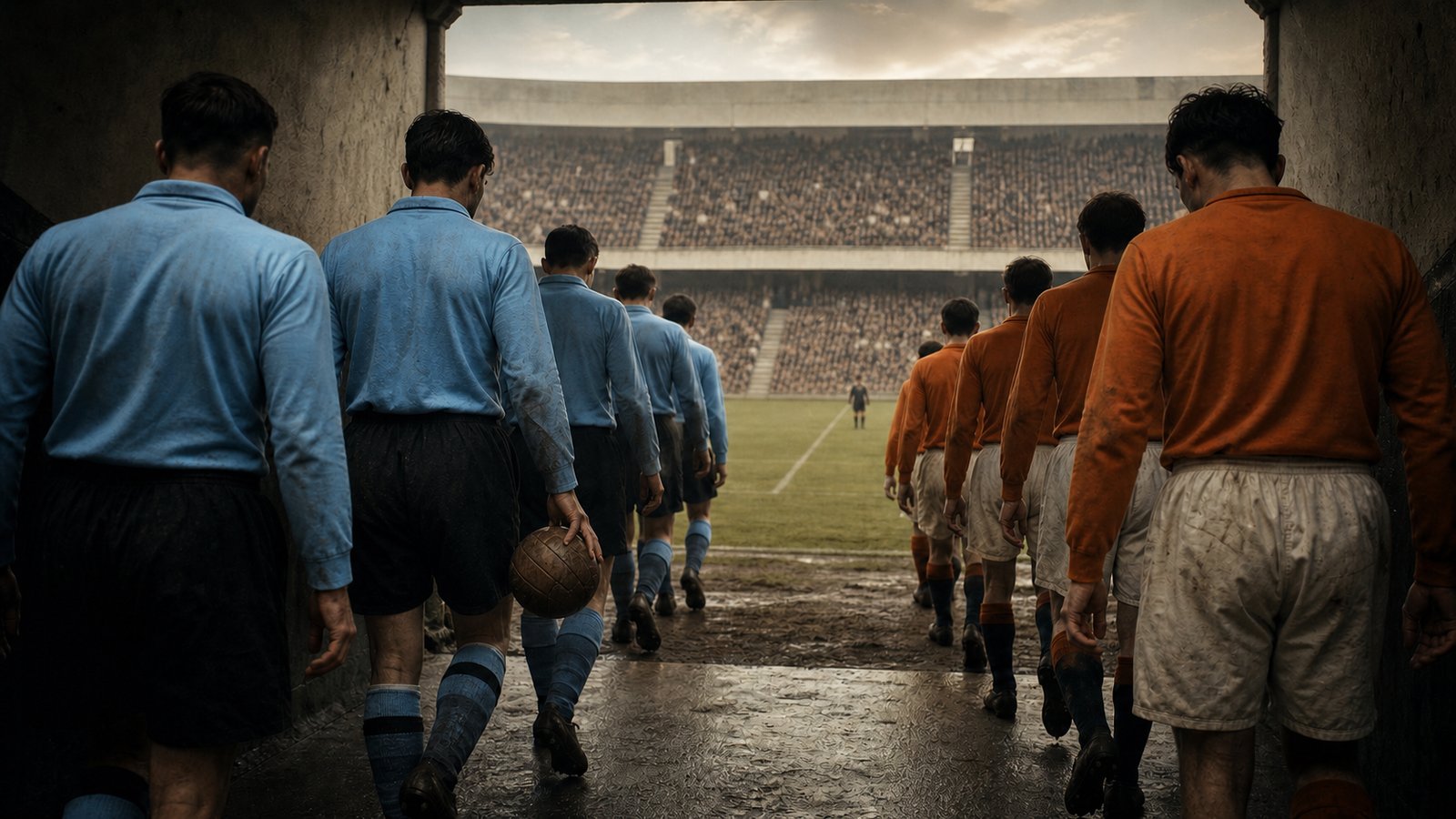
The final at Colombes began at 16:30 on 9 June. Uruguay beat Switzerland 3–0. The score completed a campaign of 20 goals for and two against, five victories, and the first of the Olympic titles Uruguay would successfully defend in 1928. Switzerland took silver and Sweden bronze; the Netherlands, after forcing the champions into their hardest match, finished fourth.
There was no FIFA World Cup in 1924. Its first edition would not be held until 1930, when Uruguay hosted and won it. The Olympic gold therefore carried a significance that is difficult to reproduce now. For an international field gathering around one knockout competition, this was the available summit. FIFA’s history of Uruguay’s early domination places the 1924 and 1928 Olympic victories beside the 1930 World Cup because the sequence established the country before the new tournament existed.
The achievement also changed what distance meant in football. A South American team had crossed the Atlantic and beaten opponents from five different nations in Paris. Its players were no longer names confined to results arriving from another continent. European spectators had watched Nasazzi lead, Mazali guard the goal, Andrade connect play, and five different Uruguayans score across the event.
Uruguay’s later 1950 victory in Brazil would create a different kind of memory, built around the pressure and silence of the Maracanã. Our account of the compact plan behind the Maracanazo begins with a team facing a host nation’s certainty. Paris was the earlier reverse: the audience did not yet know what it was about to see.
The lasting image of 1924 is therefore not one tactical diagram or one famous goal. It is a bracket being educated round by round. Seven, three, five, two, three: each score added a different piece of evidence. When the final whistle went against Switzerland, Uruguay had done more than take gold. It had made a football public revise the map of where the game’s best ideas and players could come from.
Sources
Olympedia, Football at the 1924 Summer Olympics; Olympedia, Football, Men — Paris 1924; FIFA, Uruguay’s Early Domination: Olympic Football Tournament and World Cup.