
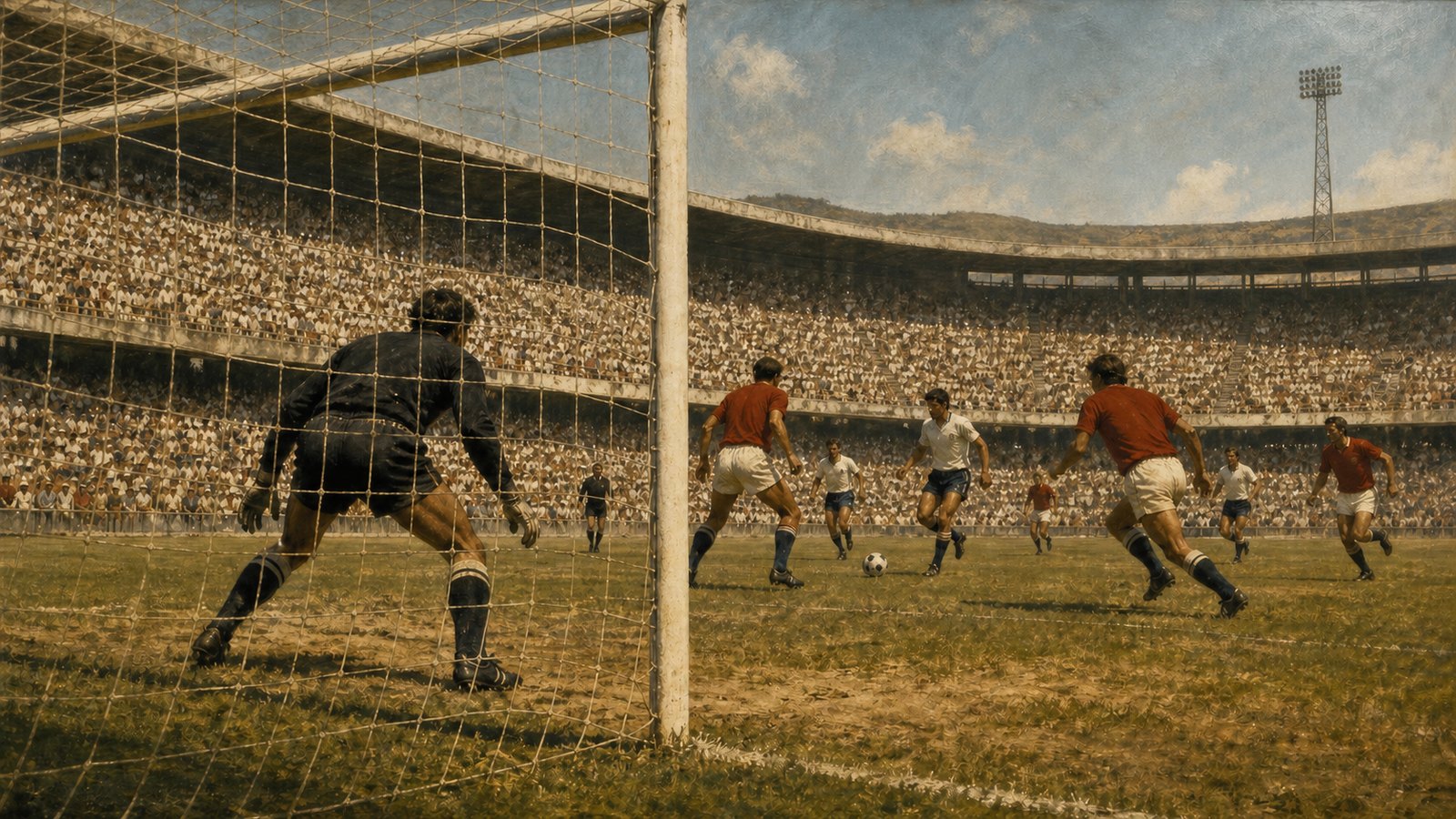
At 49 minutes in León, the simplest object on the pitch was doing the most damage. Keith Newton had the ball near England’s right touchline, West Germany’s defenders were turning toward their own goal, and Martin Peters was arriving where a second runner is hardest to count. Newton crossed. Peters finished. The scoreboard read 2–0.
Thirty-one minutes earlier, the same right-back had supplied Alan Mullery for the opening goal. England had not stumbled into a lead against the side they had beaten in the 1966 World Cup final. They had built it twice through the same corridor.
What followed on 14 June 1970 is often compressed into a list of famous errors: Gordon Banks fell ill, Peter Bonetti struggled, Alf Ramsey removed Bobby Charlton, and the defending champions vanished from the tournament. Every item matters. Together, however, they can make the match sound as if it turned with one decision. It did not. The quarter-final moved through five separate score states, and each one changed the work demanded of the players.
England’s two-goal cushion was real. So was West Germany’s response. Franz Beckenbauer found the first breach, Uwe Seeler invented an equaliser from an almost impossible body position, and Gerd Müller completed the recovery in extra time.
The Goalkeeper Missing at Noon
The quarter-final began at noon local time at Estadio de Guanajuato, La Martinica, in León, before 23,357 spectators. England arrived as world champions for a rematch of the Wembley final four years earlier.
Banks had become ill the previous day, leaving Bonetti to start. The BBC retrospective links the illness to a Mexican beer but rejects the easy claim that the absence alone decided the tie. Bonetti was still part of a complete England side that controlled much of the opening hour.
Ramsey used a 4-4-2, with Cooper at left-back and Newton on the right behind a midfield of Mullery, Alan Ball, Peters and Charlton. England’s task was not merely to protect Bonetti. It was to give West Germany several problems at once.
The opening goal arrived at 30:55. Mullery combined, sent play toward Newton and continued into the area. Newton’s low delivery found the midfielder at close range. A player who had begun the movement deeper finished it seven yards from goal. The run was difficult to track because it came from behind the forwards rather than from a fixed position on the last line.
Two Crosses Build a Lead
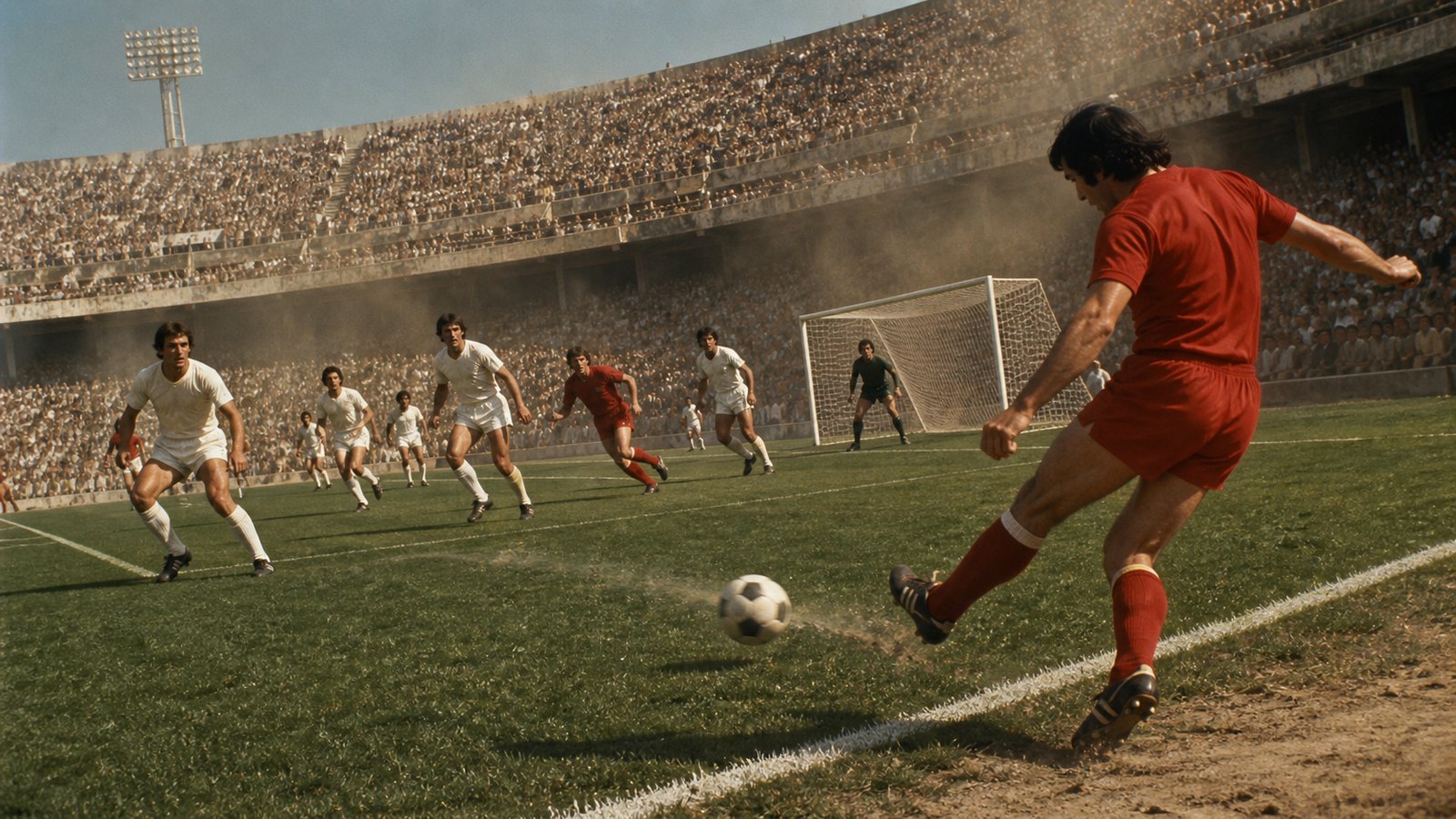
West Germany made its first alteration at half-time, replacing Horst-Dieter Höttges with Willi Schulz. The change helped contain Hurst more effectively, but it did not immediately close the route England had already used. Four minutes after the restart, Newton advanced again.
Peters understood the timing. He did not wait beside the centre-forward. He arrived at the near post as Newton’s cross entered the six-yard area and placed his finish beyond Sepp Maier. England Football Online records the goal at 49:18. Two attacks, two Newton deliveries, two midfield arrivals: this was a repeatable pattern rather than a fortunate bounce.
At 2–0, the duties changed. England no longer needed to manufacture the same volume of chances. West Germany could no longer afford to let an unproductive flank remain untouched. Helmut Schön acted again in the 57th minute, taking off Reinhard Libuda and sending on Jürgen Grabowski.
The substitution gave Terry Cooper a different opponent. The BBC account describes Grabowski immediately troubling the tiring left-back.
Ramsey’s lead was still two. Schön’s side now had movement on the right, Beckenbauer carrying from deeper positions, and Müller waiting close to goal. The next action did not need to be beautiful. It needed to change what every player believed was possible.
Beckenbauer Changes the Score State
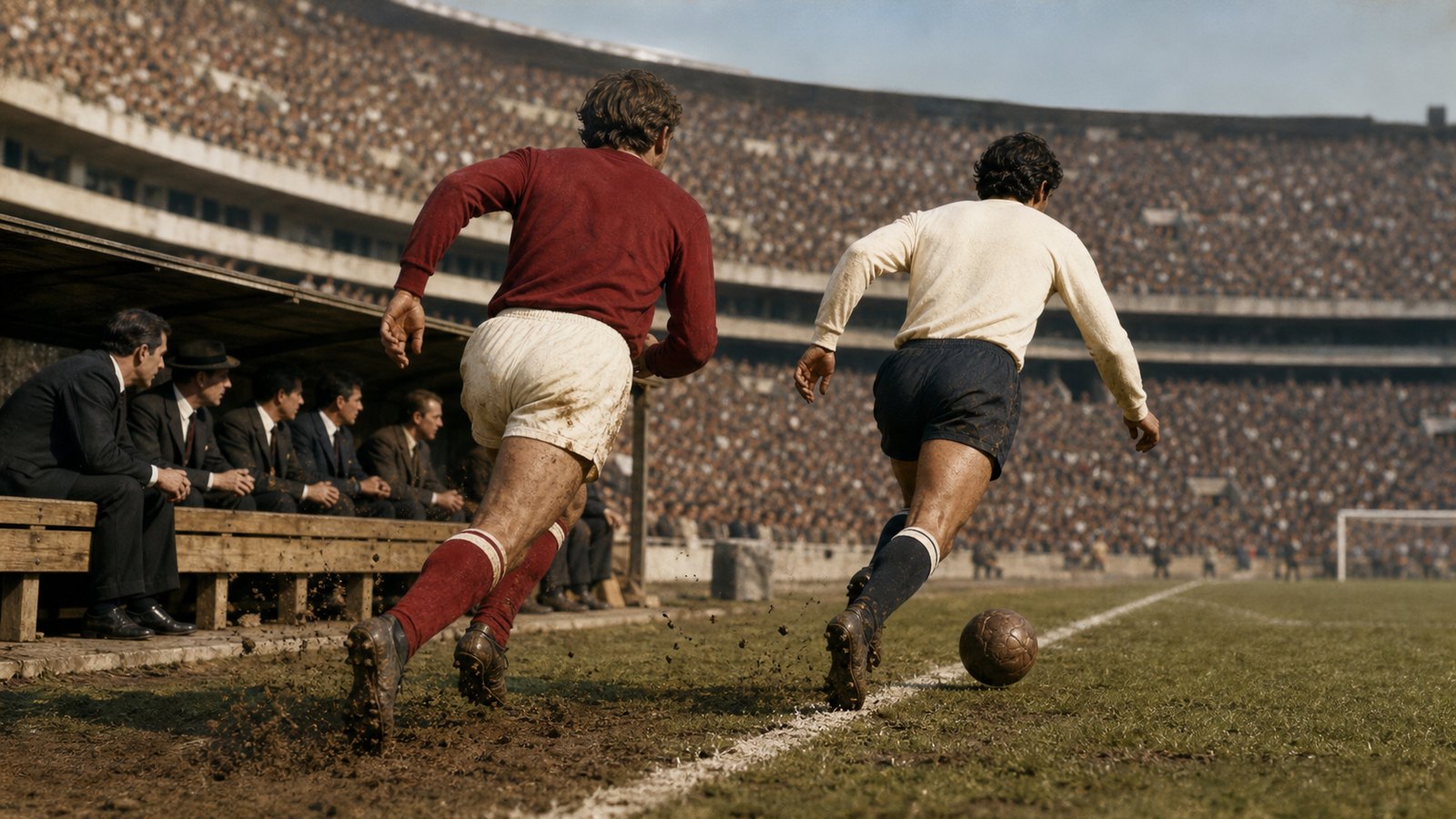
Beckenbauer supplied that action in the 68th minute. He moved beyond Mullery and struck low from outside the area. The shot went underneath Bonetti. It was not the kind of finish expected to defeat a goalkeeper at a World Cup, and Bonetti’s part in it cannot be erased. Yet the shot’s importance went beyond the mistake. At 2–1, West Germany no longer required two events merely to survive. One more attack could reset the match.
Ramsey replaced Charlton with Colin Bell almost immediately, the substitution recorded in the 69th minute. The decision has followed Ramsey ever since. Charlton was playing his 106th and final England match, and removing him reduced the presence West Germany had to respect between midfield and attack. Ramsey may have wanted Bell’s running and fresh legs. What England lost was a player able to receive under pressure and make possession feel dangerous rather than temporary.
Eleven minutes later, Peters came off for Norman Hunter. Again, the intention was readable. Ramsey added a defensive player with the lead narrowing and the clock moving toward full time. The effect was less reassuring. England had fewer familiar connections for moving the ball away from its own penalty area, while West Germany had Grabowski repeatedly offering an outlet on the right.
Seeler Finds a Header No Diagram Predicts
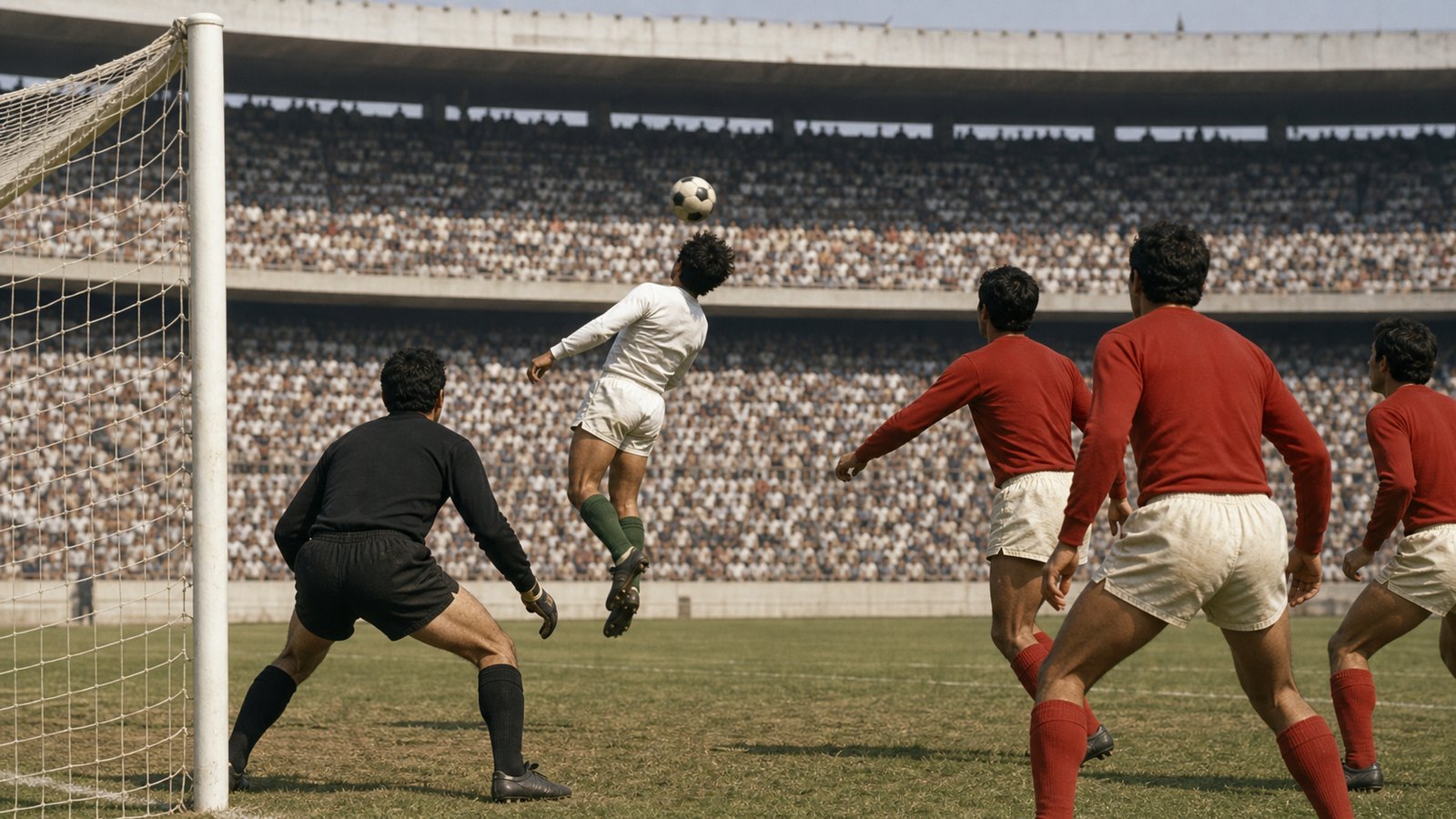
The equaliser came in the 82nd minute and remains the match’s strangest image. Karl-Heinz Schnellinger delivered a high cross. Seeler reached it seven yards from goal while facing away from the net. A conventional header from that posture would have moved the ball back across the area. Seeler instead sent it up and behind him.
Bonetti had advanced and was caught between decisions. The ball looped over him and dropped into the goal. Seeler had not powered through a static defence. He had improvised a finish from the wrong orientation, using the height of the cross and the goalkeeper’s position to create a path that barely looked available.
Now the scoreboard read 2–2. England’s substitutions had been chosen to preserve a lead, but the lead no longer existed. West Germany’s changes had been chosen to chase the game, and their attacking value remained useful. That asymmetry carried into extra time. Bell and Hunter could still contribute, but Grabowski’s direct running continued to pull England toward its own goal.
The winner at 107:56 began on that side. Grabowski crossed, Hannes Löhr headed the ball back, and Müller volleyed from two yards. The sequence required three different pictures in quick succession: width, a headed return, then the tournament’s most alert penalty-box striker reading the second ball.
England still produced one final argument. Hurst put the ball in the net shortly after Müller’s goal, but the finish was ruled offside. There would be no repeat of Wembley’s disputed goal-line drama, no second recovery, and no semi-final place.
Why the Match Refuses a Single Villain
Bonetti’s afternoon was damaging: Beckenbauer’s shot passed beneath him, and Seeler’s header caught him stranded. Ramsey’s substitutions also reduced England’s ability to keep the ball while the game became unstable. Those explanations interacted.
The sharper account begins with what England did well. Newton and two midfield runners created a deserved two-goal lead. It then follows Schön’s interventions: Schulz changed one defensive assignment, while Grabowski created an attacking route against Cooper. Beckenbauer turned territorial pressure into a goal. Ramsey answered by changing his midfield. Seeler turned an awkward cross into an equaliser. Grabowski, Löhr and Müller then combined for the winner.
Each score state demanded a new behaviour. At 0–0, England attacked with its full-backs and midfield arrivals. At 2–0, West Germany accepted more risk. At 2–1, England tried to protect control with fresh legs but surrendered some ability to hold the ball. At 2–2, the German attacking substitutions still fitted the problem in front of them. At 3–2, England had too little time to rebuild what had been removed.
The reward for West Germany was a semi-final against Italy. That game became another extra-time epic, producing five goals after the 90th minute; its chaos belongs to a different story. The quarter-final in León had already extracted its own price. Müller, Seeler and Beckenbauer would play on. England’s title defence was over, and Charlton’s international career had ended from the bench.
Newton’s second cross, Bonetti reaching too late, Seeler heading while looking away and Müller appearing two yards out belong in one sequence. In that order, the comeback becomes a contest in which the solutions kept changing—and West Germany found the last three.
Sources
BBC Sport historical archive; England Football Online match archive; FIFA match centre.