
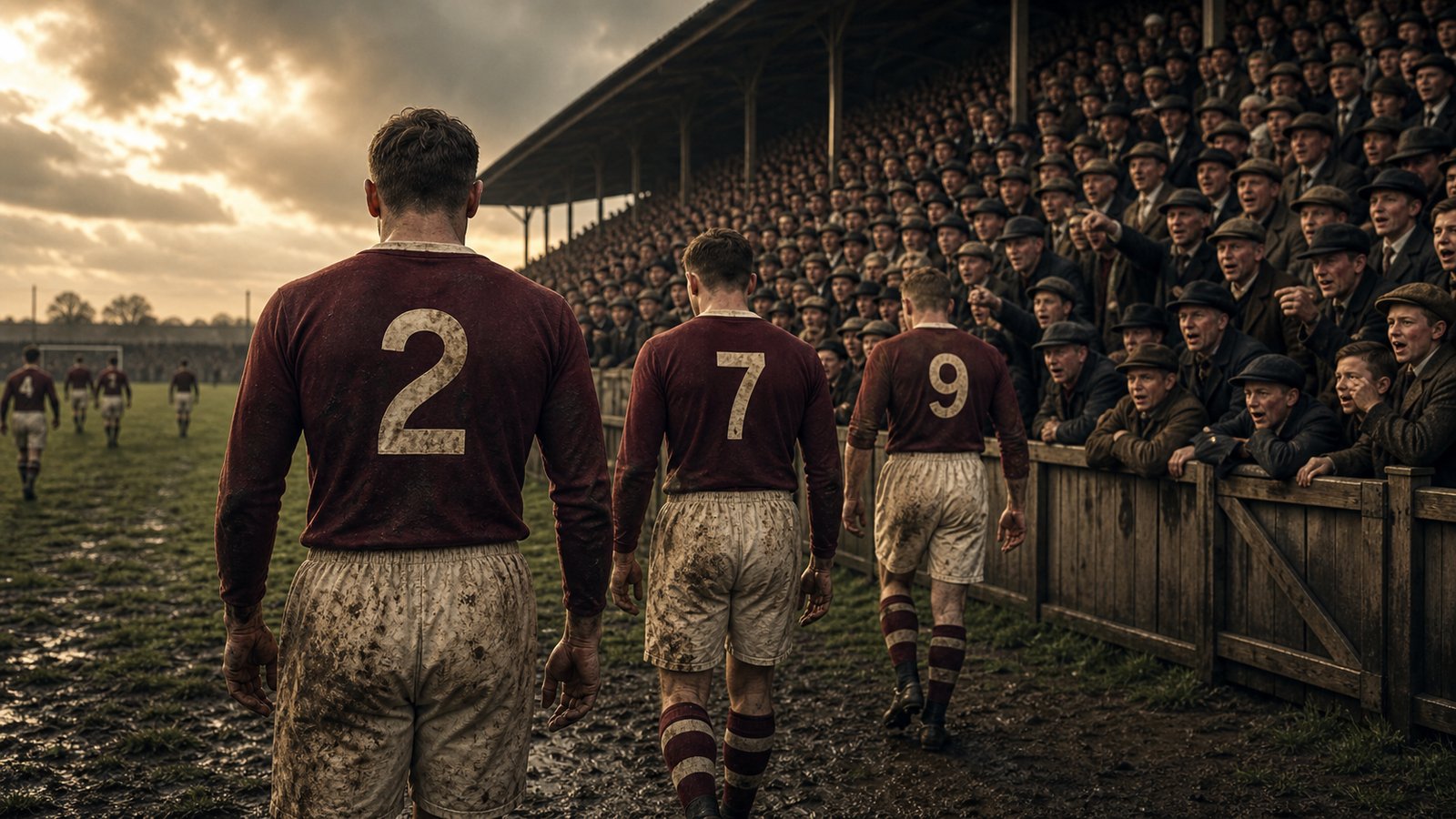
On 25 August 1928, two English grounds offered spectators a small piece of help that now seems impossible to imagine football without. At Hillsborough, The Wednesday hosted Arsenal. At Stamford Bridge, Chelsea welcomed Swansea Town. Across those two matches, large figures appeared on players’ backs, turning a moving crowd of similar shirts into individuals who could be recognised from the stands.
The experiment was practical before it was iconic. A number told the public who had made a tackle, who had drifted inside and who had missed a chance. It also attached a visible label to a place in the team. Long before supporters bought shirts with a favourite player’s name, English football used numbers as a viewing aid and a positional map.
The surprising part is how slowly the obvious idea won. Clubs experimented, newspapers praised the clarity and Herbert Chapman kept pushing. Yet the Football League resisted for years. The modern football number was born through a sequence of trials, refusals and revisions rather than one clean decree.
Two grounds tried the same idea on the same afternoon
The earliest recorded use in English league football came on that August Saturday in 1928. Arsenal’s official history identifies the away match against Sheffield Wednesday, then commonly called The Wednesday, as an early numbered-shirt experiment. Arsenal lost 3–2. In London, Chelsea’s match against Swansea Town provided a simultaneous test before a crowd reported at roughly 35,000.
The two matches did not use one perfectly settled method. Arsenal’s history describes one side wearing 1 to 11 and the other 12 to 22, a scheme designed to make every player on the pitch uniquely identifiable. At Stamford Bridge, contemporary reports described outfield players carrying 2 to 11. The goalkeeper’s familiar association with number 1 had not yet become the universal visual rule it later appeared to be.
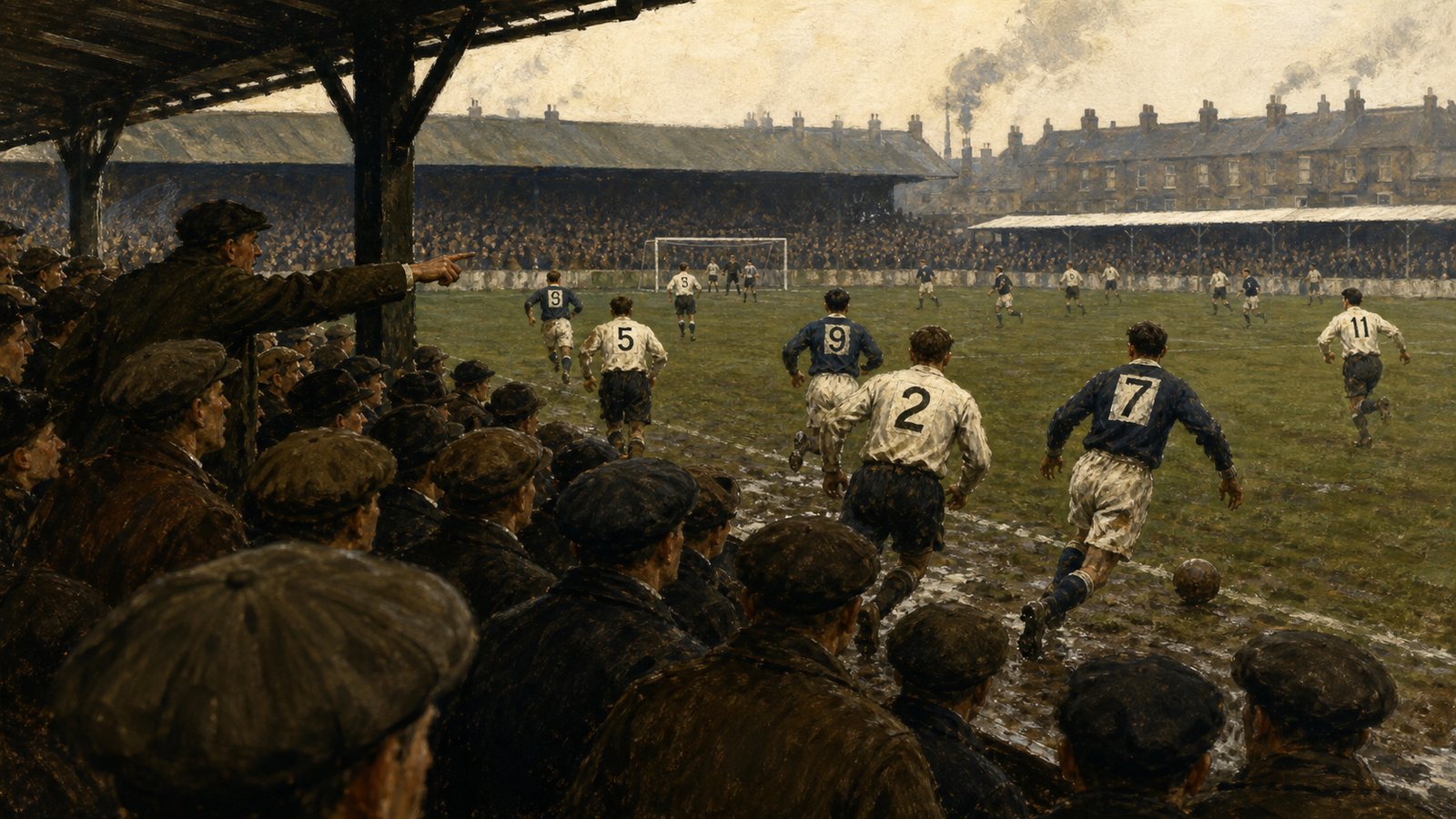
What mattered to spectators was not the precise sequence but the sudden legibility. The Daily Express observed that the large black figures, mounted on white squares, allowed people to credit good play to the correct individual. The Daily Mirror called numbered jerseys a success and predicted that the scheme had come to stay. From high in a packed stand, identification had become quicker than recognising a haircut, gait or place in the formation.
A number first described a job, not a celebrity
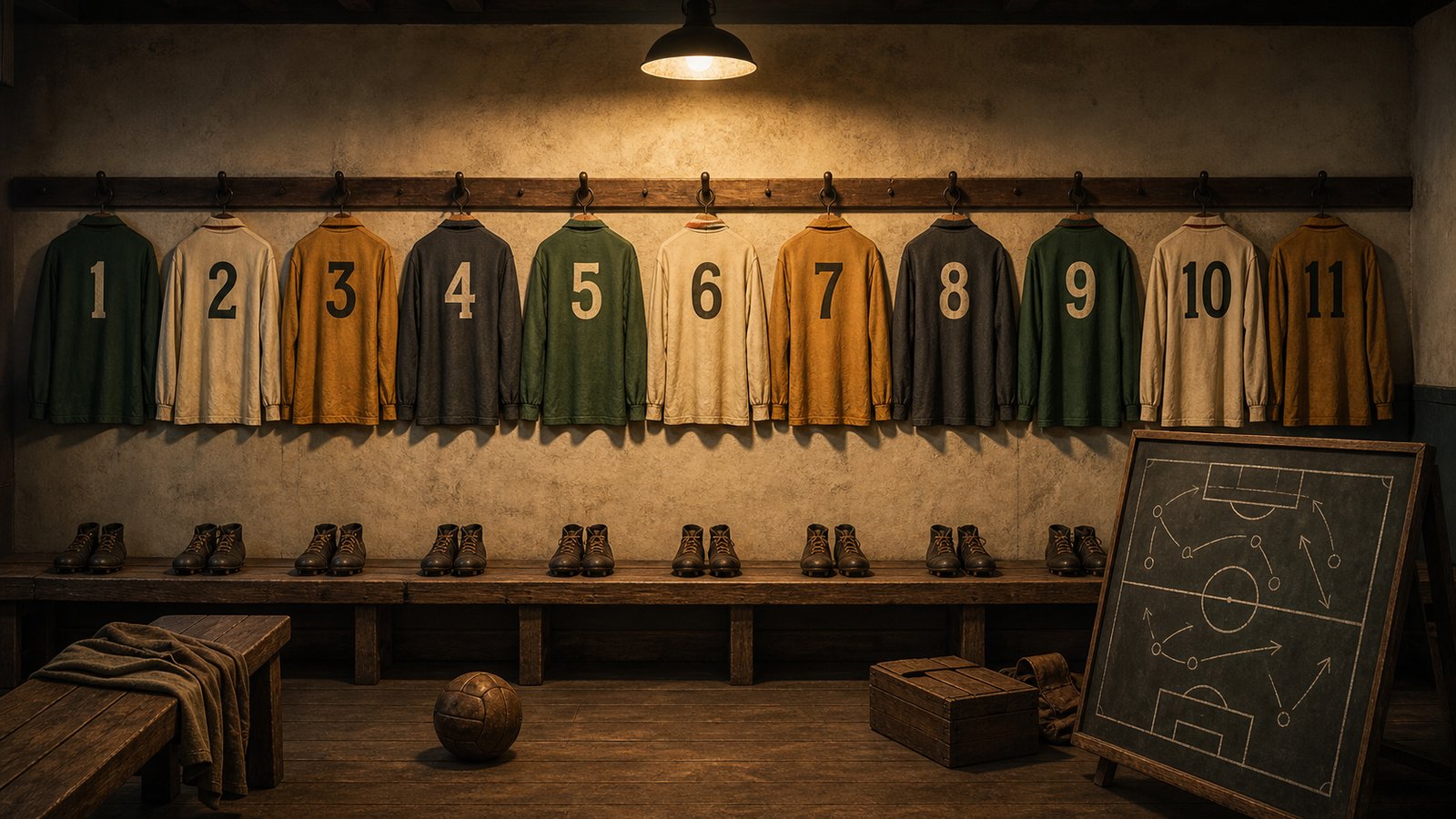
Early numbering followed the inherited map of the 2–3–5 formation. The goalkeeper stood at 1. Full-backs took 2 and 3. The half-back line occupied 4, 5 and 6. The five forwards ran from the outside right at 7 through the centre-forward at 9 to the outside left at 11. The digits were coordinates before they were identities.
That explains why football numbers survived tactical change in uneven, fascinating ways. When the centre-half moved deeper as formations evolved, number 5 travelled toward central defence. Number 9 remained attached to the central striker. The outside channels preserved 7 and 11. Later systems rearranged the bodies but kept traces of the old diagram on their backs.
The number therefore did two jobs at once. It helped the crowd distinguish one player from another, and it revealed the organiser’s intended shape. A spectator who knew the convention could glance at a shirt and infer where its wearer belonged, even if the match itself had pulled everyone out of position.
Herbert Chapman treated visibility as part of football
Arsenal credit manager Herbert Chapman as a driving figure in the adoption of shirt numbers. His interest fits a wider pattern. Chapman thought seriously about how a fast, crowded match could be understood: by players searching for teammates, by spectators following moves and by a club presenting itself as modern. Numbering was not a decoration added after the tactical work. It was part of making the work readable.
Arsenal returned to the idea on 4 December 1933 in a Highbury friendly against FC Vienna, a side containing the Austrian national team. Arsenal won 4–2. The event came in the same year that the FA Cup final staged another conspicuous numbering experiment, but with a striking twist.
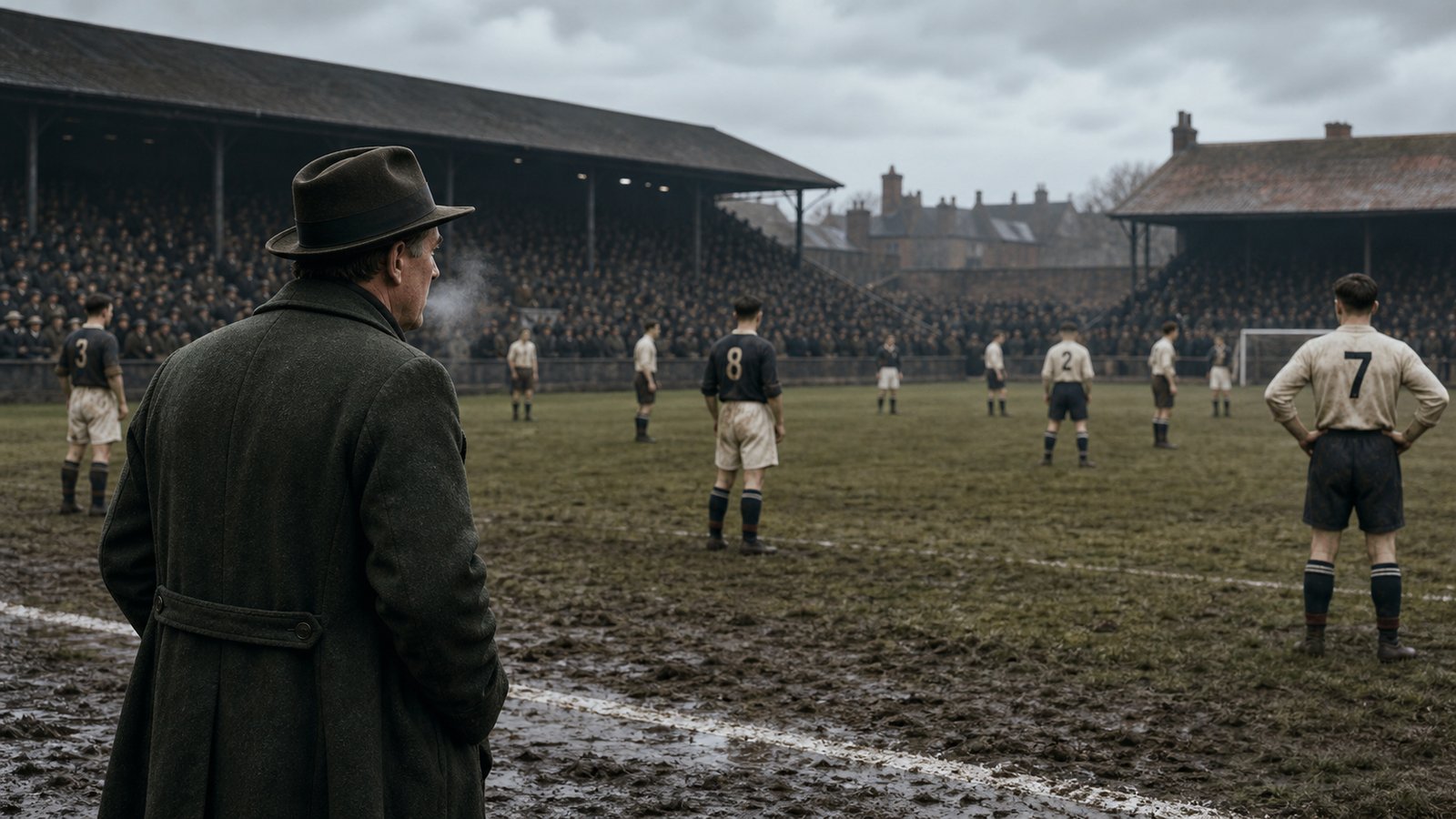
At Wembley in the 1933 final, Everton wore 1 to 11 while Manchester City wore 12 to 22. The arrangement made each participant distinct, yet it also exposed the unresolved question underneath the experiment. Were numbers meant to identify a particular person across the whole match, or to announce a positional role shared by both teams? Football had discovered the usefulness of the symbol before agreeing on its grammar.
Chapman did not live to see mandatory league numbering. He died in January 1934. The numbered shirt sits among his quieter legacies because it altered how football was watched rather than changing a result on its own. It gave the crowd a simple visual language for the organisation he cared about.
The Football League kept saying no
Approval was not automatic. Arsenal’s account records that the Football League Management Committee refused to sanction numbered shirts for years. Even after the Highbury experiment and the numbered 1933 final, the committee rejected their general use at its 1934 meeting. The hesitation left clubs with occasional trials instead of a common standard.
That resistance mattered. A one-off number can assist an afternoon’s audience; a standard creates shared meaning across grounds and seasons. Until all clubs follow the same broad logic, a spectator cannot be certain whether 5 means centre-half, a unique match identifier or merely an experimental patch sewn on for the day.
The delay also shows that football’s most familiar customs can arrive as contested administrative choices. There was no technical barrier to stitching a numeral onto fabric. The obstacle was institutional agreement: who would wear which digits, whether both teams could repeat them and whether the practice should be compulsory.
On 5 July 1939, the committee finally approved numbered shirts. It discarded the 1-to-22 split and required both teams to use 1 to 11 according to position. Arsenal’s first Highbury league match under the new arrangement came against Blackburn Rovers on 30 August 1939, a 1–0 home win. Eleven years separated the August 1928 trials from a league-wide rule.
The positional map outlived the formation that made it
Once both teams wore 1 to 11, the crowd gained a repeatable key. The goalkeeper was 1; the right and left full-backs were 2 and 3; the centre-forward was 9. Those associations became so strong that they remained useful after the original 2–3–5 structure faded.
The internal link between shirt and role also helps explain later football language. A “number nine” can mean a type of striker rather than the literal figure on the shirt. A “number ten” suggests a creative attacker operating behind the forward line. The vocabulary is historical sediment: new tactical duties described through numbers inherited from older team sheets.
That shared code made later innovations easier to notice. When a player wearing 9 dropped away from the centre-forward line, the movement felt meaningful because the number carried an expectation. When a defender wore an unconventional digit, it stood out against a pattern everyone recognised. The standard did not freeze tactics. It supplied the baseline against which tactical departures could be read.
The same principle appears in football’s later attempts to make complicated action visible. Referee Ken Aston’s traffic-light inspiration produced yellow and red cards that communicated across languages. His card system solved a different identification problem, but the logic was related: a simple sign could tell tens of thousands of people what had happened.
Sources
Arsenal FC, “Gunners wear numbered shirts”; Historical Football Kits, “The History of Football Kits”; Daily Express, 27 August 1928; Daily Mirror, “Numbered Jerseys A Success,” 27 August 1928; Wikipedia, “Squad number (association football)”; The Guardian, “How a football shirt number is being used to oppose homophobia in Brazil.”