
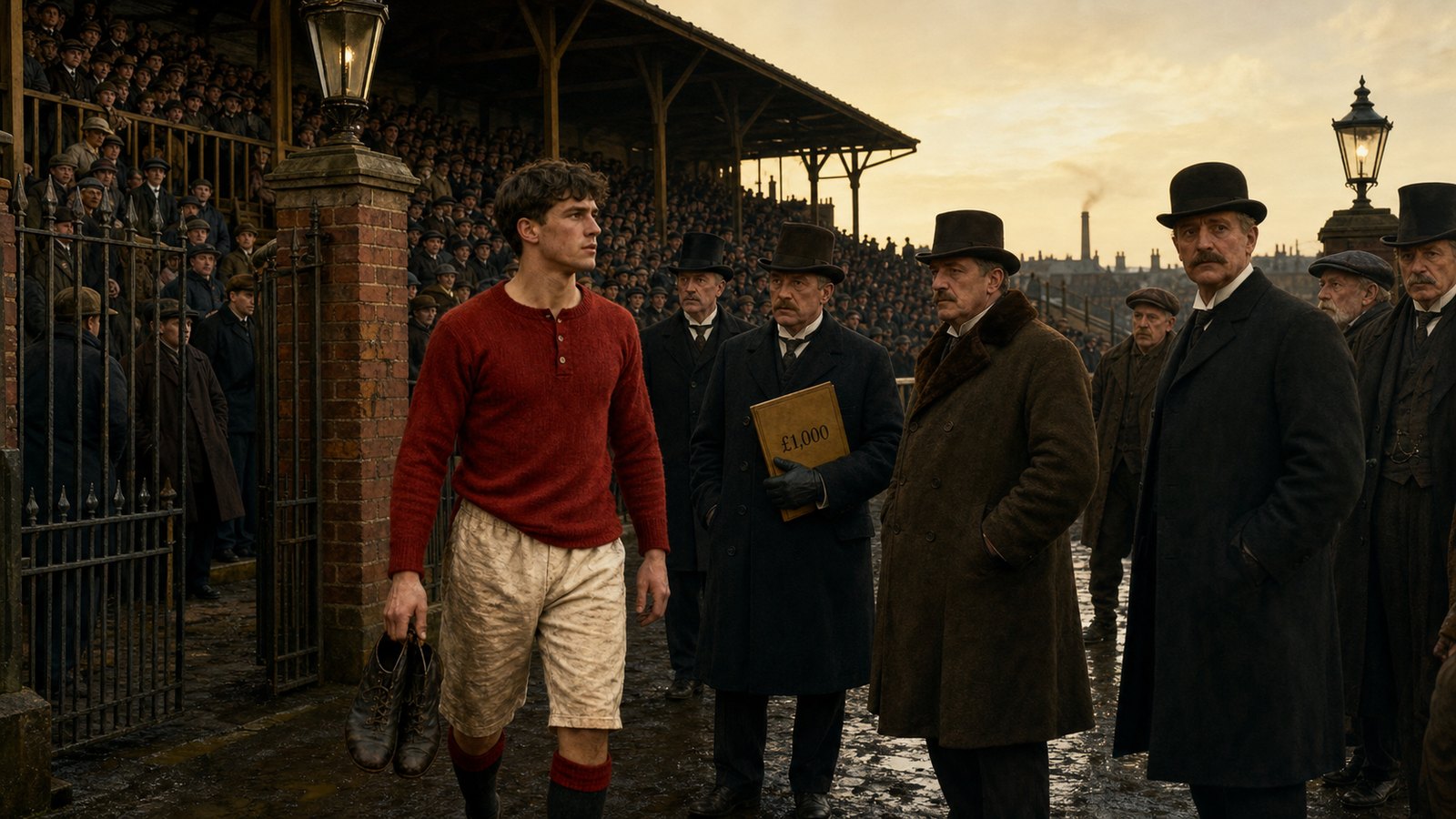
On Valentine’s Day 1905, Middlesbrough committed £1,000 to a footballer while the club was fighting to remain in the First Division. The sum mattered because no transfer had crossed four figures before. The player mattered because Alf Common already knew how quickly football could put a new price on the same pair of boots.
Common had moved from Sunderland to Sheffield United, returned to Sunderland, and then left again for Ayresome Park. Each move raised the record or pushed close to it. His path from £325 to £520 and then £1,000 made him more than the subject of an expensive rescue attempt. It exposed an English game in which professional clubs were learning to value immediate survival, proven goals and scarce talent in cash.
The famous fee can look quaint from a century of distance. In its own moment, it was provocative enough to produce language about bodies being sold and questions about where the market might end. Middlesbrough were not buying a symbol, however. They needed points, and Common’s first weeks made the price inseparable from the relegation battle that had produced it.
Valentine’s Day at Ayresome Park
Common arrived from Sunderland on 14 February. Middlesbrough were in danger near the bottom of the First Division, so the transfer was not a leisurely investment in a future team. It was an emergency purchase made while the current season could still go wrong.
The amount was striking even beside the record immediately before it. Sunderland’s Andy McCombie had moved to Newcastle United for £700 in 1904. Common’s transfer added another £300 in one jump. A contemporary public could therefore see the market accelerating, not merely inching upward.
There was also a local sharpness to the deal. Common was Sunderland-born, had first established himself with his home-town club and had only recently returned to Roker Park. Now one north-east club was paying another a sum large enough to become a national argument. The transaction joined two neighbours through a fee neither could pretend was ordinary.
William McGregor, the Football League’s founder, described football in 1905 as a big business whose leading clubs could have turnovers larger than important trading concerns. Middlesbrough’s own accounts gave that observation an edge: the club recorded a net loss of £1,035 2s 5d for 1904–05. The fee for Common was almost the size of that entire loss. This was a club placing a conspicuous amount of money behind one direct sporting need.
A Price That Doubled in Ten Months
The £1,000 did not emerge from an unknown player suddenly catching Middlesbrough’s eye. Common’s transfer history had already become a sequence of rising valuations. After breaking into Sunderland’s first team, he joined Sheffield United in 1901 for a fee reported between £325 and £350 by historical accounts.
At Bramall Lane he supplied evidence that the money had bought consequence. Sheffield United reached the 1902 FA Cup final against Southampton. Common scored in the first match, a 1–1 draw, and helped create the winning goal when Sheffield United took the replay 2–1. He was becoming expensive while producing in the matches that fixed reputations.
He also entered international football. Common made his England debut against Wales on 29 February 1904, then scored against Ireland in March. His England career would total three caps, but in 1904 those appearances strengthened the picture of a forward whose value was visible beyond club football.
Sunderland bought him back in the summer of 1904 for £520, itself a record fee. Barely a year after the first England appearance and only months after that return, Middlesbrough paid almost twice as much. The important mechanism was not inflation in the abstract. One club had a proven, recently reacquired international forward; another had an urgent league problem and little time to solve it.
The Away Goal Middlesbrough Had Waited For
Common’s first decisive answer came against one of his former clubs. On 25 February, eleven days after the move, Middlesbrough visited Sheffield United. Common scored the only goal in a 1–0 victory.
The result carried a detail that made the rescue feel immediate: it was Middlesbrough’s first away win for more than two years. A transfer discussed in ledgers and moral language had become a goal, two points under the scoring system of the day, and an obstacle removed from a side that had forgotten how to win on the road.
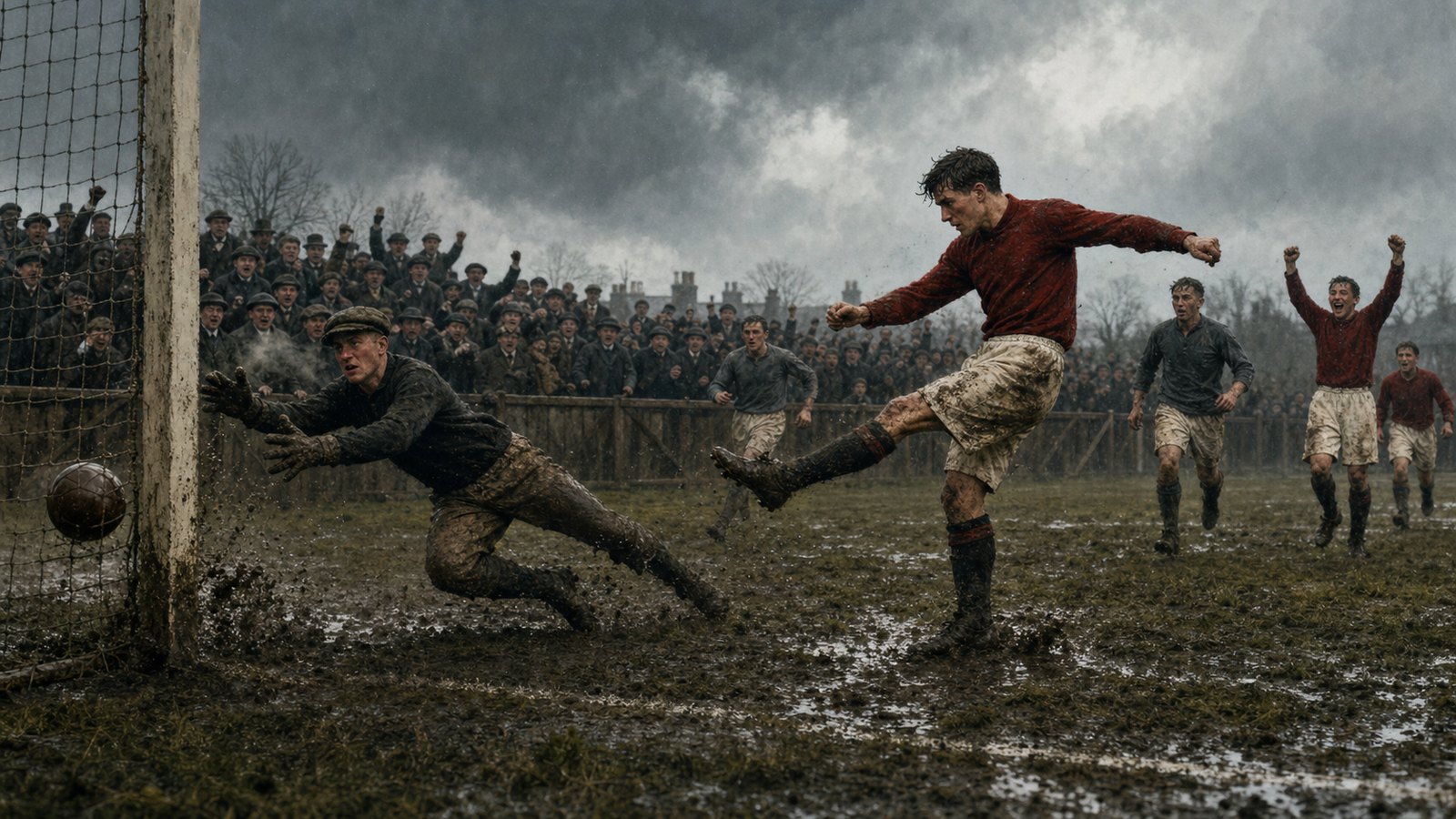
This did not mean one player single-handedly erased every weakness. It showed why Middlesbrough had accepted the price. A relegation-threatened team was paying for a forward able to alter a narrow league match immediately. Common helped the club remain in the First Division, giving the fee a practical sporting return before anyone knew what his longer stay would become.
The scene also separated this story from the modern ritual of a record signing unveiled as a brand asset. The sharpest early proof was not a presentation or forecast. It was a winter away ground, a former employer and a single goal in a match Middlesbrough could not afford to treat as theatre.
What the Four-Figure Fee Bought
Common stayed at Middlesbrough for five years. In the season after his arrival he became the club’s leading scorer with 24 goals. Historical records credit him with 58 goals in 168 league appearances for Boro, and he was made captain before later losing the role after an off-field charge.
Those numbers complicate any attempt to reduce him to the first entry on a list of record fees. Middlesbrough did not buy a novelty who disappeared once the fee had made news. They bought a substantial part of several seasons: goals, a partnership with the celebrated Steve Bloomer, and enough standing for Common to lead the side.
Yet the club did not become a major trophy force during his stay. That limit is part of the transfer’s meaning. £1,000 could help protect First Division status and secure a productive forward, but it could not manufacture a complete championship side. The transfer market was becoming powerful without becoming magical.
Common’s career kept moving after Ayresome Park. He joined Woolwich Arsenal in 1910 and Preston North End in 1912, helping Preston win the Second Division title in 1913. When he retired in 1914, his route through the professional game had stretched from local north-east football to FA Cup and international matches, relegation pressure and promotion.
The Argument Hidden Inside the Number
The reaction to the transfer revealed anxiety about what professional football was becoming. One description called the transaction “flesh and blood for sale.” Another wondered whether footballers would eventually rival thoroughbred yearlings in the market. The complaint was aimed less at Common’s ability than at the idea that a human sporting talent could be assigned a rapidly increasing exchange value.
That discomfort existed beside a system in which players had limited control over their working lives. The transfer fee went between clubs, not into Common’s pocket as a personal £1,000 reward. His record therefore measured the price institutions placed on his registration and services. It did not mean the player suddenly possessed the same financial freedom that the number suggested.
The contrast links Common’s story to later struggles over football labour, including the abolition of the maximum wage described in the fight led by Jimmy Hill and the PFA. In 1905, however, the immediate public question was more basic: if £1,000 could be justified to avoid relegation, what would the next desperate or ambitious club be prepared to pay?
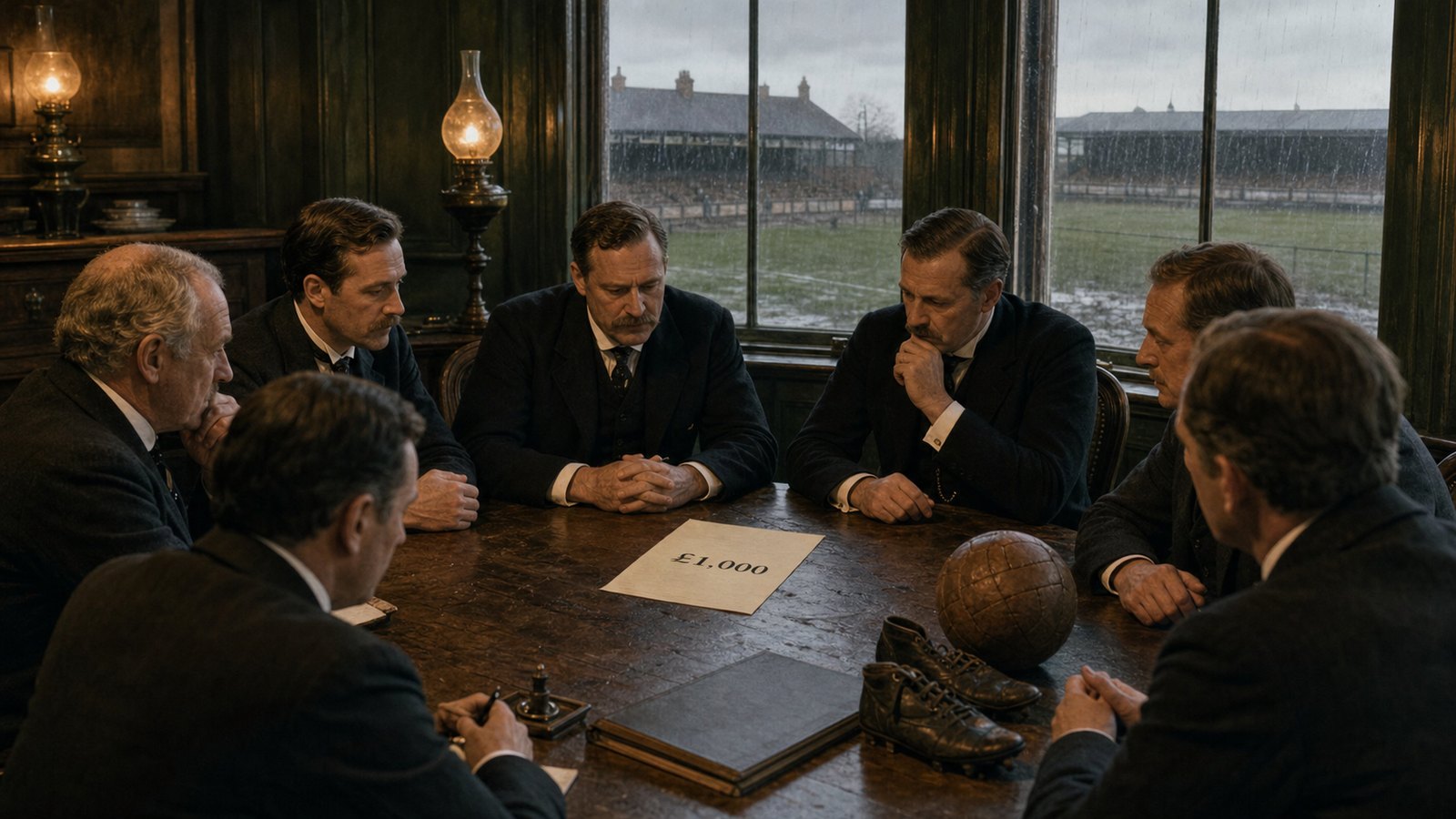
The market answered by continuing upward. Sunderland later paid world-record fees for Warney Cresswell in 1922, Bob Kelly in 1925 and Trevor Ford in 1950. Common’s number did not remain extraordinary forever. Its importance lies in the moment four figures became thinkable and then useful.
Middlesbrough’s gamble also established the enduring shape of a record transfer story. The headline belongs to the fee, but the decision begins with sporting pressure. A club identifies a specific weakness, the calendar narrows its options, a seller controls scarce talent, and urgency converts football judgment into a number that alarms everyone outside the room.
Sources
Soccer History; Spartacus Educational; Roker Report; The Guardian.