
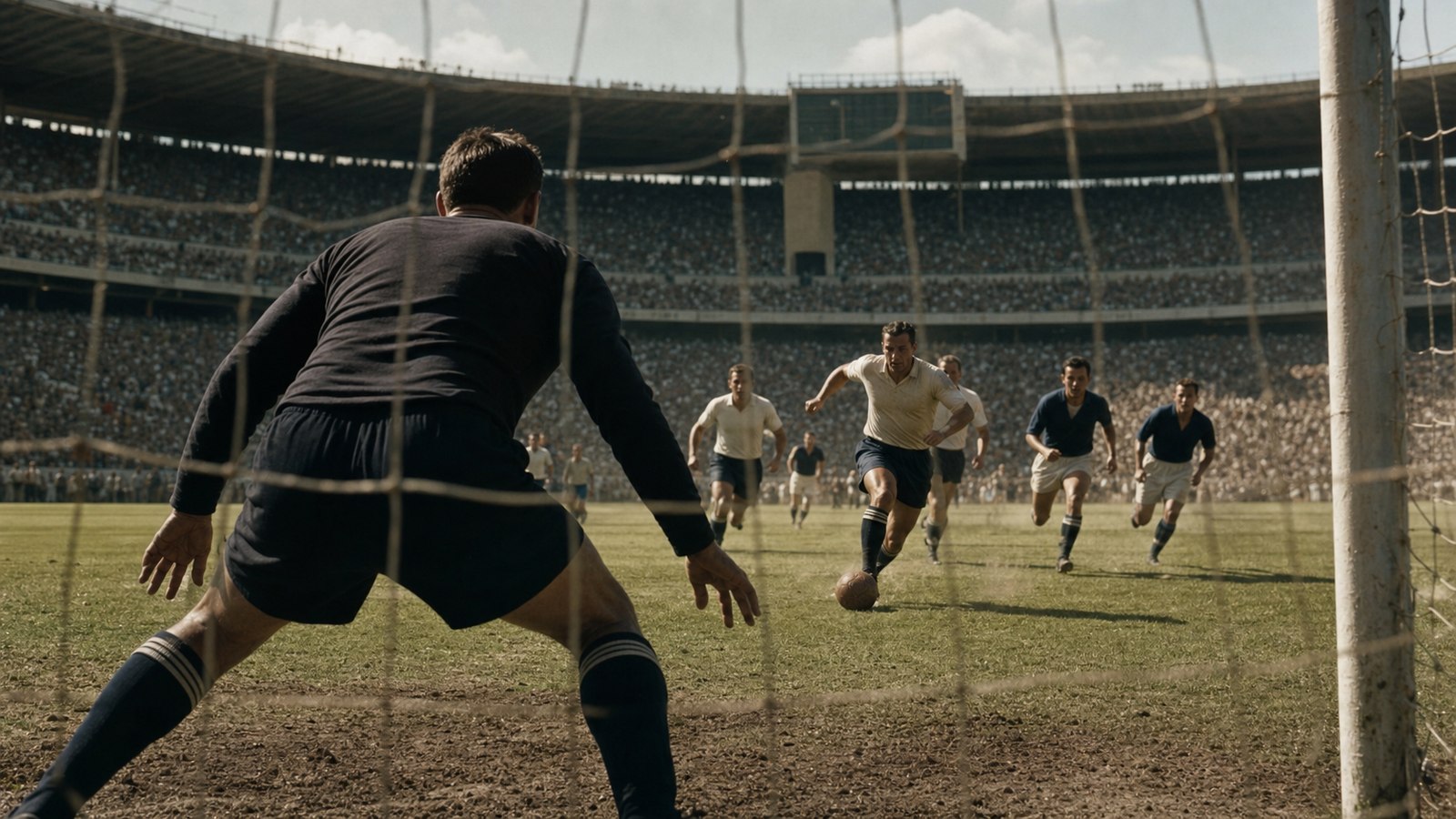
On 29 June 1950, England arrived at the Estádio Independência carrying the reputation of football royalty. The United States arrived with a high-school teacher, a hearse driver, a dishwasher and teammates drawn from the small immigrant leagues where the American game had survived. England had won its opening World Cup match. The Americans had lost theirs. The afternoon appeared to offer no mystery.
For the first 12 minutes, England produced six attempts at goal. Two struck the woodwork. Frank Borghi, the American goalkeeper who worked around his uncle’s funeral home, stopped the rest. Then a cross from Walter Bahr met Joe Gaetjens moving across the penalty area. The ball glanced off his head, changed direction and passed Bert Williams. The United States led 1–0.
The score survived every English attack that followed. Yet the strangest part of the story came after the final whistle. One of the largest shocks in World Cup history landed in a country that barely noticed it. The victory exposed not only how an improvised team could resist a favourite, but how completely a sporting miracle can disappear when there is no audience prepared to receive it.
England Arrived for a Coronation
The imbalance began before the teams were selected. England were entering the World Cup for the first time after staying away from the first three editions during the Football Association’s dispute with FIFA. Their post-war record stood at 23 wins, four defeats and three draws. Shortly before the tournament, they had beaten Italy 4–0 and Portugal 10–0. American Heritage records odds of 3–1 on England winning the competition and 500–1 on the United States doing so.
England’s squad included Stanley Matthews, Tom Finney and Stan Mortensen. Matthews did not play in Belo Horizonte; the selectors retained the side that had beaten Chile 2–0 and saved him for opponents considered more dangerous. That choice became an irresistible symbol of complacency, although England still fielded a team with vastly greater international experience than the Americans.
The United States had qualified behind Mexico after a 5–2 win over Cuba. Its preparation belonged to another sporting world. The squad trained together only once before leaving for Brazil. Ben McLaughlin could not travel because he could not get time away from work. Coach Bill Jeffrey publicly described his players as sheep ready for slaughter. The imbalance was not invented after the result; everyone involved could see it.
The American Game Survived in Small Pockets
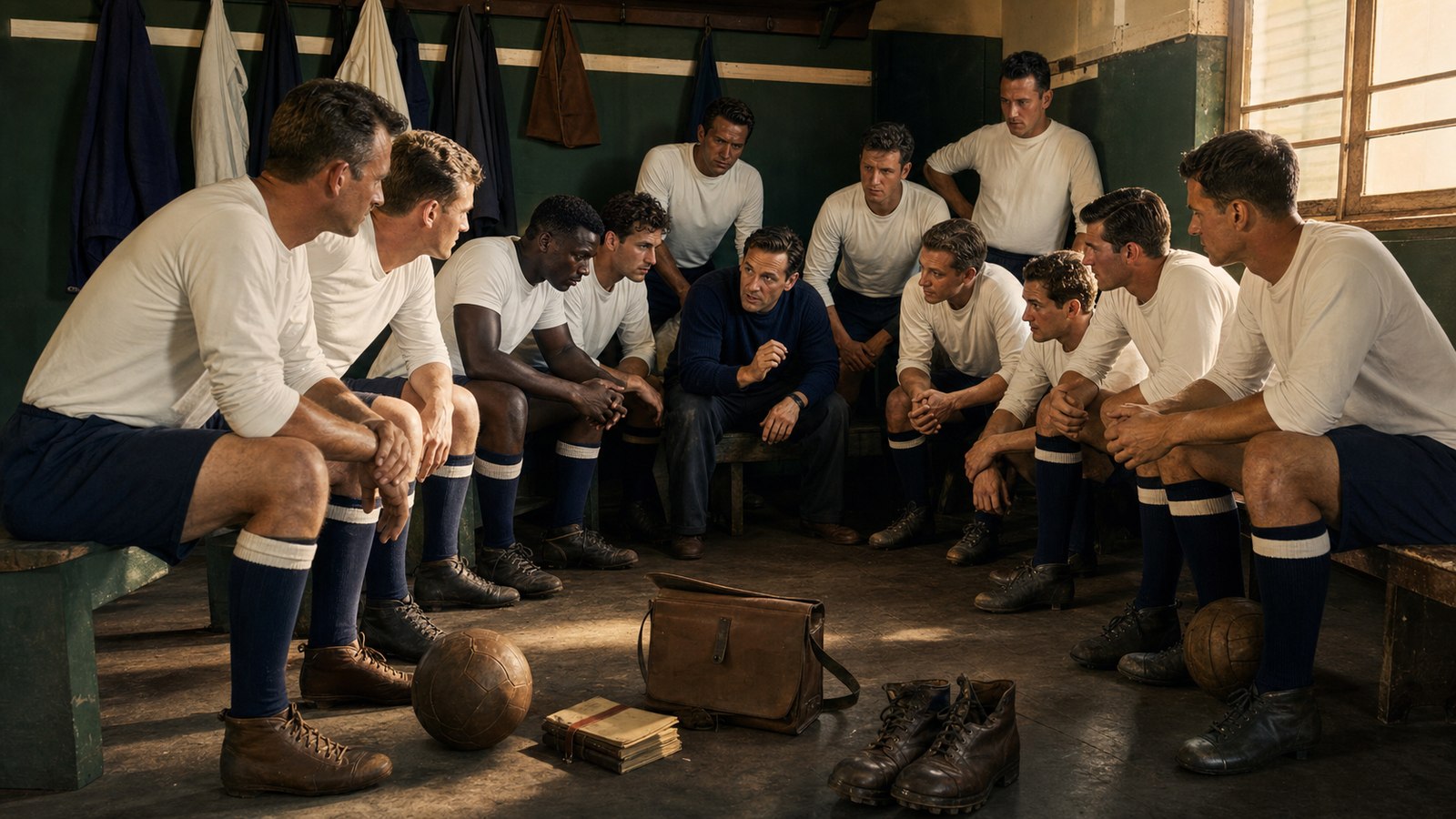
The team looked accidental only if American football history was viewed from the national headlines. The first American Soccer League had attempted professional football in the 1920s before the Depression helped destroy it. A second league emerged in 1933, but the game retreated into immigrant communities. Clubs carried the identities of places such as Kearny and the neighbourhoods of St Louis rather than the broad national market reached by baseball or American football.
Five of the starters against England were born in St Louis. The team’s work lives later became part of the legend: Bahr taught school, Gaetjens washed dishes, Borghi drove a hearse, and other players worked as a letter carrier, machinist or factory worker. Those details can make them sound like strangers collected for a single adventure. In reality, several came from dense football cultures where neighbourhood reputation mattered and matches were fiercely competitive.
They were still a hurried national side. Most had little time together, and three members of the starting eleven were not yet American citizens, though the federation’s rules allowed them to play after declaring an intention to seek citizenship. Their cohesion could not come from a long training camp. It had to come from simple responsibilities, mutual effort and the habits built in local football.
That distinction matters. The United States did not beat England because ordinary workers were magically transformed for an afternoon. It won because players who were ordinary in employment were not ordinary in football experience. The world outside their communities simply had no reason to know their names.
Six Chances in Twelve Minutes
England immediately supplied the match everyone expected. Within 90 seconds, Mortensen crossed for Roy Bentley and Borghi pushed the shot away. By the 12th minute, the favourites had created six clear attempts. Two hit a post, another passed just over the bar, and Borghi dealt with the others. The pattern was territorial pressure against a goalkeeper and defence trying to make every intervention final.
No substitutions were permitted. The Americans could not plan to survive by replacing exhausted defenders or adding fresh runners late in the match. American Heritage’s account notes that some players believed they were properly conditioned for only 20 or 25 minutes at a time. Five days earlier, the United States had led Spain before conceding three goals. England therefore had evidence that pressure and fatigue would eventually break this opponent.
But the early misses changed the emotional balance. Every Borghi save encouraged the Brazilian crowd, which largely backed the underdogs. Every English chance that passed without a goal made the next attack carry more weight. The United States did not need equal possession. It needed the contest to remain uncertain long enough for one clean transition to matter.
The Header That Changed the Afternoon
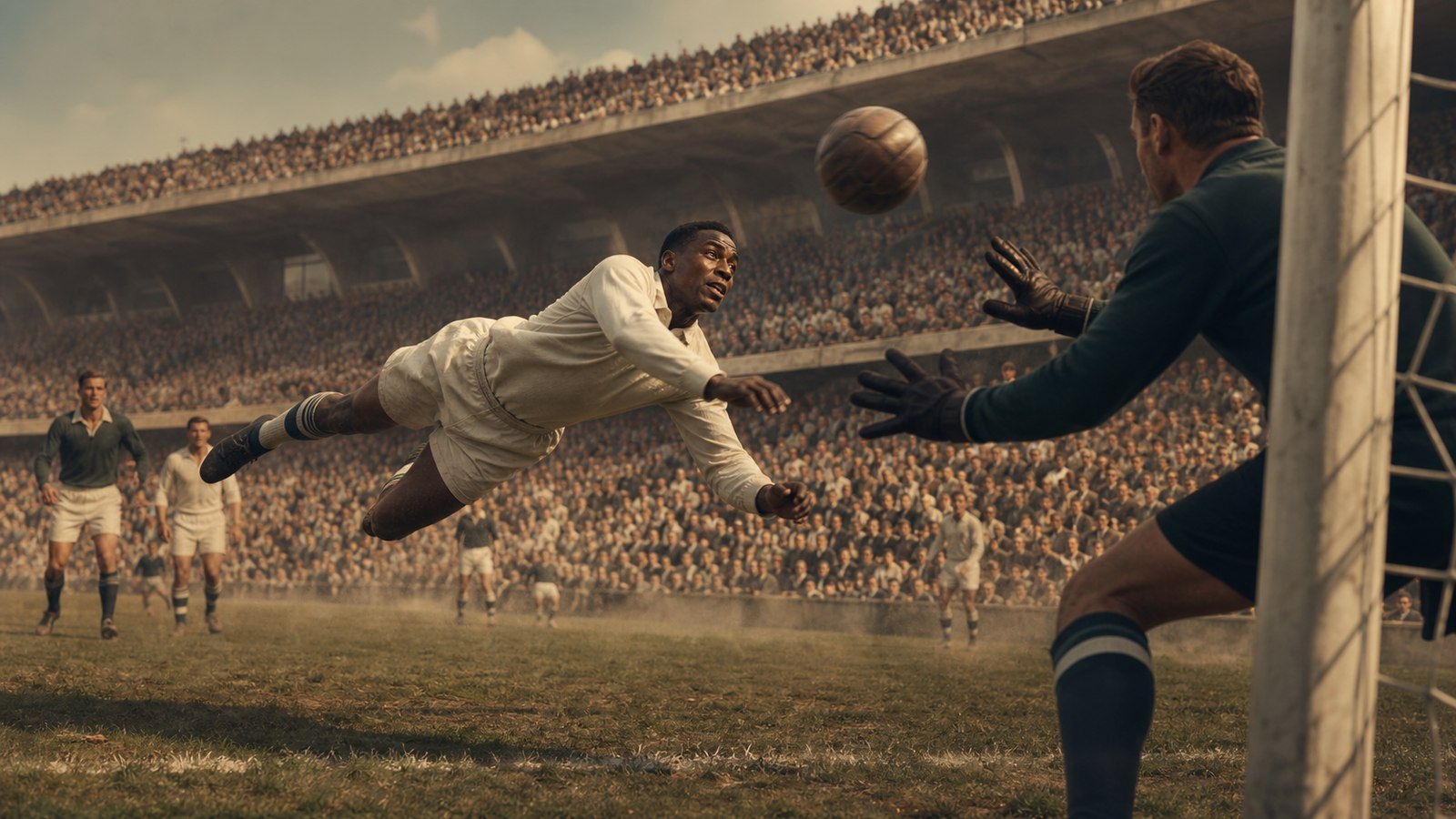
The decisive move came in the 37th minute. Bahr advanced and struck a long ball toward the penalty area. Williams shifted to intercept its original path. Gaetjens threw himself forward near the penalty spot and made a glancing contact, sending the ball behind the goalkeeper’s movement. A chance that did not look like a conventional shot became the only goal.
Gaetjens embodied the layered identity of the American side. Born in Haiti, he played in New York and supported himself by washing dishes while studying. His finish was neither a thunderous strike nor a rehearsed set piece. It was an improvised redirection, the kind of action that punished a defence already committed to where it believed the ball was going.
England’s urgency increased after half-time. Borghi continued to save. With eight minutes remaining, Charlie Colombo fouled Mortensen at the edge of the area; England wanted a penalty, but the referee placed the offence outside. Alf Ramsey’s free kick was headed toward goal by Jimmy Mullen, and Borghi kept it out. England protested that the ball had crossed the line. The referee disagreed.
The Americans nearly scored again in the 85th minute when Frank Wallace drew Williams away from goal and Ramsey cleared the shot near the line. That chance is important because it prevents the match from becoming a story of 11 men standing inside their own penalty area. The United States defended desperately, but it still looked for the moment when England’s commitment forward left space behind.
A Victory Without a National Audience
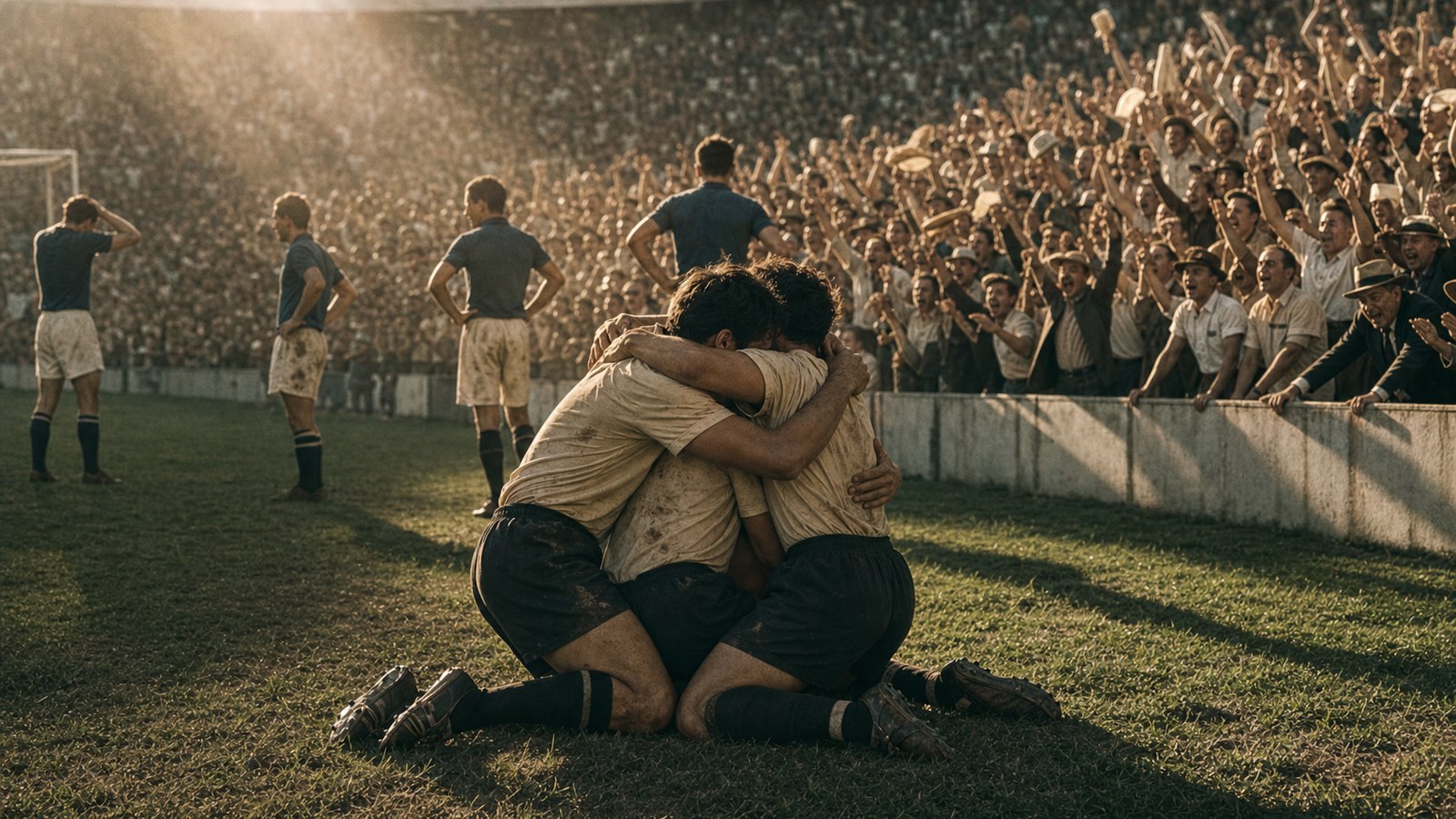
When the whistle sounded, spectators entered the pitch and lifted American players. In the United States, the moment had almost no platform. CNN’s historical account identifies Dent McSkimming of the St Louis Post-Dispatch as the lone American reporter at the tournament. He had taken time away from work and paid his own way to Brazil. Many newspapers did not run the result prominently, and the players returned home to their families rather than a public celebration.
The silence was not merely a failure of news judgment. In 1950, the World Cup occupied almost no space in the American sporting imagination. Interest remained concentrated in immigrant communities following their countries of origin. There was no national professional league capable of converting the result into ticket sales, no television spectacle to replay Gaetjens’s header and no established language for presenting the team as a shared American story.
The victory therefore produced little immediate growth. The United States lost 5–2 to Chile in its final group game and did not return to the World Cup until 1990. The players resumed their ordinary lives. Around 30 years later, journalists began finding them whenever another World Cup approached. In 1976, the entire winning team was inducted into the National Soccer Hall of Fame.
The Miracle Was Also a Missed Beginning
England’s defeat became a wound in its football memory. For the United States, the same match became a story recovered much later. That contrast gives the upset its unusual shape. Most famous shocks create an immediate before and after: a manager’s reign changes, a club gains belief, or a nation discovers a team. Belo Horizonte created the result without creating the audience.
The tactical lesson is modest but durable. Borghi protected the goal under sustained pressure. The defenders reduced the value of England’s volume by contesting the final action. Bahr and Gaetjens converted one moment when the favourite’s expected path of play was disrupted. As England chased, the Americans remained willing to counter. It was not dominance disguised as luck. It was a narrow route to victory followed with enough discipline for 90 minutes.
The cultural lesson is larger. Sporting significance does not travel automatically with the score. It needs newspapers, broadcasters, leagues, supporters and repeated images. England possessed that network and experienced the result as humiliation. The United States lacked it and experienced the result as a private memory shared by a few communities and families.
Decades later, the match finally acquired the name and scale it had been denied in 1950. By then, American football had a new audience capable of understanding what Gaetjens, Bahr and Borghi had done. The greatest surprise was no longer that part-time players had beaten England. It was that they had done so on the World Cup stage and returned to a country where almost nobody was waiting.
Sources
FIFA, “Glorious Gaetjens upsets old order”
CNN, “The greatest sporting upset of all time”
American Heritage, “The Greatest Upset in World Cup History”
Wikipedia, “United States v England (1950 FIFA World Cup)”