
The easiest way to ruin Denmark’s 1992 story is to call it a holiday team that wandered into history. It is a wonderful myth because it is so visual: players supposedly pulled from beaches, an invitation arriving late, Europe laughing until the trophy was gone. But the football underneath was not a vacation postcard. It was a compact five-match survival machine, assembled in a hurry, hardened by a hostile group, and carried by moments that were too specific to be dismissed as luck.
Denmark were not supposed to be in Sweden at all. The final tournament began on 10 June 1992 with eight teams, and Denmark arrived only after Yugoslavia were excluded. That made the Danes the tournament’s emergency substitute, but it did not make them empty space. Richard Møller Nielsen still had to turn a late opening into a plan that could live through England, Sweden, France, the Netherlands and Germany. That is not a fairy tale schedule. That is a punishment route.
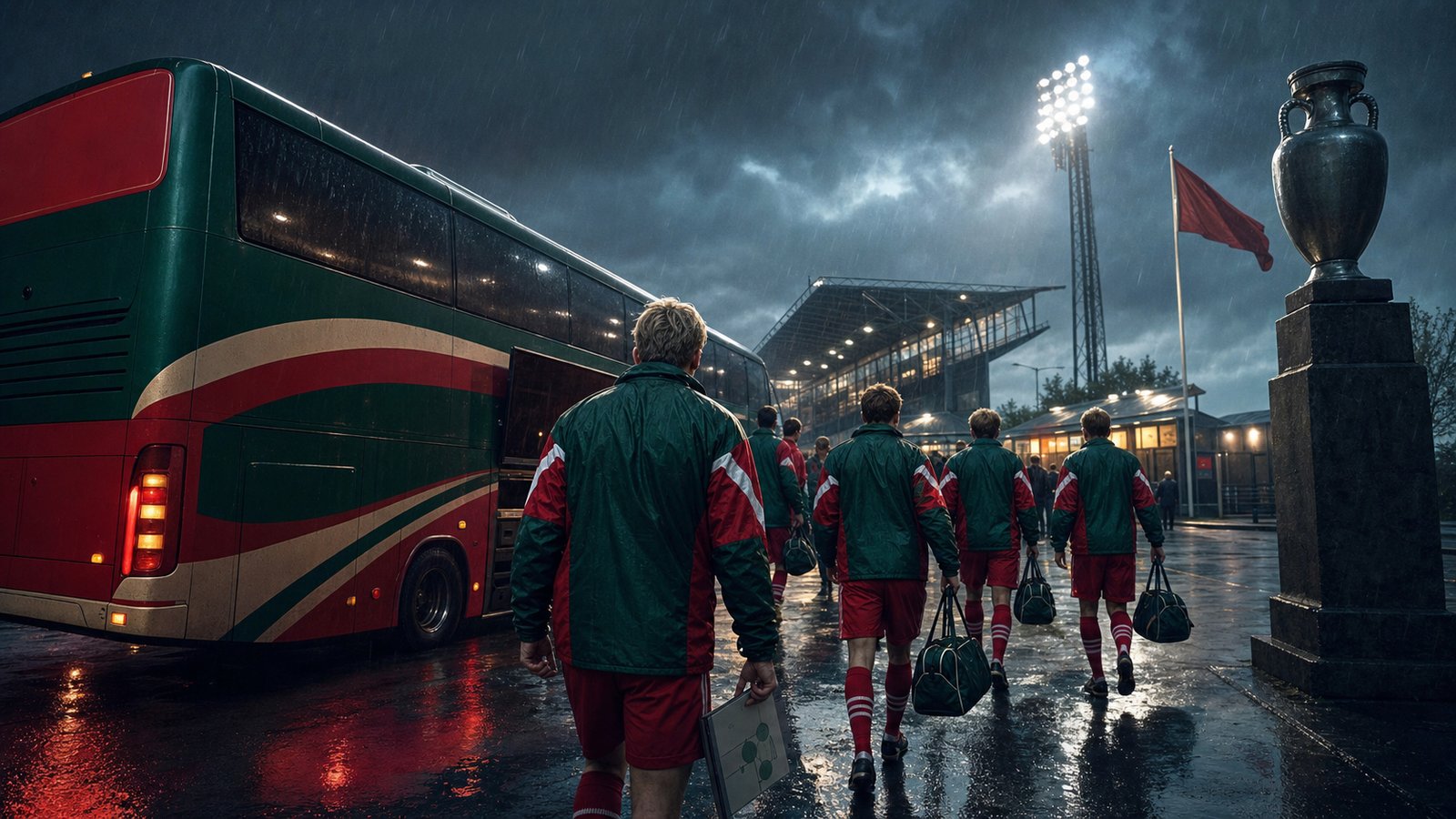
The invitation did not remove the pressure
The late-call detail matters because it changed the psychology of the tournament. Denmark could be treated as outsiders, but outsiders still have to play every minute. The format offered no soft landing: two groups of four, only the top two advancing. In Group A, Denmark faced England first, then the hosts Sweden, then France. There was no long league season to grow into form. There was barely time for a side to decide what it was.
The opening match against England ended 0-0. On paper, a draw sounds like a quiet beginning. In practice, it gave Denmark something more useful than romance: evidence that a narrow game state could be managed. A late entrant could survive without being stretched into a spectacle. The team did not need to dominate the ball or write a new attacking manifesto. It needed to keep distances, protect the goalkeeper, and make the match feel smaller than the opponent wanted.
Then came the 1-0 loss to Sweden. That result should have cracked the story. A host-nation defeat in the second match left Denmark on the edge before the final group game. It also stripped away the most comfortable version of the myth. If this was destiny, destiny still required a win over France. The tournament had become simple and brutal: beat a major side, or go home as an anecdote.
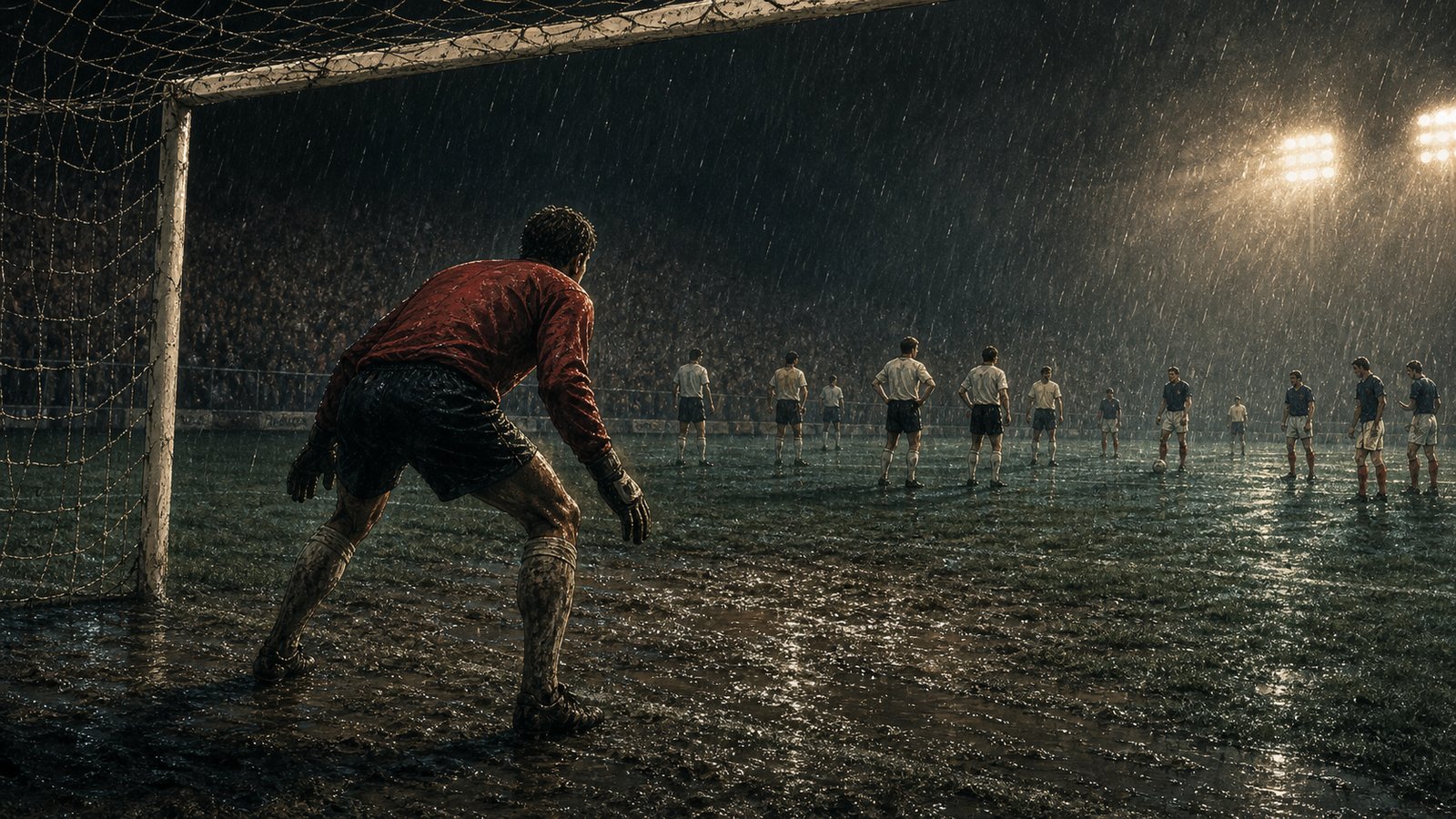
France turned the joke into a threat
The France match is where the Danish story changes shape. Henrik Larsen scored, France answered, and then Lars Elstrup made it 2-1. The names are important because they move the story away from mist. Denmark did not advance because the bracket pitied them. They advanced because, in the game that mattered, two Danish goals changed the group table. Sweden finished above them, Denmark finished second, and England and France were out.
That win also explains why the later matches did not come from nowhere. Denmark had already played the tournament as a sequence of small emergencies: draw without panic, lose without collapse, win with the exit door open behind them. By the semi-final, the team had rehearsed pressure in three different forms. It had learned that Sweden’s wet pitches, short turnarounds and narrow margins could be made to suit a side that accepted discomfort.
This is the tactical truth hidden inside the beach-story version. Denmark’s advantage was not that they had no pressure. It was that their pressure had a strange shape. They were expected to leave, so every extra day made them harder to read. Opponents had bigger reputations, but Denmark had a tournament rhythm: defend the centre, trust Peter Schmeichel’s presence, wait for the game to offer a hinge, and make the hinge violent.
The Netherlands semi-final became a nerve test
The semi-final against the Netherlands was the hinge everyone remembers. The match finished 2-2 after extra time, which alone tells you Denmark were no longer merely hanging on. They had forced the defending European champions into the most ruthless format in football: five kicks, then silence. In a shootout, tactical control becomes emotional control. Every player has too much time to think, and every goalkeeper has to turn guesswork into theatre.
Schmeichel’s save from Marco van Basten is the single image that gives the run its hard edge. Van Basten was not a random taker. He was one of the defining forwards of the era, the kind of name that usually makes an underdog story end politely. Instead, Denmark’s goalkeeper went the right way, the Dutch missed their decisive margin, and Denmark won the shootout 5-4. The late entrant had now beaten not just a team, but an expectation about who was allowed to survive.
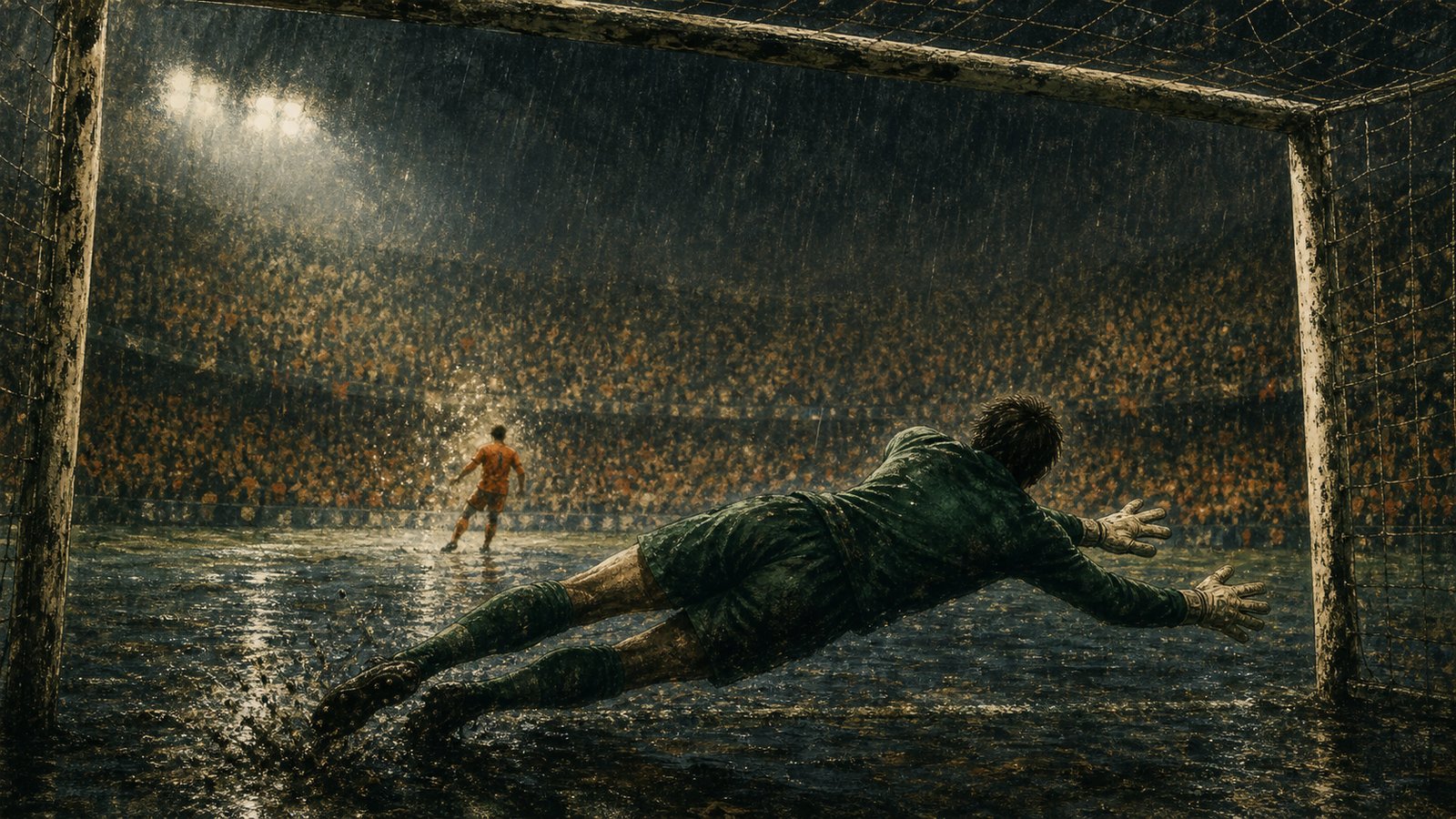
Penalty shootouts are often described as lotteries because that makes them easier to accept. Denmark’s semi-final was not pure randomness. It was the extreme version of the same tournament pattern: compressed space, compressed time, compressed nerve. The side that had lived for days inside narrow scorelines was now asked to live inside one kick at a time. That was not separate from the system. It was the system reduced to its smallest unit.
The final punished Germany’s certainty
The final against Germany at Ullevi in Gothenburg should have restored order. Germany had the pedigree, the authority and the expectation. Denmark had a story that, by normal football logic, had already used up its miracle. Then John Jensen scored in the 18th minute. The timing mattered. It forced Germany to chase a match they were supposed to control, and it gave Denmark a familiar job: protect a narrow advantage until the opponent’s certainty began to leak.
Germany pushed, but Denmark’s advantage was now psychological as much as tactical. The underdog had stopped acting like a guest. Every minute with the lead made the late invitation feel less like a loophole and more like a trap. The longer Germany failed to make the expected correction, the more the match belonged to Denmark’s preferred emotional weather: tense, stubborn, and awkward for anyone who needed the game to open.
Kim Vilfort’s 78th-minute goal made the final score 2-0 and changed the tournament from curiosity into fact. That second goal is why the story still lands. A 1-0 win might have been filed as a smash-and-grab. A 2-0 final against Germany has a different weight. It says Denmark did not merely resist. They completed the run with enough clarity to leave a scoreline that still looks impossible and immovable.
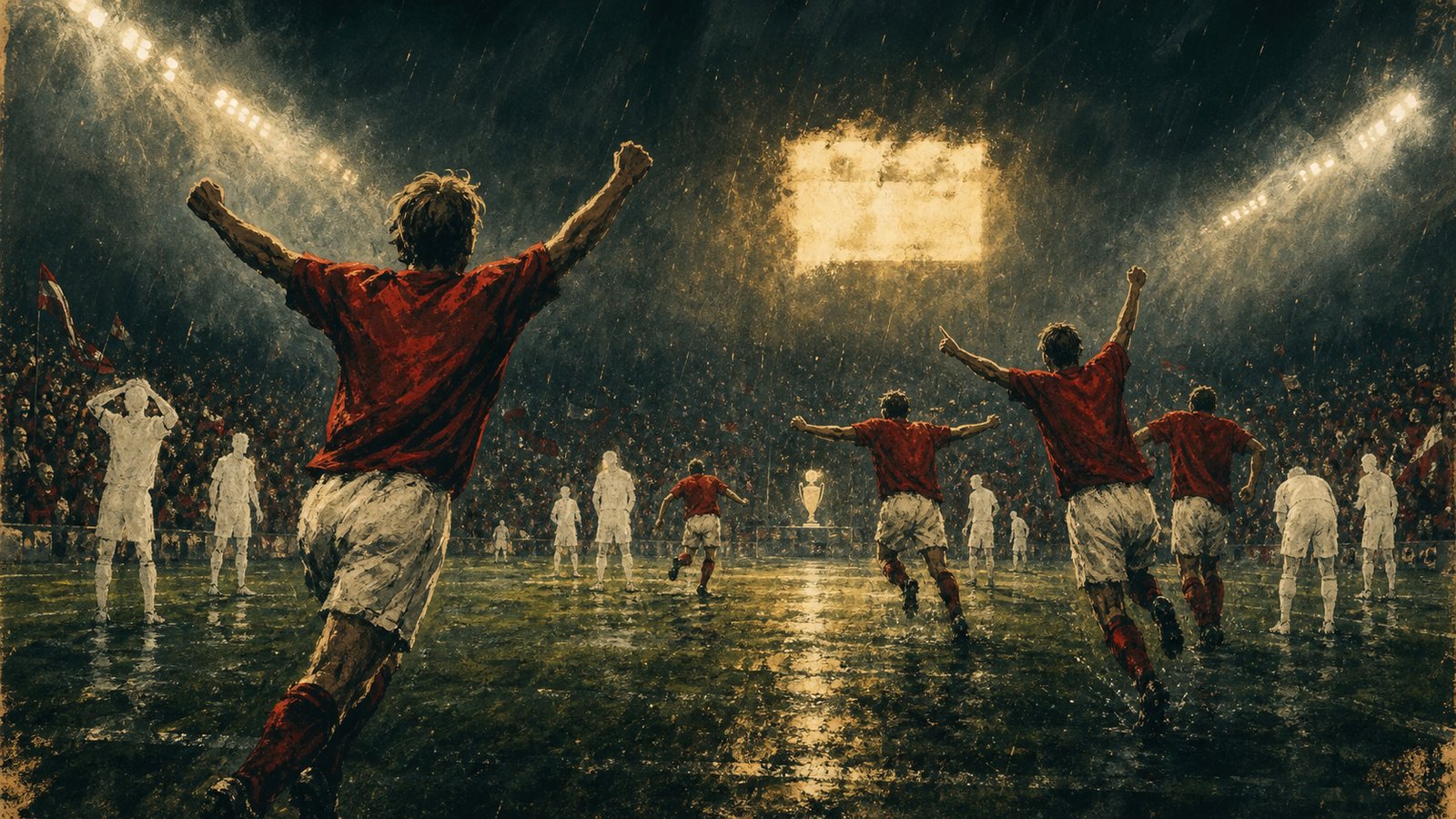
The myth survives because the mechanism was real
The 1992 title endures because it gives football one of its cleanest underdog images: a side called in late, walking through a tournament it had not been expected to enter. But the better version is less soft. Denmark played five matches: England 0-0, Sweden 0-1, France 2-1, Netherlands 2-2 with a 5-4 shootout, Germany 2-0. That sequence contains no easy chapter. Every step required a different form of control.
There was also absence in the story. Michael Laudrup was not in the squad, while Brian Laudrup returned. That detail matters because it prevents a lazy reading of Denmark as secretly stacked with every possible star. The team that won had quality, but it also had limits. Møller Nielsen’s achievement was making those limits useful. A compact side with a dominant goalkeeper, disciplined distances and a willingness to live in ugly minutes can become more dangerous than a prettier team still searching for its tournament identity.
That is why the beach myth never quite explains the trophy. The late call is the hook, not the answer. The answer is that Denmark turned emergency conditions into a repeatable tournament posture. They reduced matches until favourites became anxious. They accepted the rain, the margins and the waiting. Then, when the decisive moments came, Larsen, Elstrup, Schmeichel, Jensen and Vilfort supplied names and minutes instead of folklore.
Euro 1992 was not a holiday that accidentally became a coronation. It was a short, severe football machine built after the phone rang. The machine only had to work for seventeen days. It worked long enough to beat France, the Netherlands and Germany, and long enough to make one of football’s strangest invitations feel, in hindsight, like a warning.
Sources
- UEFA Euro 1992 tournament record
- UEFA Euro 1992 final record
- The Guardian retrospective on Euro 1992