
The golden goal was supposed to make extra time feel fearless. The promise sounded simple: remove the slow, exhausted trudge toward penalties, reward the side brave enough to attack, and give tournament football a finish that landed like a knockout punch. For a brief stretch in the 1990s and early 2000s, that idea seemed modern, television-friendly, and almost inevitable.
Then players met it in real matches. Coaches met it in real knockout ties. Supporters met it with their hands over their faces. The rule did not create the attacking festival its designers imagined. More often, it made extra time feel like a room where one mistake could erase a month of work. The clock still ran, but psychologically the game had changed. Football had invented sudden death, then discovered that footballers knew exactly what death meant.
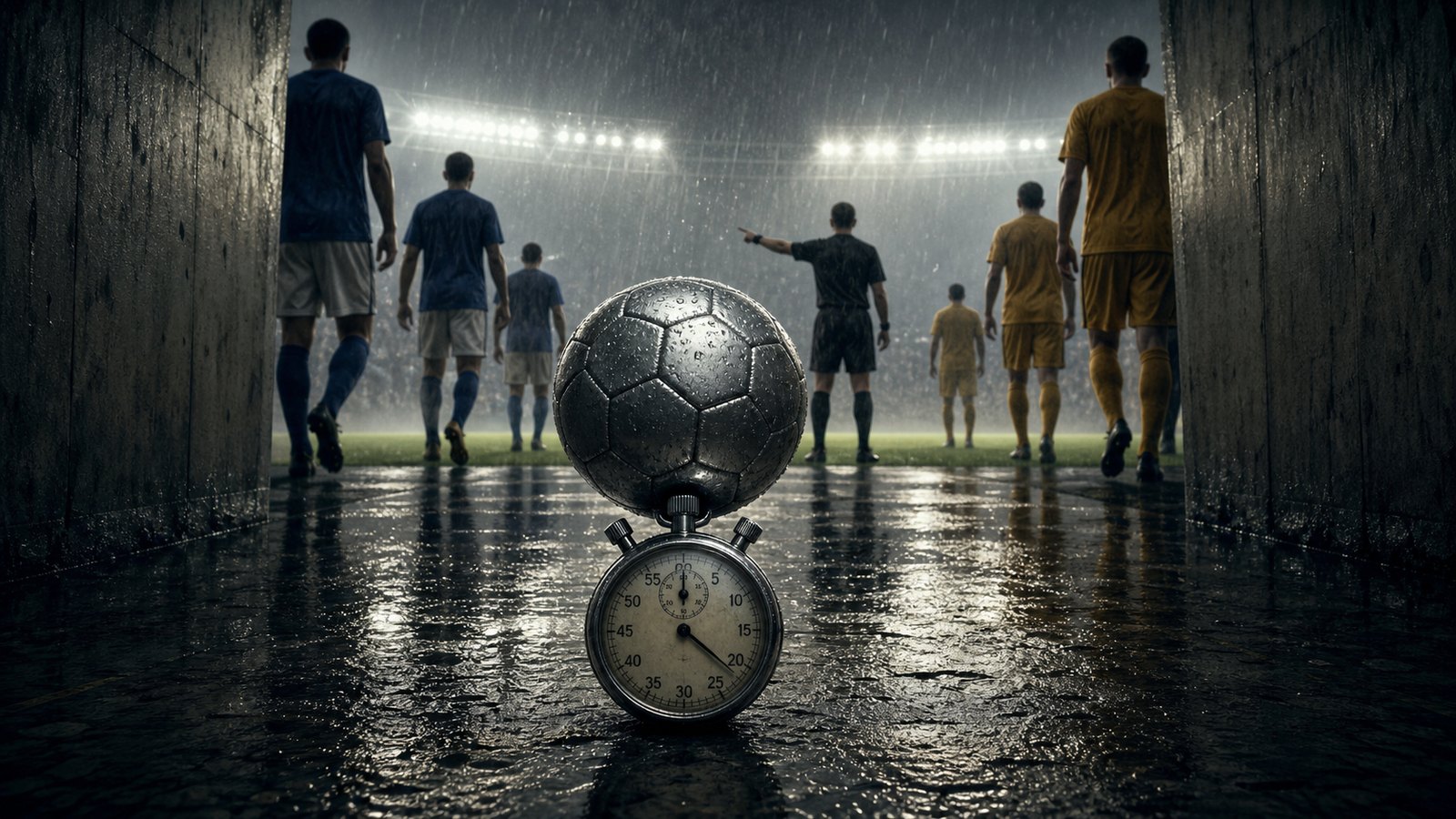
The promise was to kill the penalty lottery
By the early 1990s, penalty shootouts had become both irresistible drama and an administrative embarrassment. They produced television gold, but they also reduced World Cup and European Championship exits to a short technical ordeal that many officials saw as too detached from open play. FIFA introduced the golden-goal idea for major competitions in the decade when football was being repackaged for global broadcast audiences: more color, cleaner branding, bigger finals, and less tolerance for anticlimax.
The rule’s theory was elegant. Extra time would no longer be a half-hour waiting room before penalties. The first team to score would win immediately. The language itself was seductive: golden, decisive, almost heroic. A striker could end the match with one run. A midfielder could make one pass that survived forever. A defender could become a tournament villain through one loose touch. It gave extra time a clean story shape that television could understand.
But the rule also carried a hidden instruction. If one goal ends everything, the cost of conceding rises faster than the reward for scoring. A normal extra-time goal can be answered. A golden goal cannot. In theory, that should make attack more valuable. In practice, it made risk feel radioactive. The team that pushed too many players forward was not merely vulnerable; it was vulnerable to immediate extinction.
Euro 96 gave the rule its poster moment
The golden goal received the kind of debut no rule-maker could script better. In the Euro 96 final at Wembley, Germany and the Czech Republic reached extra time level. Oliver Bierhoff, already a substitute who had changed the match, turned and struck the shot that beat Petr Kouba. The ball squirmed in. The final ended instantly. Germany were champions. The stadium had barely processed the deflection before the tournament was over.
As a piece of television, it was perfect. Wembley, a European final, a substitute hero, a sudden ending, a new rule validated by one of the sport’s most visible stages. For administrators, Bierhoff’s goal looked like proof that the idea worked. The golden goal had not needed a decade of slow acceptance; it had delivered a clean final-scene image almost immediately.
The problem was that a poster moment can disguise a structural problem. Bierhoff’s goal showed that sudden death could be spectacular when it happened. It did not show whether teams would spend the previous twenty minutes chasing it. The highlight made the rule look brave. The incentives underneath were more complicated.
France 1998 made sudden death feel official
Two years later, the World Cup gave the rule another famous entry. France’s last-16 match against Paraguay was a narrow, tense contest, the kind of match where the favorite feels the pressure more than the outsider. In extra time, Laurent Blanc scored, and the tournament had its first World Cup golden goal. France survived, then kept moving toward the title they would win in Paris.
That goal mattered because it connected the rule to the biggest tournament in the world. It also revealed a different side of sudden death. France did not spend the match playing like a team liberated by the rule. Paraguay’s organization and France’s anxiety made the tie tight, slow, and heavy. When Blanc scored, the release was enormous because the preceding football had carried so much fear.
In that sense, the golden goal was already producing a contradiction. It manufactured a huge emotional explosion at the finish, but it often did so by making the path to that finish more cautious. The rule could intensify the end of extra time while shrinking the appetite for risk before it. It was drama created less by attacking freedom than by threat.
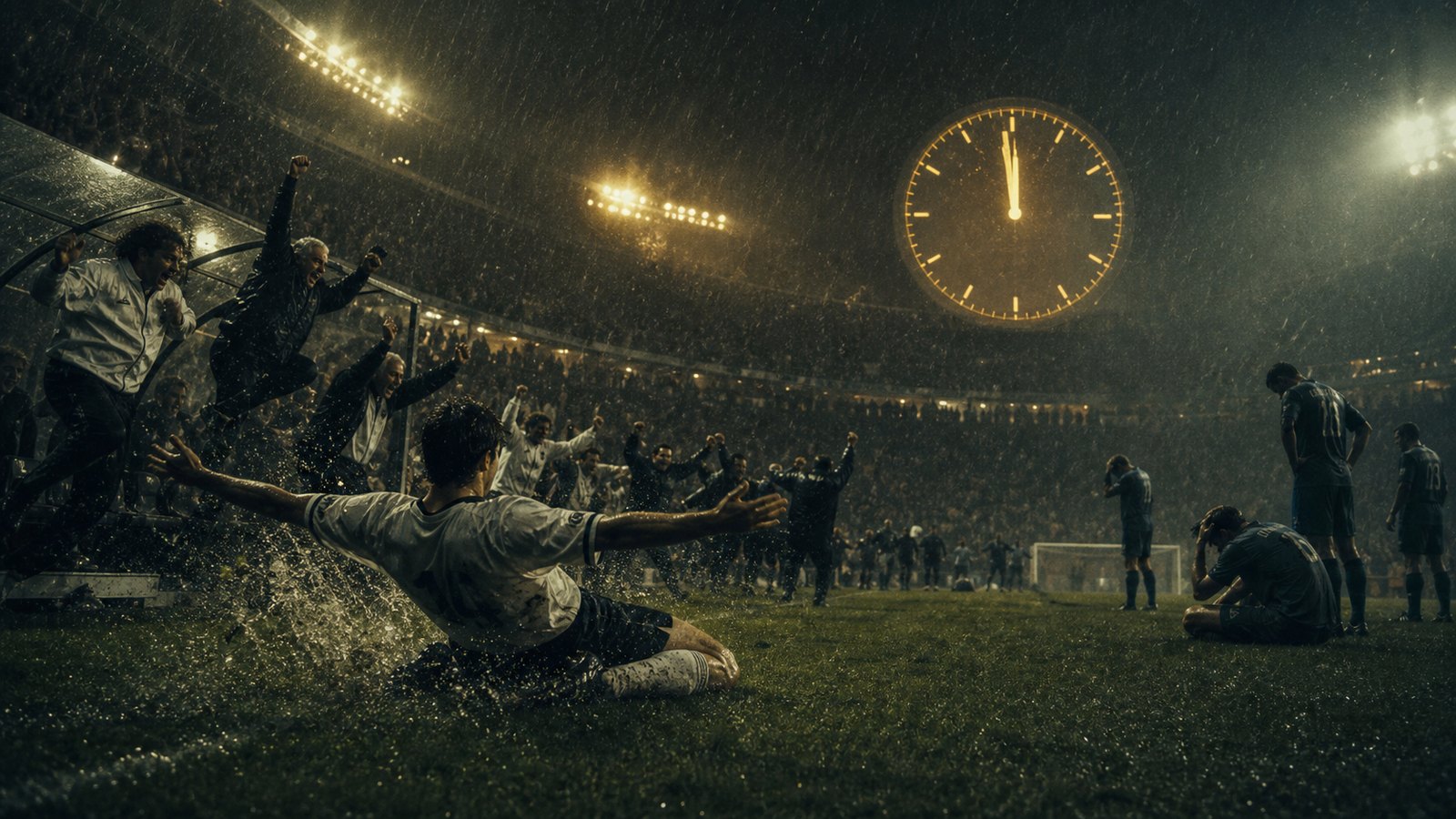
Coaches heard the rule differently from administrators
Administrators imagined players hearing, “Score first and become immortal.” Coaches heard, “Concede once and you cannot recover.” That difference mattered. Tournament coaches are rarely rewarded for philosophical purity. They are rewarded for surviving the next ten minutes, then the next five, then the next set piece. When a rule makes one defensive lapse final, the rational response is not always more adventure. It can be smaller spaces, safer passing lanes, fewer full-back overlaps, and substitutions designed to protect the match until penalties.
Golden-goal extra time therefore changed the atmosphere around ordinary actions. A goalkeeper’s punch, a midfielder’s square pass, a defender’s decision to step up, a substitute’s first touch: each carried a heavier silence. Supporters could feel it. The longer extra time went without a goal, the more the match seemed to narrow. Both teams knew the same truth. A brave run might win it. A brave run might also leave the channel where the losing goal arrived.
This is why the rule’s failure was not simply aesthetic. It was tactical. It misunderstood how elite teams price risk under knockout pressure. Football is not a laboratory where incentives produce symmetrical behavior. When the punishment is irreversible, the safer side of the equation often wins.
The silver goal was an admission in disguise
UEFA and FIFA eventually experimented with the silver goal, a softer version in which a team leading at the end of an extra-time half would win rather than ending the match at the instant of scoring. The adjustment was revealing. It admitted that instant termination had become too severe, while still trying to avoid the old march to penalties.
The silver goal never settled the argument because it was trying to preserve a compromise few people loved. It lacked the brutal clarity of the golden goal and the familiar fairness of ordinary extra time. Instead of one rule everyone understood emotionally, football briefly carried a procedural half-measure. The sport had tried to engineer a better ending and found itself explaining fine print.
By 2004, the experiment was effectively over. The game returned to two full halves of extra time followed by penalties if required. Penalties remained flawed, cruel, and irresistible. But they were also understood. Everyone knew the bargain. The golden goal had tried to replace that bargain with something sharper. In the end, sharpness was the problem.
The lesson was about fear, not courage
The golden goal survives in memory because its best moments were unforgettable. Bierhoff at Wembley. Blanc in Lens. Later sudden endings in European and world competitions that made players sprint in one direction while opponents simply stopped. It gave football images that ordinary extra time rarely produces: the instant collapse, the delayed realization, the celebration that begins before anyone has checked the clock.
But the rule’s deeper legacy is a warning about designing football by highlight. The finish can look perfect while the incentives underneath make the game worse. A law can promise courage and produce caution. It can try to rescue extra time from penalties and instead make penalties feel like the safer horizon.
That is why the golden goal was football’s future for only a little while. It understood the appetite for drama. It underestimated the intelligence of fear. Coaches, players, and supporters did not reject sudden death because they disliked drama. They rejected it because they knew football already has enough ways for one moment to haunt a lifetime. It did not need the clock to become an executioner too.
Sources
FIFA competition regulations and World Cup archive; UEFA Euro 1996 tournament archive; UEFA Euro 2004 rules material; IFAB laws history summaries; contemporary match reports on Germany v Czech Republic 1996 and France v Paraguay 1998.