
Auxerre’s 1996 French title can look like a charming exception if it is viewed only from the final table. A small city, a modest stadium, and a club without the glamour of Marseille, Paris, or Monaco somehow finished above the country’s louder football institutions. The temptation is to call it a miracle. That word is flattering, but it hides the real achievement. Auxerre did not stumble into a title. They built the conditions for one slowly enough that outsiders noticed the result before they understood the machine.
The key figure was Guy Roux, whose long management of the club turned patience into competitive infrastructure. In a sport addicted to short cycles, Auxerre became a rebuke to panic. The club grew through coaching, scouting, academy work, and a stable idea of what it could be. By 1996, the league title and Coupe de France double were not proof that small clubs can occasionally get lucky. They were proof that a small club with a durable method can make luck less necessary.

The City Made the Achievement Stranger
Auxerre was not a metropolis pretending to be modest. It was a provincial football place competing against clubs with larger markets, bigger reputations, and easier access to attention. That geography mattered. A small club cannot afford to solve every mistake with a transfer fee. It cannot assume that television, sponsors, or star players will arrive simply because the badge is famous. Auxerre had to make development central because development was not a slogan. It was the route to survival and then to ambition.
This is why the 1996 season still feels different from a one-year spending surge. Auxerre’s rise came from a club culture that treated daily work as strategic. The training ground, the scouting network, the academy pathway, and the manager’s authority were not separate departments pulling in different directions. They were parts of one argument: identify players early, improve them, give them responsibility, and keep the team coherent long enough for those gains to compound.
Guy Roux Was More Than a Long-Serving Manager
Longevity alone does not win titles. A manager can stay for years and merely preserve habits. Roux’s significance was that his longevity gave Auxerre a memory. Recruitment did not have to restart every summer under a new vision. Young players did not have to guess what the first team wanted. The club could afford to be patient with certain profiles because the coach, the staff, and the institution shared enough language to understand what a player might become.
That shared language is one of the most underrated advantages in football. Wealthy clubs often buy solutions already formed. Auxerre had to recognize solutions in unfinished form. A player’s first touch, attitude, running power, or tactical intelligence could matter more than fame. When the same manager and club structure evaluate those details over time, the margins begin to add up. By 1996, Auxerre were not simply a well-organized underdog. They were a club whose internal knowledge had become a competitive edge.
The Double Was Built From Balance
Winning a league and a cup in the same season demands more than inspiration. It requires a squad that can handle different kinds of stress. League campaigns punish inconsistency. Cups punish lapses. Auxerre’s 1996 double showed that the team had enough depth, discipline, and adaptability to survive both forms of pressure. They could collect points across months, then manage knockout matches where one poor spell could erase everything.
The names around the team help explain the balance. Players such as Laurent Blanc, Corentin Martins, Sabri Lamouchi, Lilian Laslandes, and Stéphane Guivarc’h represented different parts of a mature side: defensive quality, midfield intelligence, running, and finishing. The point is not that Auxerre secretly had an all-star squad in disguise. The point is that their players fit a structure. The club had assembled a team that made sense together rather than a set of reputations that looked impressive separately.
Small Clubs Need Time Because They Cannot Waste Money
Auxerre’s lesson is uncomfortable for modern football because it is not easily accelerated. Many clubs admire development models until the first bad month arrives. Then the academy pathway narrows, the recruitment plan changes, and the manager is asked to win immediately with players chosen for a different idea. Auxerre’s advantage was refusing that rhythm for long enough to let the system mature. They did not have the money to waste on constant reinvention, so continuity became both necessity and philosophy.
There is a tactical consequence too. A team built through development often shares habits that are hard to buy late. Players understand pressing triggers, covering angles, and attacking runs because they have learned them in the same environment. That does not make them invincible, but it reduces the number of problems that must be solved during matches. In a title race, those small automatisms become points. A full-back who knows when the winger will press, a midfielder who expects the second ball, a striker who trusts the early cross: these details rarely become mythology, yet they are how a modest club survives a long season.
The Title Challenged French Football’s Hierarchy
Auxerre’s triumph also disrupted assumptions about where French power should live. Marseille had carried glamour and controversy. Paris represented capital-city potential. Monaco had wealth and European visibility. Auxerre offered something quieter: a club that made itself excellent through accumulation. The title did not destroy the hierarchy permanently, but it showed that the hierarchy could be interrupted by competence deep enough to outlast richer noise.
That interruption mattered for the imagination of other clubs. It suggested that a smaller institution did not have to choose between romantic identity and professional seriousness. Auxerre could be both local and elite, modest and ruthless, patient and ambitious. The double gave form to an idea many clubs claim but few actually protect: that the path from youth pitch to first team can be a strategic advantage rather than a public-relations line.
Why 1996 Still Feels Useful
The modern game has not made Auxerre’s story irrelevant. If anything, it has made it sharper. Money now moves faster. Talent is identified earlier. Bigger clubs monitor the same markets that once allowed patient developers to find value quietly. But the core lesson remains. A club that knows itself can still make better decisions than a club that merely reacts. Infrastructure is not glamorous, yet it is what allows a good season to become something more than a streak.
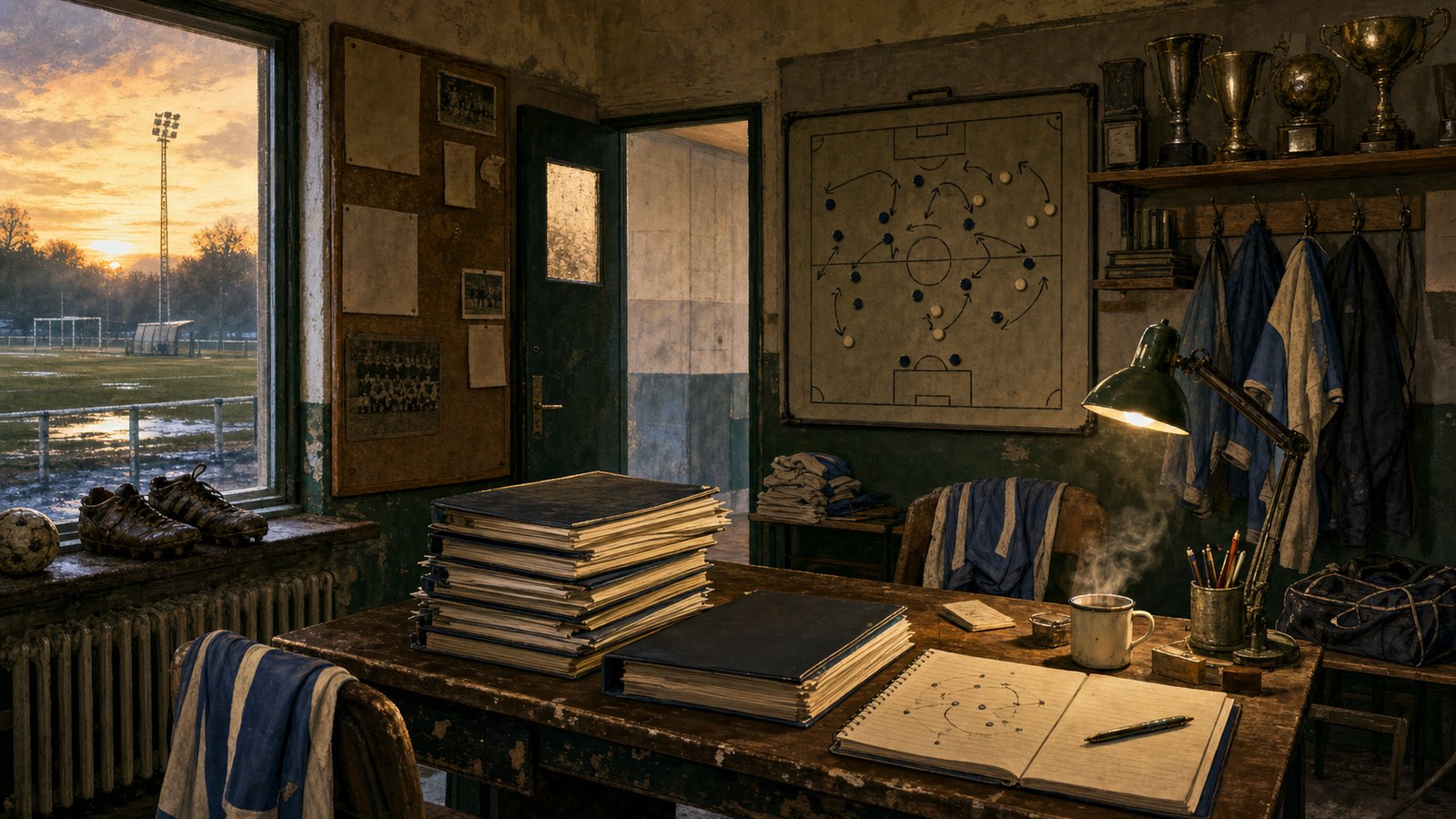
Auxerre 1996 should not be remembered as a fairy tale floating above football economics. It should be remembered as the visible reward for an unusually coherent club. The frost on the training ground, the long-serving manager, the youth pathway, the scouting patience, and the players who fit together all came before the trophy lift. The miracle was not that Auxerre won. The miracle, if the word must be used, was that they protected a method long enough for the table to finally show it.
Sources
Ligue 1 historical records; FFF Coupe de France archive; AJ Auxerre club history; RSSSF France 1995-96; UEFA club profile; contemporary French season summaries.