
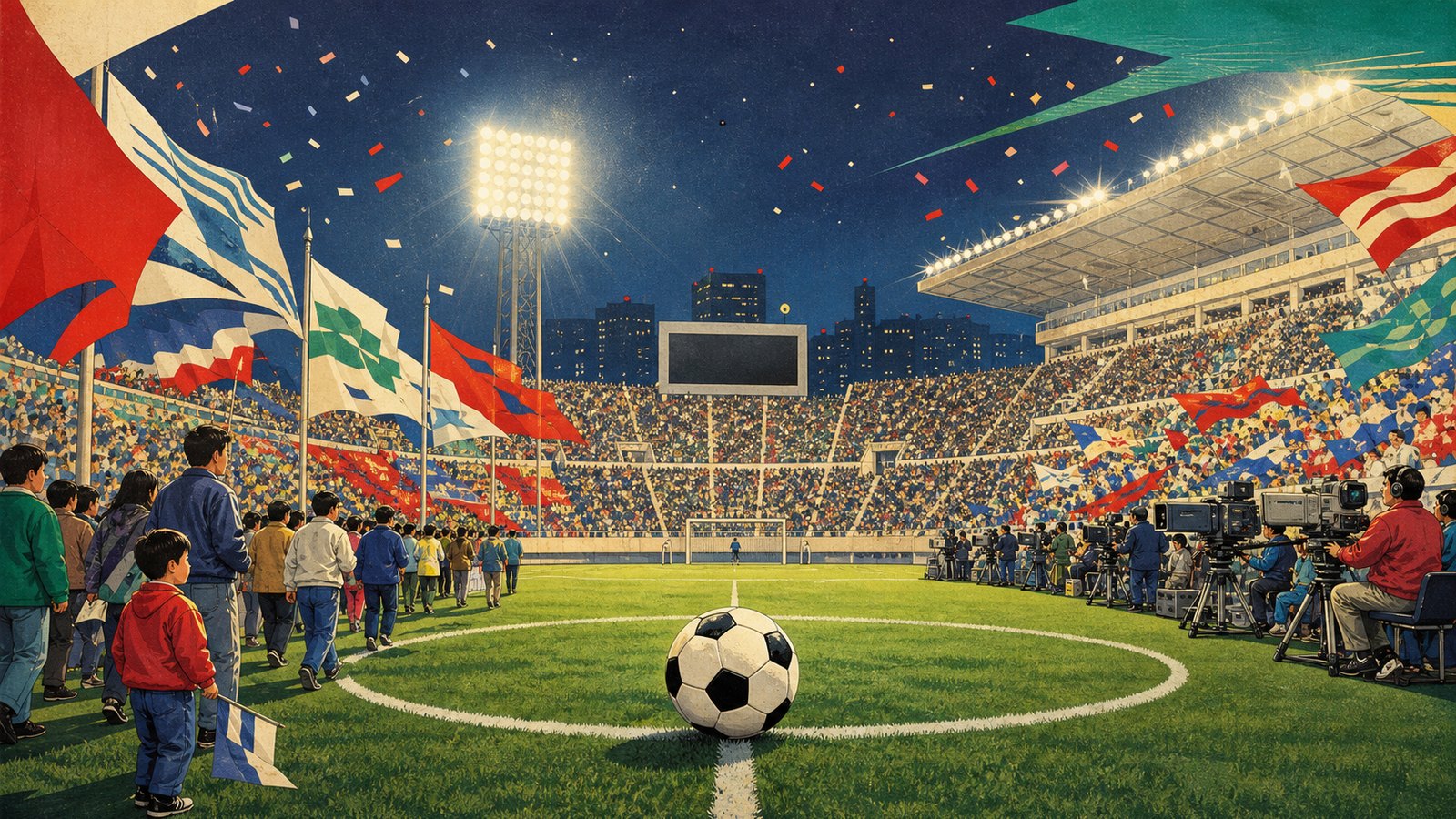
The J.League’s 1993 launch looked bright, modern, and almost theatrical: new club identities, packed opening nights, television attention, mascots, music, and a sense that Japanese football had suddenly stepped into color. But the real revolution was deeper than presentation. Japan was moving from a company-team culture, rooted in corporate ownership and workplace sport, toward a professional club model that could attach itself to cities, supporters, youth development, and international ambition. The league was entertainment, but it was also infrastructure. It asked whether football in Japan could become more than a niche pursuit beneath baseball and whether a national program could be built through clubs rather than only through schools and companies.
Company Teams Had Built the Base
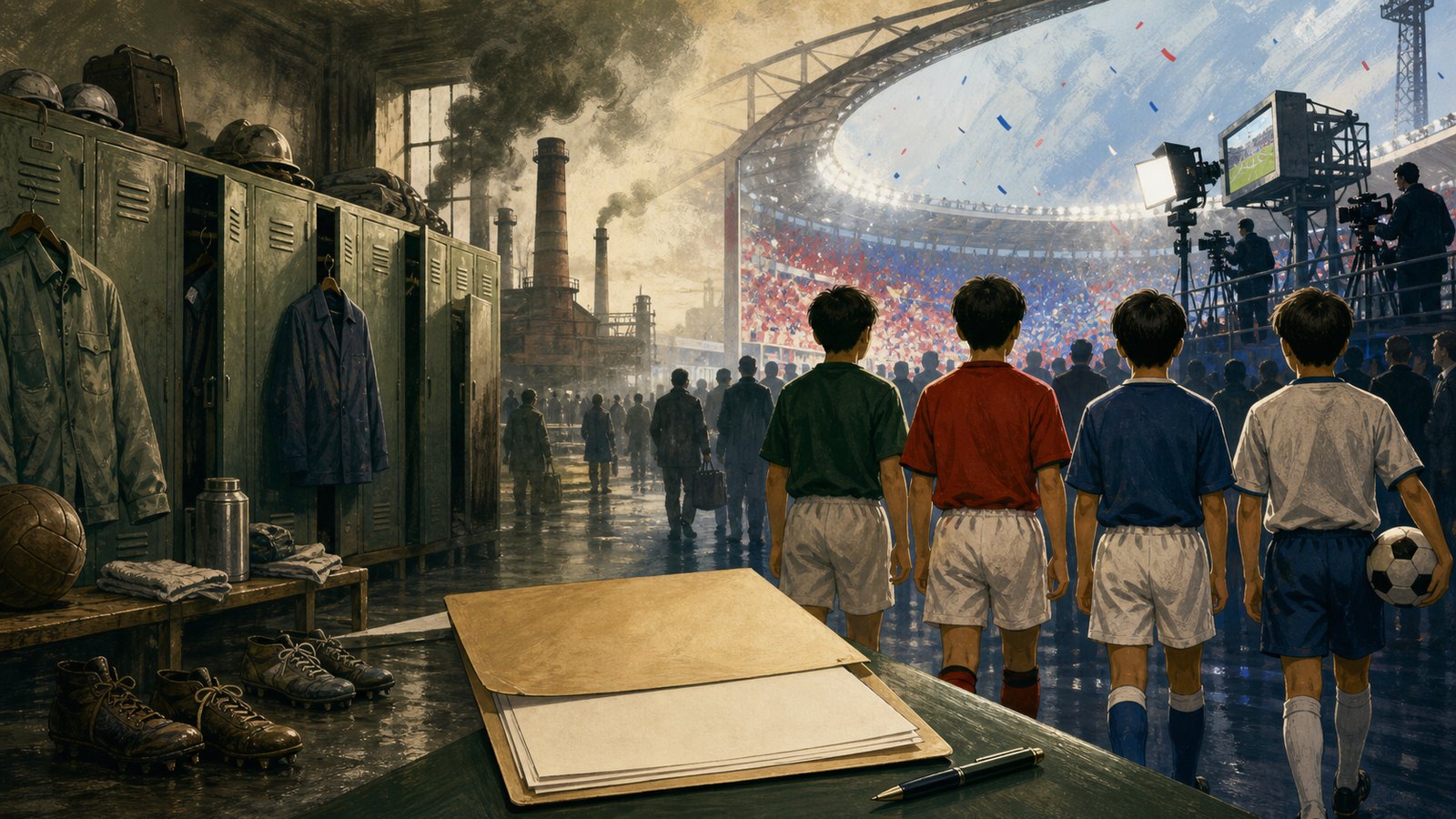
Before the J.League, Japan’s top football had already developed serious players and organizations through the Japan Soccer League. Many teams were connected to major companies, and that corporate support mattered. It provided jobs, facilities, and stability. It also limited the sport’s public imagination. A team could feel like an extension of a firm rather than a civic institution. Supporters outside the company orbit had fewer emotional entry points. Match day was not yet a mass entertainment ritual on the scale that professional football needed.
The company-team system was not a failure. It was the foundation. It taught administration, sustained competition, and produced players who carried the sport into the professional era. But by the late 1980s and early 1990s, Japan’s football leadership understood that qualification for the World Cup, international credibility, and a broader fan base required a different structure. Clubs needed names, places, youth pathways, media visibility, and reasons for children to choose football as a dream.
That meant the J.League’s founders were not merely selling shirts. They were changing the social address of a football club.
A League Designed for Supporters
The early J.League was intentionally vivid. Clubs adopted identities that did not simply repeat corporate labels. Stadium presentation was polished. Television turned matches into events. The league wanted families, children, and casual viewers to feel that this was a new national entertainment product. The strategy could look glossy, but it solved a real problem: football needed atmosphere before it could build tradition.
Japan did not have the same centuries-old professional club roots as parts of Europe and South America. Tradition had to be accelerated without being faked. The answer was to create rituals people could join immediately: scarves, songs, mascots, local pride, and recognizable match-day color. Some of it felt manufactured at first, but manufactured beginnings can become inherited culture if supporters keep showing up.
The league also borrowed intelligently from global football while adapting to Japanese conditions. It did not simply copy England or Italy. It built a product that could coexist with baseball, television variety culture, corporate sponsors, and municipal identity. That hybrid quality became one of its strengths.
The National Team Was the Long Game
The J.League’s most important payoff was not the first crowd surge. It was the player-development pipeline. Professional clubs meant better daily environments, clearer career incentives, and stronger youth systems. Young players could imagine a domestic professional future before needing to go abroad. Coaches could work inside clubs that cared about technique, conditioning, and long-term progression. The national team benefited because the domestic game became a stronger laboratory.
Japan narrowly missed the 1994 World Cup after the famous late collapse against Iraq in Doha, but the J.League era still pointed forward. By 1998, Japan reached its first World Cup. After that, qualification became regular rather than miraculous. The league did not guarantee international success, but it made sustained progress plausible. It gave the national team a domestic engine.
The change also reshaped player ambition. Stars such as Kazuyoshi Miura gave the league glamour, while later generations treated Europe as a possible next step rather than an unreachable world. The domestic league became both destination and launchpad.
The Bubble Burst Was Part of the Lesson
The J.League’s early boom did not last in a straight line. Attendance cooled. Japan’s economic environment changed. Some clubs struggled to balance ambition with sustainable support. That slowdown is sometimes used to mock the launch hype, but it may be more useful as evidence that professional football cannot live on novelty alone. A league needs roots after the fireworks fade.
The response was crucial. Japanese football did not abandon the project. It expanded the pyramid, deepened local identities, and learned to value sustainability. The later J2 and broader club network helped move the sport beyond a handful of glamorous launch brands. The professional game became less like a television event dropped from above and more like a national football map.
That maturation mattered because it spread opportunity. A country becomes a football country not only when its biggest clubs draw crowds, but when smaller places can imagine belonging to the same system. The J.League’s long-term success came from surviving its own first wave of hype.
The Revolution Was Cultural, Not Just Commercial
The J.League changed how Japanese football was seen abroad, but it also changed how football could be lived inside Japan. Children had local clubs to follow. Municipalities had teams that could represent civic identity. Sponsors had a sport with television shape and community value. Players had professional dressing rooms, pressure, and crowds. The old company-team world had produced the base; the new league gave that base a public face.
The result is visible in the modern game. Japanese players now move regularly through Europe’s strongest leagues. The national team is technically confident and tactically serious. Domestic clubs remain tied to communities rather than only to corporate history. None of that was inevitable in 1993. It had to be built through governance, branding, youth development, and the willingness to accept that football culture can be deliberately planted if the soil is prepared.
The J.League was not just Japan joining professional football. It was Japan choosing to build football as a long-term civic system.
That civic idea made the league different from a simple rebrand of existing company teams. A club could still have corporate backing, but it also needed a place, a supporter base, and a story that made sense to people who had never worked for the parent company. Local governments, schools, youth coaches, broadcasters, and families all became part of the project. The professional league therefore changed the route by which football entered everyday life.
It also gave Japanese football a way to absorb disappointment without collapsing. Missing the 1994 World Cup hurt because the dream had become public, not private. But that same public dream meant the next generation had visible reasons to continue. By the time Japan reached France in 1998, the achievement felt like the result of a system beginning to work rather than a one-off miracle.
The hidden genius of the 1993 launch was patience disguised as spectacle. The fireworks drew attention, but the deeper bet was that a professional club network would keep producing habits: better coaching, better crowds, better pressure, better exports, and a national team no longer dependent on rare golden moments. It made the weekly league match a piece of national-team preparation, community identity, and commercial education all at once. That combination explains why the league’s first season still matters even after the novelty faded and the hard work began in public.
Sources
- J.League official historical materials
- Japan Football Association historical records
- Jonathan Wilson, football development writing on Japan
- David Goldblatt, The Ball Is Round
- Contemporary reporting on the 1993 J.League launch and Japan’s 1998 World Cup qualification