
Galatasaray’s 2000 UEFA Cup is often remembered as a night of noise: red and yellow smoke, Turkish flags in Copenhagen, Arsenal losing a penalty shootout, and Gheorghe Hagi leaving the pitch before the end of extra time. That memory is true, but it is too small. The trophy was not a single emotional detonation. It was the moment when a club that had been learning European football by bruising itself against it finally found a way to make its own conditions travel.
The easy version says Galatasaray won because the night became chaos. The harder version is more interesting. Their run came from continuity under Fatih Terim, a spine of players who knew each other’s habits, a domestic environment that made pressure feel normal, and a European route that forced them to tighten every part of the team. By the time Arsenal arrived in Copenhagen, Galatasaray were not a charming outsider hoping for one perfect evening. They were a side that had spent months turning volatility into routine.
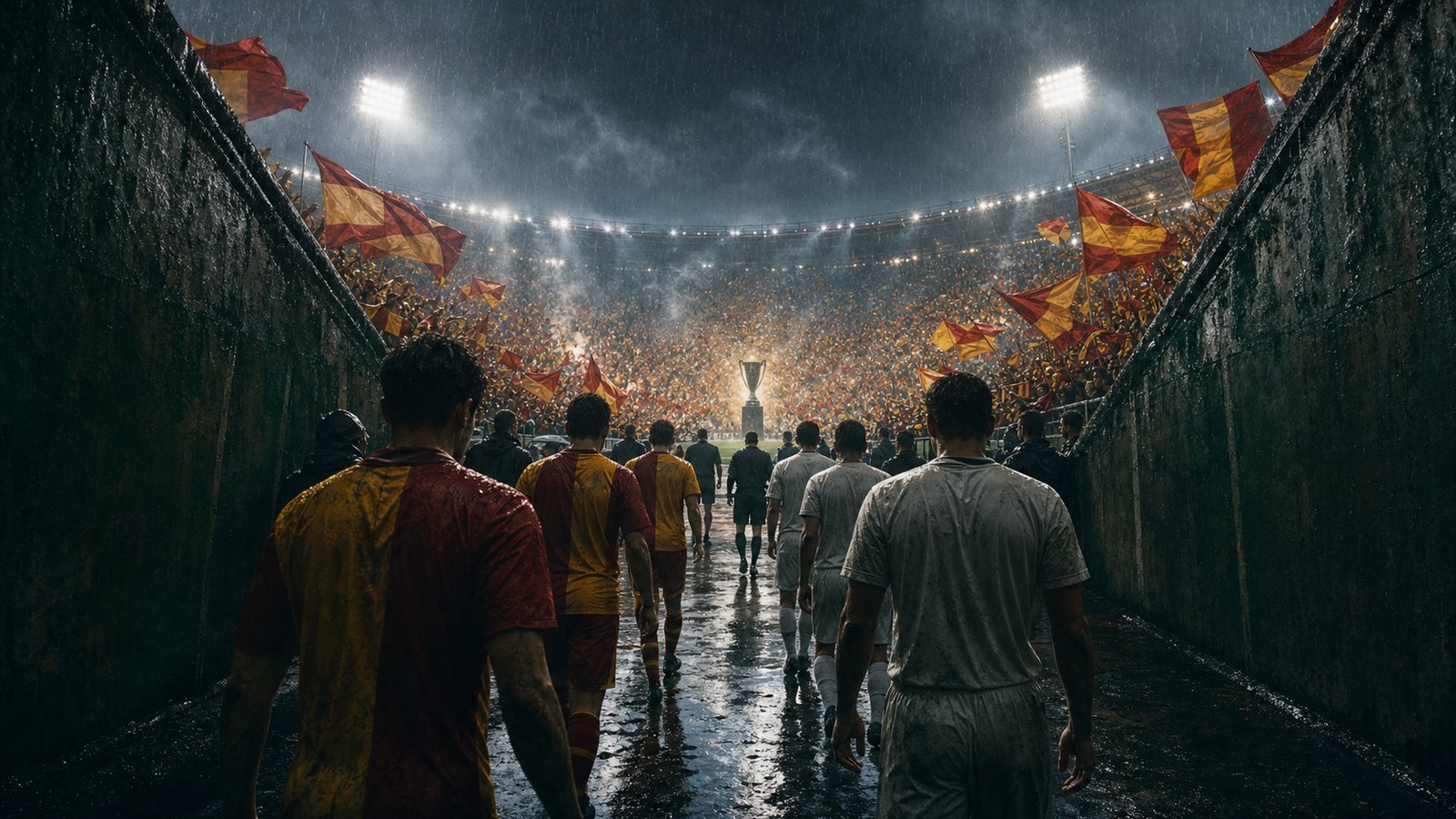
The Champions League Exit That Became a Second Campaign
The UEFA Cup triumph began with an apparent demotion. Galatasaray had played in the Champions League group stage, where the margins were unforgiving and the opponents exposed every loose touch. Dropping into the UEFA Cup could have felt like consolation. Instead, it gave them a second European campaign with sharper habits. The club had already faced the speed, spacing, and concentration demands of Champions League football, then carried those lessons into a knockout format where one controlled away performance could transform the tie.
That sequence mattered. A team entering the UEFA Cup cold might treat each round as an adventure. Galatasaray entered with European rhythm already in the legs. They had felt what happened when a midfield line arrived late, when a full-back lost the far-side runner, when a crowd’s emotion could not cover a poor rest-defense shape. The campaign became less about discovering Europe and more about surviving it long enough for their own strengths to become decisive.
Terim’s Continuity Was the Hidden Advantage
Fatih Terim’s team had a clarity that is easy to miss when the highlights are reduced to penalties. They could be dramatic, but they were not tactically formless. Hakan Şükür gave them a reference point. Hagi gave them risk, disguise, and provocation. Bülent Korkmaz gave them a defensive authority that suited hard European nights. Claudio Taffarel gave the back line a goalkeeper with international pedigree and calm under pressure. The midfield and wide players were not asked to perform a fashionable theory. They were asked to understand when the game needed heat and when it needed oxygen.
That is the difference between emotion as fuel and emotion as a system. Galatasaray could use the crowd without becoming the crowd. They could press and scrap, but they also knew the value of slowing the tempo after a dangerous spell. They could accept that Hagi might lose the ball trying the pass nobody else saw because the rest of the side had enough structure to absorb the risk. In a cup run, that kind of shared tolerance is priceless. It lets a team carry genius without being governed entirely by it.
Arsenal Met a Team Built for Bad Moments
The final against Arsenal did not produce a clean tactical masterpiece. It produced something more revealing: a match in which both sides had to live through long periods where their preferred script failed. Arsenal had Arsène Wenger’s control, elite attacking talent, and recent big-match experience. Galatasaray had the stubbornness of a side that had already learned not to panic when a European opponent looked smoother for ten minutes at a time. The score remained 0-0 through normal time and extra time because neither team could break the other’s nerve.
Then came the moment that should have cracked Galatasaray. Hagi was sent off in extra time after a clash with Tony Adams. For many teams, losing the most famous creative player before penalties would become the story of collapse. Galatasaray instead turned the sending-off into another defensive problem to solve. The line dropped, the distances tightened, and the match moved toward penalties with the Turkish side still intact. Their achievement was not that nothing went wrong. Their achievement was that something very important went wrong and they still did not lose the frame.
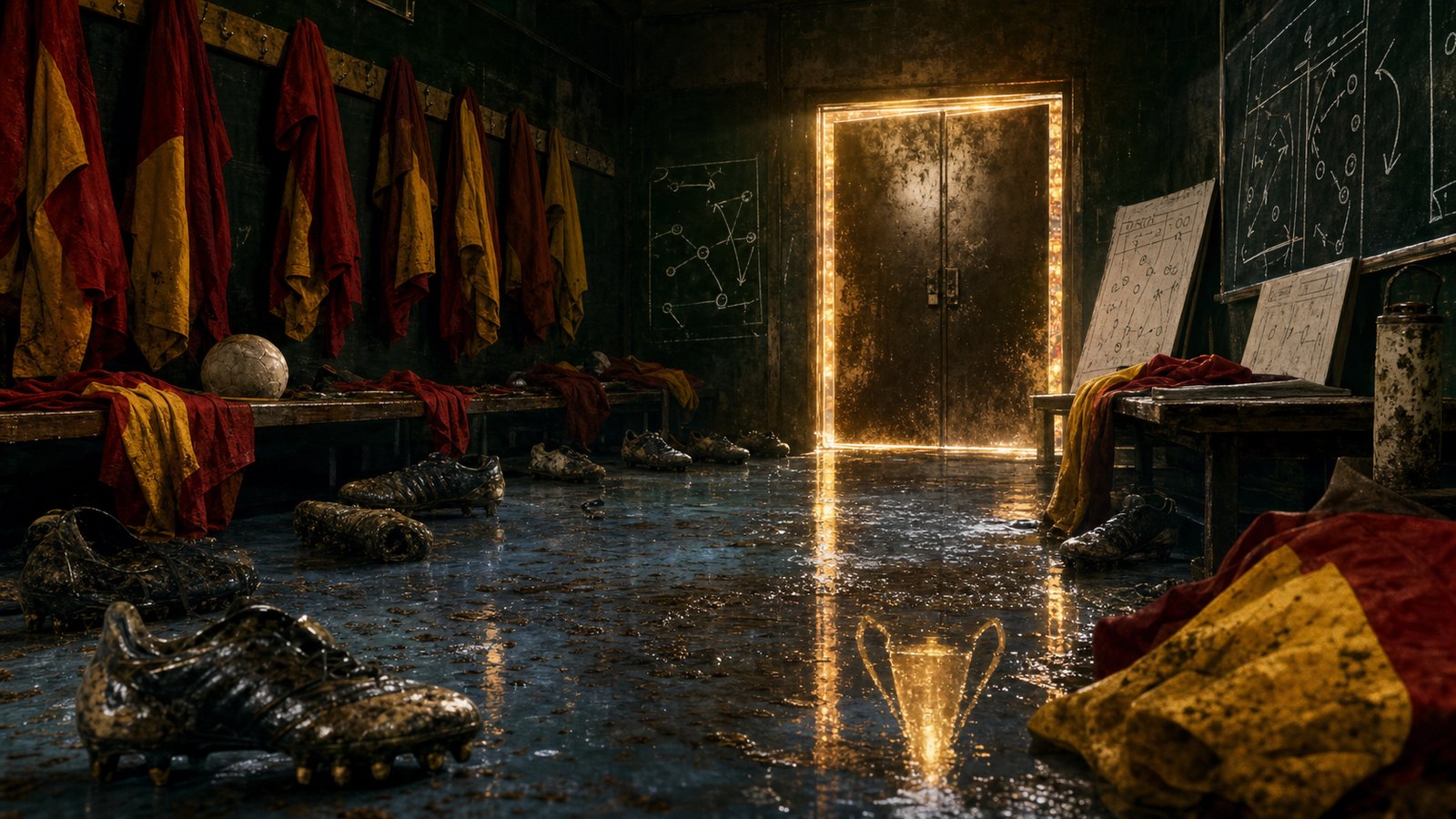
The Penalties Were a Verdict on Nerve, Not Luck Alone
Penalty shootouts always contain randomness, but this one was not only a coin toss. Galatasaray’s takers walked into a moment that compressed an entire season: domestic pressure, European frustration, the red card, and the chance to become the first Turkish club to lift a major European trophy. Popescu’s decisive penalty is remembered because it ended the contest, but its meaning came from everything around it. Arsenal missed. Galatasaray converted. The gap between a fairy tale and a footnote became a few controlled steps from the halfway line.
It also mattered who delivered the final kick. Popescu was not a romantic mascot. He was an experienced defender, a footballer who understood big clubs and difficult stadiums. His penalty gave the night a fitting shape: the trophy was secured not by one wild flourish, but by an experienced player doing something cleanly under unbearable pressure. The team that had spent the campaign absorbing stress had one more piece of stress left to absorb.
Why the Trophy Changed the Map
The result did more than decorate Galatasaray’s cabinet. It changed what Turkish clubs could plausibly imagine in Europe. Before 2000, Turkish football had passion, talent, and intimidating home grounds, but European trophies still felt like they belonged to the old western powers. Galatasaray did not erase that hierarchy, yet they punctured it. They showed that a club from outside the usual winners’ circle could build enough continuity, enough tactical resilience, and enough psychological hardness to win a continental final against an English heavyweight.
The afterlife of the victory is why it still feels larger than one shootout. It became a reference point for every later Turkish European campaign, a proof that atmosphere did not have to be dismissed as folklore if it was attached to a serious team. It also explained why Galatasaray’s domestic dominance that season mattered: the league title and the UEFA Cup were connected. The same competitive habits that made them relentless at home helped them endure abroad.
The Real Lesson of Copenhagen
Galatasaray 2000 is not best understood as a night when emotion defeated sophistication. It is better understood as a club making its emotional environment tactically useful. The players knew the noise, the arguments, the expectation, and the danger of drifting into chaos. Terim’s job was not to remove those forces. It was to channel them into a team that could defend a lead, survive a setback, and still take penalties with enough clarity to finish the job.
That is why the trophy still has weight. It was Turkish football’s great European breakthrough, but it was also a study in how a club can turn the parts outsiders dismiss as excessive into competitive advantages. The smoke and flags were real. The roar was real. But beneath the roar was a machine: experienced players, repeated pressure, European scar tissue, and a final in which Galatasaray lost their genius before they won the trophy anyway.
Sources
UEFA match archive; RSSSF European Cups 1999-2000; BBC Sport final report; Galatasaray club historical records; The Guardian match coverage.