
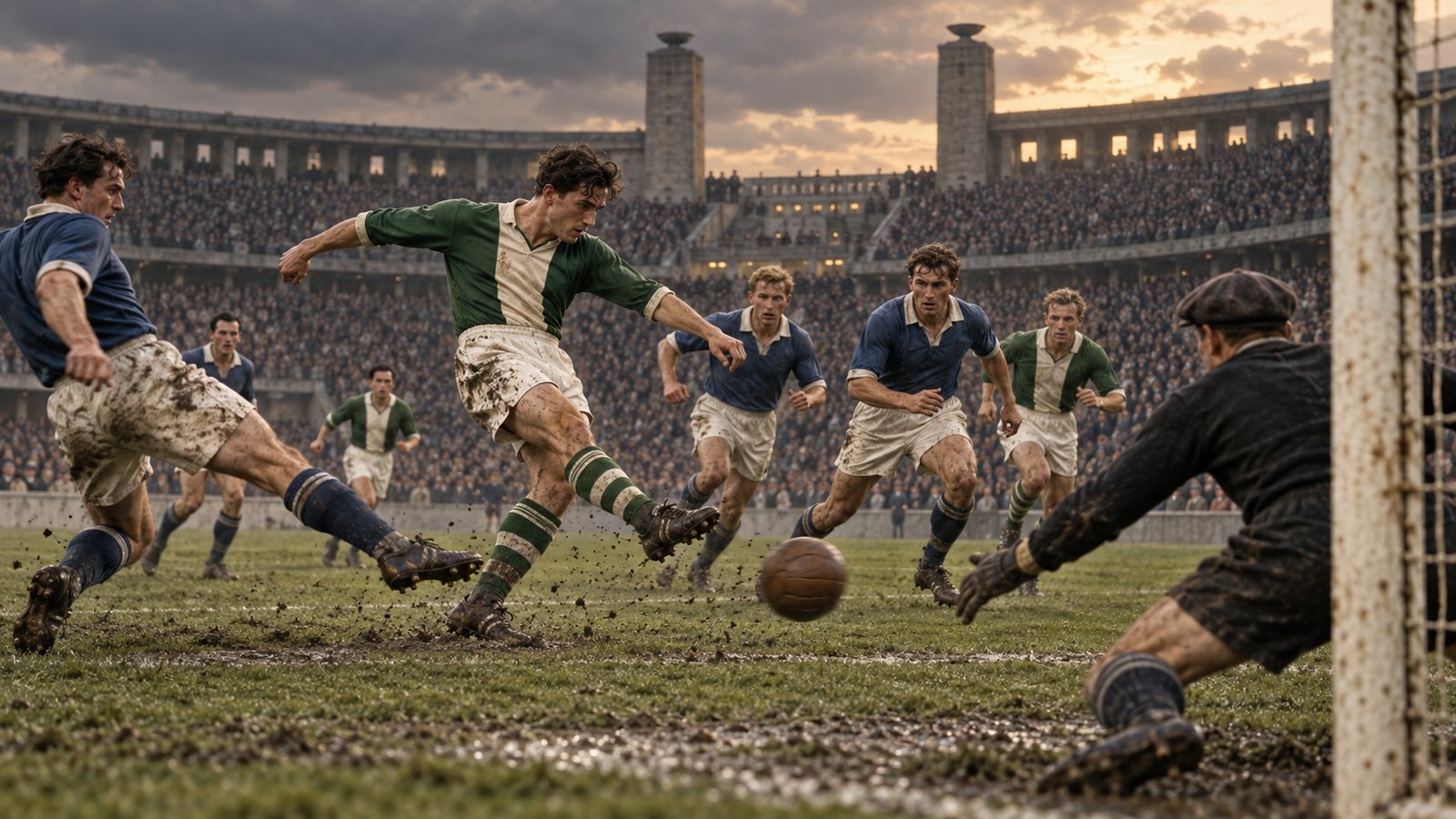
On 22 June 1941, the scoreboard in Berlin showed the kind of final that usually ends before the whistle. Schalke led Rapid Vienna 3–0 after 57 minutes. The defending champions had won five of the previous seven German titles, and their third goal appeared to have restored the hierarchy everyone recognised.
Then Rapid scored four times. Franz Binder supplied the last three, turning a three-goal deficit into a 4–3 victory in less than half an hour. A Vienna club became German champion on the same day German forces invaded the Soviet Union.
The comeback can be told as seven goals and one extraordinary swing. Its setting makes it harder to isolate. Austrian clubs were competing inside the German league network because Nazi Germany had annexed Austria in 1938. Rapid’s players and supporters brought a powerful Vienna football identity into a tournament administered by the regime that had erased their country’s independence. The final was therefore both a sporting upset and a match burdened with meanings no scoreline can settle.
Schalke arrived as the order Rapid had to break
Schalke 04 were not merely favourites. They were the defining German side of the era, champions in 1934, 1935, 1937, 1939 and 1940. Their short-passing style, often called the Schalker Kreisel, gave the team a recognisable authority. By the 1941 final they were pursuing a third consecutive championship and a sixth title in eight seasons.
Rapid carried a different record into Berlin. Before the Anschluss, the club had already won twelve Austrian championships between 1911 and 1938. Once Austrian football was absorbed into German competition, Rapid won the 1938 Tschammerpokal, the cup competition that preceded today’s DFB-Pokal. The club was not an anonymous outsider, but it entered the final against a team accustomed to owning this stage.
The championship itself had advanced through regional leagues and knockout rounds under wartime conditions. Twenty teams reached the national phase. Rapid emerged from the Ostmark competition and survived the route to the final, while Schalke returned as reigning champion. Berlin’s Olympiastadion supplied the monumental backdrop the regime preferred for national occasions.
Three goals made the favourite look inevitable
Schalke’s lead reached 3–0 in the 57th minute. At that point, the margin aligned with reputation: the established champion controlling the challenger from Vienna. A team chasing the game could easily have broken its shape, thrown players forward without connection, and allowed Schalke to turn the final into a rout.
Rapid instead found one goal and then compressed the match. Georg Schors scored first for the Viennese side. The strike did more than alter the total; it reduced the problem from an impossible-looking three goals to a chase with visible stages. One became two, and Schalke had to decide whether to keep playing forward or protect ground it had controlled for most of the afternoon.
Finals change character when the leading team starts measuring the clock. Passes that had expressed confidence become decisions about risk. Clearances return the ball but invite another attack. The trailing side no longer needs to imagine a complete recovery in one movement. It needs the next duel, the next delivery, and one finish clean enough to make the favourite feel the distance behind it.
The physical setting amplified that turn. In a vast bowl, each Rapid goal had time to travel from the pitch through the stands before play restarted. Players returning to the centre circle could see the scoreboard and understand that the margin was no longer protecting Schalke in the same way. Rapid did not have to disguise its intention. The ball would be pushed forward, Binder would occupy the central defenders, and every second ball near the area would become another test of whether the champions could recover their earlier composure.
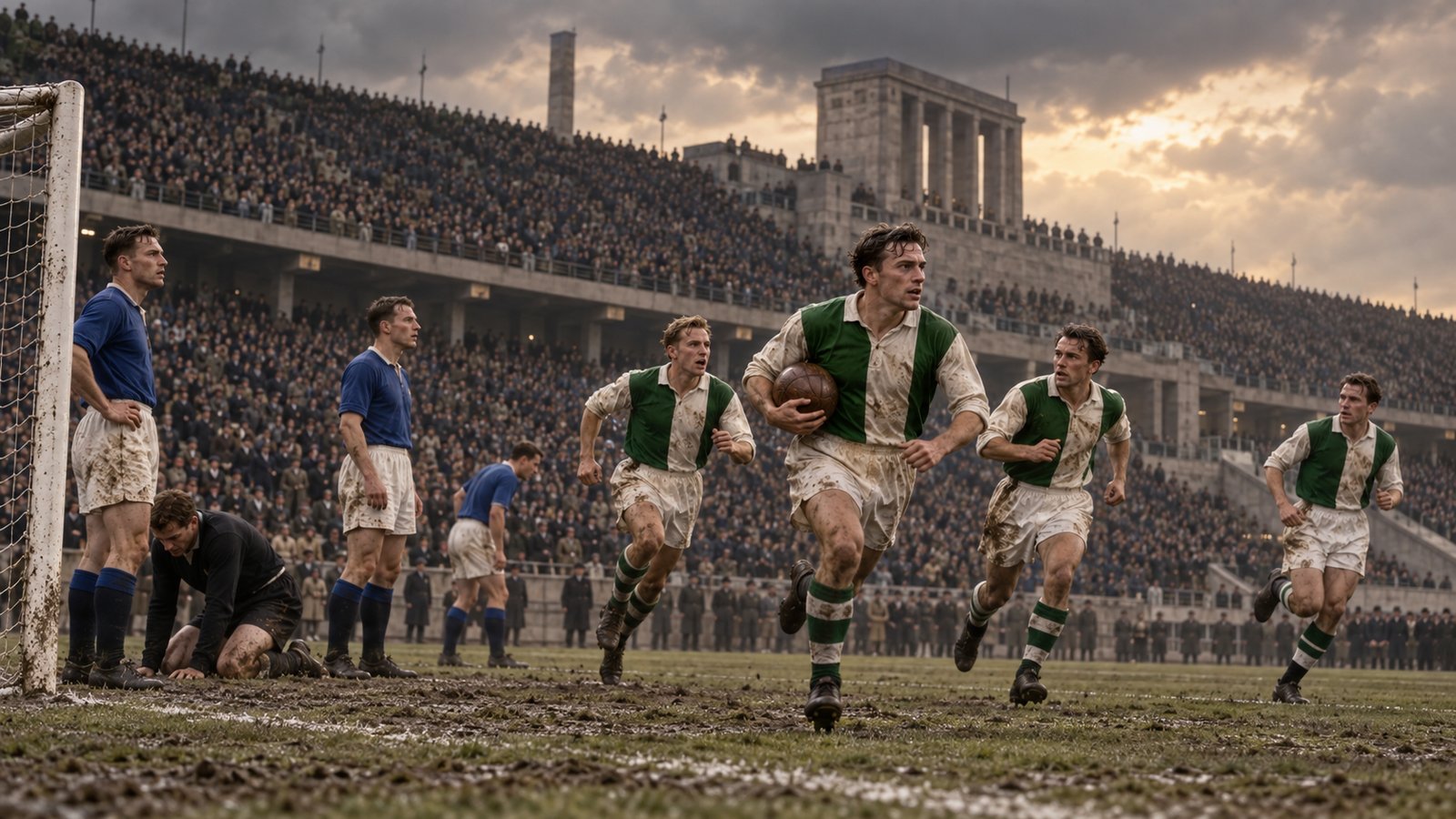
Franz Binder filled the final twenty-five minutes
Binder was Rapid’s centre-forward and the figure around whom the recovery gathered. He scored three times after Schors had opened Rapid’s account. The hat-trick transformed him from the focal point of a losing attack into the author of one of the competition’s most abrupt reversals.
The goals came in a narrow late window. That concentration matters. Schalke did not lose the final through a slow erosion spread across ninety minutes; they lost control after building what should have been a decisive lead. Binder kept arriving at the moment when a crowded penalty area demanded one clear touch.
Rapid’s tradition celebrated directness, urgency and the late surge known around the club as the Rapid quarter-hour. It would be too convenient to treat a club legend as a mechanical explanation for every comeback. Yet the final gave that identity an enduring scene: a green-and-white side increasing the emotional and physical pressure precisely when the celebrated champion expected the game to close.
When Binder’s third goal made it 4–3, the scoreboard told two stories at once. Rapid had scored four unanswered goals. Schalke had moved from three goals of protection to none. The remaining minutes no longer belonged to the team with the longer list of German titles. They belonged to the team trying to hold the most improbable lead of its season.
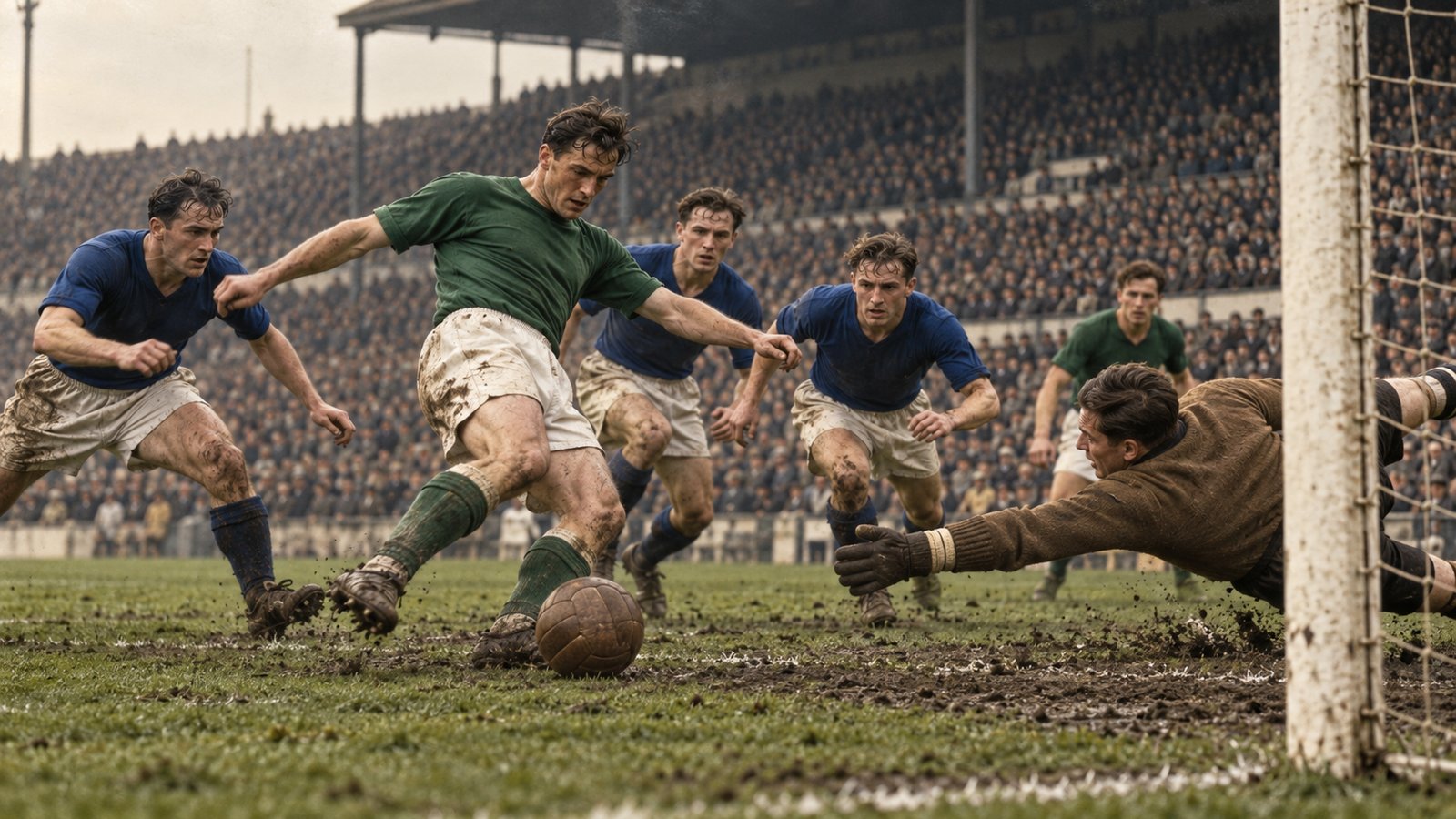
A Vienna champion inside an annexed competition
Rapid became the only Vienna club to win the German championship during the years of annexation. Admira Vienna had reached and lost the 1939 final; First Vienna would do the same in 1942. Rapid’s 1941 trophy therefore occupies a singular place in both Austrian and German records.
But the word “German” cannot be detached from coercion in this case. Austrian clubs had not entered a normal cross-border competition by choice. The Anschluss placed them inside Nazi Germany’s institutions, and football was reorganised accordingly. Players, officials and supporters navigated a public culture shaped by dictatorship, war and persecution.
The date makes that collision especially stark. The final was played on the opening day of Operation Barbarossa, Nazi Germany’s invasion of the Soviet Union. While thousands watched a football comeback in Berlin, a vast military attack was beginning in the east. Mentioning the simultaneity does not make the match responsible for the war, nor does it turn every act on the pitch into resistance. It prevents the sporting drama from being presented inside an empty historical room.
Later conspiracy stories claimed that the result must have been arranged, either to reward Vienna or for other political purposes. The comeback’s speed and the era’s politics made suspicion easy to project backward. No such theory is required to understand what happened on the field: Schalke led 3–0, Rapid scored four unanswered goals, and Binder scored the last three.
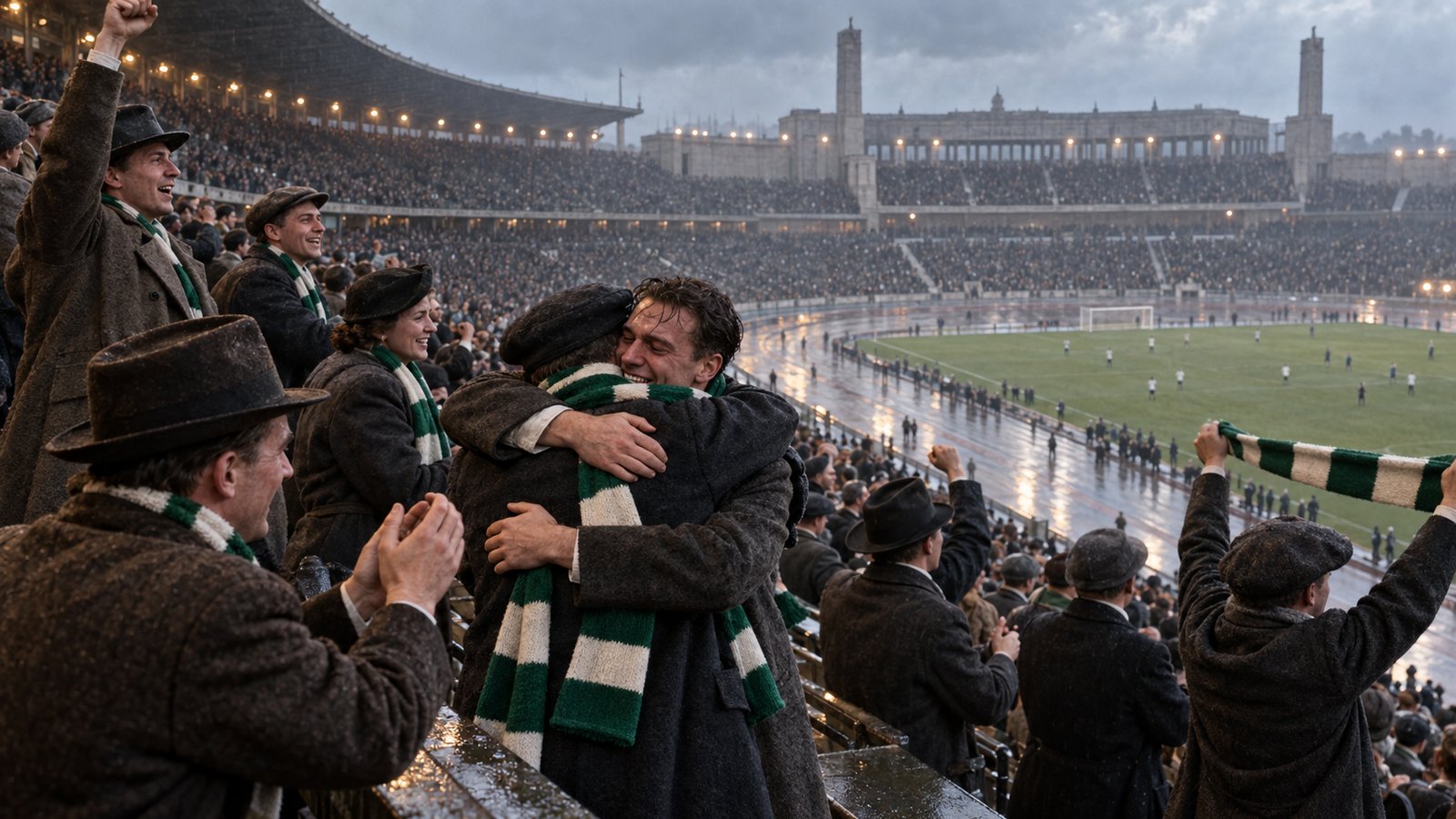
The trophy survives, but simple ownership does not
For Rapid supporters, the final remains one of the club’s greatest matches. It combines a dominant opponent, a three-goal deficit, a star centre-forward and a national title decided in a burst. Those elements would make the game durable in any era.
Its memory also resists a single political label. Calling the win a straightforward Austrian triumph over Germany can satisfy a later desire for symbolic revenge, but it risks assigning motives and freedoms that the players did not publicly possess. Treating it as an ordinary line in German championship history erases the annexation that put Rapid in the tournament. The honest version holds both facts together.
Football archives contain other matches where a score became larger because history crowded around it. The same care is needed when reading Dynamo Moscow’s 1945 visit to Chelsea: the spectacle is real, and so is the political world that shaped how audiences understood it. Context should deepen the match rather than replace it.
Rapid’s recovery remains astonishing without mythology. A team went three goals down to the era’s dominant champion and won 4–3. Binder scored a hat-trick after the 57th minute. The sporting facts are dramatic enough. The harder task is to remember that the trophy was lifted by a Vienna club in Berlin, inside a competition created for it by annexation, on one of the most consequential dates of the war.
Sources
- RSSSF, German Championship 1941 records
- SK Rapid, club honours and historical archive
- Weltfussball, 1941 German Championship final match record
- German football championship historical records