
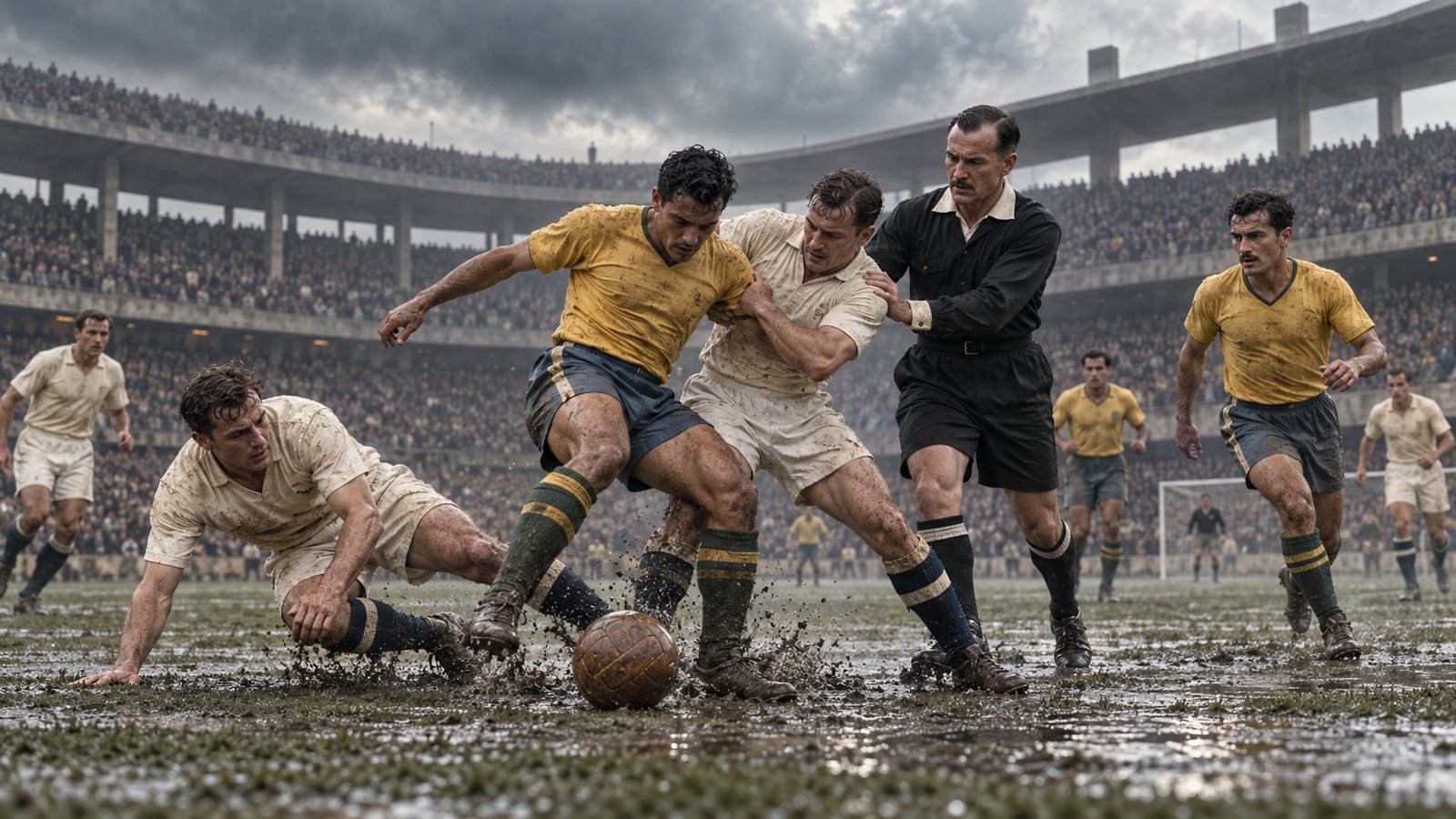
The first body blow arrived before Brazil had settled into the quarter-final. Zezé Procópio was dismissed after fourteen minutes, leaving ten Brazilians to face the 1934 World Cup runners-up in a new stadium in Bordeaux. By the final whistle, the score was still level, two more players had been sent off, and both teams were counting injuries serious enough to reshape the replay.
This was 12 June 1938, long before substitutes could repair a damaged lineup. Czechoslovakia goalkeeper František Plánička remained in goal despite a broken bone. Forward Oldřich Nejedlý could not complete the contest. Three Brazilians also left hurt. The quarter-final lasted 120 minutes and resolved nothing except which players would not be ready to return.
Two days later, the teams met again. Brazil changed nine starters and Czechoslovakia changed five. The replay was not a continuation in any ordinary tactical sense; it was a second match assembled from what the first had left available. Brazil recovered from a goal down to win 2–1, but the route to the semi-final ran through selection sheets, untreated injuries and a rulebook with no penalty shootout.
A new Bordeaux stadium opened with a broken match
The quarter-final was staged at Parc Lescure, the rebuilt Bordeaux ground now known as Stade Chaban-Delmas. An attendance of 22,021 arrived for a meeting between teams with different claims to the tournament. Czechoslovakia had reached the final four years earlier. Brazil had just survived a remarkable 6–5 extra-time match against Poland, with Leônidas emerging as the attack’s central danger.
Brazil scored first after thirty minutes. Leônidas, known as the Black Diamond, supplied the goal even though his side was already down to ten. Czechoslovakia equalised in the second half when Nejedlý converted a penalty after Domingos da Guia handled the ball. At 1–1, the game should have acquired a simple shape: Brazil protecting reduced numbers, Czechoslovakia using possession to stretch them.
Instead, the contest kept splintering into individual collisions. Hungarian referee Pál von Hertzka allowed a level of contact that neither side interpreted as a reason to retreat. Every challenge seemed to alter the next one. The match became less about controlling territory than surviving the next exchange without losing another player.
The setting sharpened the contrast. Parc Lescure’s sweeping concrete curves represented modern stadium design. On its opening football occasion, however, the competition depended on rules that offered almost no repair once bodies failed. A team could reorganise, but it could not send on a healthy replacement.
The first red card changed the argument, not the temperature
Zezé Procópio’s dismissal came in the fourteenth minute. Accounts differ over the precise sequence around the decision, but they agree on its practical consequence: Brazil had to play most of the afternoon with ten men. The punishment did not calm the match. It removed one participant while leaving the escalating mood intact.
Leônidas gave Brazil the lead sixteen minutes later. His goal made the disadvantage look manageable, yet it also ensured that Czechoslovakia had to keep pressing. Nejedlý’s penalty brought the score level, and the contest moved toward a final phase in which fatigue and injury mattered as much as formation.
Near the end of regulation time, Brazil defender Arthur Machado and Czechoslovakia winger Jan Říha were also dismissed. Three red cards in one World Cup match was unprecedented. The total would not be matched until the Hungary–Brazil quarter-final in 1954, another knockout tie remembered by a battle-name rather than by its football alone.
The comparison is useful but incomplete. Bordeaux did not end after ninety minutes. With the score 1–1, the teams were required to play another half-hour. Nine against ten became the frame for extra time, while the injured remained part of the arithmetic because there was no bench intervention available.
Plánička guarded the draw with a broken bone
Plánička’s injury gives the match its hardest physical image. The Czechoslovakia captain stayed in goal through the second half and extra time despite a fracture. He could not be replaced, and leaving the field would have reduced his team again. Goalkeeping became an act of endurance before it could be an act of positioning.
Nejedlý, the forward who had scored the equaliser, suffered a broken leg and was out before the end. Josef Košťálek was injured in the stomach. Brazil’s Leônidas, José Perácio and another teammate were also hurt badly enough to leave the field during the afternoon. The formations visible on the original team sheet no longer described what remained late in the game.
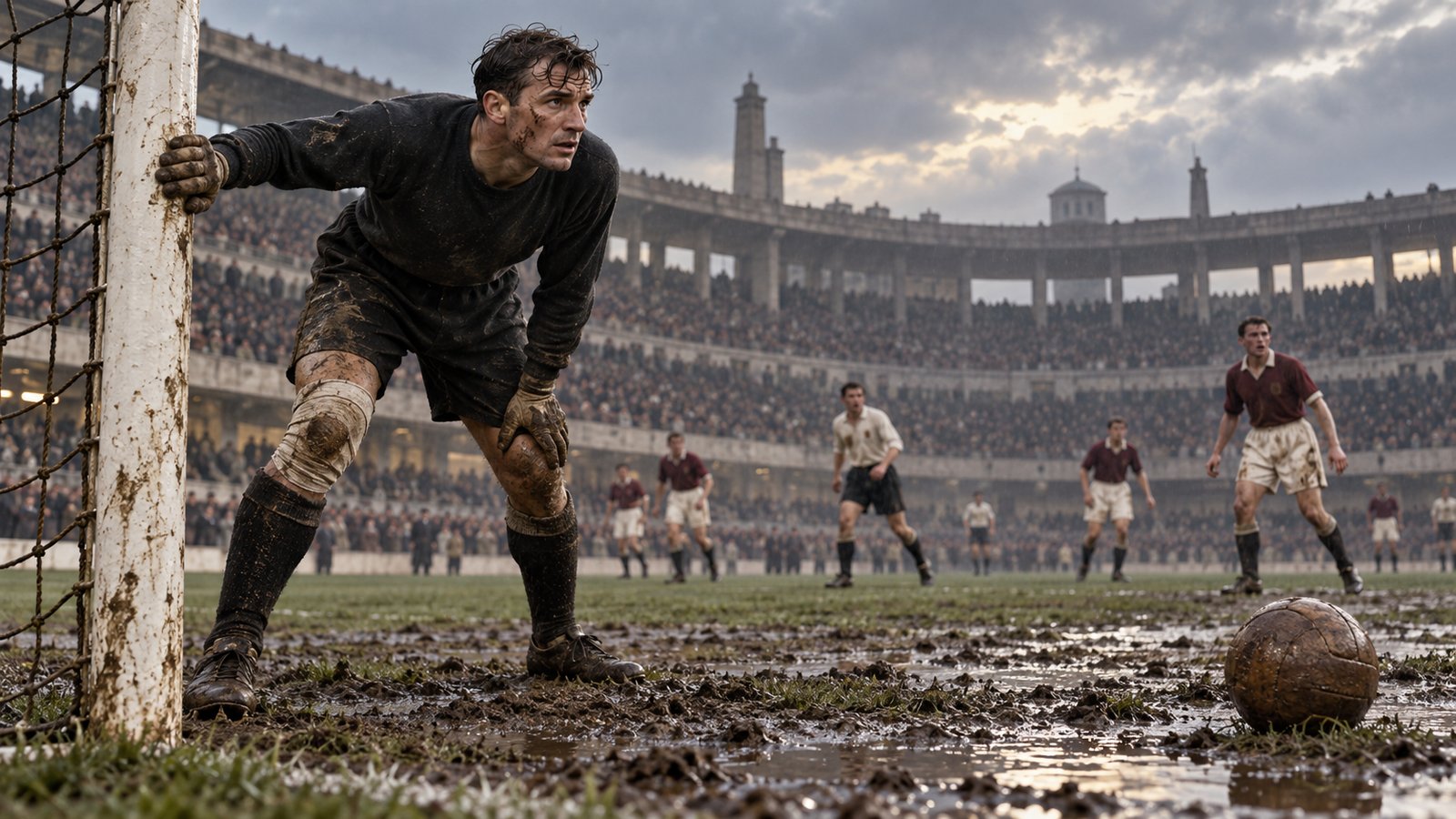
Neither side scored in extra time. That 1–1 draw did not lead to penalties, because the World Cup had no shootout procedure. Tournament regulations sent the teams toward a replay. The result looked like postponement, but the short interval made it a severe test of squad depth: the next selection had to be made only two days after the first match’s injuries and suspensions.
Modern match reports often list a score and discipline beneath it. Bordeaux resists that compression. The draw, three dismissals and injury list were not separate statistics. Together they determined the personnel, rhythm and likely winner of the replay.
Nine Brazil changes made the replay a different contest
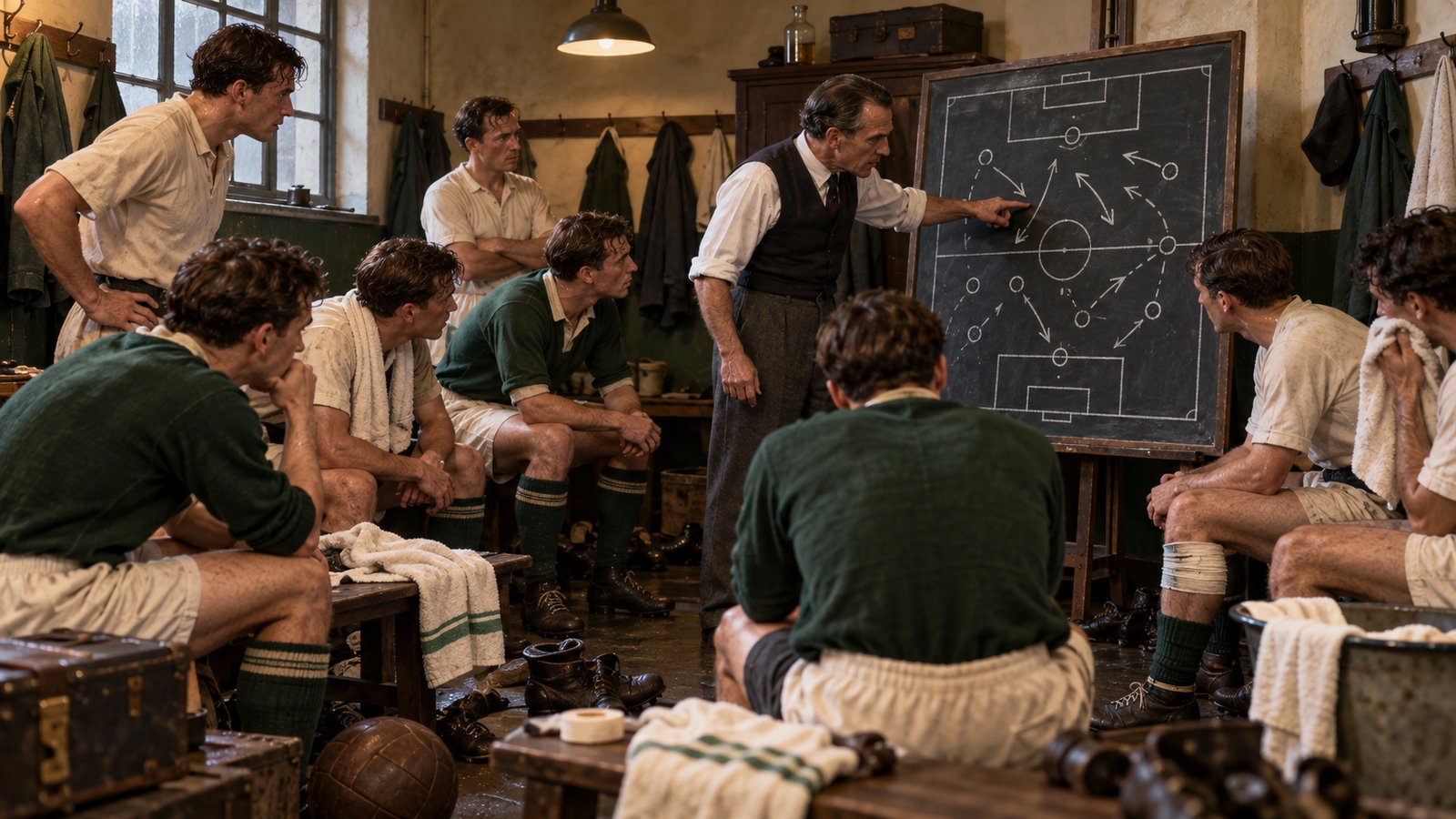
Brazil coach Adhemar Pimenta changed nine players for the second meeting. Only goalkeeper Walter and Leônidas remained from the starting side described in contemporary reconstructions. Czechoslovakia made five changes, including the unavoidable loss of Plánička and Nejedlý. The rematch therefore tested reserves who had watched the first game become progressively less recognisable.
Czechoslovakia led after twenty-five minutes through Vlastimil Kopecký. That opening mattered because it showed the altered European side could still reproduce the pressure of the first contest. Brazil now needed a comeback from a lineup assembled under emergency conditions.
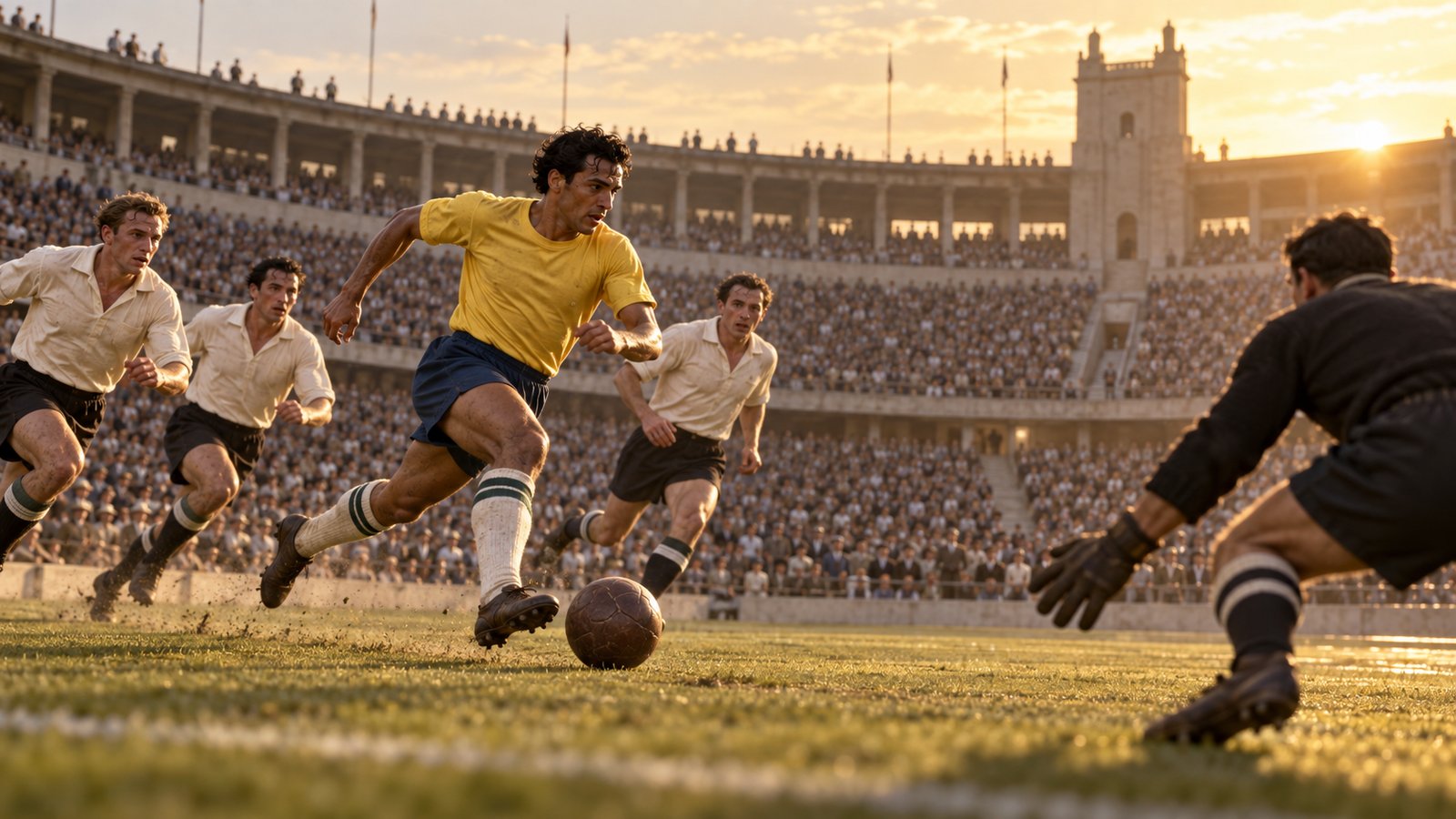
Leônidas equalised after the interval. His presence connected the two matches: scorer in the first game, one of the few retained starters in the second, and the forward around whom Brazil could still organise its attack. Roberto, making his tournament debut, then scored Brazil’s winner on a counterattack after Czechoslovakia had pushed forward.
Czechoslovak accounts disputed a separate effort that they believed had crossed the line before Brazil’s second goal. The official result remained 2–1. Brazil advanced to face Italy, while Czechoslovakia left after a quarter-final that had consumed two matches, multiple starters and 210 minutes of football.
The replay rule turned damage into competitive leverage
The Battle of Bordeaux is usually described through violence, and the label is deserved. Its deeper tournament mechanism was the replay. A draw did not preserve the same contest for another day. Suspensions and injuries transferred directly into the next team sheets, allowing the first match’s damage to influence the second match’s balance.
Brazil’s larger reshuffle did not prevent victory, partly because Leônidas was fit enough to remain the attack’s reference point. Czechoslovakia lost its captain and goalkeeper as well as the forward who had scored the equaliser. The replay rewarded whichever squad could construct a workable side from the aftermath.
Later World Cups would provide other examples of officiating struggling to control hostile matches. The 1962 Battle of Santiago showed how quickly a referee’s early thresholds could define an afternoon. Bordeaux adds a different layer: even after the whistle, the competition carried the physical consequences into a second fixture.
The quarter-final is therefore more than an old record for dismissals. It is a case study in how tournament rules distribute risk. No substitutions forced injured players to continue or teams to shrink. A replay offered another chance but only after forty-eight hours of recovery. Discipline did not reset when the score did; it helped select the people permitted to decide the tie.
Brazil’s 2–1 win appears clean in a bracket. The path was anything but clean: a fourteen-minute dismissal, a captain guarding the draw while injured, three total red cards, nine Brazilian changes, five Czechoslovak changes and a debutant scoring the decisive goal. The bracket records one quarter-final winner. Bordeaux required two different teams from each country to produce it.
Sources
- FIFA World Cup match archive
- Infobae, “Francia 1938: el día que Brasil cambió el jogo bonito por la violencia extrema”
- Battle of Bordeaux historical match record