

Fergus Suter’s change of trade sounded convenient. The Glaswegian stonemason crossed into Lancashire to play football, joined Darwen in 1878, and soon stopped cutting stone. English stone, the story went, was too difficult to work. What remained easier to see was that Suter kept appearing on a football field while living far from the yard that had trained him.
The explanation mattered because football still described itself as an amateur game. A club could help a player find employment. It could offer a home or cover expenses. It was not supposed to pay a wage for football. Suter’s career occupied that narrowing space between the official rule and the industrial towns already building teams that required more time, travel and practice than spare Saturday afternoons allowed.
He did more than become a disputed first professional. He carried a Scottish passing tradition into two Lancashire clubs, crossed a local rivalry at its hottest point and reached four FA Cup finals with Blackburn Rovers. By the time the Football Association accepted professionalism, his medals had already demonstrated how thoroughly the game had changed.
Two Partick Players Crossed to Darwen
The route south existed before Suter travelled it. Partick, the Glasgow club distinct from the modern Partick Thistle, had developed a connection with Darwen through William Kirkham, a Lancashire man who worked in Partick and became close to local players. The clubs arranged cross-border matches. On New Year’s Day 1876, Partick beat Darwen 7–0.
Results like that were advertisements. Lancashire clubs could see a style based on movement and combination rather than one player carrying the ball until an opponent stopped him. They could also see the people performing it. Partick later played Bolton Wanderers and Blackburn Rovers, placing Scottish footballers in front of the clubs most willing to find ways around amateur restrictions.
Jimmy Love made the move first in the summer of 1878. Suter followed soon afterwards. Neither arrived in a sporting vacuum. Darwen had used Tom Marshall, known as a professional runner, and Ralph Crookes, a cricket professional during summer. Victorian sport already contained paid expertise; football’s regulations merely forced clubs to disguise how that expertise was retained.
Love’s senior career in Darwen was brief, but Suter became the more durable experiment. He played at full-back, captained the side and was noted for his passing. His value was not hidden in a goal total. He helped a team move the ball in a way that made eleven players more connected, and that demanded repeated practice with the same colleagues.
The Stonemason Explanation Fooled Nobody
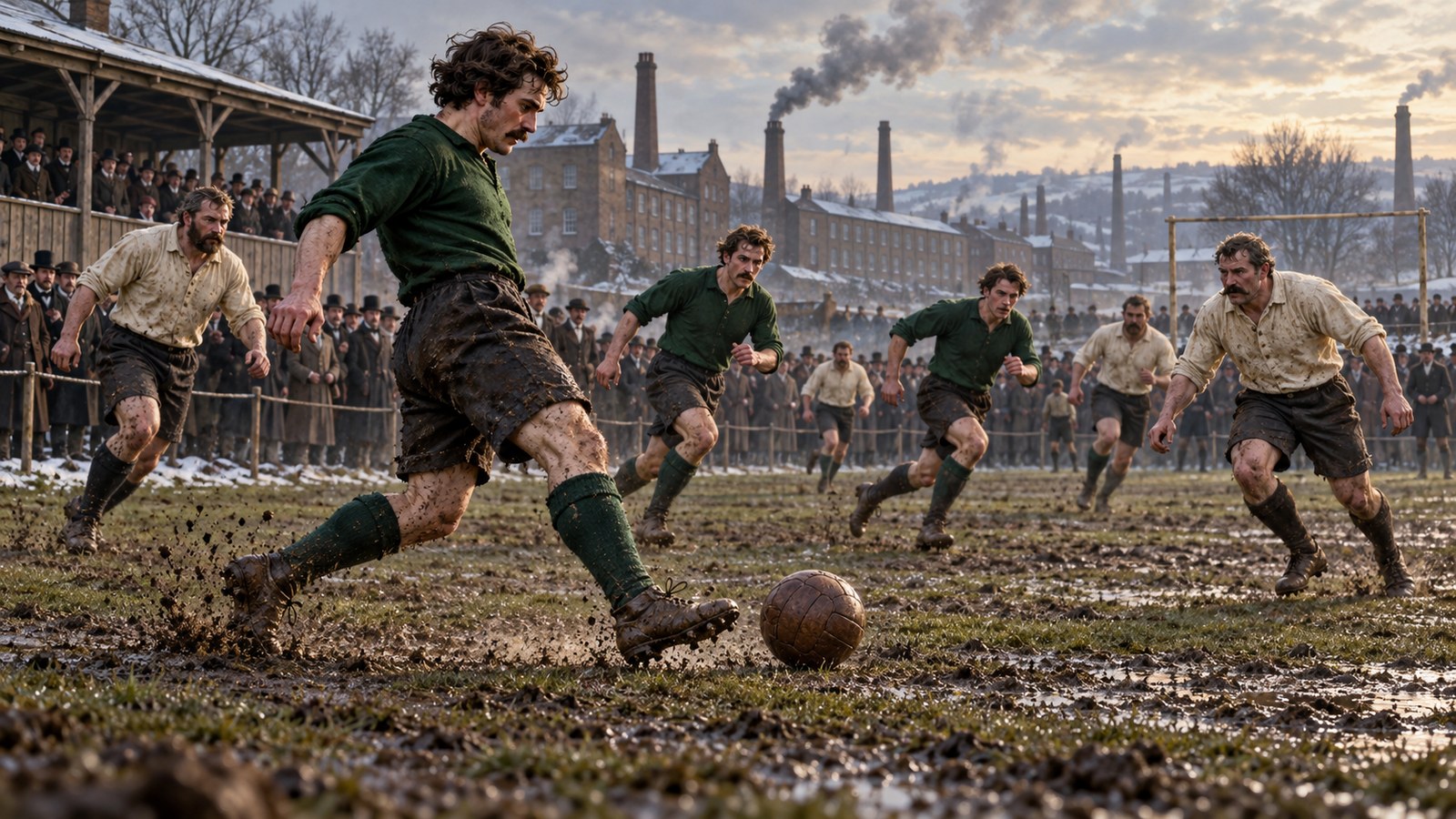
Suter had been trained for hard manual work. Once in England, however, football became the visible constant in his week. The claim that Lancashire stone was too difficult to work survived because it expressed the contradiction neatly: a supposed amateur had abandoned the occupation that explained his income.
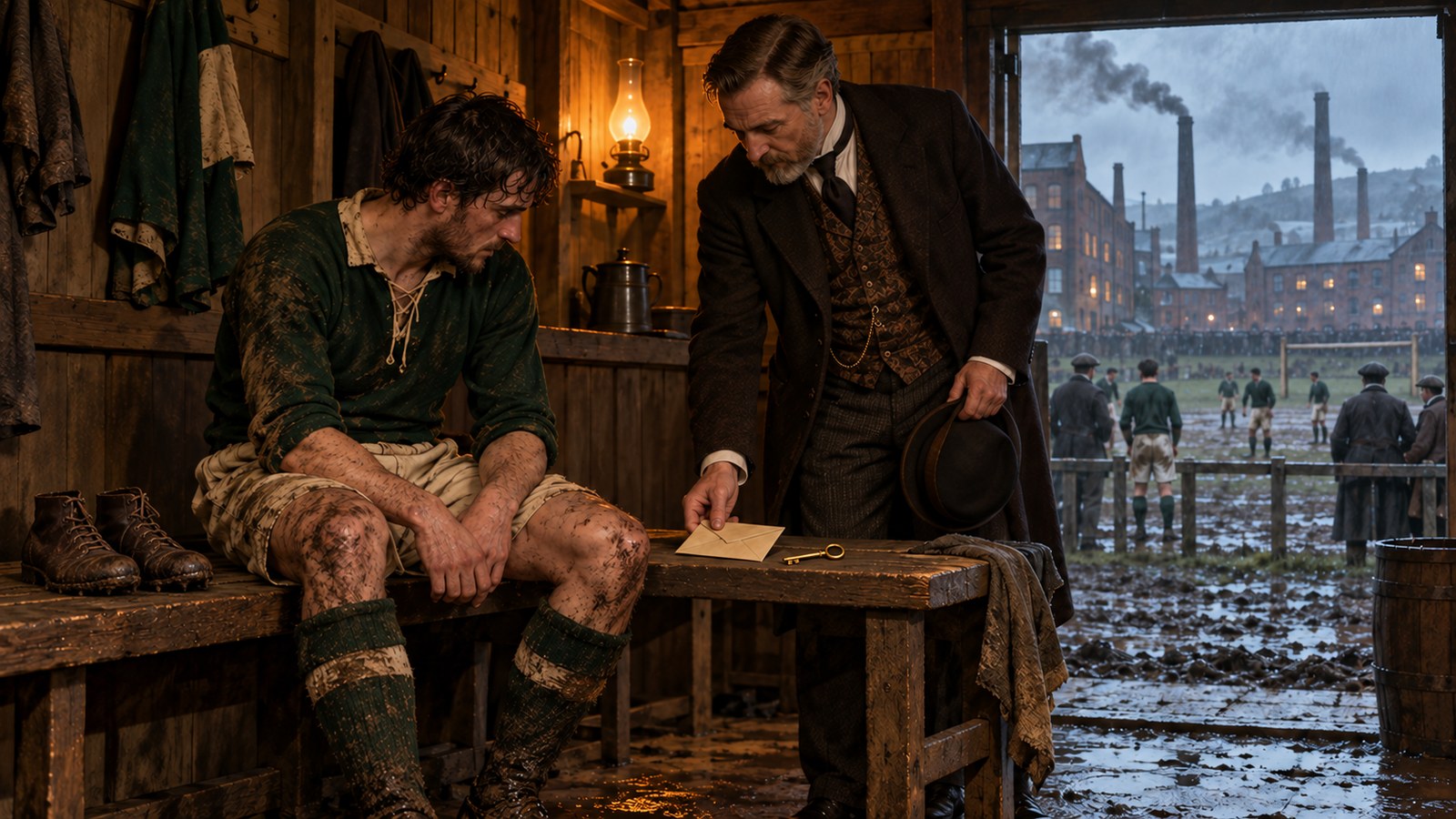
Payment did not need to arrive in an envelope labelled “football wage.” Richard McBrearty of the Scottish Football Museum has described the inducements offered by northern English clubs: good jobs, decent homes and other support that ensured a recruit wore the desired colours. The arrangement gave officials room to deny professionalism while giving players enough security to train and play.
That ambiguity explains why arguments about the “first professional” can become tangled. Suter was not the first sportsman to earn money, nor the only footballer receiving discreet help. He became a recognisable marker because his moves, his abandoned trade and his sustained place in major teams made the economic arrangement difficult to pretend away.
The dates sharpen the point. Suter joined Darwen in 1878, four years before the FA formally outlawed payment in 1882, and went to Blackburn in 1880. The regulations hardened while the practice was already growing. Football’s authorities were trying to close a door through which players and clubs had been walking for seasons.
Blackburn Made the Transfer Explosive
In 1880 Suter left Darwen for Blackburn Rovers. This was not a quiet progression to a larger stage. The towns were close, the clubs were rivals, and the move intensified suspicions that Blackburn had offered better terms. A player whose living arrangements were already controversial had switched employers without being officially employed as a footballer.
The transfer also revealed a new source of leverage. Once clubs valued a player’s technique and availability, rivals could compete for him. Amateur language did not prevent a market; it simply pushed negotiation into jobs, housing and private promises. Suter’s choice showed that a skilled footballer could influence where he played because more than one club wanted what he supplied.
His Scottish background was part of that value. The recruits moving south became known as the Scotch Professors, a nickname for their sophisticated use of passing. McBrearty has contrasted their quick team play with the individual dribbling preferred by early English elites. Smaller Scottish players had learned to release the ball and move, reducing the advantage of physically larger opponents.
The style also suited spectators in industrial towns. Passing created speed, combinations and recognisable collective patterns. A team could be assembled, coached and improved rather than merely selected. The story connects directly with Blackburn Olympic’s working-class FA Cup breakthrough in 1883, when preparation and combination unsettled Old Etonians. Suter played for Rovers, not Olympic, but both clubs belonged to the same shift in football’s geography.
Three Finals Changed Who Owned the Cup
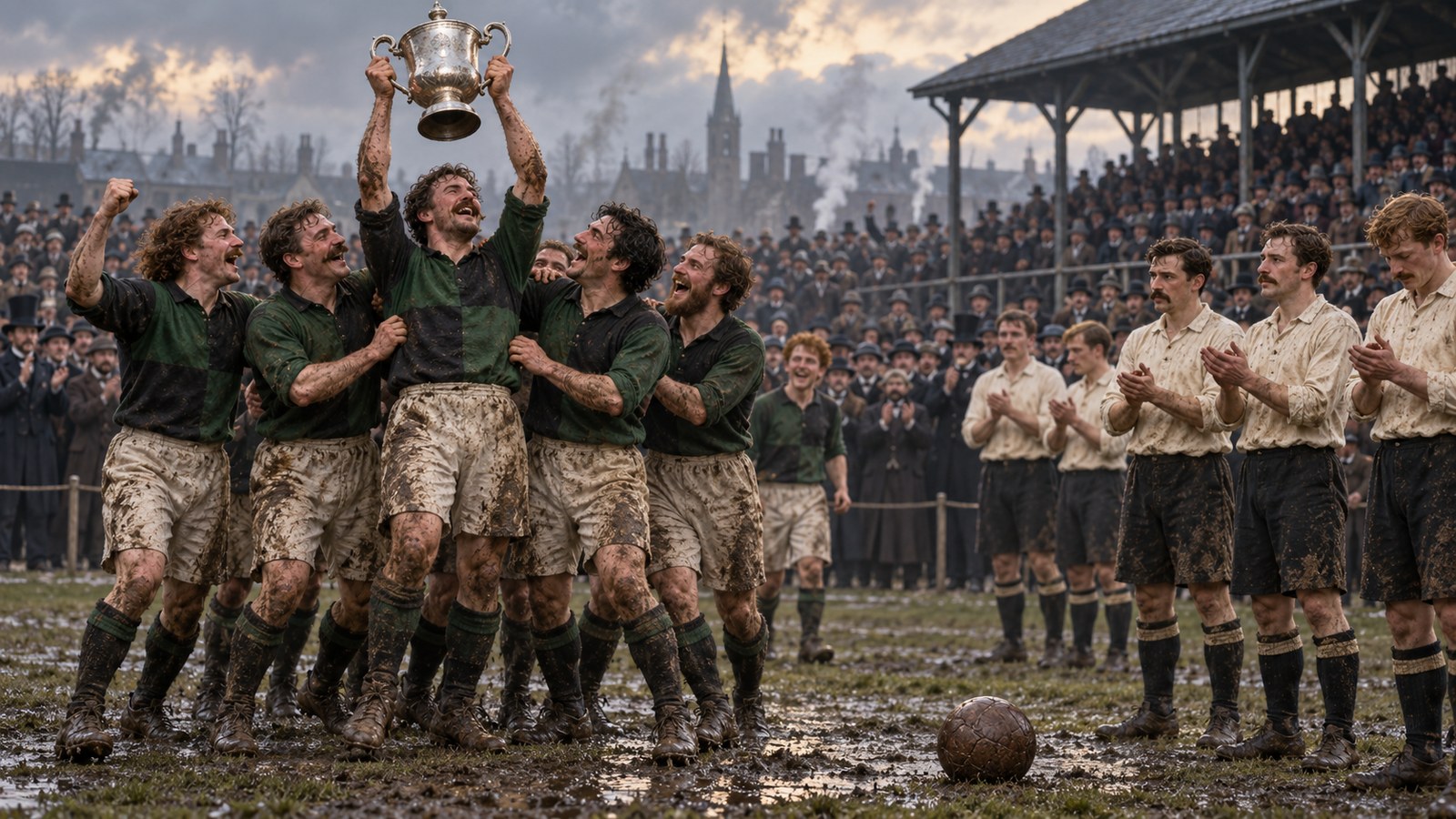
Suter’s Blackburn record gave the argument a trophy cabinet. Rovers reached four FA Cup finals with him and won three in succession: 1884, 1885 and 1886. The first of those victories came against Queen’s Park, the great Glasgow amateur club. The path that began with Scottish players travelling south now placed one of them opposite Scotland’s most powerful guardian of the old ideal.
The sequence matters more than a single upset. An isolated cup win could be treated as romance. Three consecutive wins announced control. Northern clubs could recruit, practise and retain talented players long enough to dominate the competition that had begun with old boys, universities and public-school networks near its centre.
Professionalism did not create passing, crowds or northern ambition by itself. It made the labour behind them more honest. Players who trained seriously and attracted paying spectators were producing value. Covert jobs and invented occupations kept that value hidden, while medals made the effect impossible to miss.
The FA legalised professionalism in July 1885, between Suter’s second and third winning finals. The rule change therefore arrived in the middle of Blackburn’s run, not before it. One season he was part of a structure officially resisted; the next, the governing body had begun acknowledging the terms on which leading northern clubs were already operating.
The consequences stretched beyond Rovers. Seven members of Preston North End’s 1888–89 League-and-Cup double side were Scottish. That team’s unbeaten campaign is preserved in the 27 competitive matches Preston played without defeat. Suter’s generation had helped establish the route, the playing language and the economic logic that made such a squad possible.
His Career Ended as the League Began
Suter was near the end when the Football League started in 1888. The timing gives his career a peculiar shape. He helped force the conditions for organised professional football, yet the new national league belonged mostly to players who followed. His major stage had been the FA Cup, where a short sequence of knockout matches could display the growing power of Lancashire football to the entire country.
More than a century later, his grave in Blackburn Old Cemetery had fallen over and become, in the words of the supporter who noticed it, little more than a mound of grass. Jacqueline McAleese encountered his story through television, contacted Blackburn Rovers and prompted the club to fund a restoration.
The work was completed in 2021 on the 135th anniversary of Suter’s third FA Cup victory, a 2–0 win over West Bromwich Albion. That detail gives the memorial a fitting clock. The restored stone marked not merely an individual footballer but the moment football could no longer keep its workers economically invisible.
Suter’s story is sometimes reduced to a claim about being first. Its stronger meaning lies in the sequence: cross-border match, recruitment, abandoned trade, rival transfer, passing football, repeated finals and eventual legalisation. He did not wait for professional football to be formally invented. He lived inside its unofficial version until the rules caught up.
Sources
- BBC News, “Netflix series prompts fan to restore first paid footballer’s grave”
- The Guardian, “Who gave English football its mass appeal? The ‘Scotch Professors’”
- Partick Thistle — The Early Years, “How two Partick footballers started professional football”
- Association football professionalism historical record