
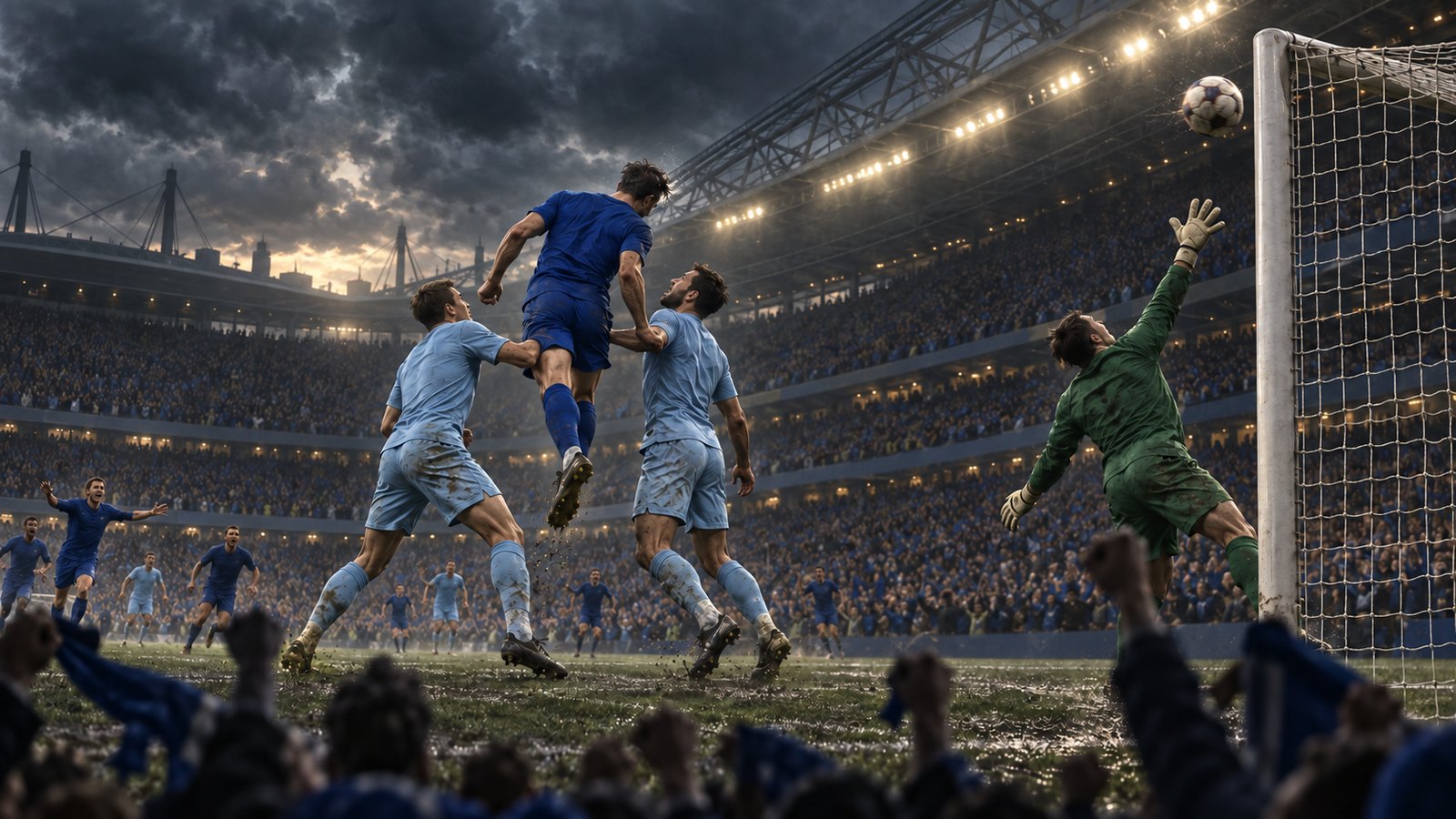
Ben Watson had entered the FA Cup final in the 81st minute. Twenty minutes later, as Shaun Maloney’s corner bent toward the near post, he rose between Manchester City defenders and redirected it beyond Joe Hart. The clock had entered stoppage time. At the other end of Wembley, Wigan Athletic supporters saw the ball cross the line and understood that their club’s first major trophy was almost in their hands.
Three evenings later, the same team walked into driving rain at Arsenal with a different clock running. Wigan still needed points to survive in the Premier League. By the end of that night, the FA Cup holders had been relegated. The two results are often packaged as football’s sharpest contradiction. In reality, they reveal what happened when one small squad had to fight a knockout final and a survival campaign without being allowed to pause either one.
Wembley Offered One Match With a Clear Ending
Manchester City arrived as firm favourites on 11 May 2013. Their side contained Sergio Agüero, Carlos Tevez, Yaya Touré and Vincent Kompany. Wigan arrived in the league’s bottom three, with two Premier League fixtures still to play. Roberto Martínez had no way to protect the league campaign without diminishing the greatest occasion in the club’s history.
He chose the occasion. Wigan did not retreat into a permanent line on the edge of their penalty area. Callum McManaman kept attacking Gaël Clichy, carrying the ball directly enough to make City’s defenders turn. Joel Robles supplied the resistance at the opposite end, saving from Touré, Agüero and Tevez. The underdog’s plan depended on surviving danger while preserving a route forward.
The match tightened rather than opening. With six minutes of normal time remaining, Pablo Zabaleta received a second yellow card for bringing down McManaman. City were reduced to ten. Martínez then sent on Watson, a midfielder who had missed much of the season after breaking his leg.
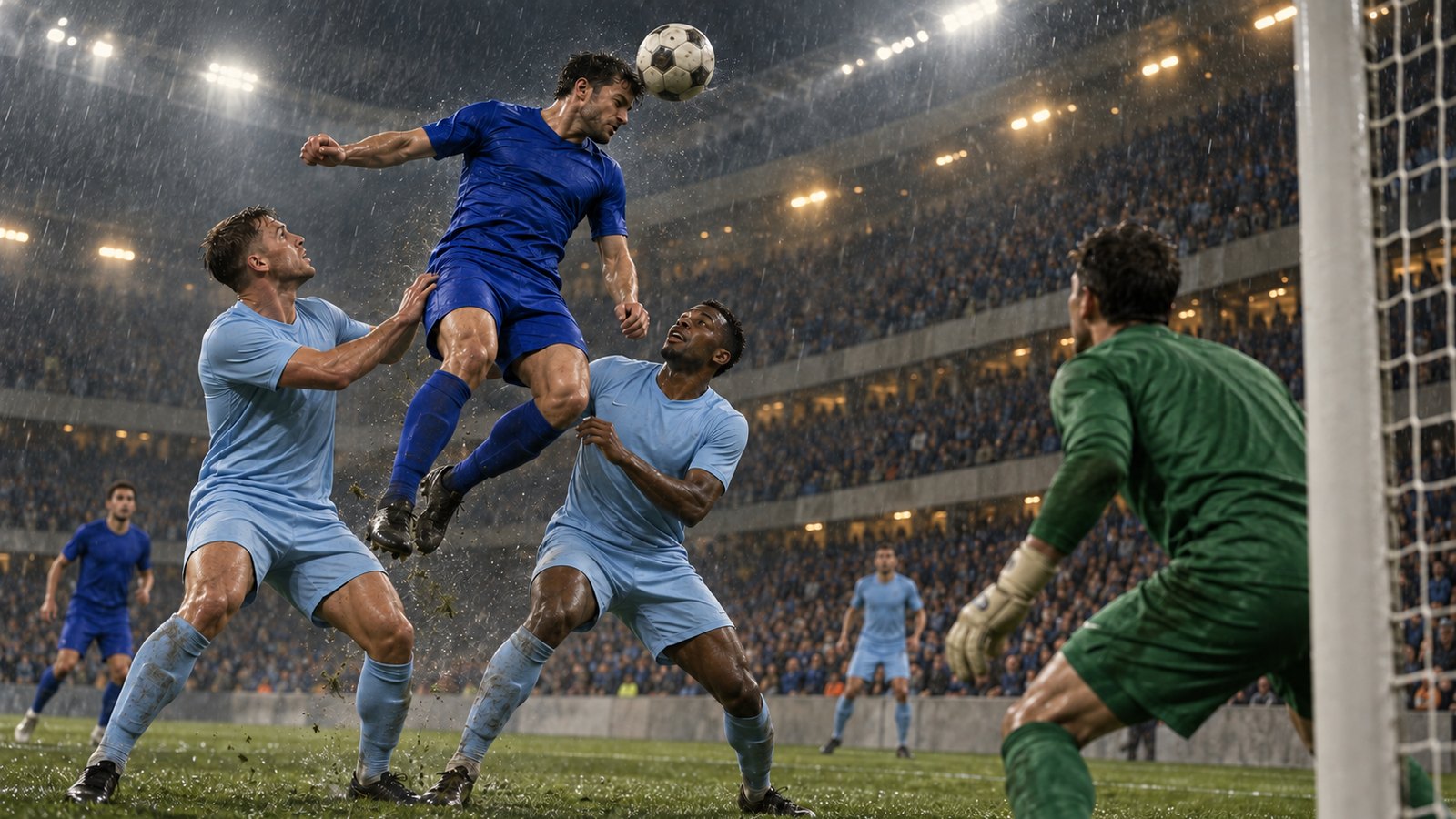
One minute into added time, Maloney delivered the corner. Watson reached it ahead of Jack Rodwell and sent his header over Hart. There was no time for City to build a reply. Wigan’s task had a final whistle, and every reserve of concentration could be spent reaching it.
The Cup Run Kept Producing Belief
Wigan’s performance did not emerge from one lucky contact. McManaman was named man of the match because his running gave City a problem they never fully solved. Robles’s saves kept the score level without making Wigan passive. The ball moved forward with purpose whenever space appeared.
That balance mattered emotionally. A relegation struggle can force every action to carry the weight of the table. At Wembley, Wigan had a self-contained assignment: stay in the game, keep an outlet and take the chance if it arrived. The favourite had more possession and more celebrated players, but the underdog could measure progress by the minutes remaining.
For chairman Dave Whelan, the scene folded two cup finals together. He had broken his leg while playing for Blackburn Rovers against Wolverhampton Wanderers in the 1960 final. In 2013 he returned to Wembley at the head of a club that had spent most of its history far from such a stage. Emmerson Boyce and Gary Caldwell lifted the trophy together before an attendance recorded at 86,254.
The celebration was deserved and unavoidable. No club can treat its first major honour as a distraction. Yet the league had not granted Wigan extra recovery time, and the table had not been altered by what happened at Wembley.
Seventy-Two Hours Could Not Separate Two Seasons
The final was on Saturday. Arsenal awaited on Tuesday. Wigan travelled to north London with the same starting eleven that had faced City, a detail that made the physical collision visible. The players were carrying the effects of a final, a celebration and an emotional peak into a league match that demanded another maximum effort.
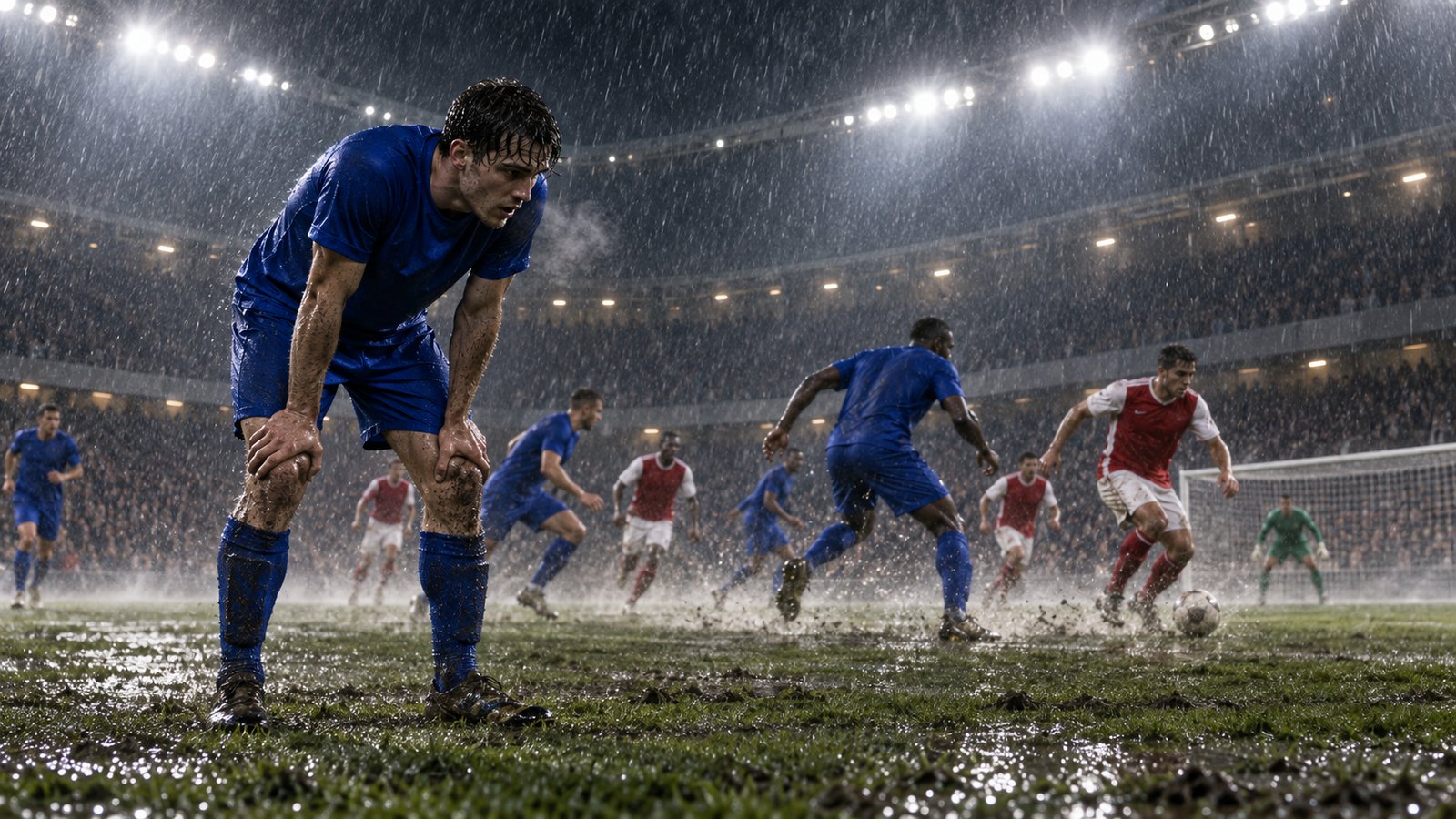
Arsenal had its own pressure. Victory would leave Champions League qualification in its hands before the final day. The home side began quickly, and Lukas Podolski headed in after nine minutes. In the driving rain, Wigan could have folded. Instead, Maloney’s free-kick shortly before half-time brought the score level.
For a short interval, the escape remained imaginable. Wigan were not merely displaying the cup at a doomed farewell; they were level away from home and still competing for another season in the division. But a league survival match has no obligation to preserve a story’s symmetry.
Theo Walcott restored Arsenal’s lead in the second half. Podolski added another, and Aaron Ramsey made it 4–1. Three days after beating one of England’s richest teams at Wembley, Wigan’s eight-season Premier League stay was over.
The Same Courage Met Different Mathematics
Cup football and league football reward different kinds of survival. At Wembley, Wigan needed to remain level until one opening could decide everything. At Arsenal, a draw was unlikely to be enough, and the match existed inside a table shaped by 36 previous games. Going behind demanded risk. Chasing the result created more space for an Arsenal side pursuing its own target.
This explains why the two performances can belong to the same team without cancelling each other. Wigan’s willingness to attack City helped win the cup. The same appetite could not erase the accumulated cost of a league season in which the club finished 18th. Arouna Koné led their league scoring with 11 goals, but the relegation calculation involved every missed point before May.
The contrast also separates Wigan’s story from a conventional final upset such as Luton’s 1988 League Cup victory over Arsenal. Luton’s final supplied the destination. For Wigan, Wembley was followed immediately by another match with consequences at least as large for the club’s daily future.
It also differs from Portsmouth reaching Wembley during administration in 2010. Wigan’s crisis was not hidden from the players or deferred to a boardroom. It was visible on a live league table while medals from Saturday were still new.
The Medal and the Drop Share One Photograph
Wigan became the first club to win the FA Cup and be relegated from England’s top flight in the same season. That record sounds like a punchline until the sequence is restored. Watson’s header was not less meaningful because Arsenal scored four on Tuesday. Relegation was not softened by the silverware. Each outcome remained complete.
The useful image is not a scale balancing glory against failure. It is a squad moving from one tunnel to another before its breathing had settled. On Saturday, McManaman could keep testing Clichy because every successful run pushed Wigan closer to a single prize. On Tuesday, Maloney’s equaliser briefly reopened the path to survival, but Arsenal’s next goal changed the required calculation again.
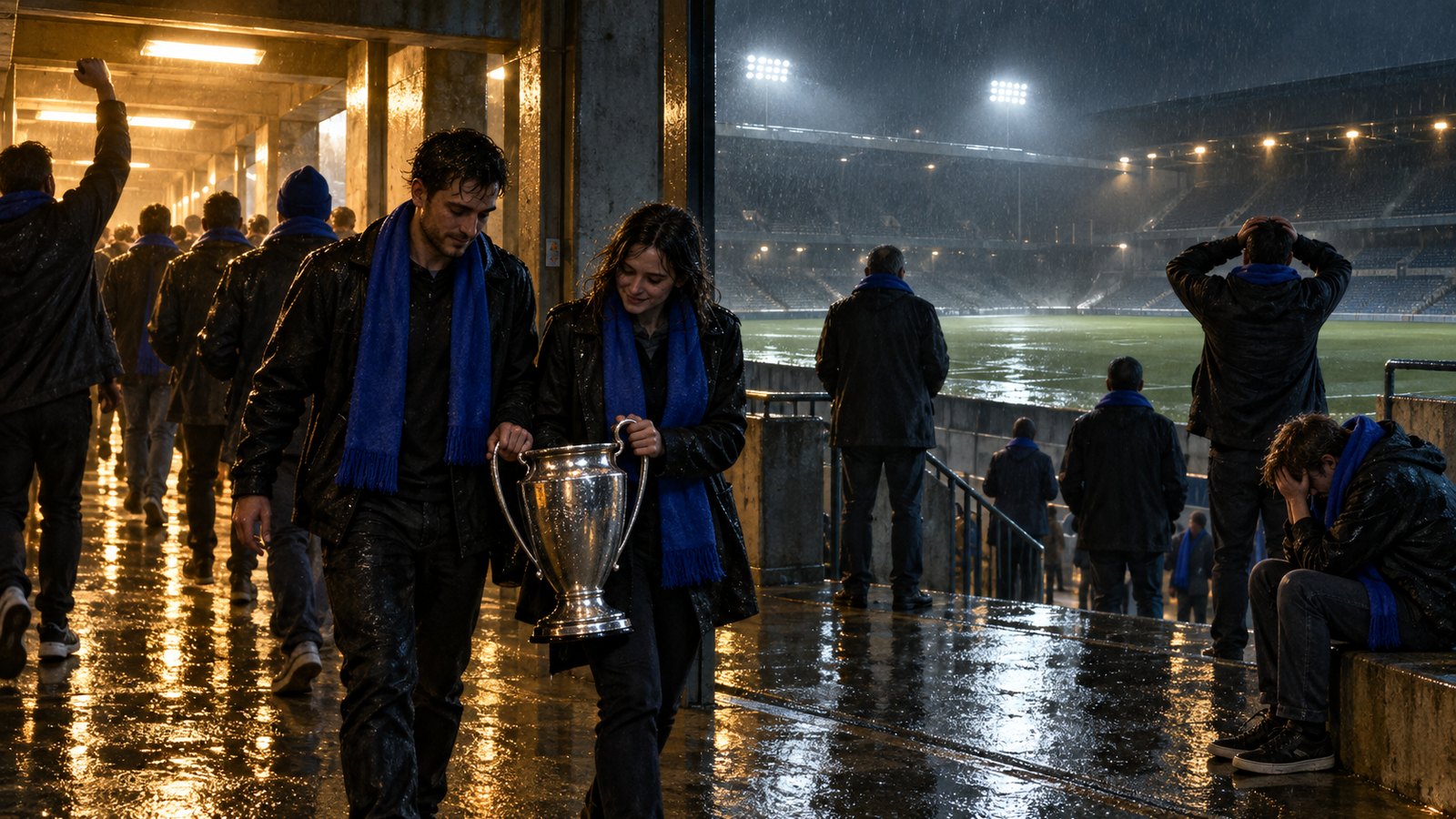
Supporters were asked to process incompatible emotions almost at once. The club had achieved something permanent: its name was engraved on the FA Cup. It had also lost the platform on which the previous eight seasons had been played. One fact belonged in the honours list; the other changed opponents, income and weekly expectations.
Wigan’s Week Refuses a Simple Moral
It is tempting to turn the episode into advice: prioritise survival, chase glory, rotate the team, protect momentum. Wigan’s week resists all of those clean conclusions. A club in its first major final could not reasonably hold back. A club in the relegation zone could not approach Arsenal gently. The schedule made both demands legitimate and placed them almost on top of each other.
Martínez’s players answered the first with one of the FA Cup’s great upsets. They answered the second strongly enough to equalise in hostile weather, but not strongly enough to stop Arsenal’s second-half surge. The difference between those outcomes was not a sudden loss of character. It was the difference between a final that began level and a league campaign that arrived carrying months of arithmetic.
Watson’s header therefore remains where it belongs: at the summit of Wigan Athletic’s history. The 4–1 defeat remains beside it, not underneath it and not erased by it. For seventy-two hours in May 2013, one group of players reached the end of two competitions. One ended with a cup in their hands. The other ended with rain, four Arsenal goals and no match left that could save them.
Sources
BBC Sport; The Football Association; Arsenal; The Guardian; contemporary match and season records.