
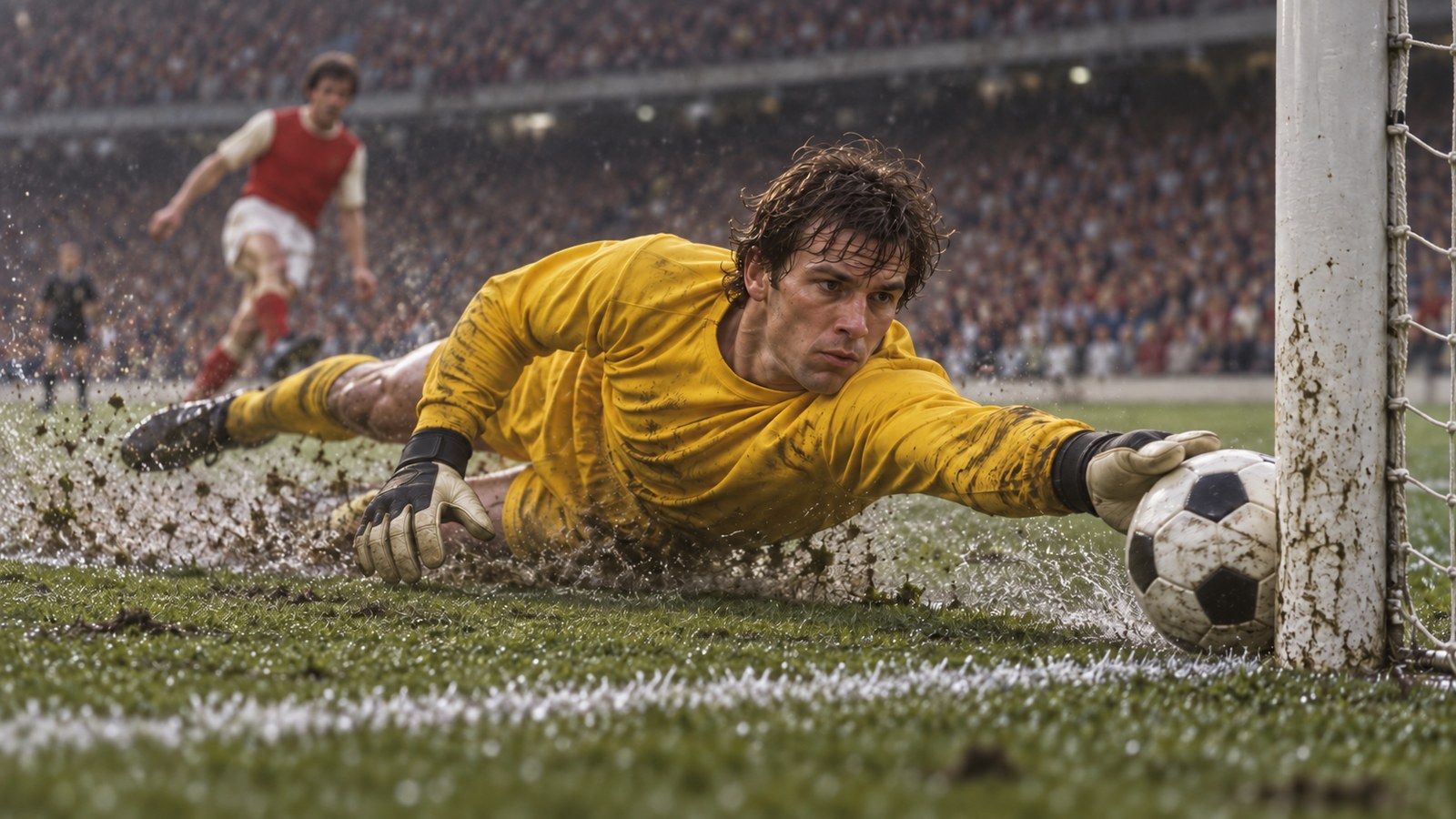
With ten minutes left at Wembley on 24 April 1988, Luton Town were behind, Arsenal had a penalty, and the holders appeared one clean strike from retaining the League Cup. Nigel Winterburn ran in from the left. Andy Dibble, Luton’s reserve goalkeeper, dived low and pushed the ball away. The match did not pause to explain what had changed. It simply accelerated.
Arsenal had overturned Brian Stein’s early goal through Martin Hayes and Alan Smith. Now the missed penalty left the door open. Danny Wilson headed Luton level in the 82nd minute, and Stein scored again in the final minute. A final that seemed settled at 2–1 ended 3–2 to the club playing its first League Cup final. The decisive sequence lasted less than ten minutes and began with a goalkeeper making only his sixth appearance of the season.
A Reserve Goalkeeper Walked Into Wembley
Luton arrived as an established First Division side rather than an unknown lower-league visitor, but Arsenal carried the clearer expectations. George Graham’s team had won the League Cup in 1987 and returned as holders. Luton had never reached this final. Their manager, Ray Harford, also had to change goalkeepers: Les Sealey was not fit, so 22-year-old Andy Dibble started.
Dibble’s lack of recent matches made the assignment unusual. The final was only his sixth appearance of the campaign. In front of him, Luton used the passing quality of Ricky Hill and David Preece, the work of Danny Wilson, and the physical pairing of Mick Harford and Brian Stein. Arsenal’s side included David Rocastle, Michael Thomas, Alan Smith and Kenny Sansom, but David O’Leary’s Achilles injury meant Gus Caesar started in central defence.
The setting magnified every selection. The attendance was 95,732, and the old Wembley terraces placed almost an entire season’s worth of attention around one pitch. Luton had reached the final by conceding only three goals in their cup run. Arsenal had conceded even fewer. The route suggested control; the afternoon produced the opposite.
Stein Gave the Underdogs the First Problem to Defend
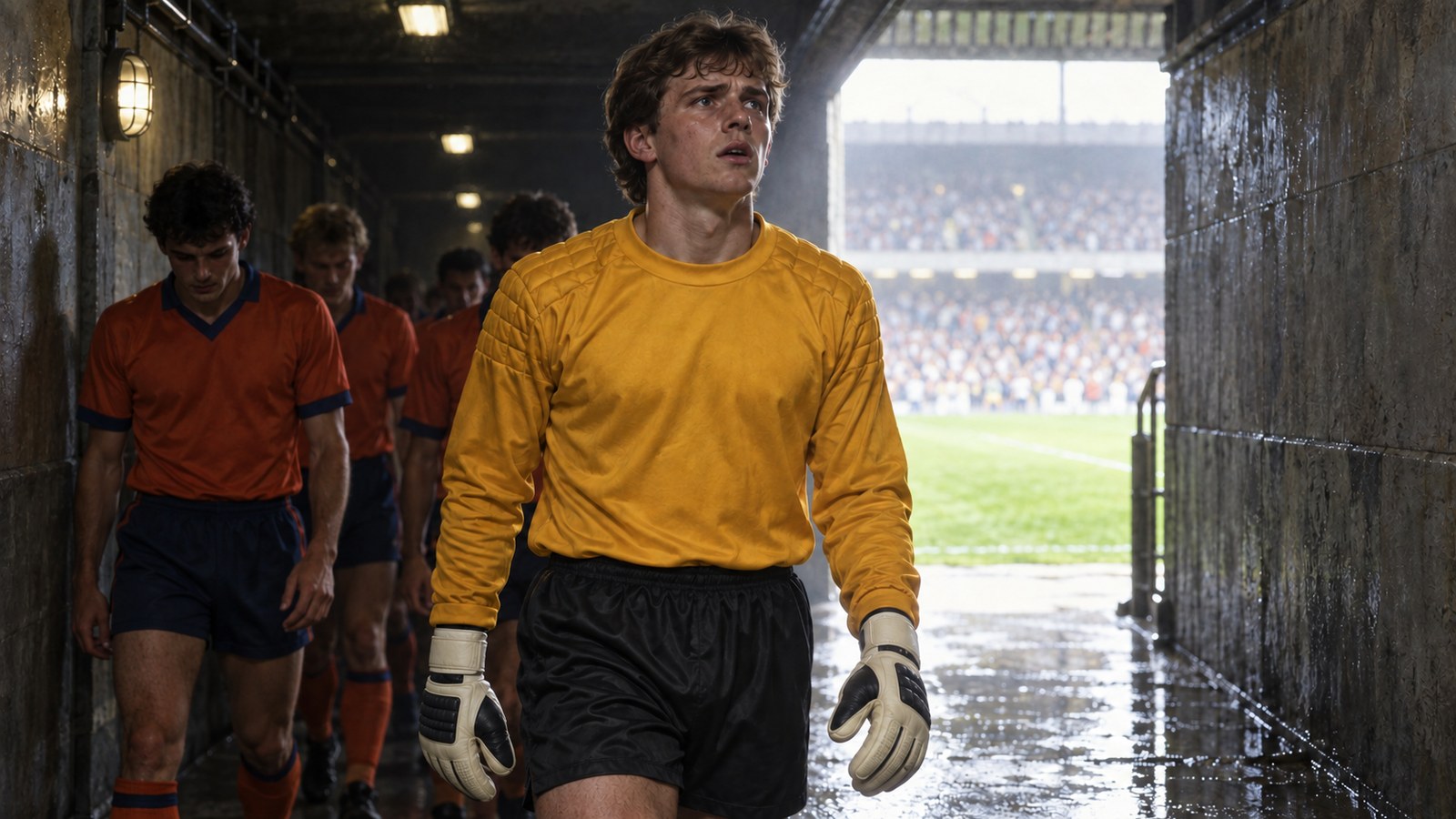
Luton scored after thirteen minutes. Hill’s delivery created disorder in the Arsenal area, and Stein reacted to finish from close range. It was not a late act of resistance from a side waiting for pressure. Luton had taken the match away from Arsenal’s preferred script almost immediately, then asked the holders to solve a compact defence.
For much of the next hour, Dibble and the defenders preserved that one-goal margin. Arsenal had possession and territory without turning the final into a procession. Luton’s midfield could still pass through pressure, while Harford and Stein offered direct exits when the team needed to leave its own half. The score remained 1–0 deep into the second period.
Then Arsenal found two goals in quick succession. Martin Hayes equalised in the 71st minute after another attack crowded Luton’s goalmouth. Three minutes later, Alan Smith headed Arsenal in front. Within a brief stretch, a lead Luton had protected since the opening phase was gone.
The change mattered beyond the score. Arsenal were experienced cup holders with the match moving into its final quarter-hour. Luton had to abandon the comfort of defending Stein’s goal and recover while Wembley expected the favourite to close the game. The next major opening appeared to remove even that possibility.
The Penalty Save Reversed the Direction of the Final
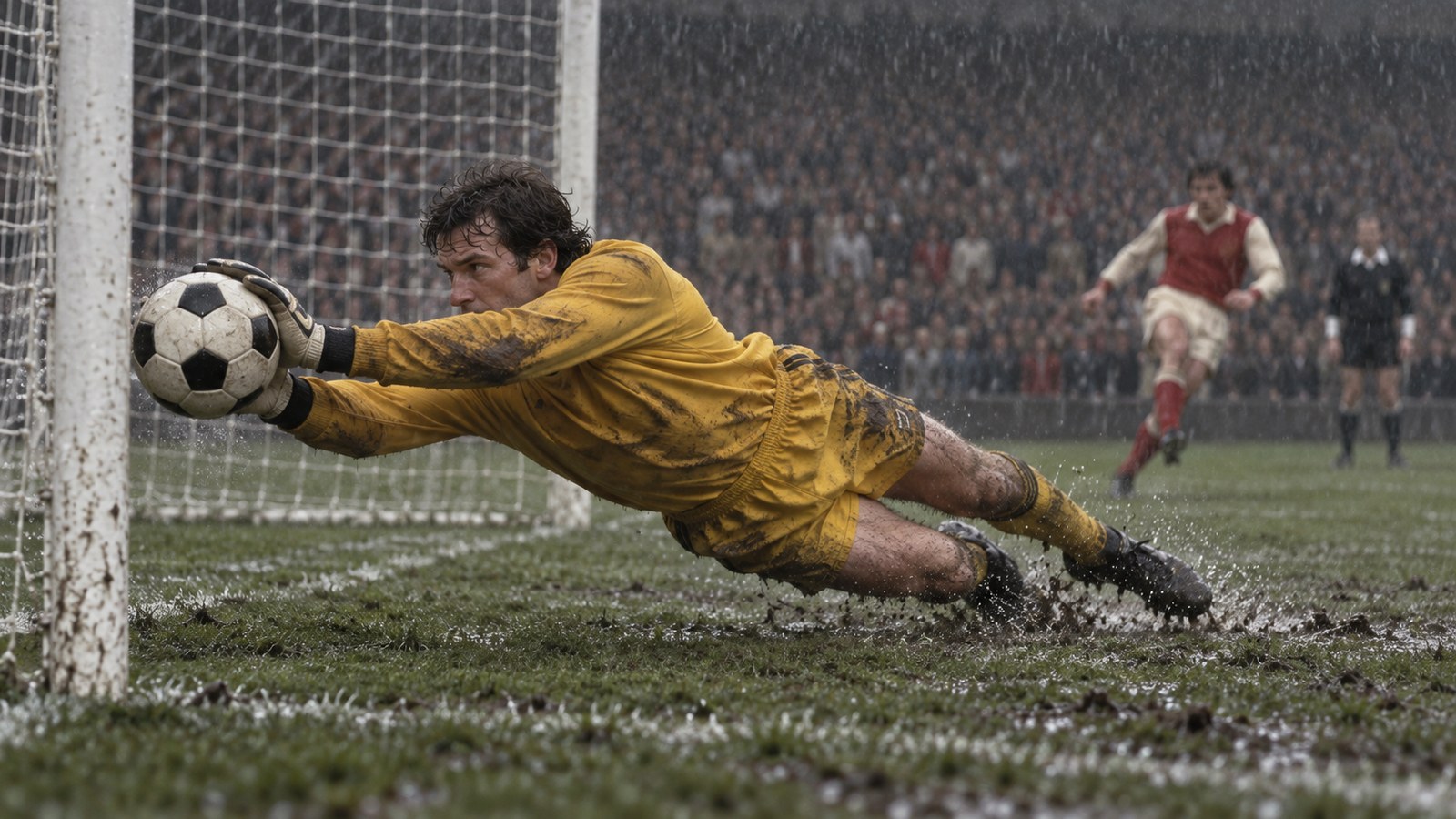
With Arsenal leading 2–1, referee Joe Worrall awarded a penalty after Rocastle was challenged. Winterburn took it. A successful kick would have given Arsenal a two-goal cushion with roughly ten minutes remaining. Instead, Dibble read the shot and saved low to his left.
The stop did more than preserve a narrow score. Arsenal had just been offered the simplest route to control: place the ball, beat one goalkeeper, restart with a two-goal lead. When that route vanished, the match became unstable again. Luton sent players forward because the cost of caution had disappeared.
Dibble had already made important saves, but this one joined time, score and consequence in a single action. A reserve goalkeeper facing a penalty at 2–1 did not have to inspire a mythical transformation. He only had to keep the match alive. The attackers still had to use the minutes he returned to them.
Wilson and Stein Used the Minutes Dibble Returned
Luton’s equaliser came in the 82nd minute. Stein crossed from the right, and Danny Wilson attacked the delivery with a diving header. The ball beat John Lukic and made it 2–2. Wilson, a midfielder asked to cover ground throughout the match, arrived in the penalty area at precisely the point when Arsenal were trying to restore order.
Extra time now looked likely, but Luton kept pressing. In the 90th minute, Caesar failed to clear another dangerous ball cleanly. Stein reached it and scored his second goal of the afternoon. He had opened the final in the 13th minute and now closed its scoring in the last regulation minute.
The sequence gave the result its enduring shape: penalty saved, diving header, late winner. Each action depended on the previous one. Without Dibble, Arsenal probably restart at 3–1. Without Wilson’s run, the save becomes a brave detail in defeat. Without Stein’s second finish, the match continues into extra time. Together they compressed Luton’s first major trophy into a chain that could be remembered without simplifying the first seventy minutes.
Arsenal’s defensive errors also had consequences beyond Wembley. Graham strengthened his back line, and Steve Bould arrived that summer. Caesar’s opportunities became more limited. A chaotic final therefore sat just before the construction of the defence that would underpin Arsenal’s league title the following season.
The Cup Win Led to a Door Europe Kept Closed
Luton’s 3–2 victory was the club’s first major cup triumph. Harford later called it the greatest win of his time at Luton. The players carried the trophy back to Bedfordshire, and the club returned to Wembley the following year, losing the 1989 League Cup final to Nottingham Forest. The 1988 success remained singular.
Ordinarily, winning the League Cup offered entry to European competition. Luton did not receive that next chapter. English clubs were still barred from UEFA competitions after the Heysel disaster, and UEFA did not relax the ban for the new winners. The club had conquered the domestic final that should have opened Europe, only to find the route closed for reasons larger than the match.
That denial makes the Wembley afternoon more self-contained. There was no European campaign in which the team could extend the story. The achievement rests on the final itself: Stein’s two goals, Wilson’s header, Dibble’s saves and the pressure of 95,732 spectators around a match that changed direction twice.
Luton were not anonymous and they were not merely lucky. They had conceded three times across the competition before Wembley, led the final for almost an hour and responded after Arsenal’s strongest passage. Yet the margin between a famous win and an expected defeat was still extremely small. It was the width of Dibble’s gloves at 2–1, the angle of Wilson’s header, and Stein reaching one last loose ball before the clock ran out.
Why Those Ten Minutes Still Define the Match
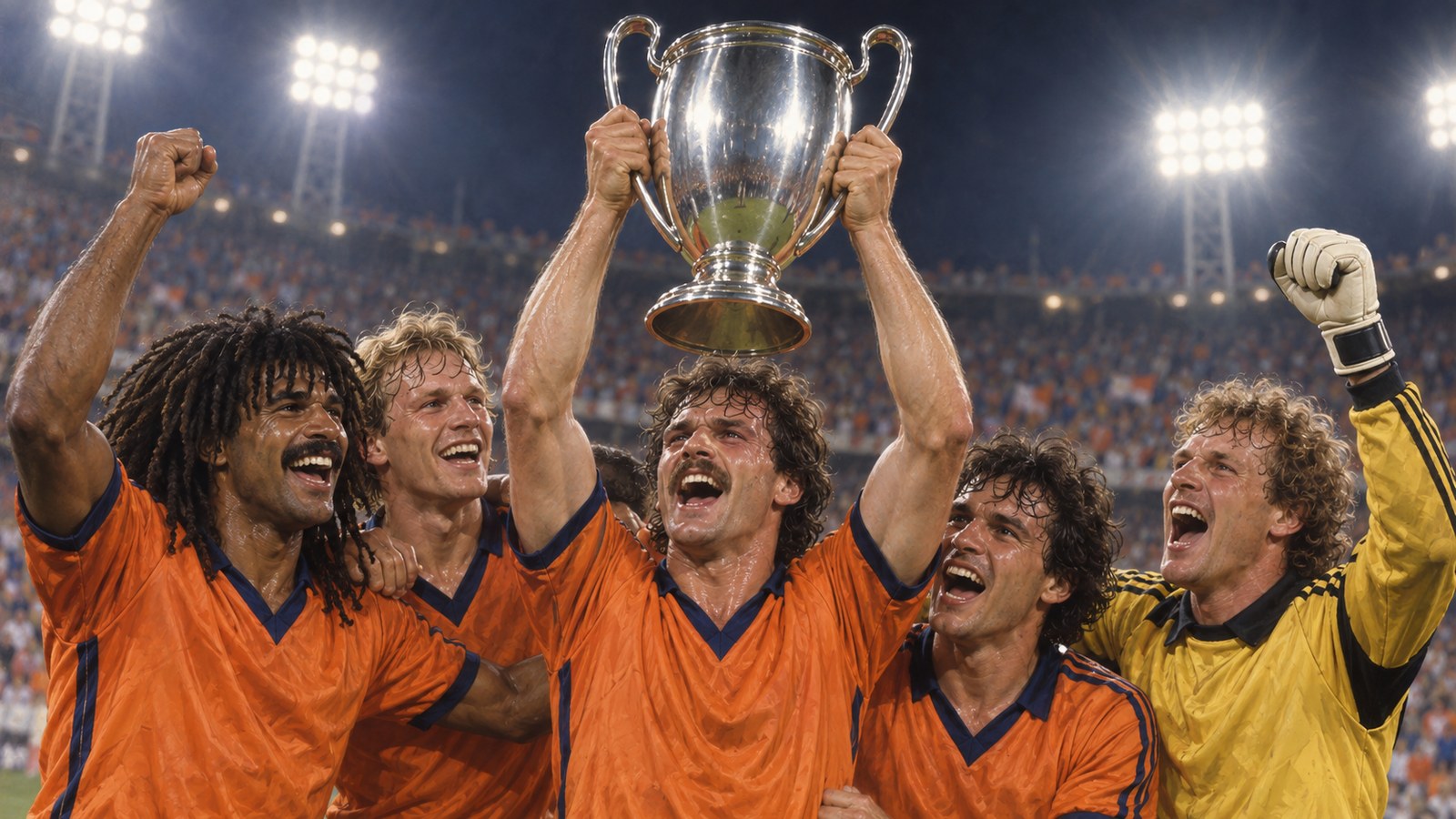
Finals are often reduced to the winner, but this one resists a single decisive act. Stein scored twice, including the winner. Wilson supplied the equaliser. Dibble was named man of the match. The strongest explanation is not that one hero carried Luton; it is that three different interventions arrived in the only order that could produce the result.
The opening goal established something worth saving. The penalty stop preserved it from becoming irrelevant. The header removed the deficit, and the final finish prevented Arsenal from using extra time to recover. Each player solved a different problem under a shrinking clock.
The sequence explains why the 1988 League Cup final remains one of Wembley’s sharpest reversals. At 2–1 with a penalty awarded, Arsenal had the ball, the lead and the status of holders. Ten minutes later Luton held the cup. Nothing about the scoreboard at the penalty spot promised that ending, but every action after the save made it possible.
Sources
Arsenal historical archive; The Guardian; The Independent; Luton Town club history; contemporary reports collected in the match record.