
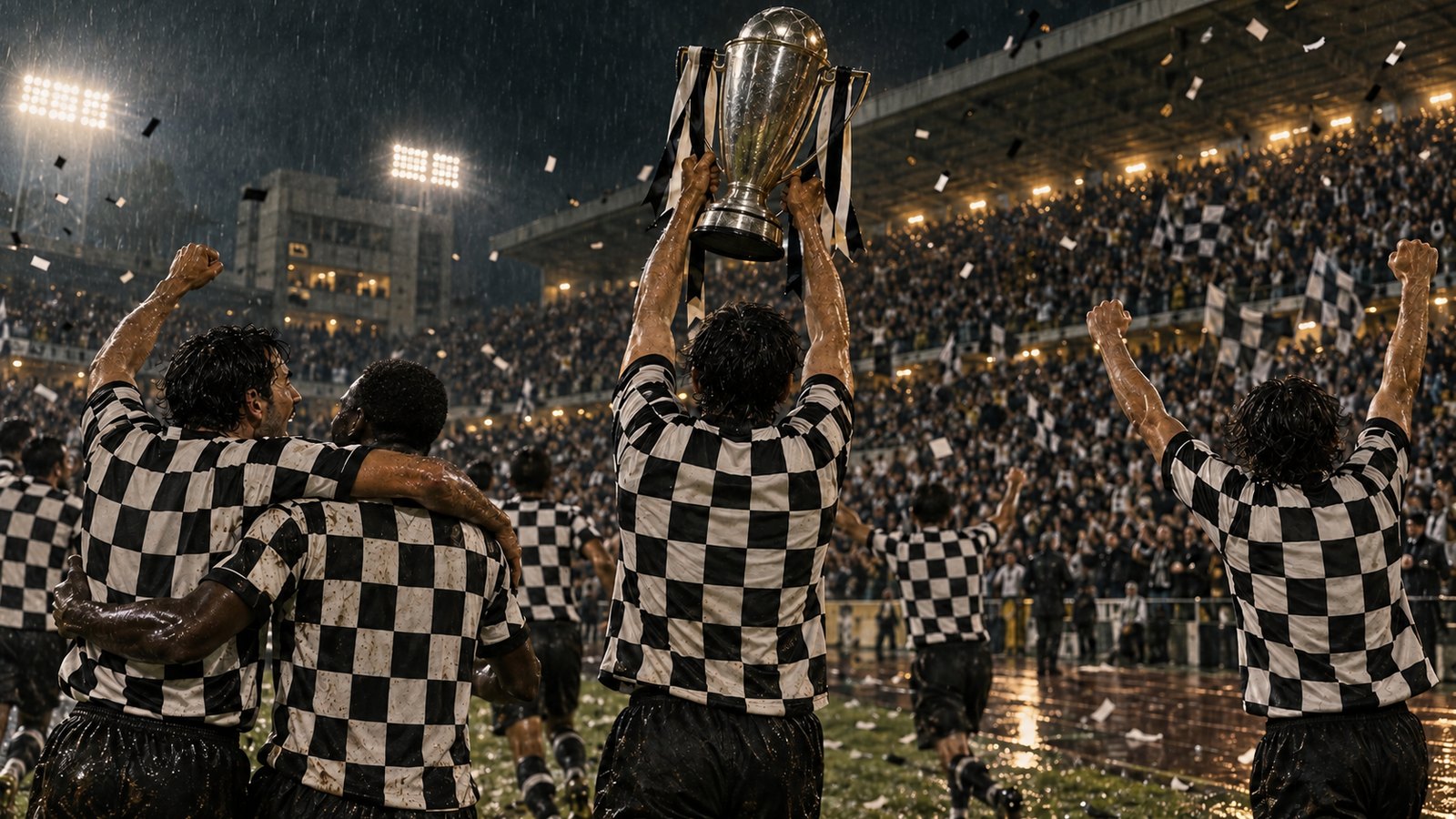
Three black-and-white goals settled the matter at the Bessa on 18 May 2001. Erwin Sánchez struck in the 23rd minute, Elpídio Silva followed four minutes after half-time, and Whelliton added the third in the 65th. Boavista’s opponents, Aves, were heading toward relegation. The home side were heading somewhere no club outside Portugal’s established three powers had gone for 55 years.
The whistle confirmed Boavista as league champions for the first time. Their margin would eventually be one point over neighbours Porto, but the title was not a single-night ambush. Across 34 matches, Jaime Pacheco’s side had lost only three times and allowed only 22 goals. Porto won more games and scored more freely. Boavista gave away fewer defeats, fewer goals and fewer opportunities for the favourites to recover.
One Point Came From a Different Kind of Arithmetic
The final table looks almost designed to provoke an argument about what makes a champion. Boavista recorded 23 wins, eight draws and three losses for 77 points. Porto won 24, one more, and scored 73 goals to Boavista’s 63. Yet Porto’s six defeats doubled Boavista’s total, leaving the challengers one point clear on 76.
That distinction is the season in miniature. A draw can feel like an incomplete afternoon, especially for a side trying to disrupt richer rivals, but avoiding a second or third bad result kept Boavista’s campaign connected. Their 22 goals conceded were five fewer than Porto allowed. Sporting, the defending champions, finished 15 points behind. Benfica fell to sixth, 23 points off the lead.
Pacheco did not need his side to imitate the most glamorous version of either Lisbon giant or their neighbours across Porto. The squad could score heavily when a match opened: Alverca lost 5–1 at the Bessa, Salgueiros lost 5–0 there, and Boavista later scored five away to the same opponent. The larger achievement was that those bursts sat beside a season of controlled damage. Twenty-three victories provided the height of the total; three defeats protected it.
The club’s own account remembers a collective. Martelinho and Silva supplied decisive goals, Petit contested midfield, and Ricardo guarded the net. Nuno Frechaut, Litos, Rui Bento and Pedro Emanuel added defensive experience, while Bolivian playmaker Sánchez could alter a match ahead of them. The squad had enough distinct tools to keep producing points.
The Big Three Found Almost No Openings
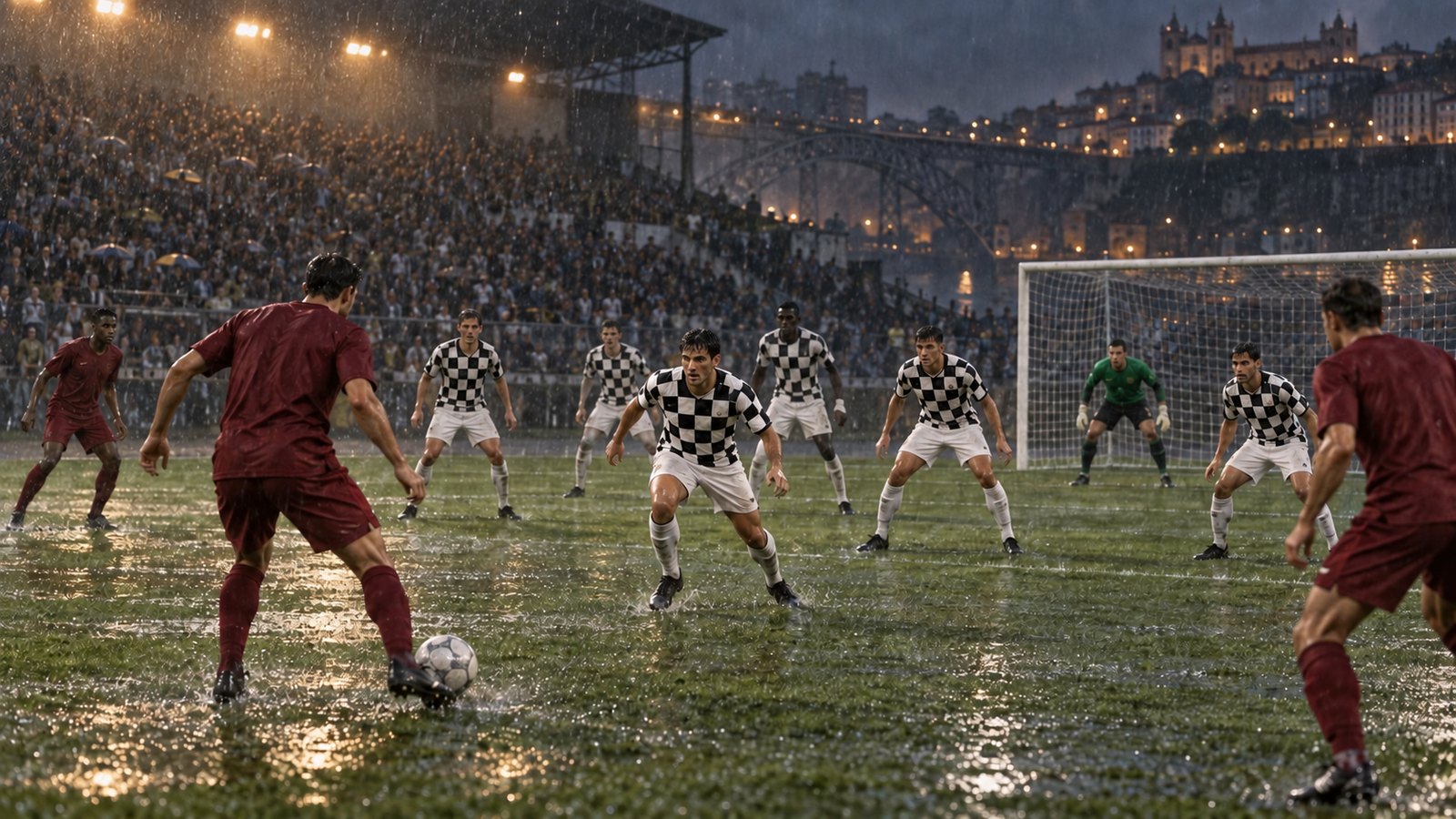
Boavista’s record against Portugal’s traditional powers explains where several of the smallest margins came from. Benfica lost 1–0 at the Bessa and could manage only a goalless draw in Lisbon. Both meetings with Sporting ended 0–0. Those four fixtures brought Boavista eight points without a single goal conceded.
Porto presented the sharper test because the two clubs shared a city as well as a title race. On 13 January, the champions-elect hosted Fernando Santos’s side at the Bessa. Martelinho scored in the 31st minute. Boavista held the 1–0 advantage for the remaining hour and took all three points from the team that would finish directly behind them.
That result was worth more than the visible gap on the day. A Porto victory would have moved three points from one side of the rivalry to the other. Instead, Boavista denied their nearest challenger and strengthened their own position at once. Over the five meetings with Benfica, Sporting and Porto that mattered before the title was secured, Pacheco’s team took 11 points and conceded nothing.
The sixth meeting came after the trophy had already been won. Porto beat Boavista 4–0 on the final day, with Deco scoring in the 11th, 18th and 44th minutes before Ricardo Silva added another. It was emphatic and irrelevant to ownership of the championship. The oddity makes Boavista’s earlier work clearer: they had built enough separation that their worst result against a major rival arrived too late to reopen the race.
Four Wins Removed the Drama From the Final Day
Title stories are often edited around one theatrical last kick. Boavista’s closing sequence resisted that shape. At the end of April, Duda scored after 20 minutes at Alverca and Silva followed in the 41st. Pedro Mantorras pulled one back, but Boavista left with a 2–1 win. A week later, Jorge Couto and Frechaut delivered a 2–0 home victory over Gil Vicente.
The penultimate away trip was more forceful. At Salgueiros on 13 May, Litos scored after 21 minutes. Silva added three, in the 30th, 61st and 80th minutes, with Duda also scoring before the interval. Salgueiros’ only goal was recorded as a Frechaut own goal. The 5–1 result sent Boavista into the Aves match able to finish the job at home.
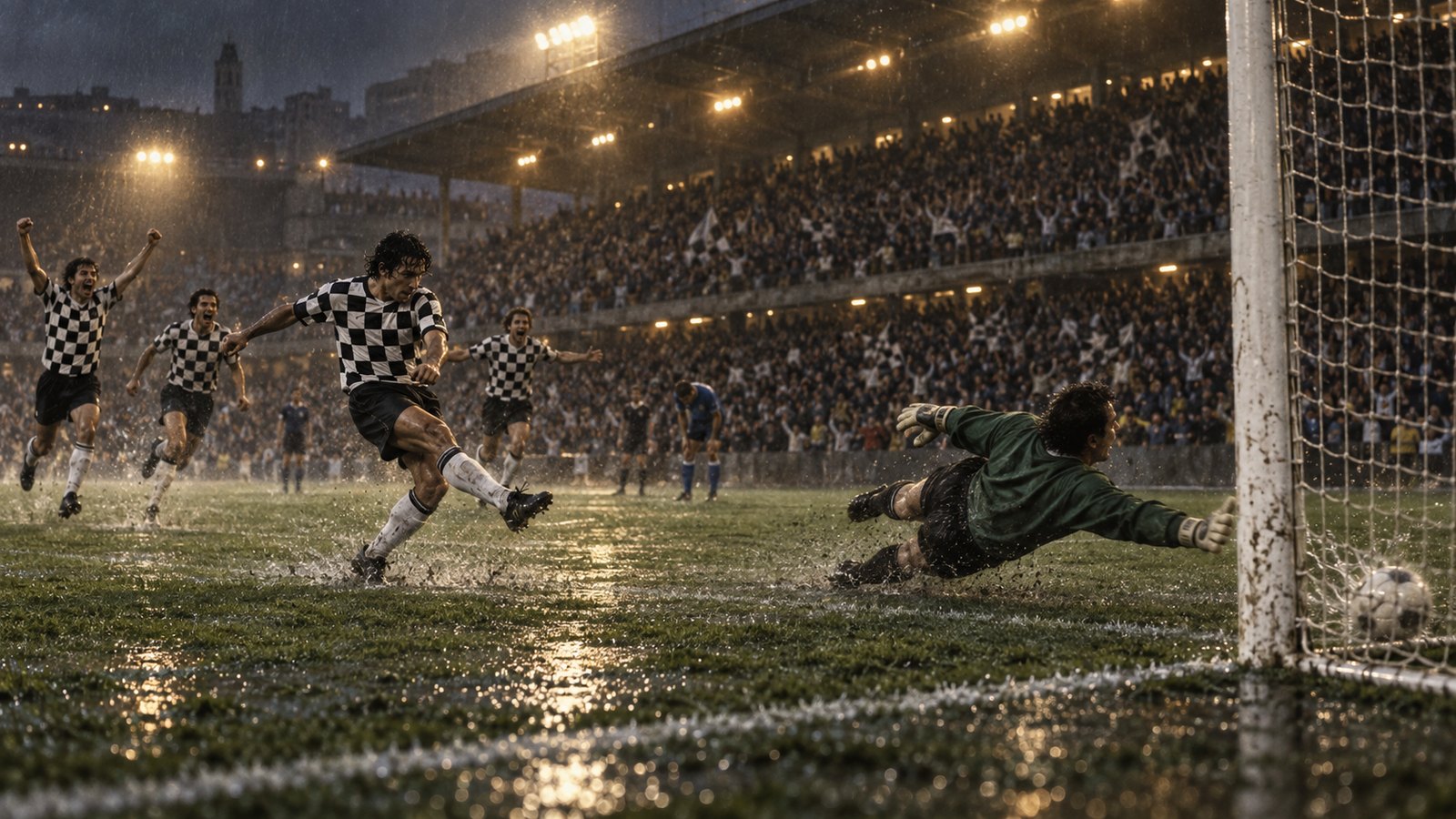
Five days later, the Bessa did not have to wait long for Sánchez’s opener. Silva’s second goal after the break widened the route to the title, and Whelliton’s third removed any practical doubt. Boavista had taken 12 points from four matches and scored 12 goals while conceding two. The side defined by a low goals-against total had closed with attacking certainty.
Porto played its match in the same round three days later, beating Estrela da Amadora 3–2. It could not reverse what had happened at the Bessa. By bringing the clinching point forward, Boavista changed the emotional terms of the final weekend. Their later defeat at the Antas became a footnote rather than a collapse.
The Climb Was Visible Before the Championship
Boavista entered 2000–01 as an outsider, but not as a visitor from nowhere. The club had finished fourth the previous season. It had won its fifth Portuguese Cup in 1996–97 and followed that with the Super Cup. Those achievements gave the players a recent memory of winning knockout honours even though the league remained governed by a much older hierarchy.
There was also physical and administrative change around the football. João Loureiro had succeeded his father Valentim as club president in 1997. Boavista’s history describes investment in sporting facilities and football management as parts of the programme. Construction of the Estádio do Bessa Século XXI began in June 1998, with a planned capacity of about 30,000. In 2000, the club established a holding company and a sporting corporation to manage professional and youth football.
Those details should not be converted into a simple claim that concrete and corporate structure won matches. They show that the championship season unfolded during an organised attempt to expand the club, not during a brief collection of borrowed momentum. The stands were changing while Pacheco’s squad was learning how little it could afford to surrender.
The timing also separates Boavista from a romantic story of one perfect afternoon. This was a club that had collected cups, finished near the top and invested around its ground before crossing the last distance. Its title still shocked the hierarchy, but the route contained visible stages. Fourth place became a challenge; the challenge became a one-point championship.

A Broken Monopoly Was More Than an Upset
Before Boavista, Belenenses in 1945–46 had been the only club outside Benfica, Porto and Sporting to win Portugal’s league. Every championship for more than half a century had returned to one of the Big Three. The 2000–01 table therefore did more than place a different name at the top. It interrupted an expectation that had hardened across generations.
The interruption was narrow but legible. Boavista conceded 22 goals. It lost three times. It took points away from direct meetings with each established power, then won four consecutive matches to secure the title before visiting Porto. None of those facts requires the season to be romanticised. Together they explain how the favourites’ structural advantage was defeated over the full distance of a league campaign.
Portuguese football did not permanently rearrange itself. Porto’s later European success followed a different path, explored in The Ghost Goal’s account of the 2004 European Cup campaign. Boavista’s achievement remains rarer: a domestic season in which consistency survived every comparison with the country’s dominant institutions.
The last-day loss can stay in the story because it changes nothing essential. Champions are measured by all 34 rounds, not by whether the final image is spotless. Boavista had already accumulated the points, guarded the goal difference and closed the necessary matches. A 3–0 win over Aves supplied the celebration. The title itself had been assembled one prevented defeat at a time.
Sources
Boavista Futebol Clube official history; Rec.Sport.Soccer Statistics Foundation; The Guardian; 2000–01 Primeira Liga season record.