
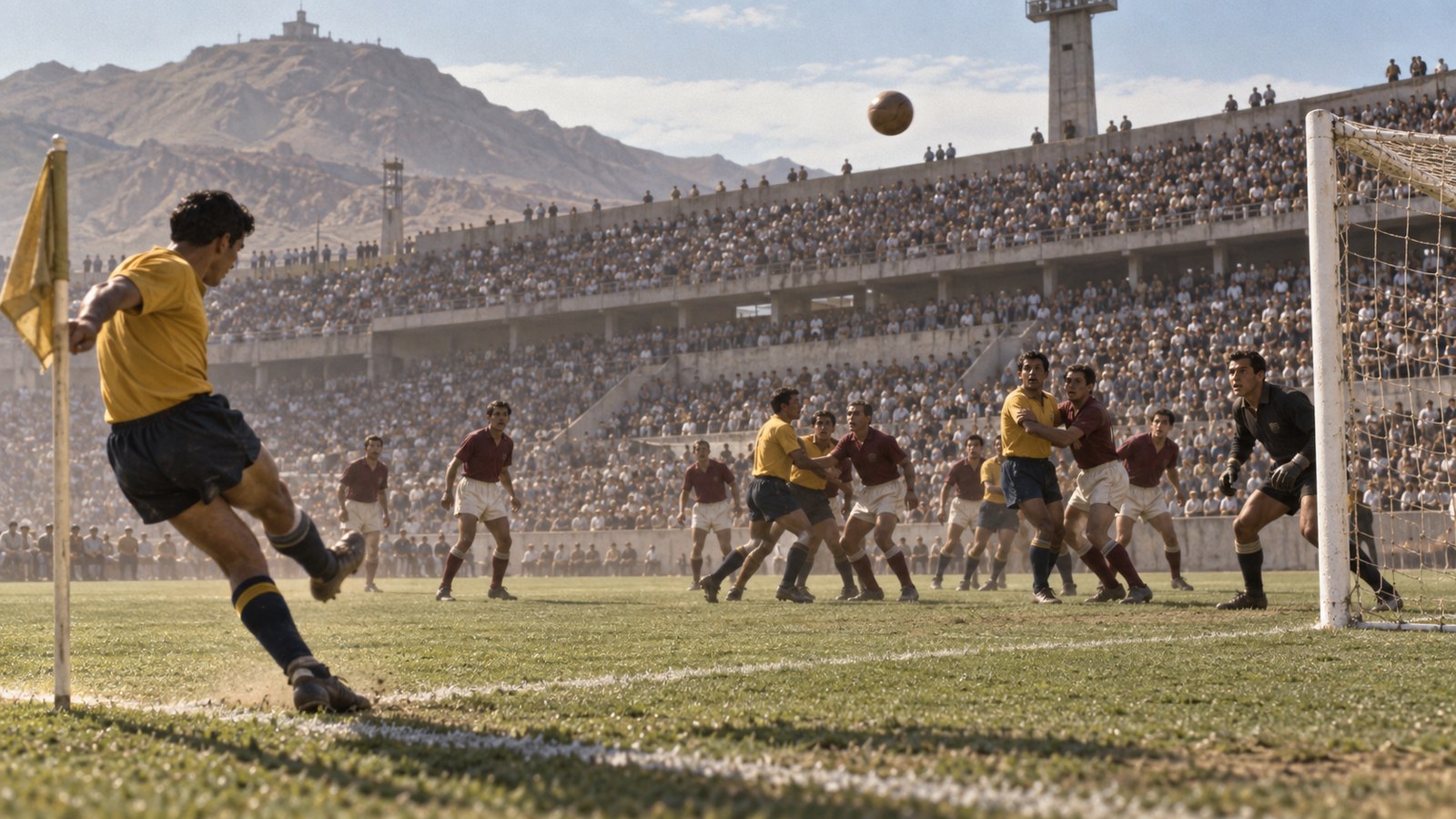
Eleven minutes had passed in Arica, and Colombia’s first World Cup already looked as if it might become an ordeal. Valentin Ivanov had scored twice for the Soviet Union. Igor Chislenko had added another between them. The scoreboard read 3–0 before many spectators at the Estadio Carlos Dittborn had settled into the shape of the match.
What followed on 3 June 1962 was stranger than a routine recovery and more revealing than the famous clip that survives from it. Colombia did not merely produce one impossible corner against Lev Yashin. They absorbed a fourth Soviet goal, changed the emotional temperature of the afternoon, and found three replies in the final 22 minutes. Marcos Coll’s direct corner was the hinge, not the entire story.
Three Soviet goals arrived before Colombia could breathe
The Soviet Union entered the match with formidable names and a powerful tournament reputation. Yashin guarded the goal. Igor Netto captained the side. Viktor Ponedelnik, Ivanov and Chislenko gave the attack weight and speed. Colombia, coached by the Argentine Adolfo Pedernera, were appearing at the World Cup for the first time.
The opening was brutal. Ivanov scored in the eighth minute, Chislenko in the tenth and Ivanov again in the eleventh. Three goals in four minutes reduced the match to a test of whether Colombia could keep its first campaign from coming apart. The official attendance was 8,040, small enough for the reactions inside the concrete bowl to feel concentrated rather than distant.
Germán Aceros offered the first refusal. His 21st-minute goal made the score 3–1 and gave Colombia something to carry into half-time. It did not erase the imbalance. The Soviet side still had the lead, the celebrated goalkeeper and the deeper international pedigree. When Ponedelnik scored in the 56th minute, restoring a three-goal advantage at 4–1, the comeback appeared to have reached its natural limit.
The arithmetic shows how sharply the afternoon broke into phases. A 3-0 score had been assembled by the 11th minute. Aceros changed it to a 3-1 interval, but Ponedelnik restored the 4-1 margin 11 minutes after the restart. Colombia therefore needed three goals merely to draw, and had 34 regulation minutes in which to find them. Nothing in that timeline suggested a slow recovery. Any route back had to be sudden.
A corner was aimed at Antonio Rada, not the goal
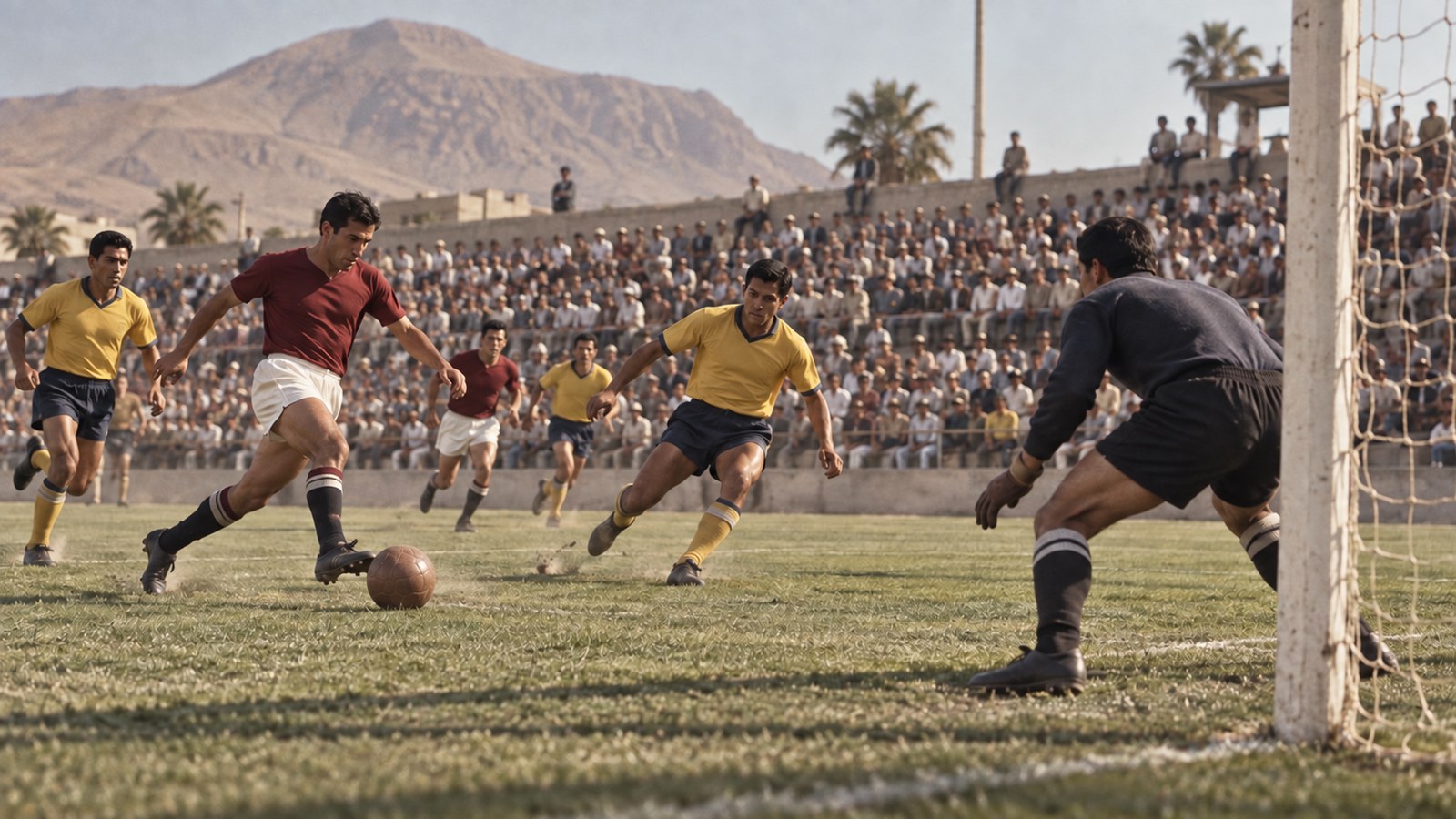
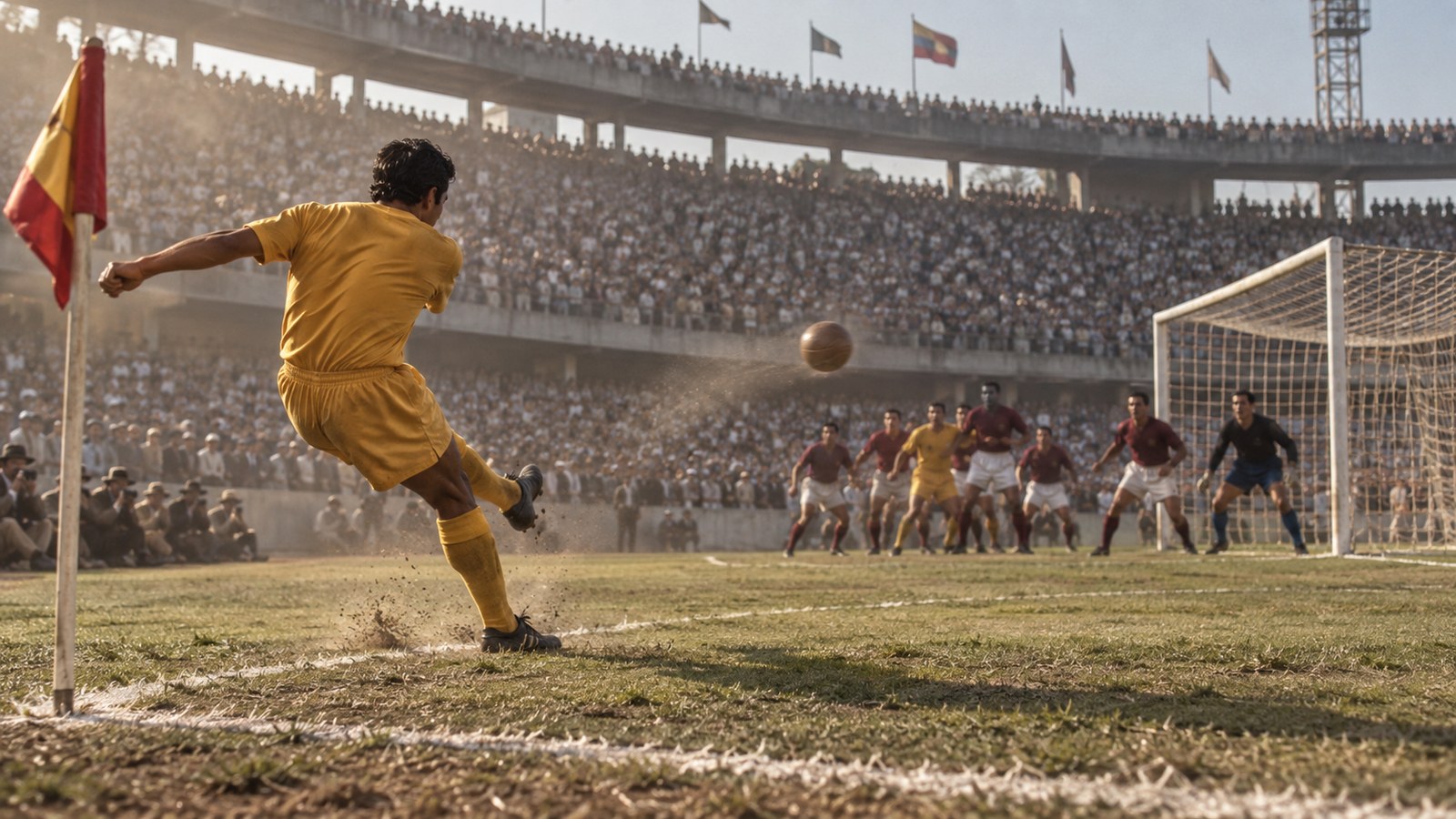
Coll approached a left-side corner in the 68th minute with a practical plan. He later explained that he usually delivered high balls toward Delio “Maravilla” Gamboa, a strong header of the ball. Gamboa was not on the field, so Coll intended a lower delivery that could reach Antonio Rada after a bounce.
The kick travelled at medium height, bent toward the near post and dipped close to the goal line. Givi Chokheli was stationed by that post. Yashin was behind him. The ball passed between the post and the goalkeeper’s body without a Colombian touching it. It was a goal directly from a corner—the “Olympic goal” that FIFA identifies as the only one scored at a men’s World Cup.
Coll insisted that he had not tried to score. That detail changes the quality of the scene. It was not a magician announcing a trick. It was a delivery designed for a teammate that acquired a sharper curve and a more dramatic destination than its taker expected. The famous goalkeeper’s presence made the accident look even more impossible.
There is a physical specificity to Coll’s recollection. He remembered following the ball’s flight and knowing it had crossed the line. He saw Yashin complain to the defender at the first post. The scorer ran diagonally toward the centre while teammates came from different directions. Pedernera raised his arms. At 4–2, the score still favoured the Soviet Union, but the match no longer felt settled.
Four minutes converted a curiosity into pressure
A spectacular goal can become an isolated souvenir when the team that scores it remains comfortably behind. Colombia gave Coll’s corner a different meaning. Rada scored in the 72nd minute, only four minutes later, cutting the deficit to 4–3.
That rapid follow-up is the part the short clip cannot contain. The direct corner unsettled the defending side because it was immediately connected to another attack. Colombia had gone from three goals down to one. Every clearance, restart and loose ball now carried the possibility of an equaliser. The Soviet players who had scored almost at will in the opening eleven minutes had to protect a lead that suddenly felt fragile.
Coll later said the Soviet team lost control after his goal. That is a participant’s interpretation, not a measurable tactical statistic, but the scoring sequence supports the sense of a match changing direction. Colombia’s recovery was not built on patient domination. It was built on shocks arriving close enough together that the leader had no time to restore calm.
The contrast with the first half is sharp. Early Soviet goals had compressed the match into a foregone conclusion. Late Colombian goals stretched every remaining minute. One sequence created resignation; the other created belief. This is why Rada’s contribution belongs beside Coll’s in any honest account of the afternoon.
Marino Klinger completed a comeback without a winner
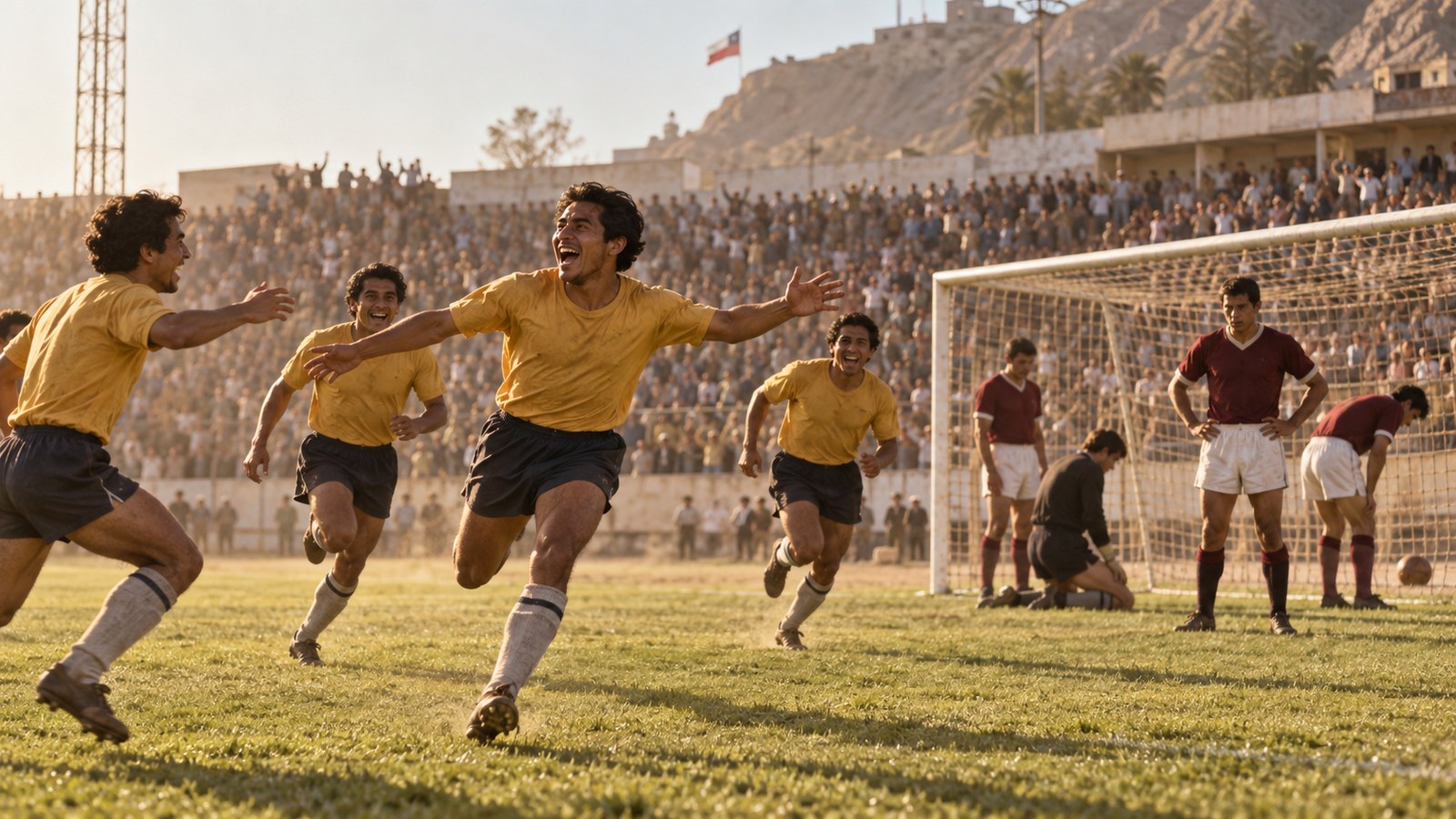
Marino Klinger scored in the 86th minute. Colombia had recovered from 4–1 to 4–4, with Coll, Rada and Klinger scoring across an 18-minute span. There was no ninth goal. The draw gave Colombia its only point of the tournament, and the team finished bottom of Group 1 after later losing 5–0 to Yugoslavia.
Those consequences resist a simple triumphal ending. The Soviet Union still topped the group and advanced to the quarter-finals. Colombia still went home after three matches. Yet the draw became larger than the table because it supplied a first World Cup appearance with a scene that could survive elimination.
Klinger’s equaliser also restores proportion to the memory. Coll made the singular intervention; his teammates completed the collective escape. Aceros had interrupted the opening rout. Rada had turned astonishment into sustained pressure. Klinger supplied the finish. Remove any one of those goals and the corner becomes an ornament in a defeat.
The match sits comfortably beside football’s other startling tournament debuts. Emmanuel Sanon’s goal for Haiti against Italy in 1974 also condensed a nation’s first World Cup into one unforgettable moment. Colombia’s difference was that its moment kept expanding until the scoreboard itself had changed shape.
The clip preserves the marvel; the scoreline preserves the match
Coll carried the nickname “El Olímpico” after Arica. He played professionally for nearly two decades, including spells in Colombia, Argentina and Mexico, but one curling delivery followed him more closely than the rest of his career. In later life, he could describe the roar, Yashin’s anger and the strange route of the ball with the clarity of an event repeatedly revisited.
The nickname is deserved. Scoring directly from a corner at a World Cup remains a unique distinction. Still, the fuller sequence is richer than a record-book first. Colombia faced a three-goal deficit after eleven minutes, reduced it once, conceded again, and then scored at 68, 72 and 86 minutes. The comeback required a set-piece accident, an immediate second blow and a late equaliser.
That pattern explains why the game has endured in Colombian football memory. It offered more than novelty. A debutant side stood opposite the reigning European champions and the world’s most celebrated goalkeeper, endured an opening collapse, and refused the ending the first eleven minutes had written for it.
The surviving footage naturally follows the ball from Coll’s boot into Yashin’s net. The match asks for a wider frame. Beyond the corner flag were Aceros’s earlier reply, Rada waiting for the delivery that never reached him, Klinger still to score, and a team discovering that 4–1 did not have to be final.
Sources
FIFA World Cup archive and Marcos Coll remembrance; El Tiempo; El Heraldo; AS Colombia.