
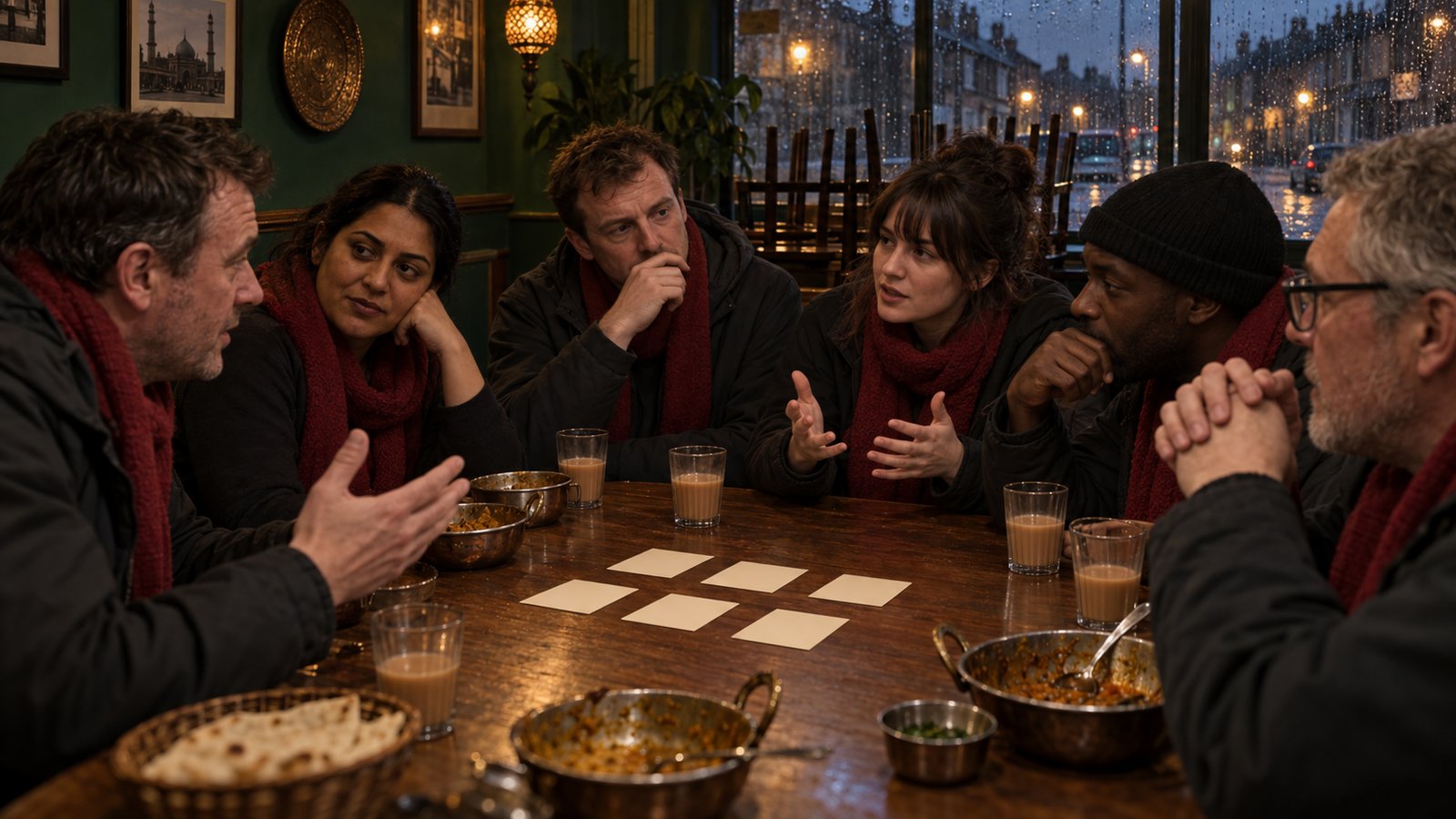
On 13 May 2005, the morning after Malcolm Glazer completed his takeover of Manchester United, a small group met in a Rusholme curry house. The room was called Dilda. The problem on the table was much larger: could supporters who believed their club had stopped listening to them build a football institution whose owners could never silence one another?
They moved at a speed that makes the dates feel improbable. FC United of Manchester was formally constituted in June, played a friendly in July and won a competitive match in August. Yet the most consequential choice was made before a ball moved. Membership would carry a vote, not a financial claim on control. One person could hold one share. A protest was being written into rules.
The crowds and promotions made FC United visible. Its governance made the experiment durable. The founders did not merely leave one stadium for another; they tried to design a club in which the route from terrace frustration to boardroom decision was short enough to walk.
A curry-house conversation acquired deadlines immediately
Glazer’s leveraged purchase was completed on 12 May 2005 and placed about £694 million of debt on Manchester United. The next day’s meeting gave the discontent a practical address. Anger could fill a street, but a club required a name, officers, money, a manager, players, a league and somewhere to play.
That administrative sprint explains the apparent disagreement over FC United’s birthday. A Guardian retrospective places the first founders’ meeting on 13 May and the formal inception on 14 June. A contemporary BBC guide used 5 July as the establishment date. They are markers along the same rapid sequence rather than competing origin myths. Four days after formal inception, the new club had been accepted into the North West Counties structure. On 16 July it played a scoreless friendly against Leigh RMI. Its first competitive win, against Leek, arrived on 13 August.
Karl Marginson became the first manager. More than 900 people applied to play, while supporters raised roughly £100,000 to get the organisation moving. Selection therefore began with abundance rather than scarcity: hundreds wanted a place in a side that did not yet possess a long history, a permanent ground or professional status.
The grievance was wider than one takeover
The Glazer deal supplied the decisive shock, but FC United’s own history calls it a catalyst and a final straw, not the only cause. Supporters also pointed to ticket prices, kickoff times moved for television and a diminishing voice inside the matchday experience. Marginson told the BBC that people were tired of being instructed not to stand or sing in ways they associated with the old Stretford End.
This distinction shaped the new club. If the complaint had concerned only one owner, replacing that owner in some imagined future might have ended the argument. If the complaint concerned the relationship between a football club and the people who sustain it, ownership had to be addressed structurally.
FC United chose co-ownership. Each member received a vote on key decisions, and no member could accumulate extra influence by purchasing additional shares. The arrangement did not promise agreement. It established who was entitled to disagree and how their voices would count. The difference is important: supporter ownership is less a permanent chorus than a rule for conducting the argument.
Gigg Lane made the scale of the appetite measurable
The new team entered the North West Counties League Second Division, nine levels below the Premier League, and shared Bury’s Gigg Lane. The surroundings were familiar football infrastructure, but the economics and scale had changed abruptly. Adults paid £7, children £2 and an adult season ticket cost £112.
Then 2,498 people attended the opening league match at Gigg Lane against Padiham. The BBC noted that this was 237 more than Bury had drawn for a League Two fixture against Shrewsbury seven days earlier. On the same 20 August weekend, four other games in FC United’s division attracted 246 spectators between them. One new club had drawn more than ten times that combined total.
The comparison shows what the founders had carried down the pyramid: not Manchester United’s squad, television revenue or league position, but a concentrated match-going public. At this level, singing and ticket purchases did more than create atmosphere. They supplied operating income and made volunteer effort visible. A crowd was also a balance sheet.
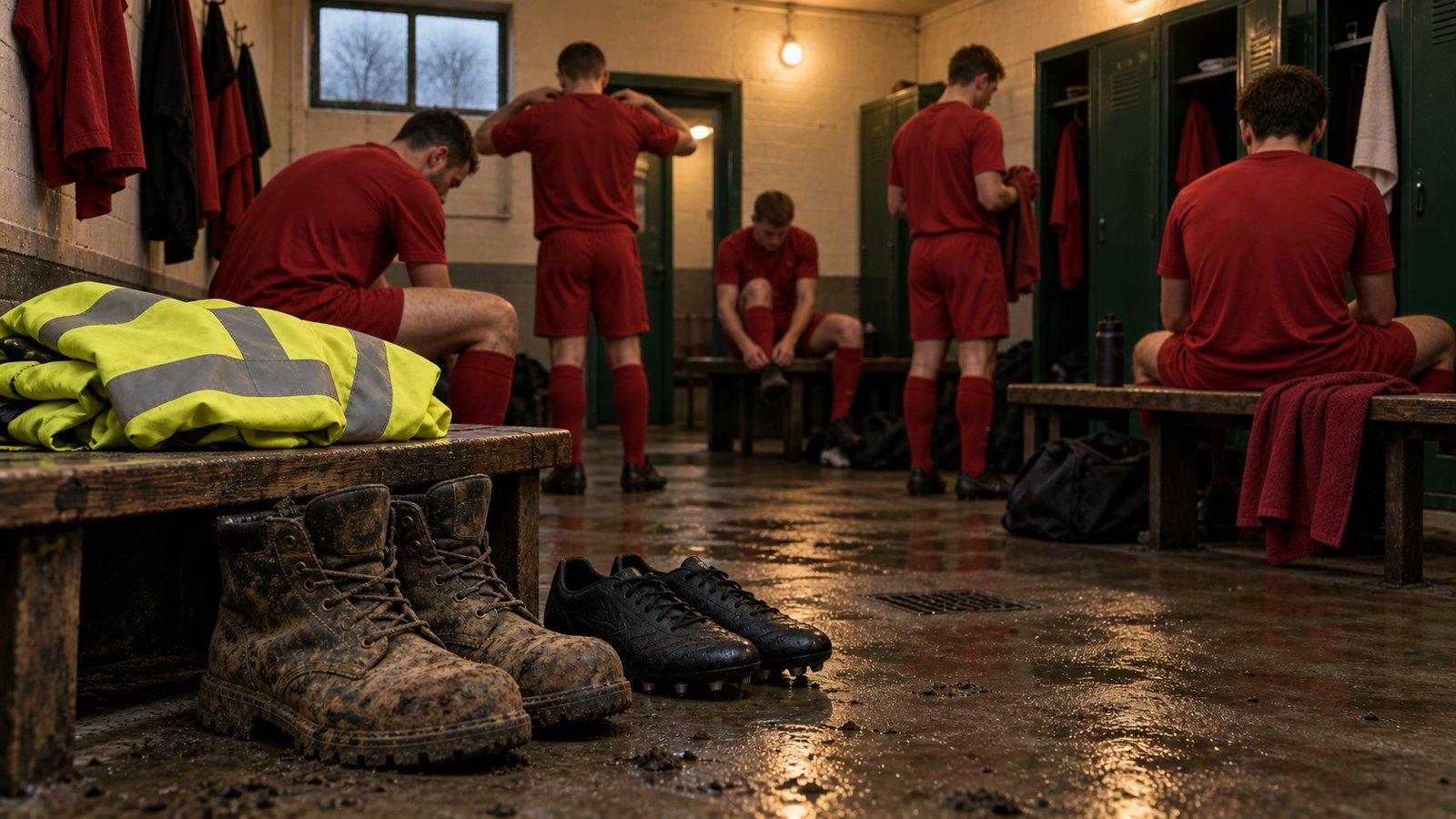
The early side was not a disguised professional operation. Squad members held full-time jobs; captain Billy McCartney worked as a scaffolding supervisor. The players and spectators met on a different scale from Old Trafford, close enough for the club’s claim of shared ownership to be tested in ordinary contact.
Three promotions tested whether principle could survive winning
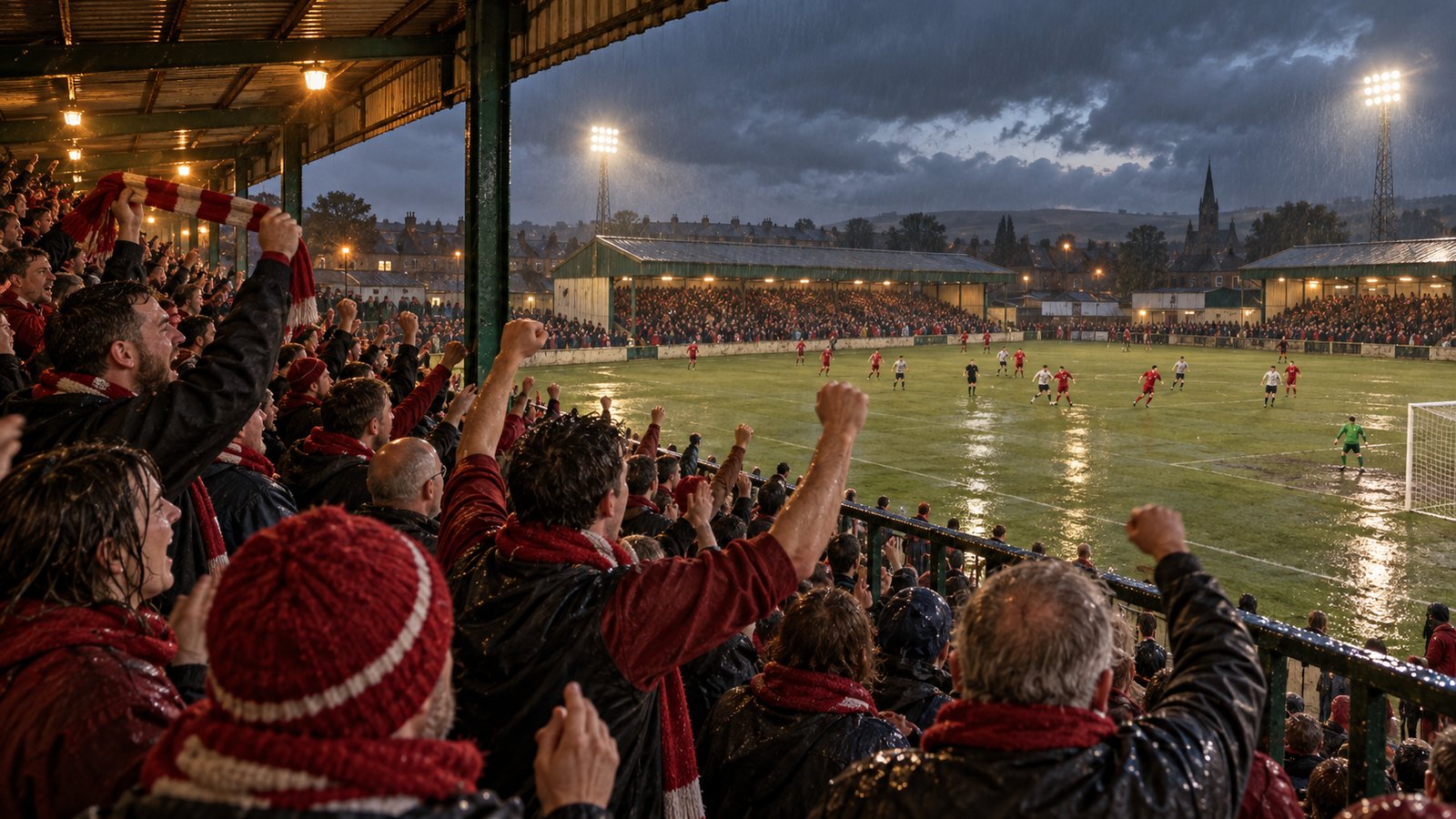
FC United’s opening season ended with the North West Counties Division Two championship: 87 points, eight clear of second place. The next campaign brought 112 points from 42 matches and another title. A 4–1 playoff-final victory over Skelmersdale then secured a third consecutive promotion.
Success created a useful tension. Protest clubs can appear pure while small because every compromise remains hypothetical. Promotion makes decisions expensive. Budgets grow, expectations rise, volunteers tire and football expertise gains authority. One-member, one-vote does not remove those pressures. It prevents competitive urgency from automatically becoming a blank cheque for concentrated control.
The governance model also separated FC United’s story from a simple march toward meeting Manchester United in a cup draw. Eight promotions would originally have been required just to reach the same division. The more immediate work involved deciding what kind of club would make that climb, which trade-offs members would accept and which ones would defeat the point of climbing at all.
Broadhurst Park put ownership into concrete and steel
A ground share had allowed FC United to begin quickly, but a permanent home would reveal whether member ownership could finance something slow. The club eventually moved to Broadhurst Park in Moston in 2015. Supporters invested about £2 million toward a project costing £6.3 million, which unlocked another £3 million in finance. Construction began in November 2013 and finished in May 2015.
Those figures describe more than fundraising. A member who contributes to a stadium while retaining only one vote accepts that money supports a common asset rather than purchasing additional command. The constitution that had governed meetings now governed bricks, loans and long-term risk.
The route was not smooth. Plans changed, costs increased and internal conflict followed. That turbulence does not invalidate the model; it reveals what the model is for. Democratic ownership cannot guarantee wise forecasts or gentle meetings. It can preserve a defined constituency with the authority to challenge them.
For a related example of supporters translating urgency into physical labour, Union Berlin’s ground rebuild shows a different route from terrace identity to infrastructure. FC United’s distinctive instrument was constitutional. The founding group answered a leveraged takeover with a limit no wealthy member could buy through: one person, one share, one vote.
That is the thread connecting the curry house, the 900 player applications, the 2,498 at Gigg Lane and the millions committed to Broadhurst Park. The club’s quickest achievements happened in weeks; its harder proposition has lasted for decades. Supporters proved they could establish and fund a team. The continuing test is whether they can keep power distributed when winning, building and surviving all demand faster answers.
Sources
- BBC Manchester — “FC United: who are ya?”
- BBC Manchester — “2005: A tale of two Uniteds”
- The Guardian — “Poppadoms, protests and promotions: the first 20 years of ‘unique’ FC United”
- FC United of Manchester — “A History of FC United of Manchester”