

On 8 September 1957, Juventus were level at 2–2 with Hellas Verona when their new Welsh centre-forward supplied the deciding goal. John Charles had arrived in Turin only weeks earlier, carrying the pressure of a £65,000 British-record transfer and speaking little Italian. Seven days later he scored the only goal against Udinese. Then he settled a 3–2 match with Genoa. Three league appearances, three winning interventions: the fastest possible answer to the question that followed him out of Leeds.
The fee made Charles a headline, but the first month revealed why Juventus had paid it. They were not buying a specialist who needed the game arranged around one habit. They were buying a footballer who had learned senior football at centre-half, became a prolific centre-forward, and could read collisions from either side. In Italy, that unusual education met Omar Sívori’s invention and Giampiero Boniperti’s intelligence. The transfer worked because Charles could cross more than a border. He could cross roles.
A Record Fee Left a Visible Space at Leeds
Charles had grown up at 19 Alice Street in Swansea, the son of a steel construction worker. He left school at 14 for a groundstaff job at Swansea Town’s Vetch Field, where his work included painting, weeding terraces, caring for kit and cleaning boots. Swansea saw the teenager’s ability without giving him a first-team appearance. Leeds scout Alf Pickard did more than admire it: he took the 17-year-old to Major Frank Buckley’s club.
Leeds initially used Charles across the defensive line. Two years of national service with the Royal Lancers interrupted that education, though the Army allowed him to continue playing. When Buckley moved him forward after his return, the scale of his finishing became unmistakable. The Dictionary of Welsh Biography records 150 goals in 297 Leeds games before the move to Italy. His scoring helped carry Leeds into the First Division in 1956, and reporters reached for the bluntest description of his influence: “John Charles United.”
By 1957, the financial logic was as dramatic as the sporting loss. Juventus paid £65,000, almost twice the previous British transfer record. The sum was large enough to alter Elland Road itself. A sporting specialist later told the BBC that Leeds built a stand with the proceeds. One footballer had become both an outgoing team and incoming infrastructure: goals departed, concrete arrived.

Turin Received a Centre-Forward Who Thought Like a Defender
A £65,000 forward would normally be judged by goals alone. Charles offered Juventus a stranger package. He was 6ft 2in, powerful in the air and comfortable absorbing contact, yet his years at centre-half had also taught him where defenders wanted a duel to happen. He could occupy that place, then change it. He knew when a centre-back wanted the ball to hang, when a shoulder challenge was coming, and where a second ball might fall after an aerial contest.
That background changed the meaning of his size. Charles was not merely a fixed target for crosses. He could hold the centre, combine with teammates, and create room for more elusive attackers. Boniperti had the timing to connect phases. Sívori, the Argentine inside-forward, had the close control and unpredictability to move through the spaces Charles helped open. Italian accounts came to treat the three as a celebrated attacking trio, but their balance mattered more than the nickname. One offered force without clumsiness, one offered mischief without isolation, and one joined the pieces.
The first three matches captured the arrangement in miniature. Charles scored the winner against Verona after Boniperti and Sívori had already brought Juventus level. He found the only goal against Udinese. At Genoa, another decisive finish completed a run in which the newcomer was immediately involved at the sharpest moment. There was no long ceremonial adaptation period on the pitch. Juventus had acquired an answer they could use at once.
Twenty-Eight Goals Changed the Shape of a Season
Charles finished his first Serie A campaign with 28 goals. RSSSF’s season-by-season record lists him as the league’s leading scorer in 1957–58, ahead of a field built for the tactical and physical demands of Italian football. Juventus won the championship. The Dictionary of Welsh Biography also records Charles as Italy’s player of the year, an extraordinary first-season return for a British footballer entering a league where foreign imports carried both glamour and suspicion.
The numbers matter because Juventus had needed renewal. Charles did not arrive at a finished dominant side and merely collect its rewards. His combination with Sívori and Boniperti gave the attack distinct routes: aerial pressure, close combinations, direct finishing and the possibility of changing the point of attack without removing the centre-forward. Opponents could not solve him simply by making the match rough. The BBC later noted that Charles was never booked or sent off in his career, the disciplinary fact behind the Italian name Il Gigante Buono—the Gentle Giant.

That restraint was competitive, not decorative. A forward who refused retaliation stayed available for the next cross, the next rebound and the next match. It also made his physical dominance easier for supporters to embrace. He could overpower a defender without performing menace. In a football culture often described to British readers through defensive severity, Charles became famous for controlled strength.
Learning Italy Made the Football Transfer Stick
Many stories about British players abroad end at the dressing-room door, as if selection and talent settle everything. Charles treated daily life as part of the move. The Dictionary of Welsh Biography says he learned the language and developed an appreciation for Italian customs and food. He adapted to the heat rather than retreating into a British enclave. That effort gave teammates and supporters more than goals: it gave them a foreign star who appeared willing to belong.
His public life in Italy became unexpectedly broad. Charles had a bass singing voice and recorded songs including “Sixteen Tons” and “Love in Portofino.” The Guardian later remembered how recognisable he became, comparing his celebrity to figures far beyond sport. The contrast with his beginnings is almost physical: the teenager weeding terraces at the Vetch Field became a singer, restaurant co-owner and football idol in Turin.
None of that would have mattered without the work on the pitch. Across five Juventus seasons, the Welsh biography credits him with 93 goals in 155 games. The club won three league championships, in 1958, 1960 and 1961, as well as the Italian Cup in 1959 and 1960. The first three winning goals had not been a bright but misleading entrance. They were the opening notes of a sustained partnership.
The Price Bought More Than Goals
Charles returned to Leeds in 1962, but the old surroundings did not restore the old rhythm. He had spent five years adapting to Italian football, and adapting back proved difficult. After 11 appearances and three goals, he moved to Roma. The brief second spell clarified something about the original transfer: Juventus had not simply rented the scoring record Charles had built in Yorkshire. Turin had created the conditions in which another version of him could thrive.
Supporters remembered that version for decades. Juventus fans voted Charles the club’s best foreign player in a centenary poll, while the BBC’s account of his 1958 championship medal called him one of the first UK players to make such a move abroad. His route was not the first British transfer to continental Europe, but its scale and success made it unusually persuasive. A player could leave the familiar arguments of English football, learn another game and become more legible rather than less.
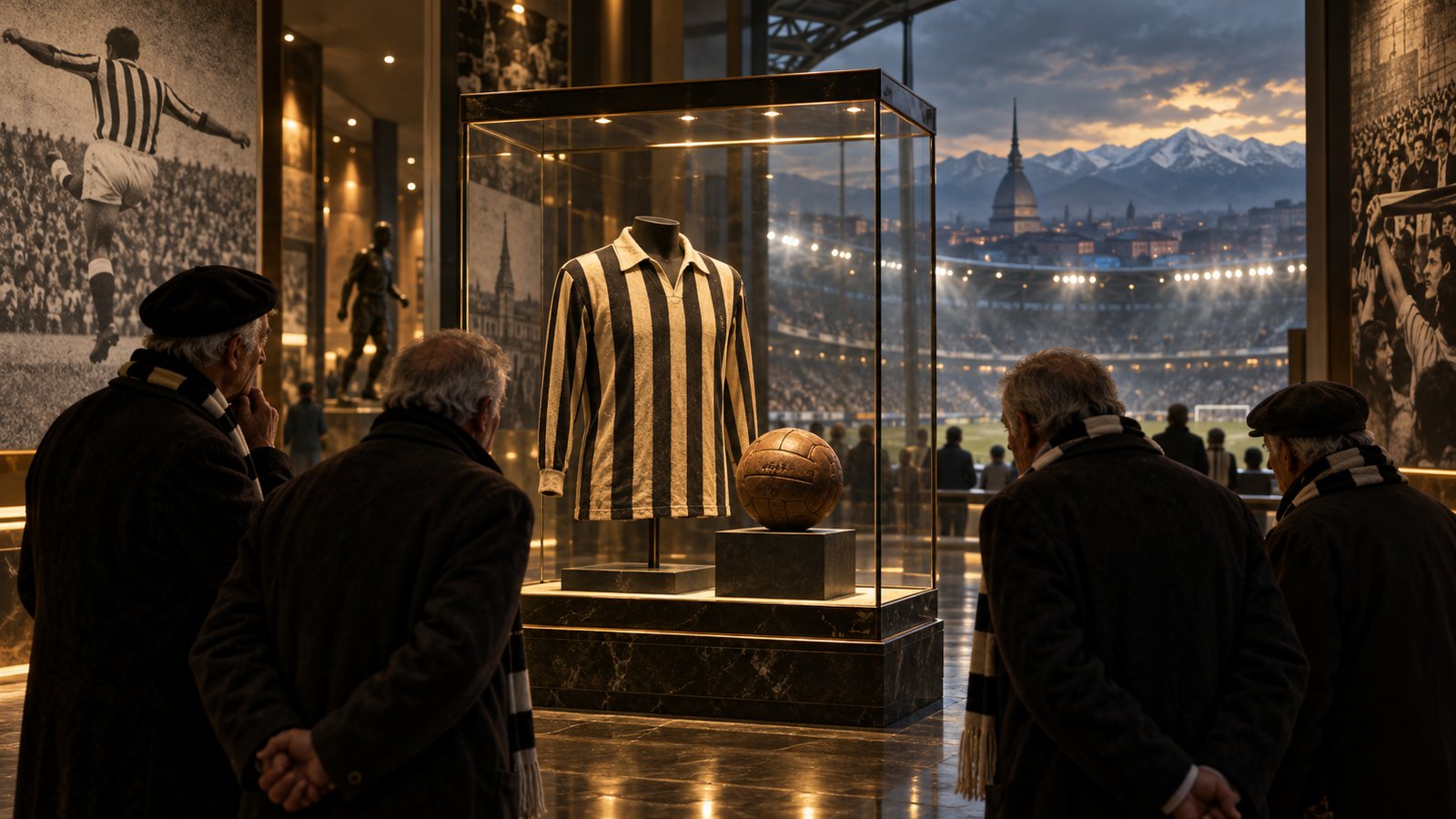
The most revealing image is therefore not the cheque on its own. It is the sequence that followed: a winner against Verona, another against Udinese, another against Genoa, then 28 league goals and a championship. The fee measured the risk before Charles played. His movement, discipline and willingness to enter Italian life explain why the risk disappeared so quickly.
Leeds could point to a new stand. Juventus could point to trophies. Charles left both clubs with something durable, but Turin supplied the deeper football lesson. The successful export was a player whose identity could not be reduced to “British centre-forward.” He arrived with a defender’s map of danger, a striker’s appetite, and enough curiosity to let a new country change the way those qualities worked together.
Sources
Dictionary of Welsh Biography; BBC News; The Guardian; RSSSF; FIFA.