
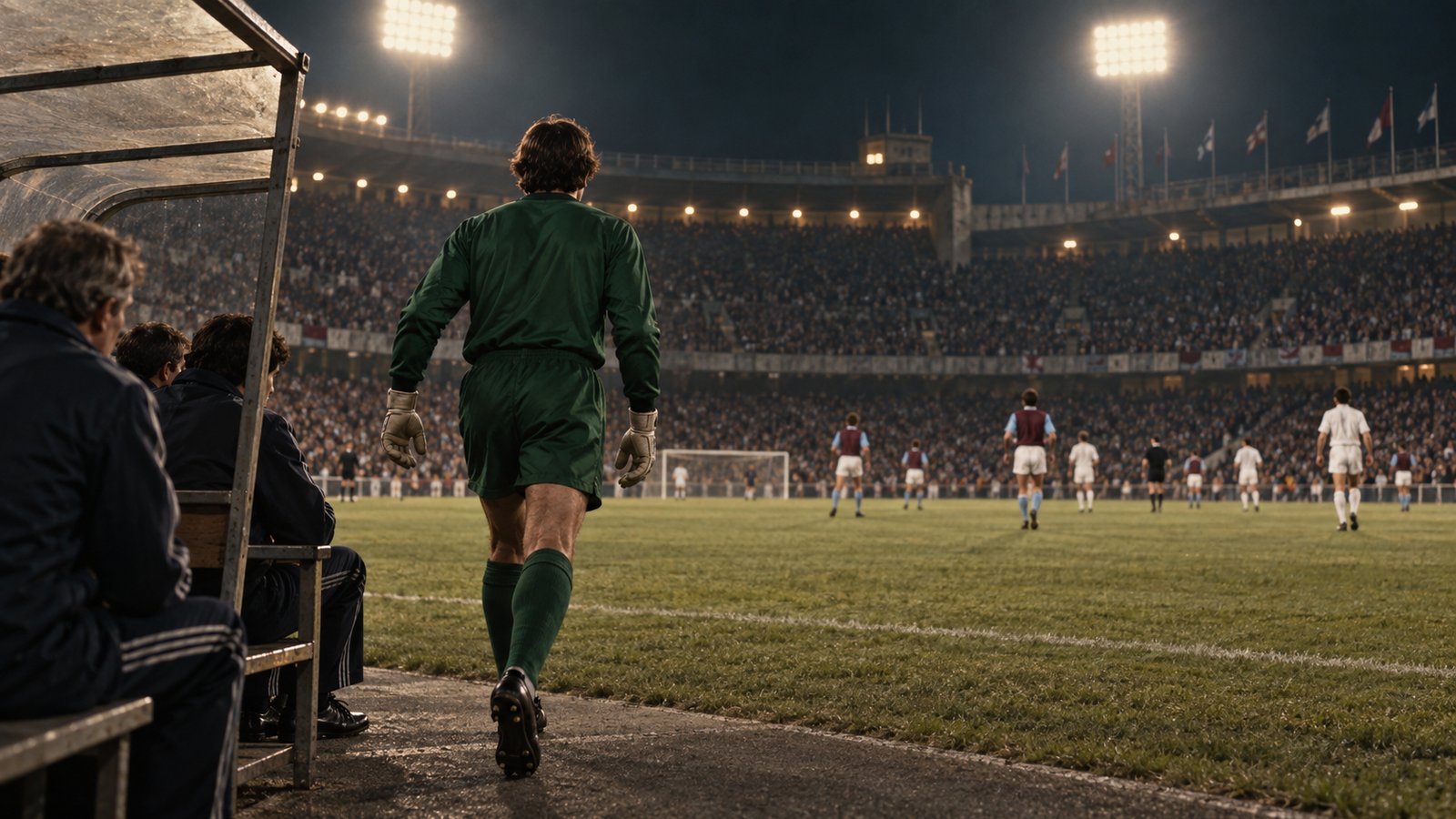
Nigel Spink was laughing at Billy Connolly through a pair of headphones on the team bus to Rotterdam. Aston Villa’s reserve goalkeeper had been given a cassette player with the rest of the squad, and he could enjoy the journey without rehearsing saves in his head. He did not expect to play.
His entire first-team career amounted to one match, a 2–1 defeat at Nottingham Forest on Boxing Day 1979. More than two years had passed. In the league, clubs could name only one substitute, so a second goalkeeper rarely sat on the bench. European competition allowed more substitutes, but Spink still regarded his place beside the pitch as insurance that would probably remain unused.
Nine minutes into the 1982 European Cup final, Jimmy Rimmer could not continue. The regular goalkeeper had carried an injury into the match against Bayern Munich. Spink removed his sweatshirt, stepped onto the field at De Kuip and inherited the largest assignment Villa could give him.
There was no long warm-up and no gradual introduction. Within moments, a ball dropped into his penalty area. He caught it. That uncomplicated first action gave a 23-year-old reserve something more useful than a speech: contact with the game.
Villa Reached Rotterdam After Their Manager Walked Away
The emergency in goal was not the first disruption of Villa’s European campaign. They had entered the competition as English champions, a title won under Ron Saunders in 1981. It was their first season in the European Champion Clubs’ Cup, and the route had already demanded several kinds of survival.
Villa progressed against Dynamo Berlin on away goals, then drew 0–0 away to Dynamo Kyiv before winning the home leg 2–0. Gary Shaw scored in that quarter-final victory. Yet Saunders had departed roughly a month before the Kyiv tie after a disagreement with the board. A manager who had delivered the league title only nine months earlier was suddenly gone.
Chief scout Tony Barton took charge for the remainder of the season. The players later described his value as continuity rather than reinvention. Training continued, senior players maintained standards, and Barton set up a side that already knew how to endure narrow European ties. Villa then eliminated Anderlecht to reach Rotterdam.
Bayern offered a different scale of threat. The German club had won the European Cup three times and arrived with Paul Breitner and Karl-Heinz Rummenigge, two of Europe’s most formidable players. Villa’s recent history said they could absorb upheaval. It did not promise that a reserve goalkeeper could absorb Bayern.
One Clean Catch Gave Spink a Place in the Match
Spink later remembered the substitution as too quick for nerves. His shin pads and boots were ready; he took off the top he had worn on the bench and entered. About 30 seconds after play resumed, Bayern sent an undemanding ball toward him. He claimed it and felt the dry-night grip of his gloves around the ball.
The catch mattered because the first minutes of an unexpected appearance can shrink a goalkeeper’s world. Every opponent watches for uncertainty. Every defender has to adjust to a different voice behind him. Spink’s first touch instead made the field familiar. He had completed the most basic job before Bayern could turn his arrival into panic.
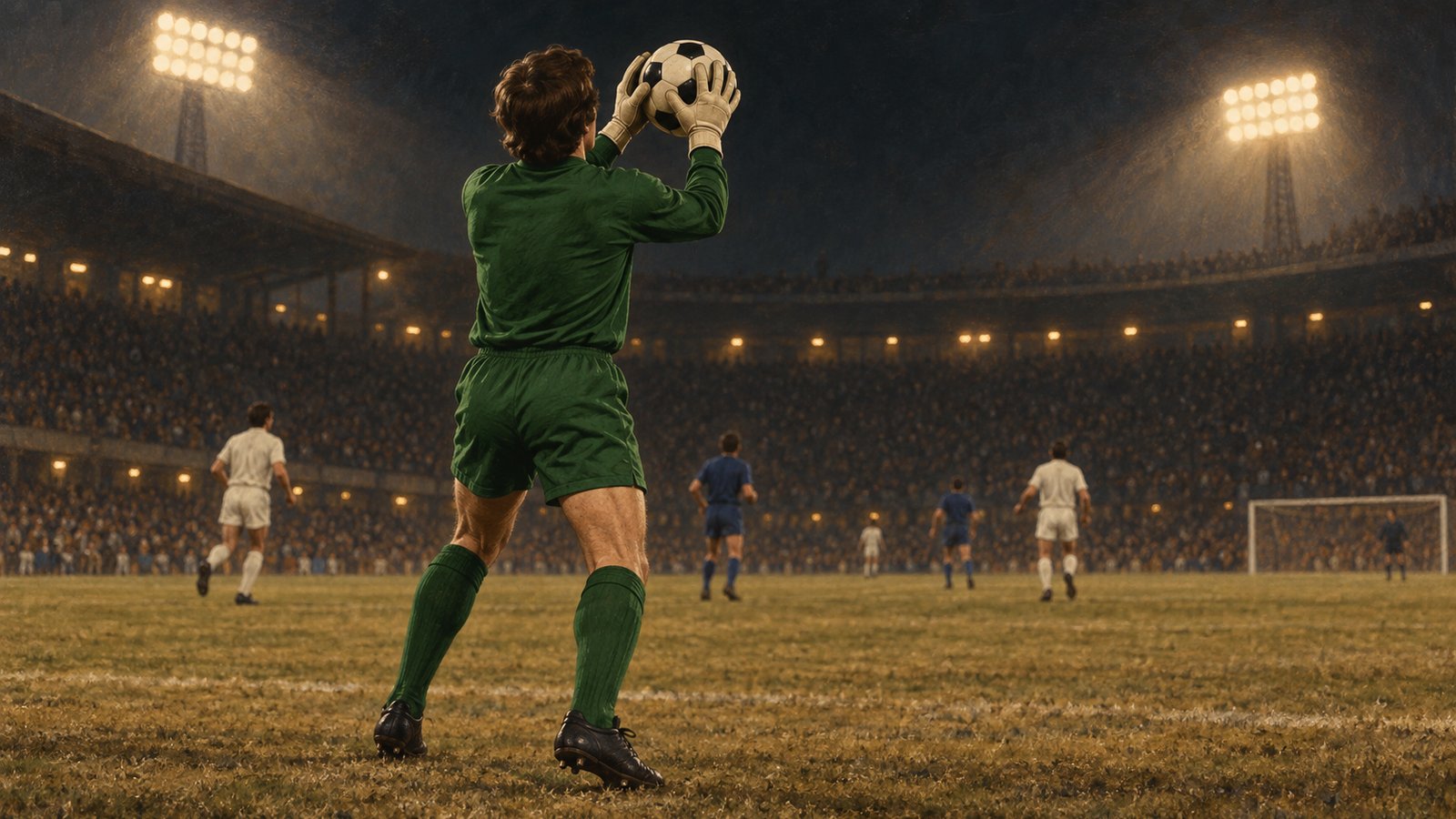
The contemporary match report noted that Bayern then waited around 20 minutes before producing a serious shot. By that point, Spink had already settled. Dürnberger cut in from the left and drove low. The ball almost escaped the goalkeeper, but Spink reached back and secured it. Within less than a minute, he blocked an effort from Rummenigge while Mathy’s attempt from the rebound struck Evans.
Rummenigge soon tried an acrobatic finish that passed wide. The sequence announced the contest that would shape the final. Bayern could establish pressure and create shots, but each failed attempt gave Spink another completed action and Villa another reason to trust the unfamiliar figure behind them.
Bayern Kept Finding the Goalkeeper or the Last Defender
Breitner increasingly controlled midfield as the first half moved on. Villa struggled to provide clean service to Shaw and Peter Withe, while Tony Morley remained a threat waiting for space rather than a constant outlet. Bayern appeared to possess more routes toward goal.
After the interval, Augenthaler carried the ball through much of the pitch but shot beyond the far post. Dürnberger tested Spink on the hour and was denied. Swain headed an Augenthaler effort off the line. Spink gathered a low cross with Uli Hoeness extending a foot nearby, and another delivery reached Hoeness in the goalmouth only for the forward to miss it.
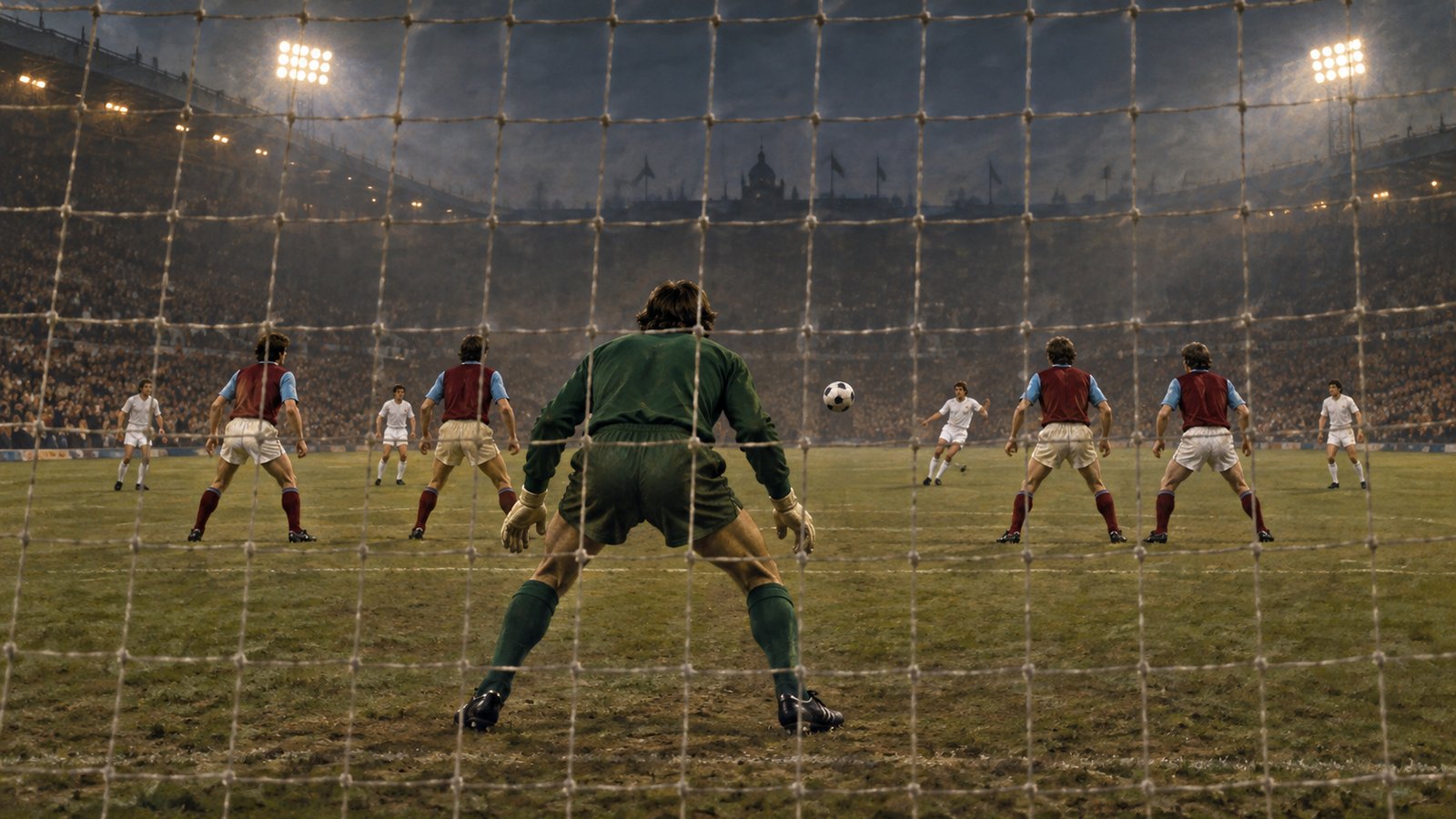
These were not identical escapes. Some belonged to the goalkeeper, some to defenders protecting him, and some to Bayern’s own imprecision. Together they created a match in which territorial command did not become a goal. Villa could be pushed back without losing the one measure that decided the cup.
The pressure also separated this final from the European Cup final Bayern had rescued in 1974. Eight years earlier, a late German equaliser had forced a replay. In Rotterdam, every surviving minute made the possibility of another late intervention feel more dangerous.
Morley’s Swerve Produced Withe’s Only Clear Opening
Villa’s goal began with a Bayern error rather than a long period of control. Wolfgang Dremmler slipped, allowing Gary Shaw to find room on the left. Shaw played inside to Morley, who faced Augenthaler and changed direction past him. The winger’s movement finally converted Villa’s left side from a dormant threat into an open crossing lane.
Morley drove the ball across the area toward Withe. The striker met it near the six-yard line and sent it in off the near post in the 67th minute. Spink, watching from the far end, knew the grass in that goalmouth had a worn depression because Villa had warmed up there. He later estimated the dip at two or three inches and believed the bobble helped explain why Withe connected with his shin.
The imperfection of the finish suited the night. Villa had not outpassed Bayern or assembled a sequence of repeated chances. Shaw exploited one slip, Morley beat one defender, and Withe converted the clear opening that reached him. The scoreboard now required Bayern’s pressure to produce something it had not produced all evening.
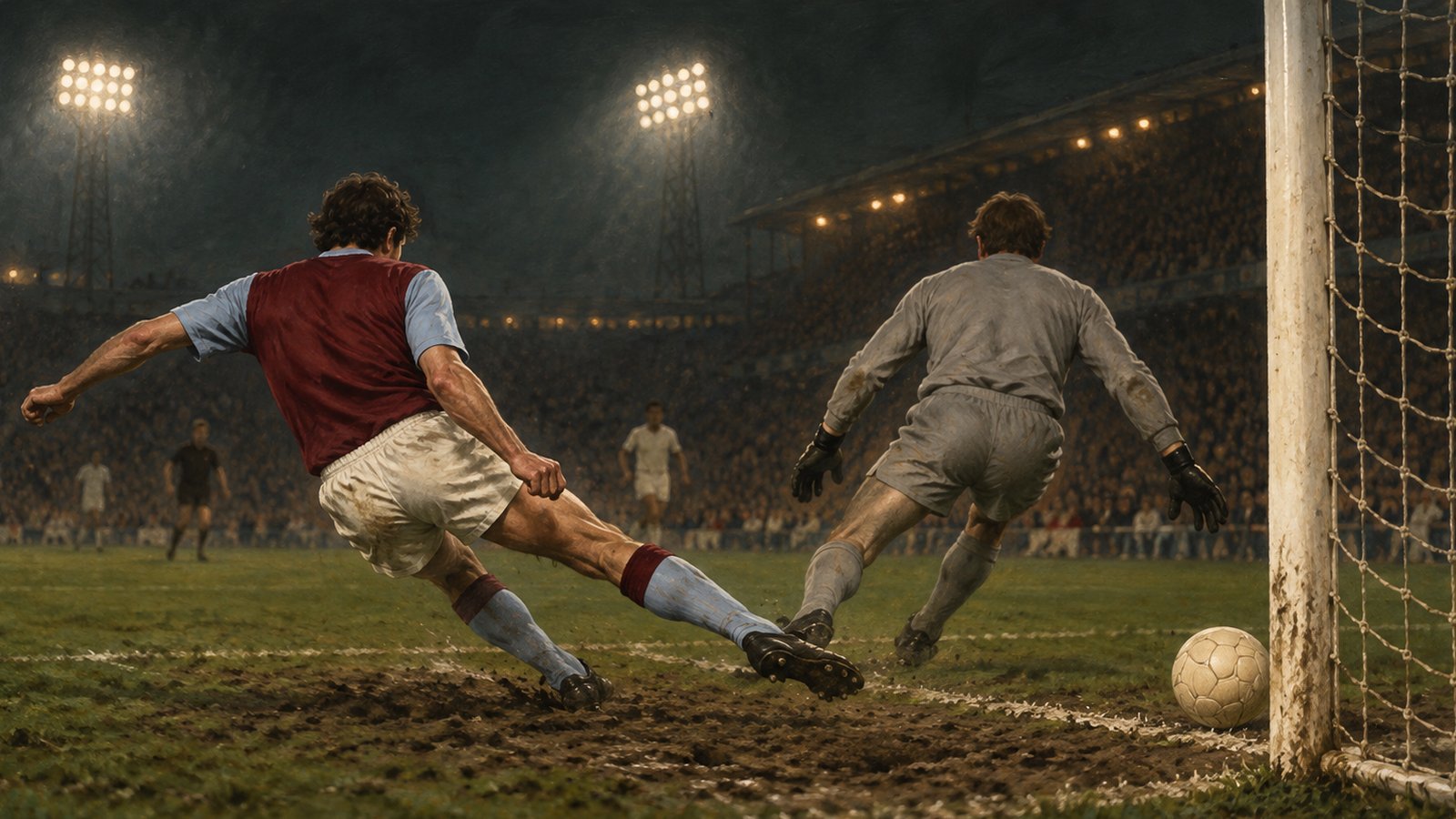
Gary Williams remembered the remaining 20 minutes feeling like 90. Villa dropped deeper while Bayern committed more players forward. The defenders’ legs carried the cost of every earlier chase, and Spink no longer had the luxury of treating each save as an isolated test. One error could erase the work that had brought the club through its first European Cup campaign.
An Offside Flag Preserved the Most Unlikely Clean Sheet
Bayern eventually put the ball beyond Spink. With only a few minutes remaining, Hoeness found the net, but the assistant referee had raised his flag for offside. The finish changed nothing. Villa still led 1–0, and the German players had even less time to convert their authority into a valid goal.
At the final whistle, Bayern’s leading players were left on the turf. Swain later recalled glimpsing Rummenigge and Breitner sitting in the dressing room with their heads lowered. Villa had kept the European Cup in English hands for a sixth consecutive season, but the chain had survived through a club making its debut in the competition and a goalkeeper making only his second senior appearance.
Spink’s achievement can sound like a fairy tale if the context is removed: unknown reserve enters a final and becomes a champion. The match itself was more physical and exact. He secured the first easy ball, recovered a low shot that nearly beat him, blocked Rummenigge, handled crosses amid contact and remained set while Bayern repeatedly returned. His defenders supplied clearances and a goal-line header; the offside flag supplied the last reprieve.
He later made 468 appearances for Aston Villa, giving the surprise in Rotterdam a long career behind it. Yet those later matches cannot make the opening minutes of 26 May 1982 ordinary. Spink boarded the bus with comedy in his headphones because he expected to watch. Nine minutes after kickoff he was responsible for the European Cup, and 81 minutes later Aston Villa had won it.
Sources
UEFA Champions League; BBC Sport; The Guardian.