
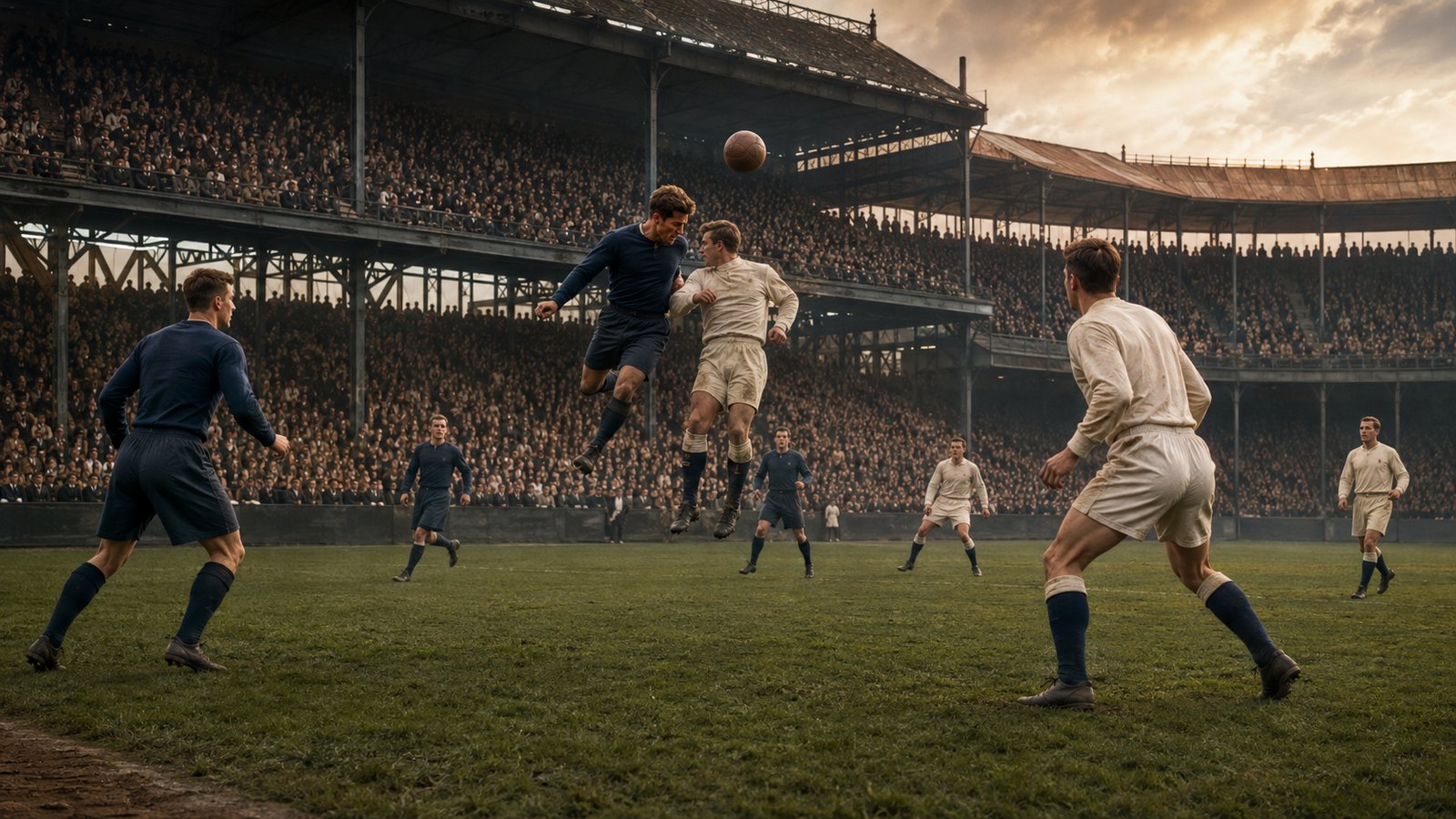
In 1926, 46,000 people entered New York’s Polo Grounds to watch a football club from Vienna. It was an American attendance record for the sport at the time, but the larger consequence came after the crowd went home. Several Hakoah Vienna players accepted contracts in the United States rather than return permanently to Austria. A touring team had crossed the Atlantic to display its football; the journey also redistributed the people who played it.
Hakoah’s visit joined three histories that are often told separately: a Jewish sports movement in Vienna, football’s early use of international touring, and the uneven growth of the American game. The connection was not a vague matter of influence. It passed through ticket gates, newspaper descriptions, contract offers and individual decisions. The Polo Grounds match supplied the scale. What followed gave the tour its lasting shape.
A Club Built to Be Seen
Fritz Löhner-Beda, a librettist, and Ignaz Hermann Körner, a dentist, were among the founders of Hakoah in Vienna in 1909. The Hebrew name meant “strength” or “power.” The club grew from the idea known as muscular Judaism, associated with Max Nordau: organized physical culture could answer a stereotype that treated Jewish life as detached from strength, movement and public athletic achievement.
Football was only one section. Hakoah also supported wrestling, fencing, swimming, athletics and other sports. Sports Illustrated reports that membership passed 5,000 at its pre-war peak. A football eleven offered the most visible travelling expression of that wider institution.
The side climbed from Austria’s fourth level to the first between 1910 and 1920. It finished fourth in 1921 and second the following season. From 1922, the club leased a ground in the Prater with a stadium and seating for 25,000 spectators. Home crowds could reach around 20,000, according to Sports Illustrated. Hakoah was not arriving in New York as a novelty assembled for one tour. It had built an audience, a competitive team and a recognizable public identity in Vienna.
Jewish spectators abroad followed the club, and promoters went ahead of tours to create interest. Every full stand could help fund Hakoah while showing that an explicitly Jewish team could command a major sporting stage.
The Championship Had Already Made the Players Famous
Hakoah’s reputation rested on results before it rested on American curiosity. The club won the 1924–25 Austrian championship, described in its historical record as the country’s first professional league title. Max Scheuer captained the side during its strongest years. Béla Guttmann, later one of football’s most travelled and successful coaches, played at centre-back.
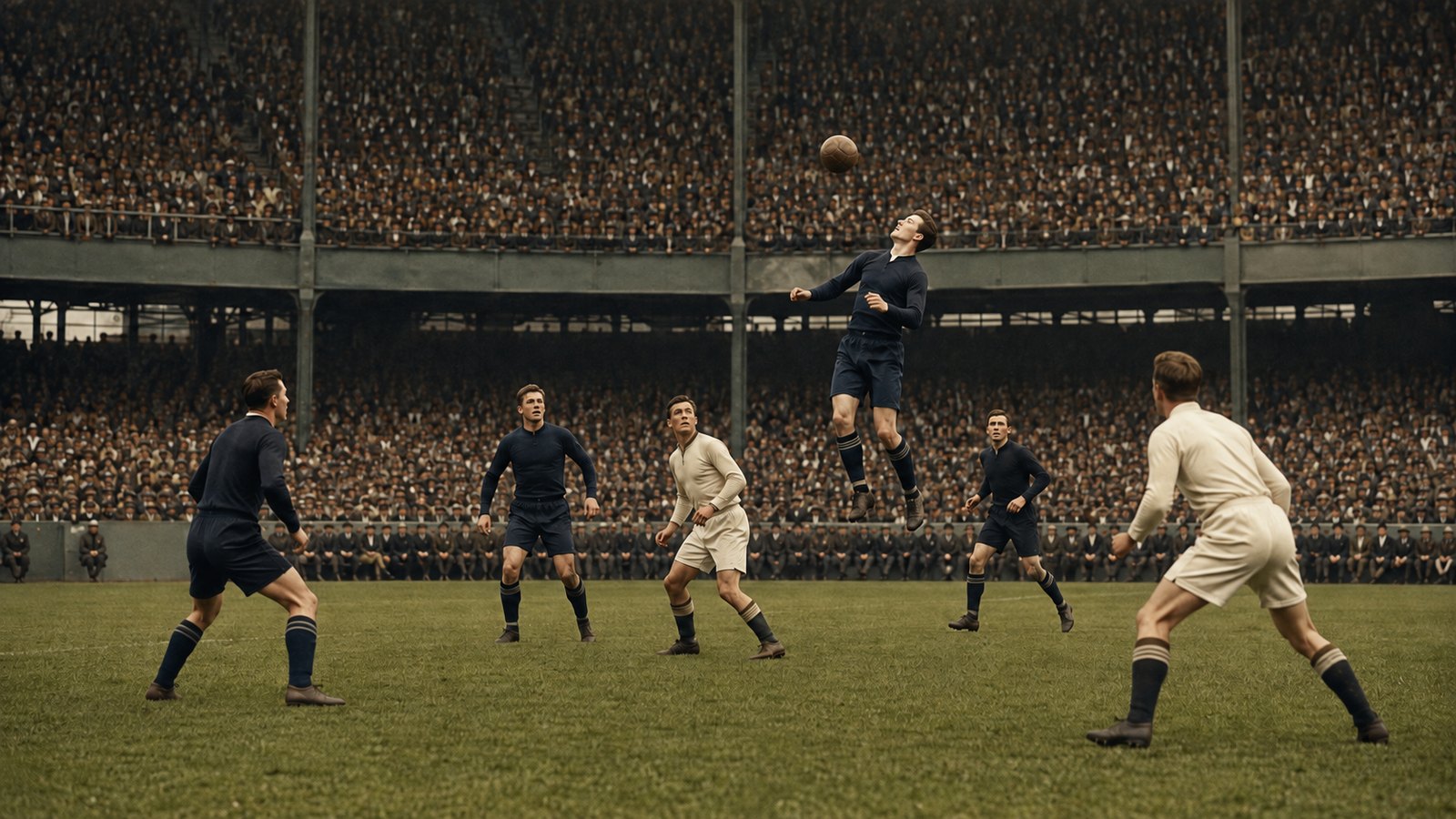
The title run included a scene that sounded designed for retelling. Goalkeeper Alexander Fabian broke his arm during a match that helped decide the championship. Substitutions were not permitted. Fabian put the injured arm in a sling, changed positions with a forward and scored the winning goal seven minutes later. The detail mattered on tour because foreign audiences were not merely being offered a team name. They were receiving a cast of players with a championship and memorable episodes behind them.
In 1923 Hakoah beat a largely reserve West Ham United side 5–1 in London, becoming the first continental European team to defeat an English side in England. It could carry its football into unfamiliar conditions.
Travel was becoming a method for circulating styles as well as reputations. The pattern resembles the journeys in Jimmy Hogan’s coaching life across Europe, but Hakoah moved an entire sporting institution in public. The players could be watched together. Their combinations, heading and positional exchanges became visible evidence rather than an idea passed from one coach to another.
New York Saw More Than a Visiting Curiosity
The 1926 American tour drew almost a quarter of a million spectators across its matches, according to Sports Illustrated. The largest date came at the Polo Grounds in New York. A crowd of 46,000 set a record for an American football match, a mark that the magazine says stood until the Pelé era in the 1970s. Hakoah’s party was also received by President Calvin Coolidge at the White House.
The newspaper reaction concentrated on movement. Sports Illustrated quotes The New York Times describing the visitors’ use of their heads to pass the ball and later praising an “intricate pre-arranged system of passing.” The language belongs to its period, but the observation is clear. The crowd was watching coordinated choices: where the next player would be, when the ball would be released and how the group could keep an exchange moving before a challenge stopped it.
That distinction gave the attendance meaning beyond a number. American football had professional clubs and strong regional pockets, yet competed in a crowded sporting market. Hakoah arrived with a ready-made story and justified the promotion through its play. The scale made the match a major New York event.
The visitors also carried a constituency with them without importing it physically. Jewish supporters in the United States could recognize Hakoah as a club created around an identity that had already gathered fans in Vienna, London and other cities. The tour converted distant recognition into a shared grandstand. It joined people who knew the political purpose of the institution with spectators drawn by a champion team.
Contract Offers Changed the Return Journey
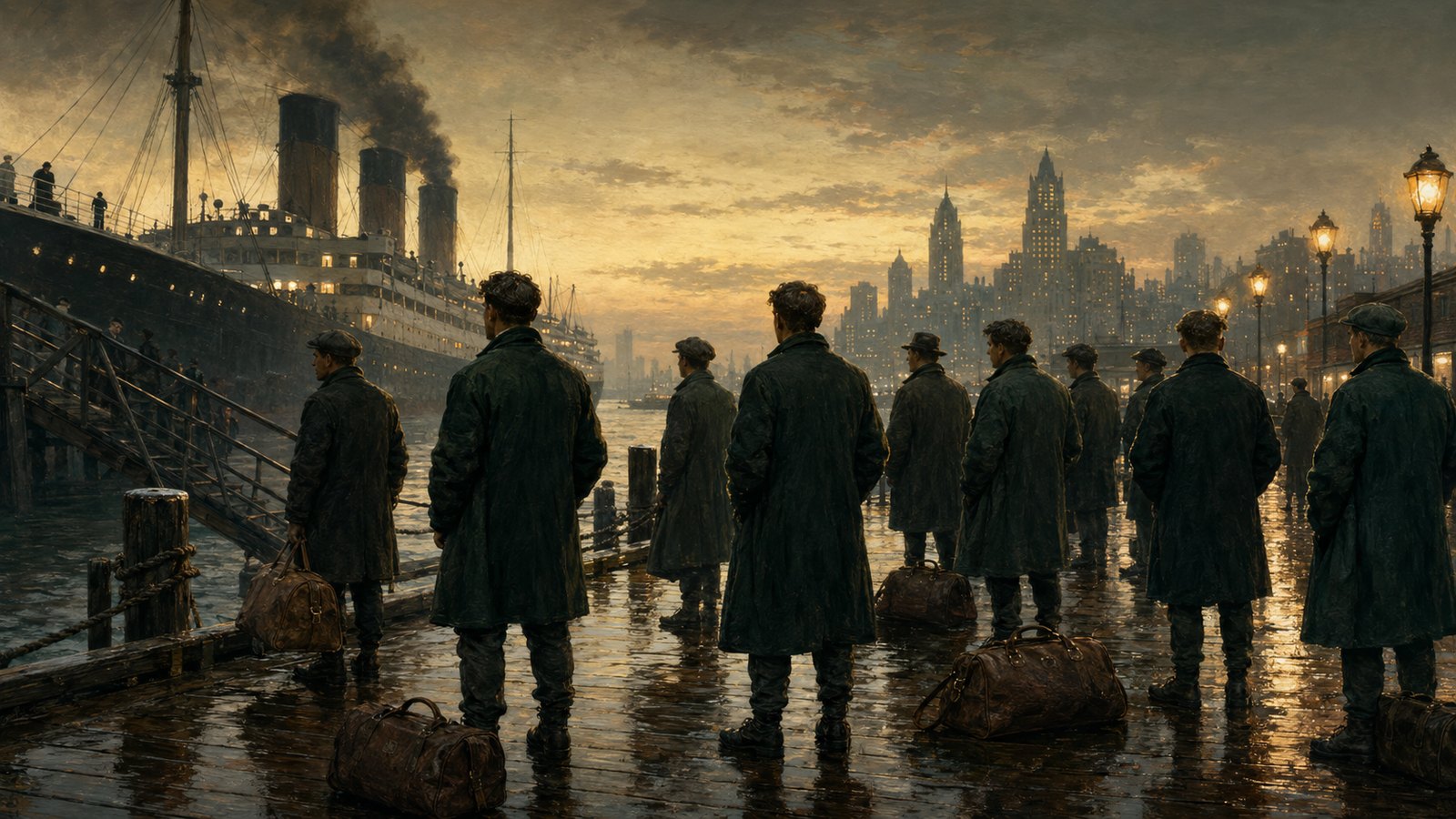
The most important transfer business did not involve one headline fee. American clubs offered Hakoah players work, and several accepted. Guttmann joined the Brooklyn Wanderers. Ernő Schwarz played for the New York Giants, later founded the New York Americans in 1931 and became coach of the United States men’s national team in 1953. Fabian also played for the Giants and then for New York Hakoah.
These choices separated the team’s institutional success from the players’ personal futures. The tour had proved that Hakoah could market itself globally, but that visibility made its leading footballers valuable to hosts with contracts available. An expedition designed to strengthen the Vienna club therefore created an exit route from it. This was not a collapse in one dramatic night. It was a series of rational decisions made after the same successful display.
The players did not disappear into an undifferentiated American game. Former Hakoah footballers helped form New York Hakoah, which won the National Challenge Cup in 1929. Schwarz built another club. Guttmann’s career eventually carried him through multiple countries and to major European trophies. The tour left behind people who could organize teams, coach, recruit and demonstrate a style at close range.
Migration also explains why a simple exhibition score would be too narrow a measure of impact. The durable result was a network. Vienna supplied players with a shared football education; New York supplied crowds, employers and new clubs. Each contract moved knowledge into another dressing room and another weekly schedule. The mechanism was ordinary enough to miss: a successful tour produced offers, and offers produced settlement.
The Team’s Dispersal Became Part of Its Survival Story
Hakoah’s football strength declined after players remained in America and others later moved to Mandatory Palestine. That sporting loss would be overshadowed by state persecution. Following the Anschluss in 1938, the German football authorities banned the club, its results were nullified, and its ground and assets were seized. The Guardian records that captain Max Scheuer was later murdered at Auschwitz; it also traces the death of former Hakoah player and coach Otto Fischer during the Holocaust.
Those facts change the meaning of the 1926 decisions without turning the players into people who could see the entire future. They stayed because contracts and a different life were available then. Yet dispersion later meant that parts of Hakoah’s football culture existed beyond the reach of the authority that closed the Vienna institution. New York Hakoah, individual careers and the memory held by supporters preserved lines that a confiscated stadium could not contain.
The club was re-established in Vienna after the Second World War. Its later form was different, but the name returned. Hakoah’s broader history therefore cannot be reduced to one record crowd or one league title. It is a history of building a public body, taking that body abroad, losing members to opportunity, suffering forced destruction and creating a presence again.
The Polo Grounds remains the hinge because it made several processes visible at once. Forty-six thousand spectators confirmed demand. Newspaper descriptions recorded a way of playing. American contracts altered careers. New clubs received experienced footballers. The visiting side came to represent strength through collective sport, and its most successful tour ensured that some of that collective would continue elsewhere.
Sources
Sports Illustrated’s history of Hakoah Vienna; The Guardian’s account of Jewish footballers murdered in the Holocaust; Hakoah Vienna club history summarized by Wikipedia.