
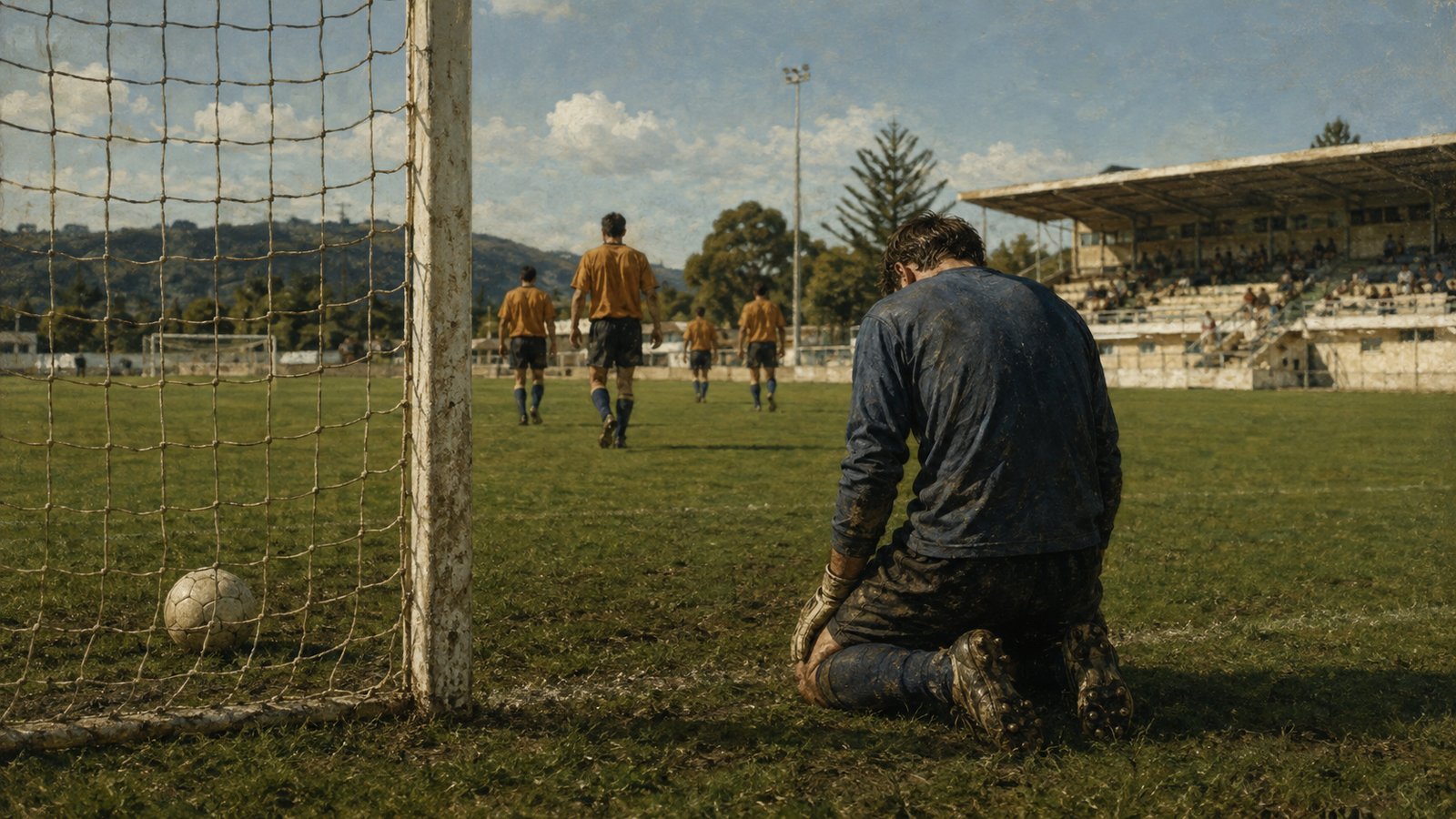
For a few minutes, even the number was uncertain. The scoreboard at Coffs Harbour showed 32. Match officials and reporters checked their notes. The accepted total became 31, which sounds like a small correction only because everything around it was so enormous. Australia had scored almost once every three minutes in a senior World Cup qualifier.
The date was 11 April 2001, the opponents were American Samoa, and the competition was qualification for the 2002 World Cup. Australia’s 31–0 win entered the record books. Archie Thompson supplied 13 of the goals and David Zdrilić eight. Yet the most revealing part of the afternoon was not the arithmetic. It was the distance between two national teams placed on the same qualifying path while possessing radically different pools, preparation and resources.
A record arrived two days after another record
Australia entered the American Samoa match having already distorted the scale. On 9 April, the Socceroos beat Tonga 22–0. That was reported as a new international record. Two days later, it became merely the preliminary act.
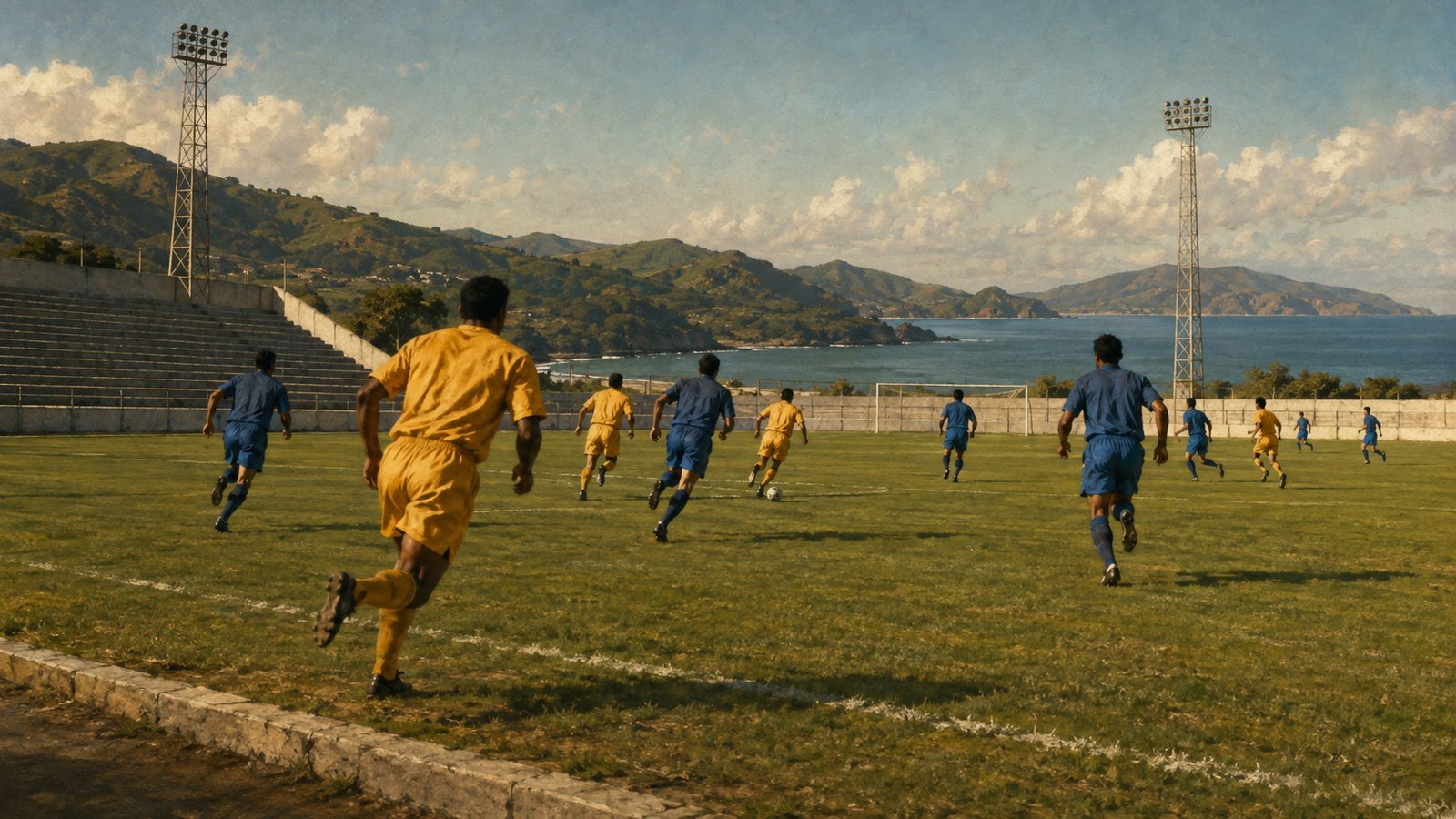
At the International Sports Stadium in Coffs Harbour, Australia scored early and kept scoring. The interval arrived at 16–0. Thompson accumulated 13, a record for one player in a senior international, while Zdrilić added eight. The goals came from routine finishes, headers, rebounds and attacks that reached the penalty area before American Samoa could reset.
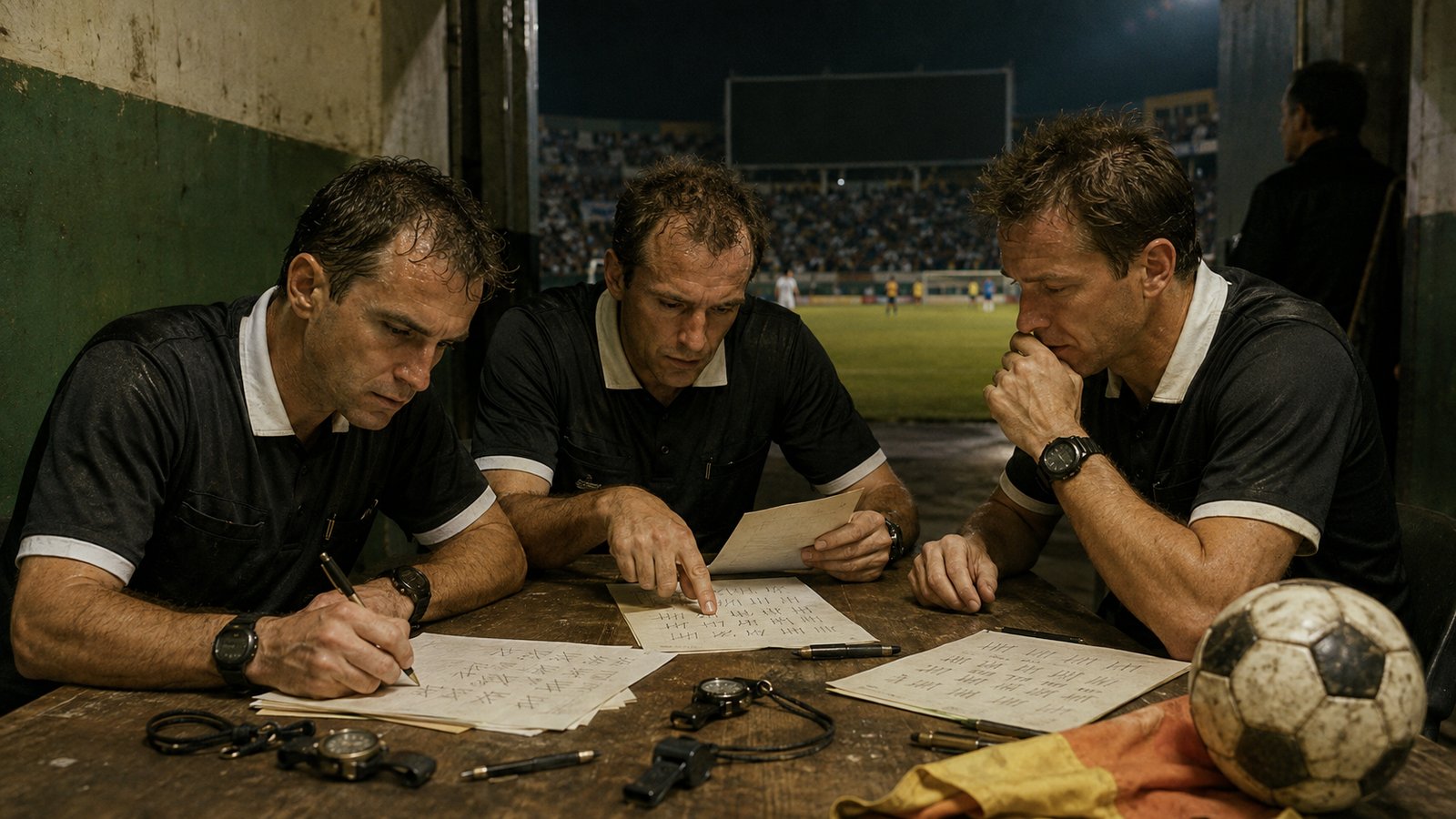
There was no comeback to manage and no tactical mystery to solve. The tension migrated to the count. Contemporary reports recorded the confusion around the scoreboard’s 32–0 display before 31–0 was confirmed. In an ordinary match, one disputed entry can decide points or qualification. Here, one goal temporarily disappeared inside a margin too large for the competition to absorb meaningfully.
The team behind the other number
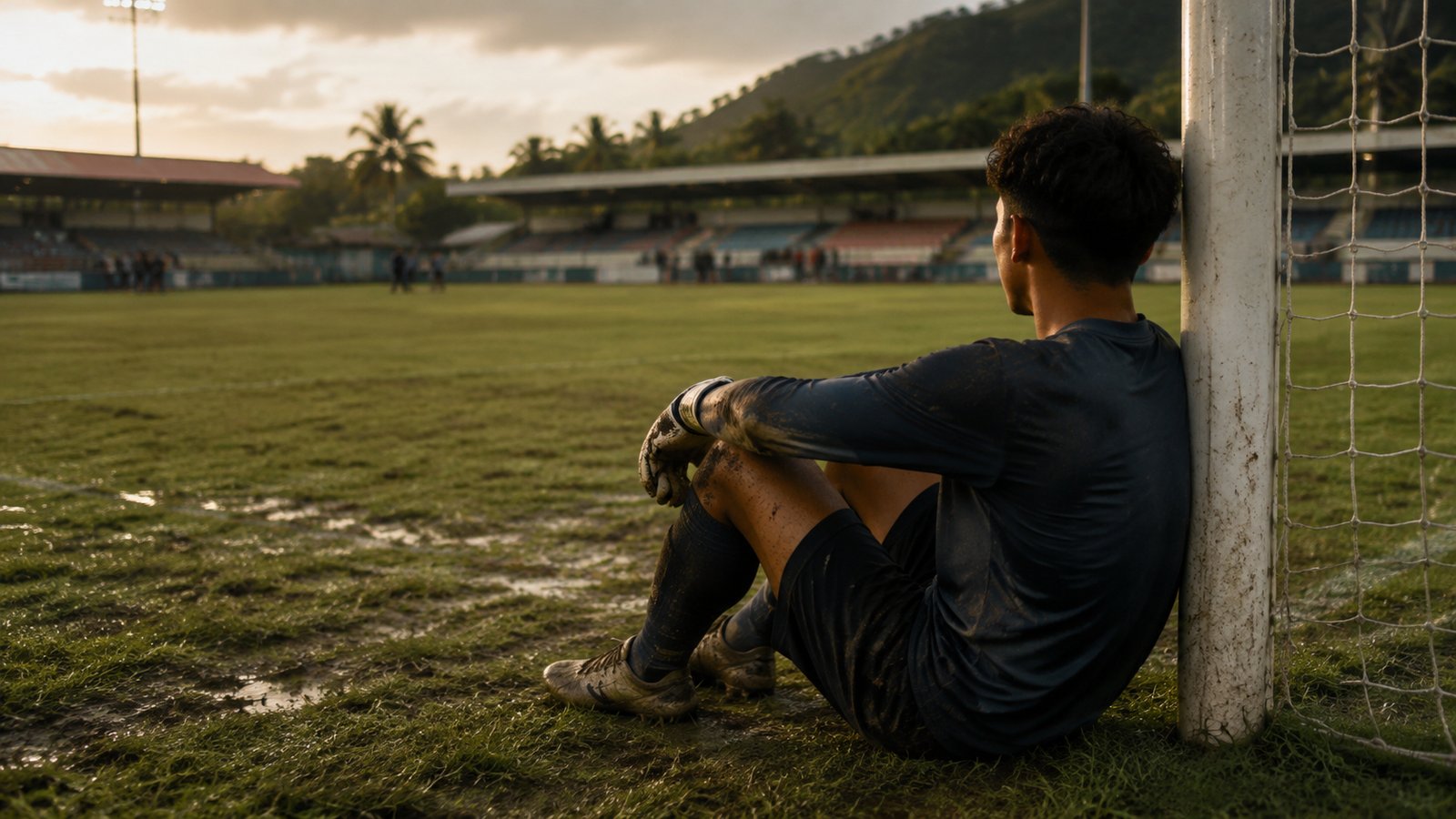
A scoreline can make the losing side look abstract, as if it were only the zero beside Australia’s total. American Samoa’s situation was painfully concrete. Eligibility and availability problems stripped away much of the expected squad. FIFA’s later account described goalkeeper Nicky Salapu as the only regular senior player available.
The replacements included teenagers asked to face full internationals with almost no shared preparation at this standard. They were not a settled defensive unit suffering an unusually bad day. They were an emergency team meeting an opponent whose physical speed, movement and finishing operated on another level.
That distinction does not erase the result. Australia completed the attacks in front of it, and Thompson’s movement repeatedly created the final touch. It changes what the record can reasonably tell us. Thirty-one goals do not measure only one side’s attacking quality. They also measure what happened when administrative eligibility, a shallow player pool and a compressed tournament format converged on the less equipped participant.
Salapu remained in goal throughout. Each restart returned him to the same exposed space. The net, the penalty area and the white posts did not change, but the match ceased to offer the ordinary promise that an adjustment could narrow the contest. His presence gives the score a human centre: one experienced player surrounded by an improvised group, continuing after every goal.
Oceania’s ladder had missing rungs
The qualifier exposed a structural problem. Oceania brought together countries separated by geography, population, professional infrastructure and access to regular elite competition. Australia stood at one end of that range. Smaller island associations could be forced to assemble teams from much narrower pools, then meet the region’s strongest side in a short centralized schedule.
A conventional league season creates time for recovery, coaching and gradual correction. This tournament did the opposite. Australia played Tonga and American Samoa within two days and scored 53 goals across the two fixtures. The weaker teams had no long runway in which to build toward the assignment. Once the mismatch began, the format simply let it run for 90 minutes.
The region’s strongest side faced a different frustration. Crushing preliminary opponents did not place Australia at the World Cup. Winning Oceania still led toward an intercontinental playoff. The Socceroos could dominate the local phase by historic margins and then confront a much stronger opponent with qualification resting on two matches.
The calendar sharpened both ends of the imbalance. Tonga’s 22–0 defeat came on 9 April; American Samoa entered the same arena on 11 April. Australia could carry combinations and finishing confidence from one extraordinary victory into the next assignment. Its opponents instead appeared as separate small associations, each responsible for surviving the regional favorite with whatever squad it could field. The compressed sequence made the aggregate figure — 53 Australian goals in two matches — possible before the first record had even settled into history.
That is the odd geometry of the 31–0: American Samoa encountered a step impossibly high, while Australia found that clearing it did not bring the finals much closer. The same system created humiliation below and uncertainty above.
The record did not deliver the World Cup
Australia advanced from Oceania, but Uruguay stopped them in the playoff. The Socceroos won the first leg 1–0 in Melbourne and lost 3–0 in Montevideo. The largest victory in international football had not prepared them for the contest that decided qualification.
This is why the match belongs beside stories about tournament design rather than in a simple collection of attacking feats. Compare it with the 1982 match that changed the World Cup schedule. In both cases, an unforgettable spectacle exposed an incentive or pathway that administrators could not explain away as a normal result.
Australia later moved into the Asian Football Confederation. That decision had several institutional causes, but the 2001 score remained a vivid exhibit in the debate. Asia offered deeper competition and a different qualifying route. Oceania lost its dominant member. American Samoa’s challenge, meanwhile, could not be solved merely by moving Australia elsewhere; player development and eligibility remained local work.
What survives after the number
Records flatten context because they are designed to be portable. “31–0” can travel without the names of the stadium, the goalkeeper or the qualifying system. It can be used as trivia, proof of dominance or a punchline. Restoring the context produces a less comfortable story.
Australia were vastly superior and finished with relentless efficiency. Thompson and Zdrilić earned places in the record. American Samoa also arrived with an eligibility crisis, an emergency squad and teenagers confronting an international standard they had barely experienced. Oceania asked these conditions to coexist inside one qualifying competition.
The two leading scorers also demonstrate how quickly a collective mismatch becomes attached to individual records. Thompson’s 13 and Zdrilić’s eight were precise achievements, but they emerged from the same repeated territorial pattern. Australia recovered the ball, advanced before American Samoa could form a stable line, and created another close-range decision. Counting each finish remains necessary; treating each one as independent evidence of attacking difficulty does not.
The halftime score supplies another scale. At 16–0, the record was already plausible, yet a full half remained. Neither substitution nor a lower tempo could repair American Samoa’s missing experience. The second period therefore became an administrative continuation of a contest whose competitive shape had already disappeared. Officials still had to time it, record it and settle whether the board’s extra goal belonged.
The best measure of the day is therefore not whether goal 31 looked different from goal 21. It is that the score kept rising after the sporting question had been settled, because the format had no other answer. The official correction from 32 to 31 supplied precision without restoring balance.
Australia 31, American Samoa 0 remains an accurate result. It is also a diagram of a route with missing competitive rungs: too steep for the smallest association, too shallow for the strongest, and capable of producing a world record that helped neither side reach the place it wanted to go.
Sources
FIFA; BBC Sport; The Guardian.