
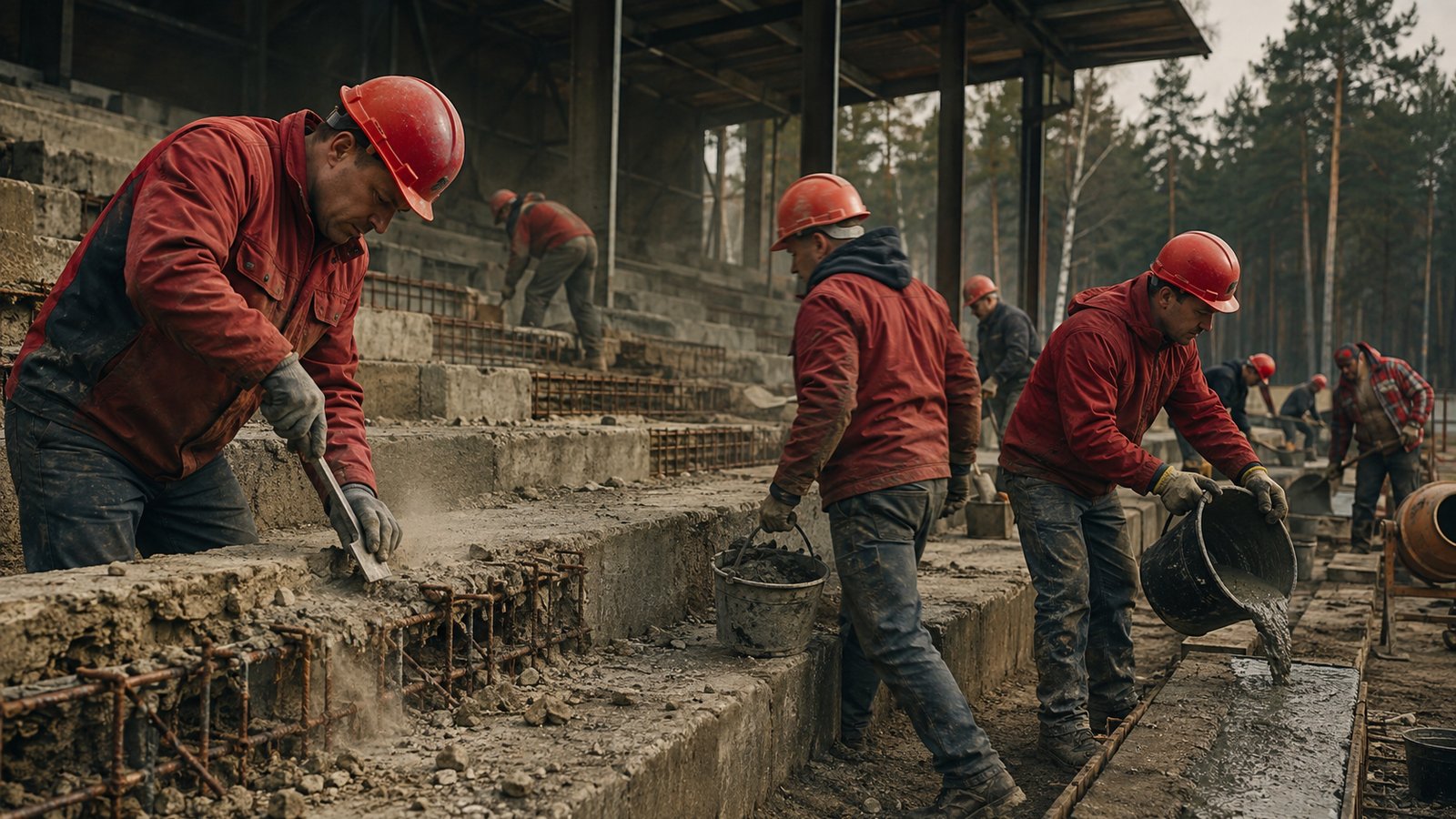
Dust clung to the red hard hats at the Stadion An der Alten Försterei in 2008. Supporters who normally stood on the terraces were scraping old concrete from them, exposing the metal beneath and carrying rubble out of a ground pressed against the woods of Köpenick. Some knew construction. Many offered only their hands and their time. The work would continue through a season in which Union Berlin had to play elsewhere.
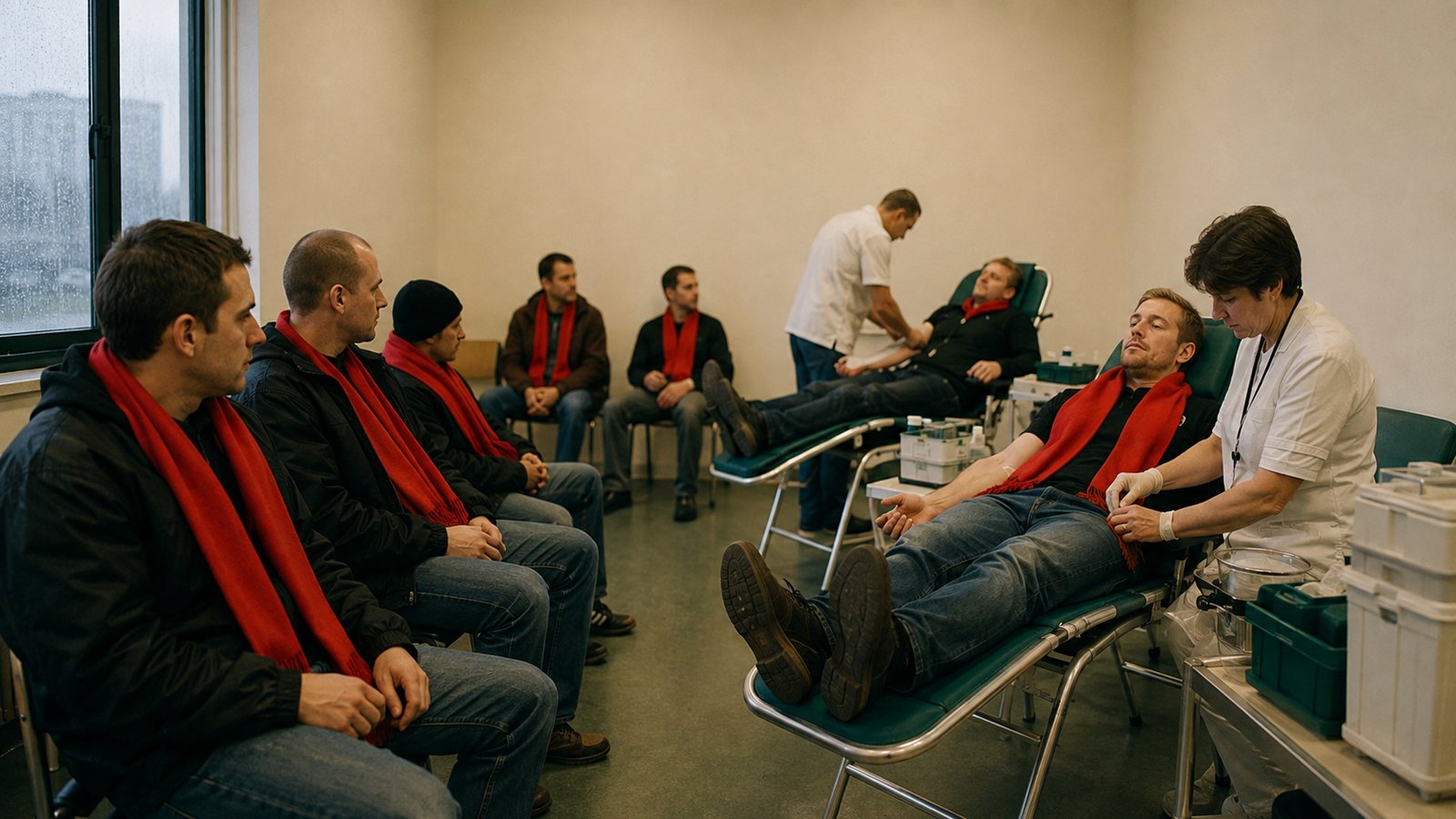
Four years earlier, another emergency had asked the same community for something more literal. The club needed a financial reserve to secure its licence. Supporters donated blood, passed their compensation to Union and gave the campaign a name that sounded like terrace rhetoric until people actually did it: “Bleed for Union.” These episodes are often told as charming proof that Union have unusual fans. Put together, they explain something harder and more consequential. The supporters did not simply rescue a football club. They supplied the capital, labour and shared ownership that made its later rise possible without separating the team from its home.
A Licence Deadline Made Blood a Currency
Union entered the spring of 2004 in danger of falling beyond the Regionalliga. The German Football Association required a liquidity reserve of €1.46 million by 9 June for the following season’s licence. For a club already heading down from the second tier, the alternative was another relegation into the Oberliga. The sporting result had become secondary to a balance-sheet deadline.
Berlin’s blood donors could receive compensation for the time and inconvenience involved. Union supporters saw a small, repeatable source of money and connected it to the club’s larger need. They donated at hospitals and directed the payments toward Union. The action also helped replenish the city’s blood supply. It was fundraising, but the physical act gave the campaign its force: the familiar claim that a fan had a club “in the blood” was converted into a practical contribution.
The campaign was not the only money behind the rescue. Members, sponsors and investors were all involved, and it would be false to pretend that individual donor payments alone produced €1.461 million. The official licence announcement credited that combined effort and recorded that the German FA accepted the submitted documents and reserve. On 11 June 2004, Union confirmed that they could enter the 2004–05 Regionalliga season.
Survival Was Followed by a Crumbling Home
The Stadion An der Alten Försterei had opened on 7 August 1920. Its name came from the old forester’s house nearby, and its location helped define it: a football ground reached through the trees rather than a polished arena dropped into a commercial district. Union installed floodlights in December 2000, but by the end of that decade the standing areas required complete renovation and roofing.
The problem cut directly into Union’s identity. The ground was not scenery behind the club. Terracing on three sides placed most of the crowd on its feet, close enough to turn a goal into a physical surge of noise. Losing the licence to use those terraces, or replacing their character with a remote solution, would change what matchday meant.
Money remained scarce. In June 2008, demolition and rebuilding began. Union played the 2008–09 season at the Friedrich-Ludwig-Jahn-Sportpark while the old ground became a worksite. The club’s official history dates the construction from June 2008 to July 2009. Instead of waiting for an outside owner to deliver a new home, supporters entered the schedule themselves.
There is a useful parallel with AFC Wimbledon assembling a club from open trials and borrowed infrastructure. In both cases, the decisive football institution was built before the team could enjoy the result. Union’s version involved concrete, steel, roofing and thousands of shifts whose value did not appear on the pitch that season.
The Terraces Became a 140,000-Hour Worksite
More than 2,300 volunteers contributed 140,000 working hours, according to the club’s current stadium history. Contemporary retrospectives sometimes round the number of participants to about 2,500, but the scale is clear whichever count is used. This was not a ceremonial weekend with a few painted railings. The project lasted more than a year and required people to return repeatedly.
Supporter Mark Jameson later remembered being asked what he could do. His answer was essentially unskilled labour, so he was assigned to remove old concrete from terrace steps down to the metal frame. The detail strips away the romance. Renovation meant dust, grime, aching hands and tasks divided according to ability. Qualified tradespeople handled specialist work; others dug trenches, moved materials or cleared surfaces.
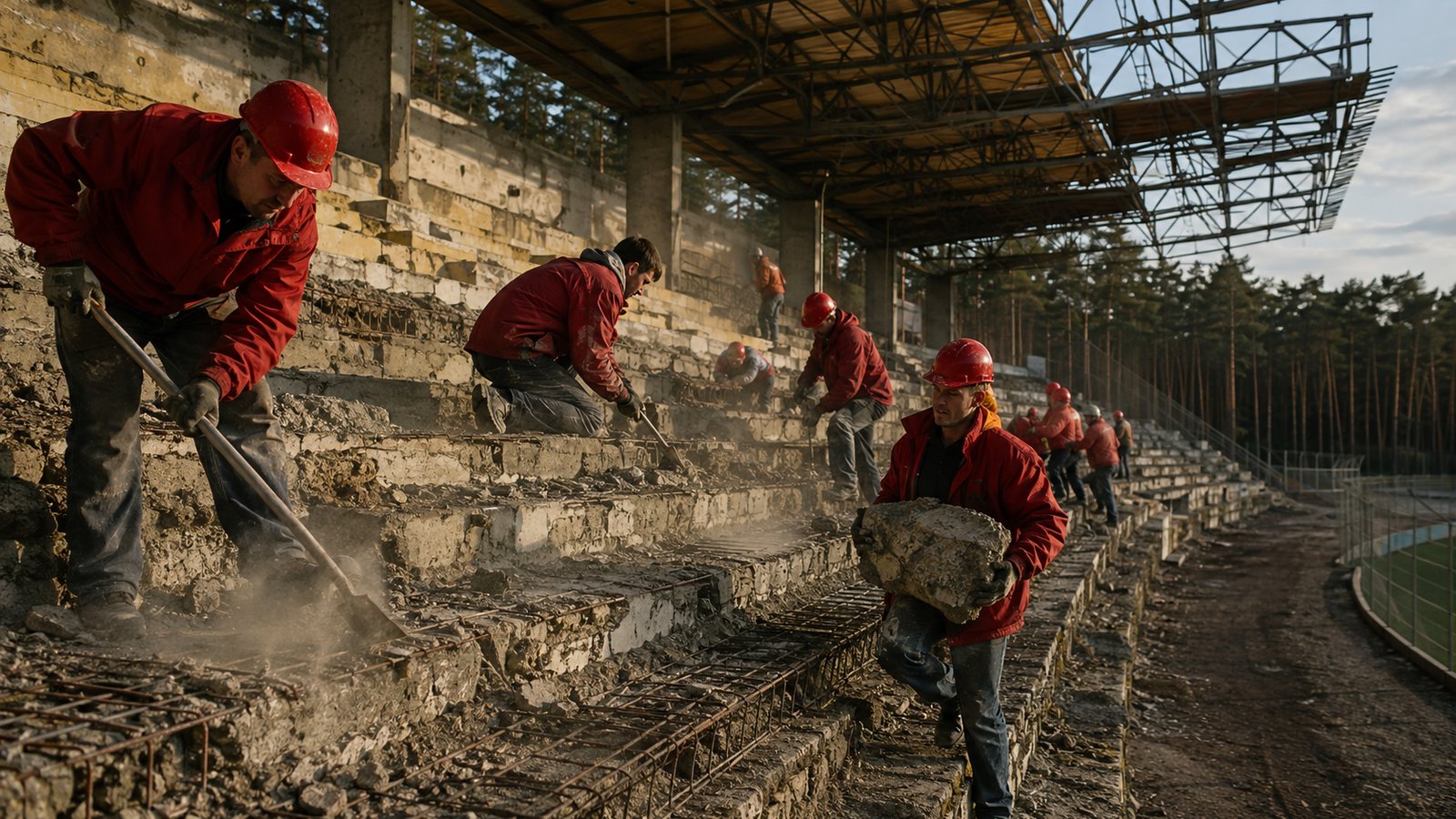
One hundred and forty thousand hours is easier to understand as accumulated attendance. It equals 17,500 eight-hour days. A person could give one Saturday; another could return for weeks. The project absorbed both contributions without requiring every supporter to possess the same money or skill. Labour became a form of membership that could be measured in cleared steps and completed sections.
The rebuilt stadium opened in July 2009. The modern ground holds 22,012 people, with 18,395 standing places and 3,617 seats. Those figures preserve the central decision embedded in the renovation: the largest share of the crowd would continue to experience Union upright, compressed into terraces and participating rather than observing from a distance.
A Forest Ground Preserved the Shape of Belonging
Football clubs often describe supporters as owners in an emotional sense while architecture tells a different story. At the Alten Försterei, the physical arrangement supports the claim. Three mostly standing sides wrap sound around the field. The woods remain just outside. The old forester’s house still stands nearby and contains club offices. The place carries its previous versions rather than pretending history began with a naming-rights deal.
Union formalised another route into the stadium through an operating company founded in July 2011. Members and sponsors were offered shares, followed by a second issue in December 2024. The structure continued the argument embedded in the volunteer rebuild: responsibility for the ground could stay connected to the Union family.
Other rituals grew from that relationship. Supporters have gathered at the stadium to sing Christmas songs since 2003. The BBC reported that the tradition began after fans, unhappy with the last match before Christmas, returned with mulled wine and biscuits to wish one another well. By 2019, the gathering drew tens of thousands. The exact origin has acquired the softness of a club story, yet the ritual’s persistence is documented. People went back when there was no match because the ground had become a meeting place in its own right.
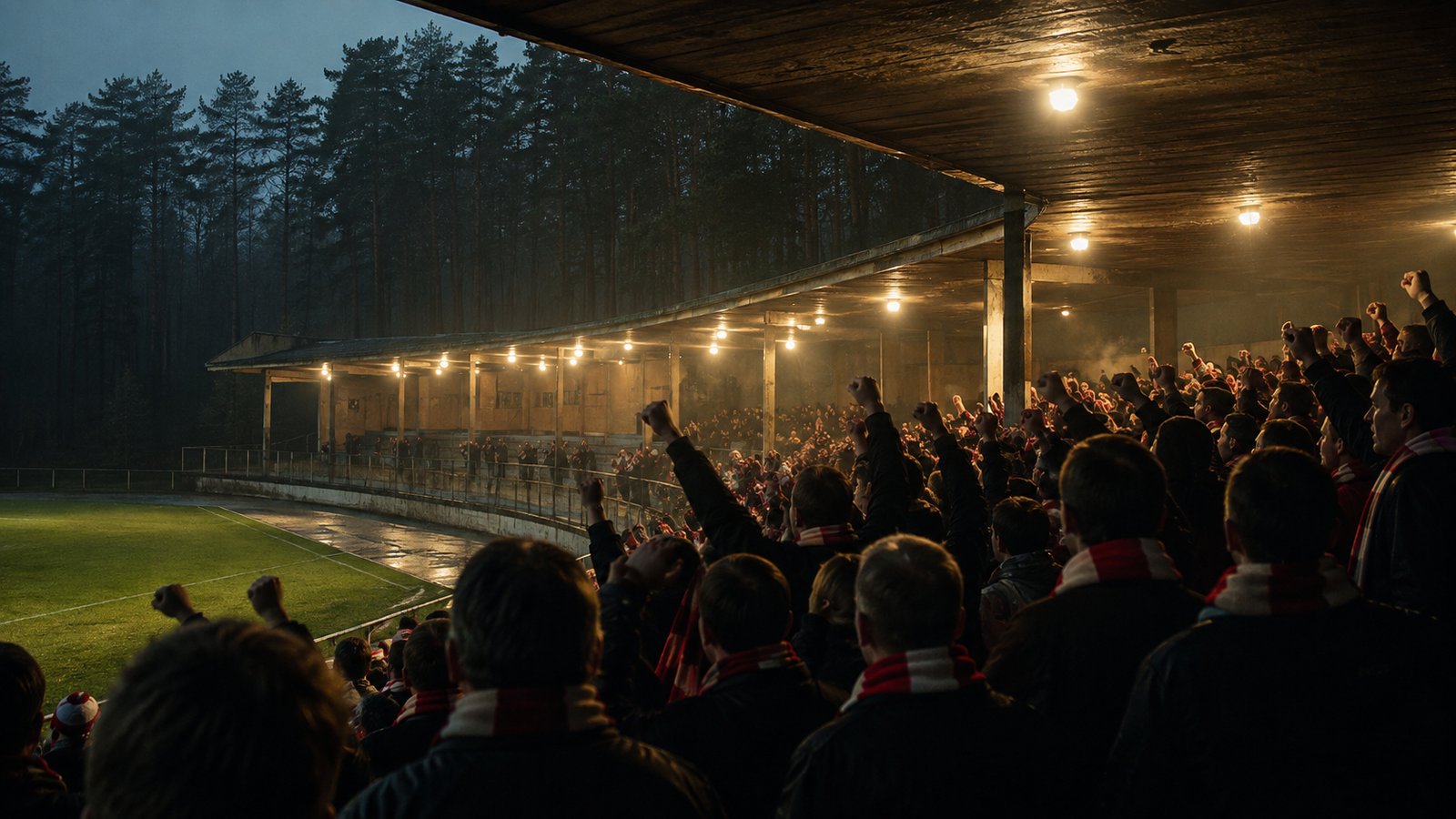
That helps explain why the construction story did not disappear after reopening. Supporters could point to a section and remember who had carried rubble there. At a friendly against Hertha, workers wore their red builder’s helmets. The object was humble enough to resist mythmaking: a hard hat recalled hours completed, not a trophy awarded.
Promotion Arrived After the Ownership Story Was Already Set
Union finally reached the Bundesliga in 2019, becoming the first club from the former East Berlin to play in the unified league’s top division. The promotion was historic, but it did not create the club’s modern identity. By then, the blood campaign was fifteen years old and the supporter-built terraces had been open for a decade. Success arrived inside a structure already shaped by collective rescue.
The climb accelerated. Under Urs Fischer, Union moved from promotion to European competition and qualified for the Champions League in 2023. The first home match in that tournament was staged at Hertha’s larger Olympiastadion so more than 50,000 members could have a chance to attend. That choice exposed a tension in the rise: the small, intense home supporters had rebuilt could not hold everyone attracted by the achievement it helped sustain.
Elite football still brings costs that volunteer shifts cannot cover, and community identity can become a marketable story. Union’s history offers no immunity from those pressures.
The sequence from 2004 to 2009 is the core of the story. First, a licence crisis taught supporters to gather many small contributions around a fixed deadline. Then a stadium crisis required the same habit at a larger scale. The work preserved a standing ground; the ground preserved a way of gathering; and that gathering gave later sporting success a home that felt earned before it became famous.
Sources: 1. FC Union Berlin; BBC Sport; Bundesliga; The Guardian.