
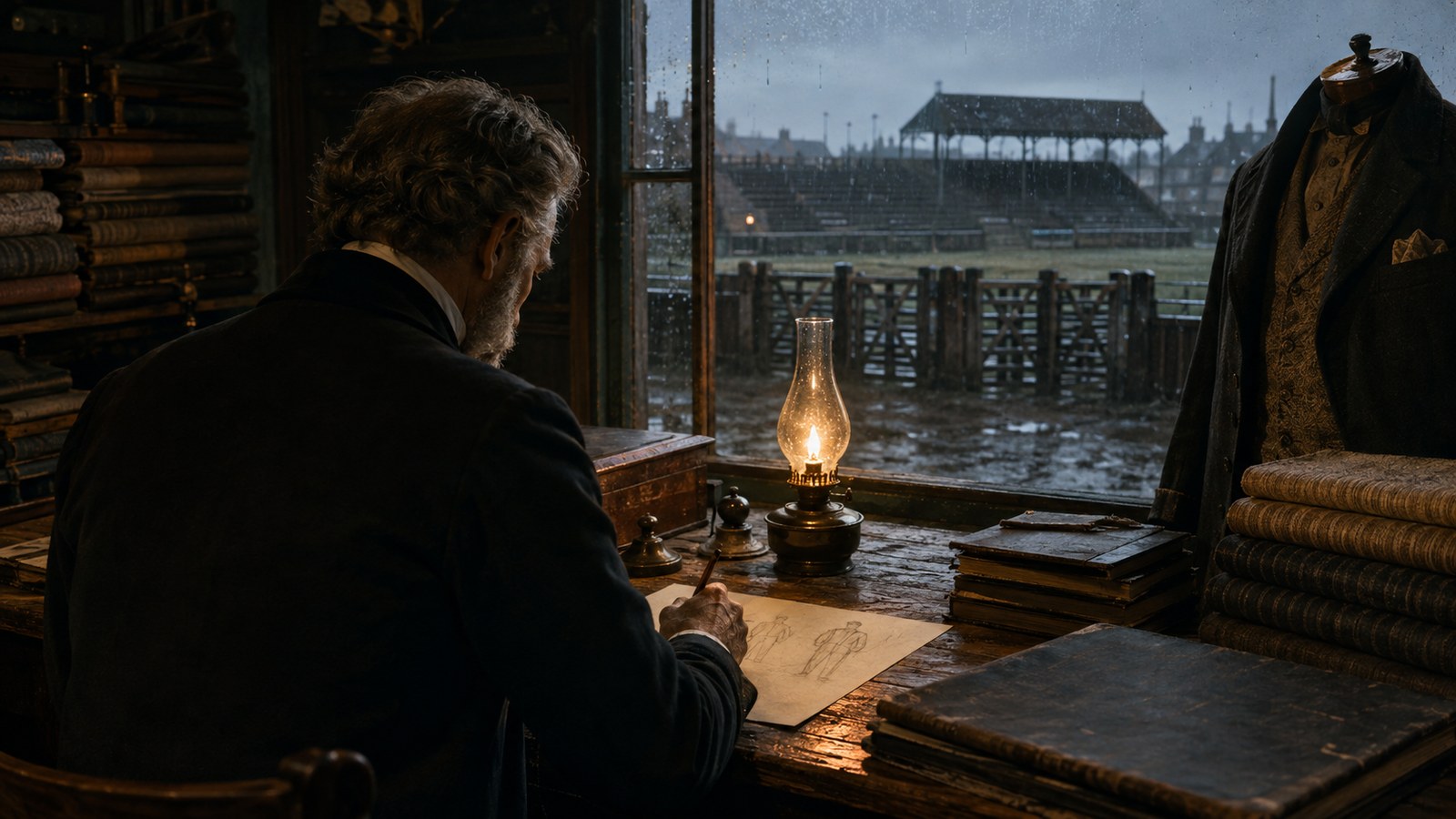
Five empty Saturdays could be more dangerous to an ambitious Victorian football club than five defeats. Aston Villa had embraced the new professional game, which meant wages had to be met whether or not an opponent arrived. Yet its calendar was still assembled from cup ties and friendlies that could collapse with little warning. William McGregor, the club’s Scottish draper and administrator, watched one run of cancellations leave Villa without a match for five consecutive Saturdays. The turnstiles stayed still while the bills did not.
McGregor’s answer began as a scheduling proposal rather than a sporting constitution. On 2 March 1888 he wrote to four other clubs and asked whether ten or twelve prominent sides might guarantee one another home-and-away fixtures. One pencilled letter led to two meetings, twelve founder members and a competition whose opening round was played before anyone had decided exactly how its table should work. League football was built in motion: first certainty, then matches, then the arithmetic by which a season would be judged.
Five blank Saturdays made professionalism unstable
English football had cups, famous clubs and growing crowds before it had a league. The Football Association had formally accepted professionalism in 1885, recognizing a reality that leading teams were already living. Paying players changed the cost of an unreliable fixture list. A cancelled friendly no longer meant only a quiet afternoon. It meant lost gate receipts with wages and other expenses still due.
McGregor understood that pressure from inside Aston Villa. Born in Perthshire, he moved to Birmingham in 1870 and established a linen draper’s business near the club’s early home. He joined Villa’s committee and became one of its central administrators. His trade depended on stock, customers and predictable exchange; his football club depended on opponents who might withdraw or offer a mismatch that spectators did not want to watch.
The problem was not a shortage of football so much as a shortage of dependable, competitive football. Strong clubs could spend early rounds of local or national cups overwhelming minor opponents, then scramble to fill gaps after elimination. McGregor later recalled scores as lopsided as 26–0 and crowds tiring of one-sided friendlies. Bad weather added another layer of uncertainty. Villa’s five blank Saturdays gave the problem a physical shape: an unused ground, unpaid-for entertainment and professionals waiting for the next booking.
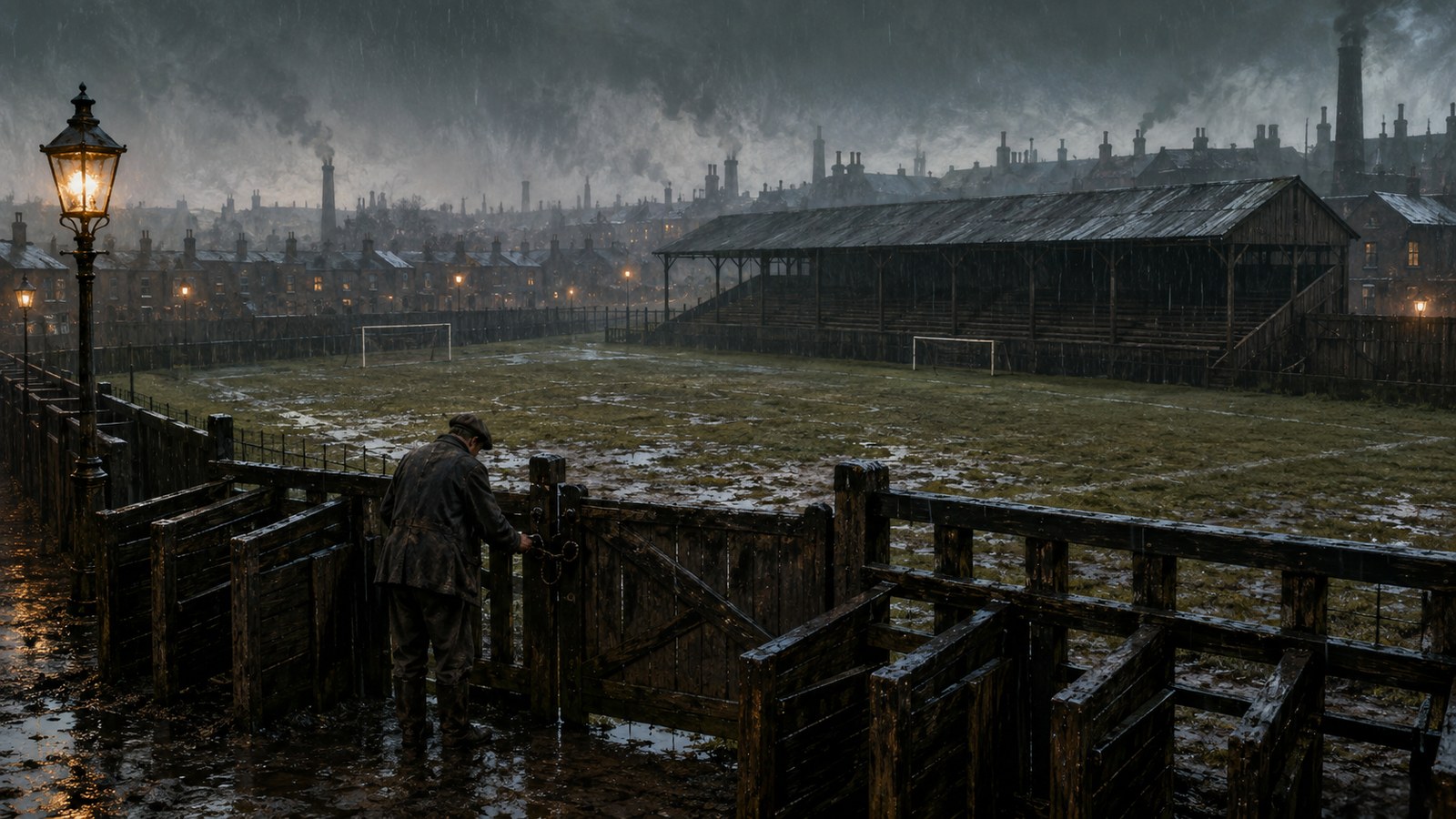
A guaranteed programme would solve several problems at once. Clubs could advertise dates, supporters could build Saturdays around matches, and treasurers could estimate gate income. Regular home-and-away games would also make strong opponents meet on agreed terms rather than only when a cup draw happened to bring them together. McGregor was not merely adding another trophy. He was trying to make a professional season financially legible.
A pencilled letter proposed home and away certainty
On 2 March 1888, McGregor wrote to Blackburn Rovers, Bolton Wanderers, Preston North End and West Bromwich Albion. His core suggestion was concise: ten or twelve leading clubs should combine to arrange home-and-away fixtures each season. The surviving text is known through reproductions, because no original copy is known to remain. BBC Sport records the evocative detail that he wrote in pencil on the back of a draper’s fashion plate.
That scrap suited the proposal. It was practical, provisional and open to alteration. McGregor did not claim to have completed every rule. He asked the recipients to consider the idea, improve it and nominate other clubs. Bolton’s response helped bring Wolverhampton Wanderers, Accrington and Burnley into the discussion. Notts County, Stoke, Derby County and Everton also joined as the project gathered shape.
The eventual membership came from the Midlands and northern England, where professional clubs and industrial crowds made regular fixtures especially valuable. No southern club joined. Railways enabled home-and-away travel, but a compact network still kept time and cost manageable.
The first meeting took place at Anderton’s Hotel on Fleet Street in London later that March, timed around the FA Cup final. Representatives accepted basic principles, including the expectation that clubs would field full-strength sides. That protected the product McGregor was trying to create. Guaranteed dates were worth less if a member treated them as disposable friendlies and sent a weakened team.
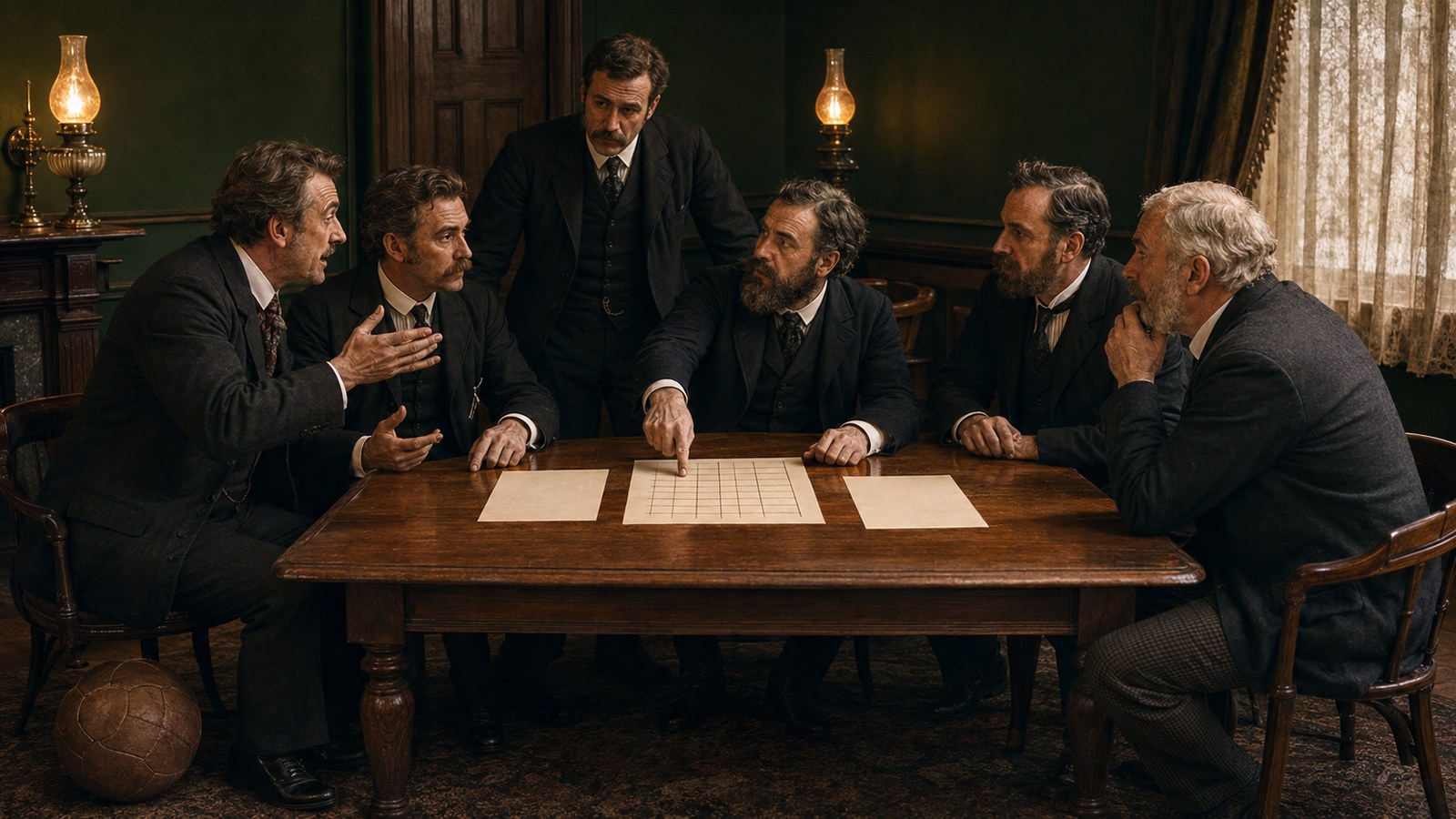
The meeting did not finish the job. It established enough agreement to make a second gathering worthwhile. That distinction is part of the story’s engine: league football did not spring fully formed from one visionary’s letter. The letter made a shared problem discussable. The clubs then negotiated a structure they were willing to trust.
London set the principles, Manchester named the competition
The decisive follow-up came at the Royal Hotel in Manchester on 17 April 1888. Even the name was unsettled. McGregor preferred “Association Football Union,” language that emphasized cooperation but risked confusion with rugby’s governing body and carried political associations he disliked. Major William Sudell of Preston North End proposed “The Football League.” The room accepted it, giving football a term that would travel far beyond the original twelve clubs.
Those founders were Accrington, Aston Villa, Blackburn Rovers, Bolton Wanderers, Burnley, Derby County, Everton, Notts County, Preston North End, Stoke, West Bromwich Albion and Wolverhampton Wanderers. Their arrangement was simple enough to explain: each club would play the other eleven twice, once at home and once away. Twenty-two fixtures promised the regular programme that cup football could not provide.
It also created a different sporting memory. A cup isolates decisive afternoons; a league accumulates evidence. A September draw can matter beside a March win, and an away trip belongs with its return fixture. Supporters had to hold a season in mind across towns and months.
The founder list contained future giants, but it also preserved a vanished map. Everton’s home match against Accrington was played at Anfield, four years before Everton left and Liverpool was formed there. The new league bound clubs together while their identities, grounds and cities were still changing. Its stability did not freeze football. It gave change a common calendar.
The first table did not exist on opening day
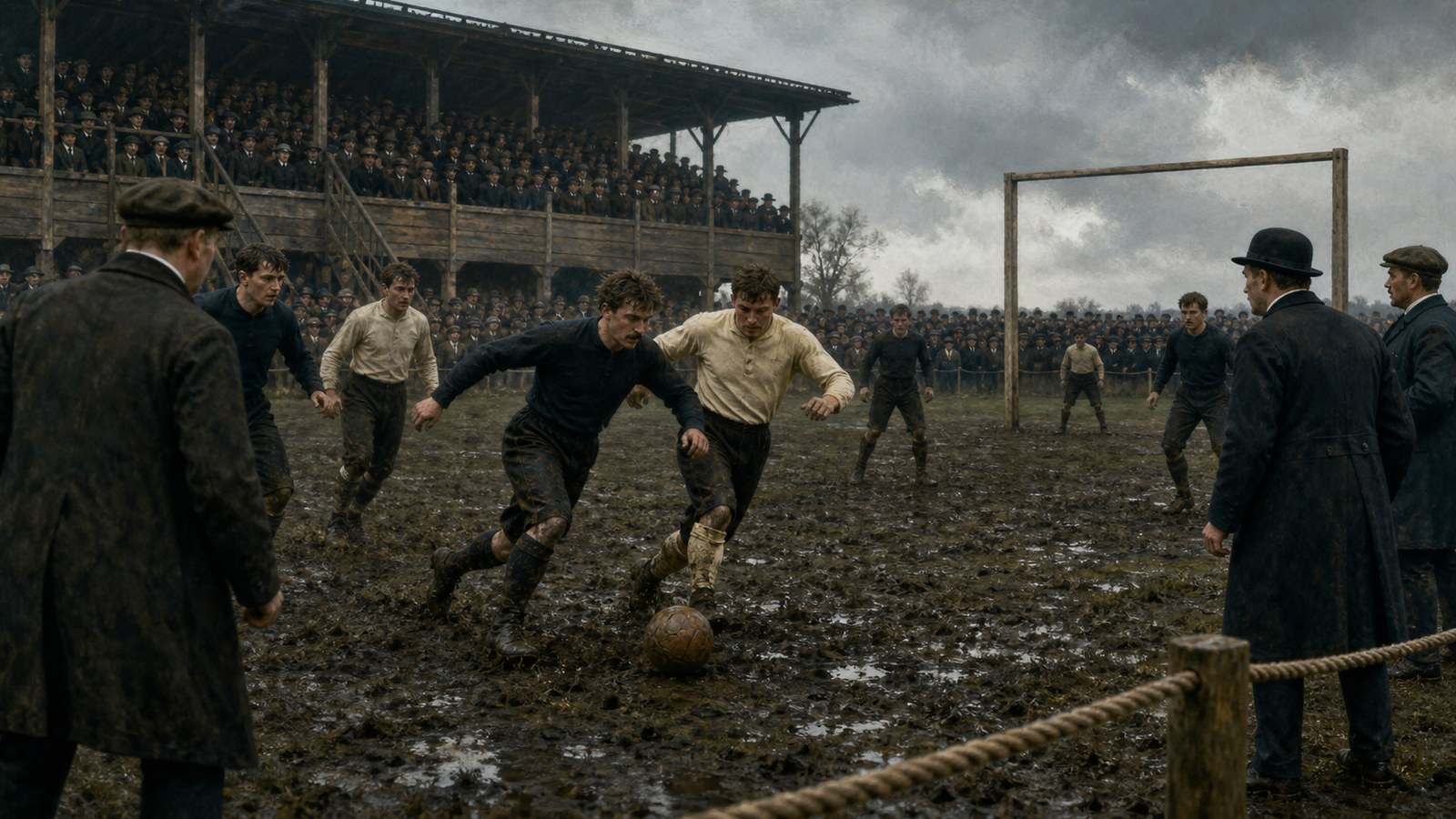
The inaugural season began on 8 September 1888 with goals everywhere. Preston beat Burnley 5–2. Derby County defeated Bolton Wanderers 6–3. Everton beat Accrington 2–1 at Anfield, West Bromwich Albion won at Stoke, and Aston Villa drew with Wolverhampton Wanderers. Blackburn Rovers and Notts County did not play their intended league game because Blackburn already had a friendly arranged against Newton Heath.
That collision between an old booking and the new competition is almost too neat. The league existed, but the habits it was replacing had not vanished. Other details make the opening weekend feel equally unfamiliar. The referee operated from the touchline, intervening when two club-appointed umpires could not agree. Goal nets had not arrived. Shirts had no numbers, substitutions were unknown, and fading light could send teams straight into the second half without a normal interval.
Most strikingly, the clubs had not settled the points system when they kicked off. The early matches produced results without an agreed method for arranging those results into the table now inseparable from league football. In November, at a meeting in Birmingham, the members chose two points for a win and one for a draw by six votes to four. The alternative would have awarded a point only for victory.
Preston North End made the uncertainty look temporary. They completed the 22-game league season unbeaten, became the first champions and also won the FA Cup. Their double gave the new competition an immediate benchmark, a team that could be measured not through one final but through an entire programme. Readers can follow that unbeaten run in our account of Preston’s 27 league and FA Cup matches without defeat.
McGregor became the league’s first chairman and later its president. By his death in 1911, the format had spread far beyond the rooms in London and Manchester where the first terms were debated. The Scottish Football League followed in 1890, and comparable competitions became the organizing rhythm of football around the world.
The enduring invention was a promise that next Saturday’s match would happen, the return fixture would follow, and every result would occupy a defined place. McGregor began with blank dates. Clubs supplied the name and, after kick-off, the points. Modern league football still carries that sequence: calendar first, argument every week, table last.
Sources
BBC Sport, “One letter, two meetings and 12 teams”; English Football League historical records; Scottish Football Museum, “The Founding of the Football League”; Football League 125, “William McGregor”; Sporting Intelligence historical archive.