
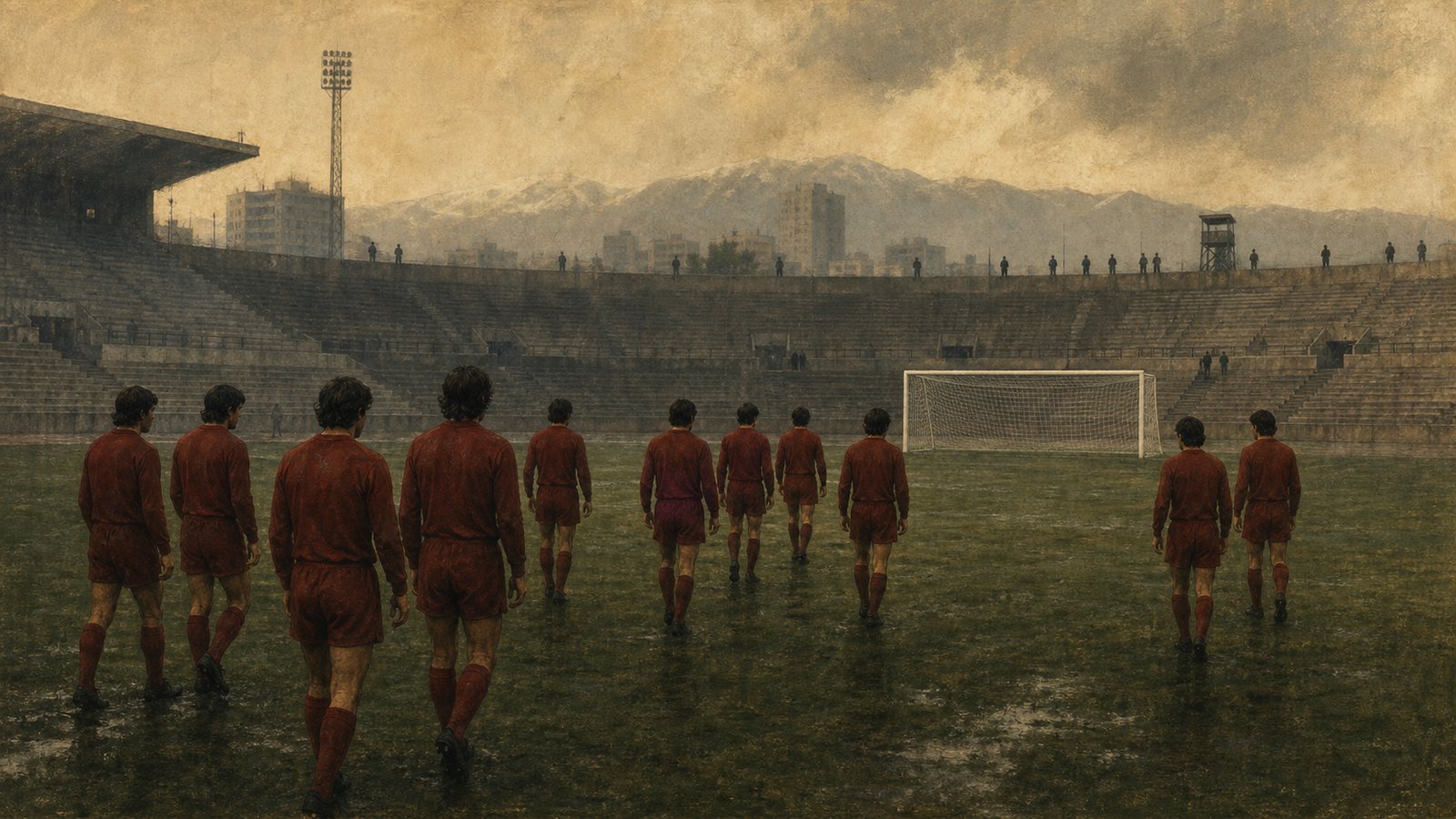
Francisco Valdés tapped the ball to a teammate and began moving toward a goal that nobody was defending. Chile’s players exchanged a short sequence of passes. Carlos Caszely, the forward they looked toward, did not take the final touch. Valdés rolled the ball over the line. Seventeen seconds had passed, one team had scored, and the other team was thousands of miles away.
The scene at Santiago’s Estadio Nacional on 21 November 1973 looked like football stripped of its essential condition. It was also the endpoint of decisions made by a dictatorship, the Soviet government and FIFA. A World Cup place had become entangled with a stadium’s recent use as a detention centre after Chile’s military coup. The goal into an empty net did not resolve that conflict. It displayed how far the governing body was prepared to preserve the appearance of a fixture after the contest itself had disappeared.
A Goalless First Leg Before the Journey Changed
Chile and the Soviet Union reached an intercontinental play-off for a place at the 1974 World Cup in West Germany. The first leg took place at Moscow’s Central Lenin Stadium on 26 September 1973 and ended 0–0. Chile had survived the away match. Ordinarily, the second leg in Santiago would decide everything.
But there was no ordinary return journey. On 11 September, fifteen days before the Moscow match, Chile’s armed forces had overthrown President Salvador Allende. General Augusto Pinochet’s regime detained thousands of people. The Estadio Nacional, the country’s most famous football ground and venue for the 1962 World Cup final, became one of the main detention sites. Prisoners were held in its stands, corridors and rooms; torture and killings were associated with the complex.
The contrast was brutal. The same pitch assigned to settle a World Cup qualifier sat inside a place being used to confine the new government’s opponents. The Soviet Union broke diplomatic relations with Chile and objected to playing there. It asked for the match to be moved to a neutral venue. The disagreement concerned far more than safety for a visiting squad. Taking the field would allow the stadium to be presented as normal while its recent prisoners and victims remained central to the dispute.
FIFA Inspected the Grass and Approved the Ground
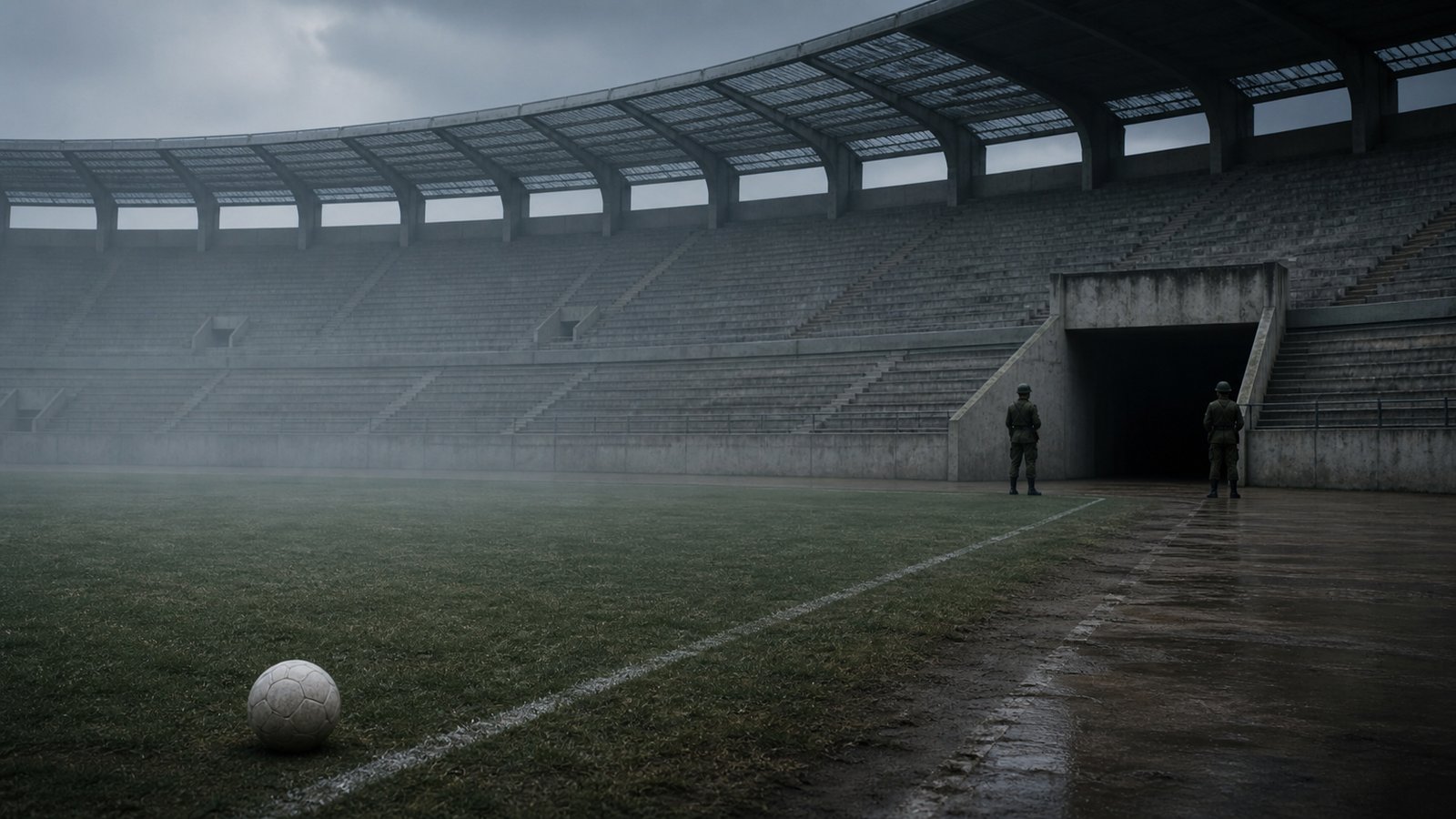
FIFA sent inspectors to Santiago on 24 October. By the time of their visit, prisoners had been moved away from the arena they were shown. The delegation reported that the field was in excellent condition and approved the Estadio Nacional for the match. A press conference was held with Chile’s defence minister, Admiral Patricio Carvajal, reinforcing the state’s claim that objections to the venue were propaganda.
That inspection narrowed the question to whether a football event could physically proceed. Grass, dressing rooms and match administration could pass while the stadium’s meaning went largely unaddressed. The Soviet position remained unchanged. Its team would not travel to Santiago. According to History’s account, FIFA gave the Soviets until 11 November to decide and rejected the neutral-ground proposal.
A conventional walkover required no ceremonial attack against an absent side. FIFA could award the tie and close the file. Instead, Chile’s players were instructed to appear on 21 November. The ground admitted spectators, although estimates vary and were far below the packed spectacle the regime wanted to project. Austrian referee Erich Linemayr and Chile’s eleven took their places. There were no Soviet players, no opposing goalkeeper and no kick-off in any competitive sense.
Seventeen Seconds Toward an Undefended Net
Captain Francisco Valdés started the movement. Elías Figueroa was among the players advancing behind the ball. Teammates offered Carlos Caszely the chance to finish, but he left the touch to Valdés. Caszely was one of Chile’s outstanding forwards and an Allende supporter whose opposition to Pinochet later became publicly significant. Football Makes History records that people had asked him to look inside the stadium for missing relatives before the event.
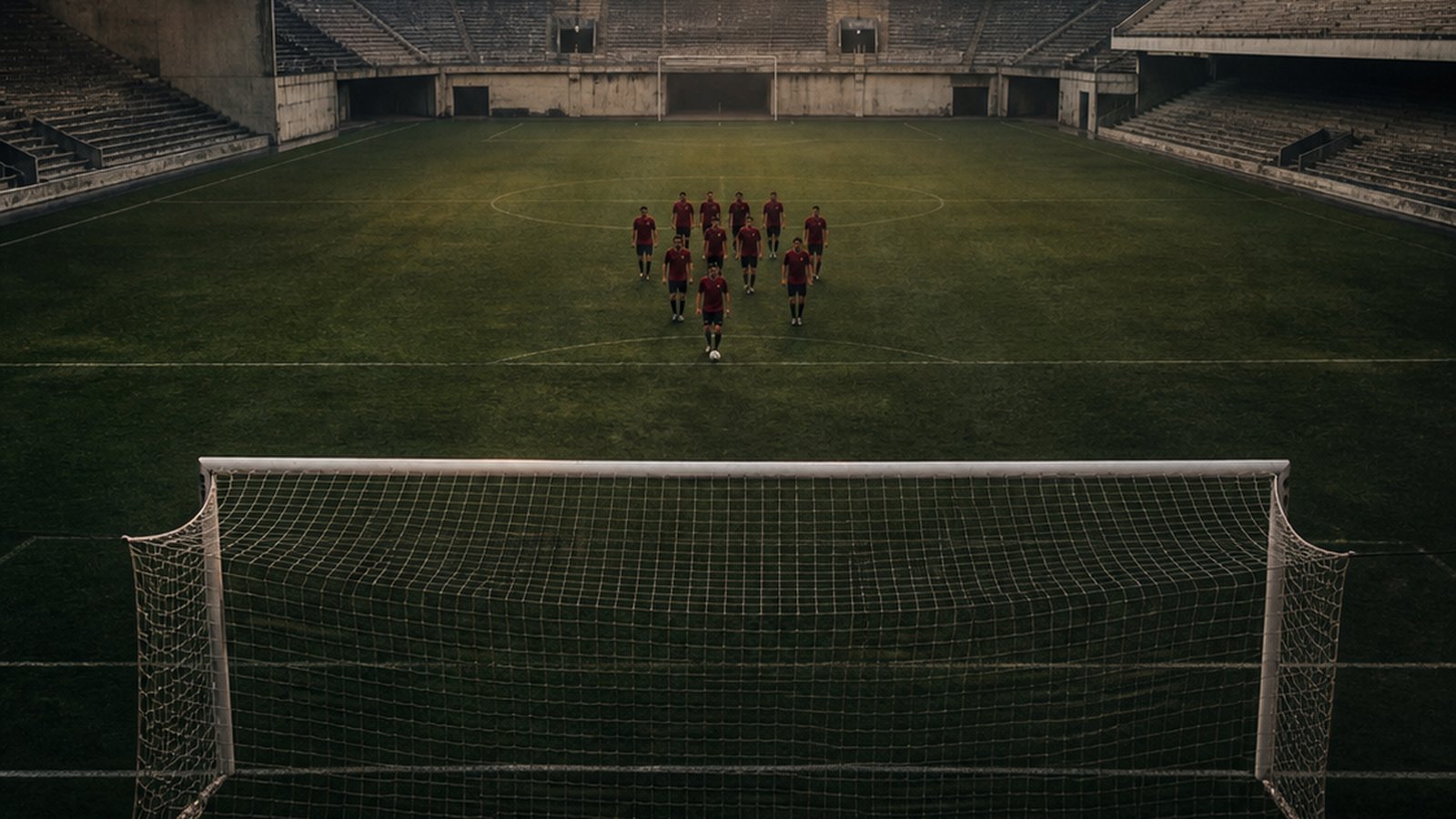
Valdés scored after roughly seventeen seconds. The referee then ended the official exercise. FIFA recorded a 2–0 awarded victory for Chile, while the performed sequence had produced a single undefended goal. The distinction matters: one score belonged to regulation, the other to political theatre. Neither came from a contest.
A friendly against the Brazilian club Santos followed, giving the paying crowd an actual match. The substitute entertainment could not erase what had preceded it. Chilean players had been placed in an impossible public role. Refusal carried risk under a military government. Participation made them figures in a scene designed by authorities they did not all support. Caszely’s choice not to apply the last touch was small, but within those limits it kept the most visible act from becoming his.
A World Cup Place Awarded Without the Return Match
Chile qualified for West Germany. The team lost 1–0 to the hosts and drew with East Germany and Australia, leaving the tournament after the first group phase. The Soviet Union, a quarter-finalist in 1970, did not attend. Other Eastern Bloc teams, including East Germany, Bulgaria and Poland, did compete.
The sporting consequences were clear enough. The institutional precedent was harder to contain. FIFA had treated a venue’s recent political use as separate from its fitness for football. Once inspectors could view an empty pitch and functioning facilities, approval followed. The Soviet boycott was answered through disqualification rather than relocation. The ceremonial goal then supplied pictures of a home team taking the field as scheduled.
Compare that response with FIFA’s later reaction to the 1982 match in Gijón. There, public damage to competitive credibility led to a format change: final group matches would be played simultaneously. Santiago presented a deeper problem because the contest was already impossible. Yet the governing response protected the fixture’s shell rather than acknowledge that the venue itself had made ordinary competition untenable.
The episode also sits beside the withdrawn goal in France against Kuwait in 1982. In Valladolid, authority entered the pitch during a live match and altered what the referee had given. In Santiago, political power had shaped every condition before the whistle. Both stories reveal that a scoreline can remain official while the route to it exposes pressures the Laws of the Game cannot explain.
What the Empty Goal Preserved
Images of the sequence have survived because they are so immediately wrong. Players advance, but there is no defender to beat. A captain scores, but there is no celebration with the release of real competition. The referee’s whistle does not begin an uncertainty; it confirms a predetermined result. Every familiar action points to the absent side.
The absence can tempt a neat description of the Soviet Union as the sole actor of refusal. The stadium complicates that reading. Its recent prisoners were the reason the venue mattered. FIFA’s inspection, the junta’s desire for a public event and the Chilean players’ constrained participation all shaped the seventeen seconds. The Soviet team’s nonappearance made the scene possible, but it did not create the conditions that made the trip unacceptable.
Estadio Nacional later became a site of public memory as well as football. The story of the ghost match remains attached to it because a stadium is never only grass and concrete. It carries what crowds witnessed there, what authorities did there and what institutions chose to recognize. In October 1973, inspectors could report that the turf was playable. In November, an undefended goal showed the limit of that finding.
Chile’s passage to the World Cup is listed as a walkover. That administrative label is accurate and incomplete. The lasting event was a performance of normality in a place where normality had been violently broken. Valdés put the ball in the net after seventeen seconds; the scene has endured for more than fifty years because everybody could see that the score was not the point.
For the players, there was no clean role available. They could not create an opponent, reverse FIFA’s venue decision or detach the national shirt from the junta’s presentation. Their brief procession survives as evidence of constraint rather than achievement. A match report can record the date and award. It cannot make the empty half of the field disappear.
Sources
Football Makes History; History; Aspects of History.