
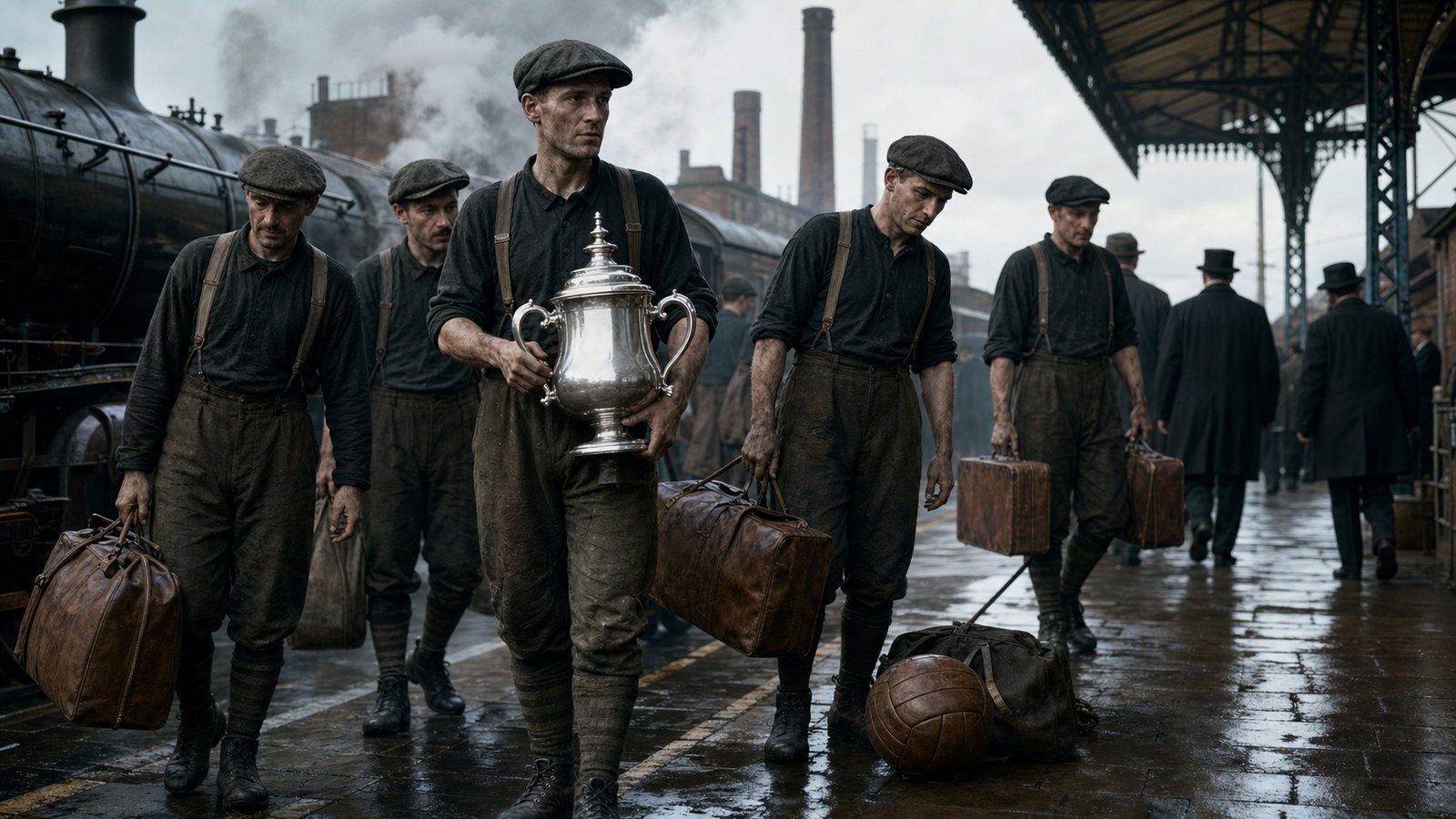
Before West Auckland’s players could worry about Stuttgart, they had to work out how to reach Turin. The invitation promised an international football tournament in April 1909. It did not provide a professional club’s travel budget. The County Durham side was amateur, many of its players worked in the pits, and the journey demanded money they did not have. Players contributed from their own pockets. Some reportedly sold furniture or other belongings.
The route itself reads like an expense sheet: bus to Darlington, train to London, ferry to Calais, then onward through Europe to northern Italy. At the far end waited teams from Germany, Switzerland and the host country. West Auckland returned with the Sir Thomas Lipton Trophy after winning both of its matches 2–0. Two years later, it went back and won the competition again, finishing with a 6–1 victory over Juventus.
The easy version calls these miners the first world champions. The more interesting version needs sharper language. This was not the FIFA World Cup, which began in 1930, and it was not a national-team championship. It was an ambitious club invitational at a time when cross-border competition had few settled forms. West Auckland’s achievement becomes more—not less—remarkable once the label is corrected. A team that had to finance its own passage won twice abroad, earned the trophy outright, and then found that victory had not solved the bills waiting at home.
An invitation arrived after the FA declined
Sir Thomas Lipton’s competition brought together representatives from four football countries in Turin. The English Football Association declined to nominate a team. Germany sent Stuttgarter Sportfreunde, Switzerland sent FC Winterthur, and the Italian entry combined players from Turin clubs. England’s place eventually went to West Auckland, a Northern League side from a mining village.
Why that club received the invitation has generated a story almost as durable as the results. One version says the organisers intended to invite Woolwich Arsenal and confused initials. Local historian Martin Connolly has treated that explanation as legend rather than evidence. Bishop Auckland, West’s powerful neighbours in north-east amateur football, may have been the intended target. The surviving uncertainty matters because it explains the tournament’s improvised scale. There was no long qualification campaign, global federation bracket or established route into the field. An invitation went unanswered, another route was found, and West Auckland accepted.
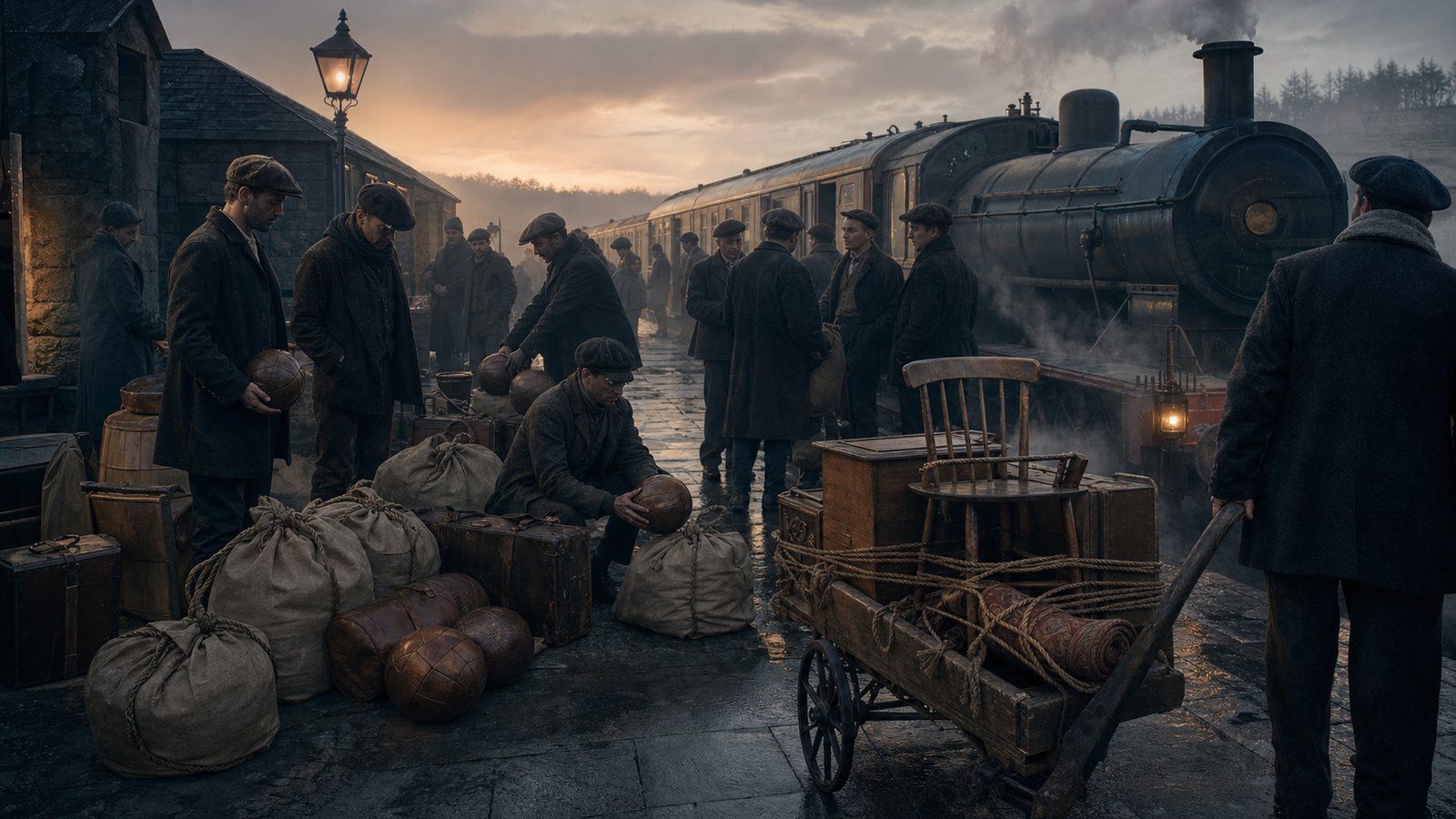
Furniture paid for a route across Europe
The team travelled by bus to Darlington and by train to London. A ferry carried the party to Calais before the longer rail journey toward Turin. It was a sequence of platforms, luggage and connections rather than the sealed travel bubble of a modern elite club. Boots, kit and ordinary clothes moved together. The players crossed borders as representatives of English football even though its governing association had declined the original invitation.
Cross-border football before the First World War did not carry one universally accepted hierarchy. The phrase “first World Cup” survives on road signs and in village memory, but the Lipton Trophy must be distinguished from the FIFA competition created two decades later. The tournament belongs beside football’s other early experiments in international scale. Long before Uruguay and Argentina disputed which ball to use in the 1930 final, organisers were already trying to make teams from different football cultures share one event.
Four goals settled the first Turin visit
West Auckland beat Stuttgarter Sportfreunde 2–0 in the semi-final on 11 April 1909. Bob Whittington scored after ten minutes. The second goal did not arrive until the 88th minute, when Dickinson converted a penalty. The timing describes a match that required control rather than a romantic rush: an early advantage, a long defence of it, then late confirmation.
FC Winterthur awaited in the final the next day. This time West Auckland compressed the decisive work into the opening minutes. R. Jones scored a penalty after six minutes; J. Jones added another after eight. The score remained 2–0. Across two matches, the English amateurs had scored four goals and conceded none.
The return trip ended 6–1 against Juventus
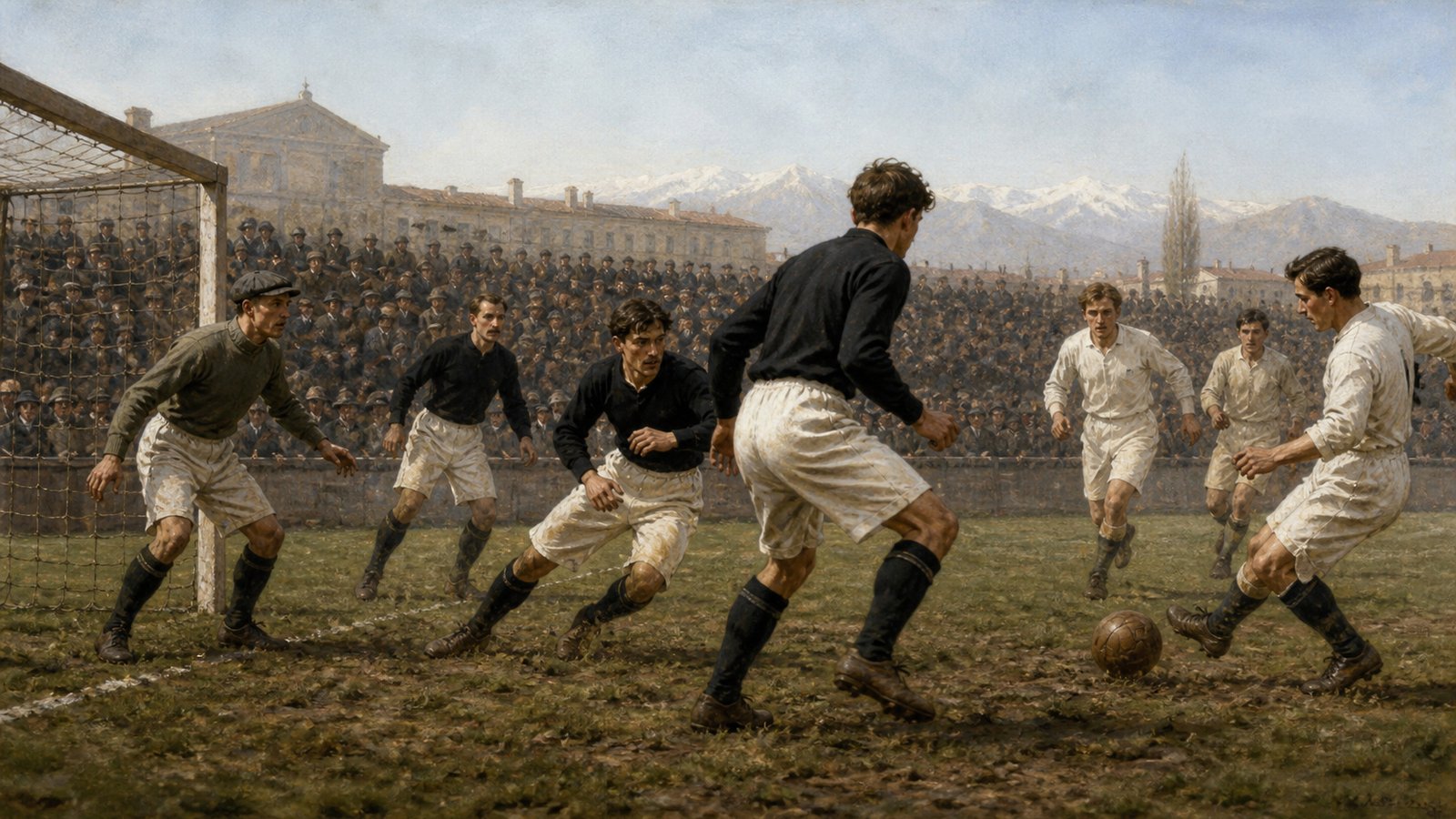
West Auckland returned to Turin two years later. RSSSF’s surviving competition record lists a 2–0 semi-final win over FC Zürich. Juventus reached the final from the Italian side of the bracket. On 17 April 1911, the County Durham amateurs beat Juventus 6–1.
The score does more than supply the story’s most startling number. It changes how the first victory must be read. A one-off invitational can produce a surprise. Two tournament wins, separated by two years and completed against different opponents, demonstrate continuity. West Auckland had travelled twice, reached two finals, won both and finished the second with a five-goal margin.
Successive victories allowed the club to retain the Sir Thomas Lipton Trophy outright. In sporting terms, the object now belonged in West Auckland permanently. In financial terms, “permanently” lasted only until the club needed cash.
A £40 debt changed where the trophy lived
The sources differ slightly over the transaction. West Auckland’s own history says the club borrowed £40 from a local inn landlady and left the trophy as security. BBC Sport describes a £40 sale used to address debt. The neutral fact is stark enough: within a short time of the 1911 victory, the trophy passed to a local landlady for £40.
It remained away from the club for almost five decades. West Auckland bought it back in 1960 for £100. Those two figures give the story a second scoreboard. The club won 2–0, 2–0 and 6–1 in Turin; at home, £40 was enough to separate it from the proof. Recovery cost two and a half times as much.
The object’s movement also explains why the village’s memory became so durable. A trophy displayed continuously can turn into furniture. This one repeatedly disappeared and returned. First it left the club as security for money. Then it came back after roughly fifty years. Each change forced people to retell what it represented: not a FIFA World Cup, but two genuine international tournament victories by an amateur mining team before Europe possessed its familiar club competitions.
That distinction resembles the way later unofficial competitions can be both culturally enormous and institutionally awkward. The 1971 women’s tournament at the Azteca also drew meaning from what happened on the field and in the stands, even though official football structures did not preserve it properly. Labels determine where events sit in record books. They do not decide whether the people involved travelled, paid, played and remembered.
The replica carries a missing original’s story
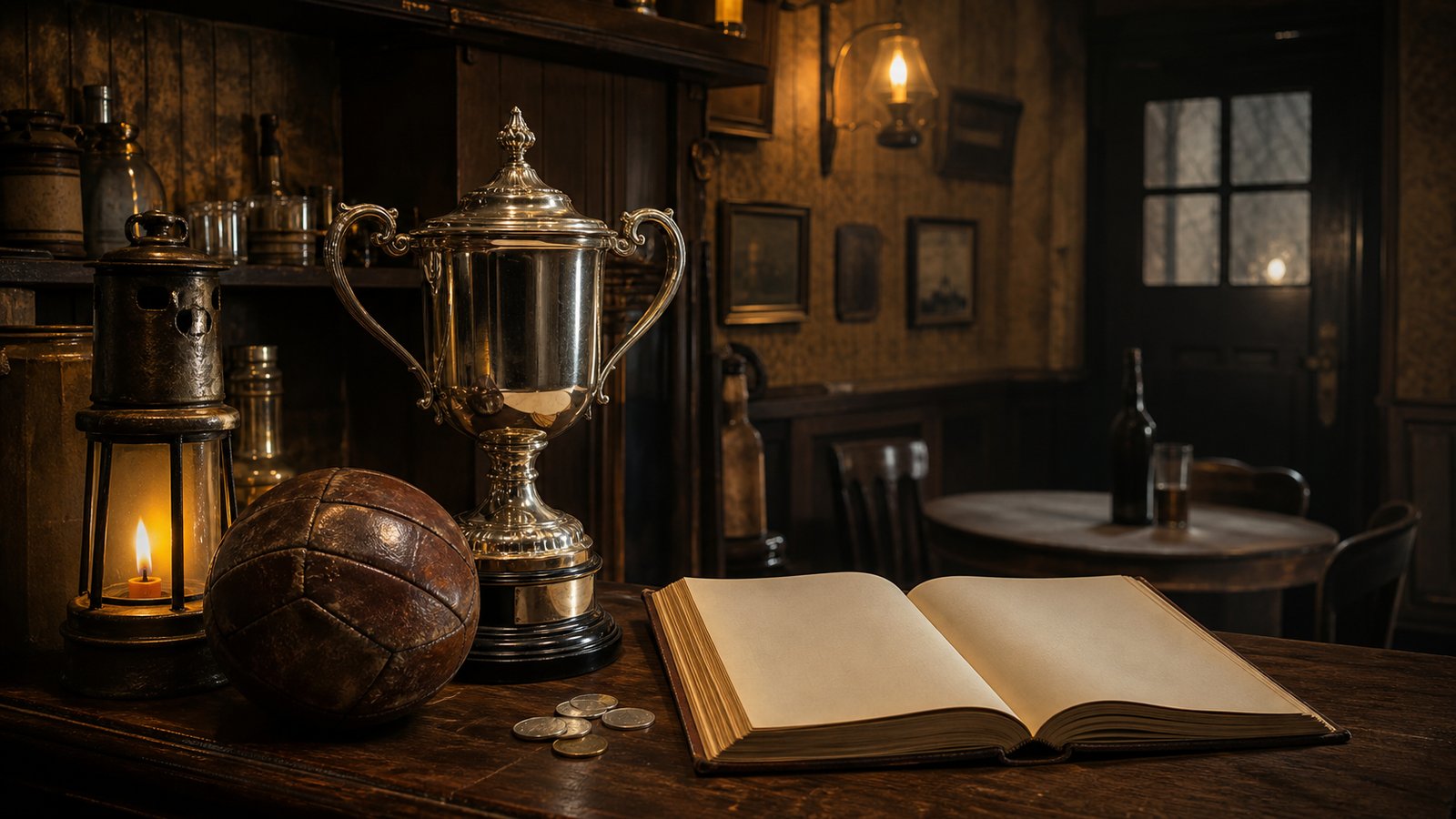
The recovered trophy was displayed at West Auckland Working Men’s Club until January 1994, when it was stolen. The original has never been found. A replica now carries the public duty that once belonged to the cup brought back from Turin.
Other objects keep the players close to the story. A 1909 winner’s medal belonging to Alf “Tot” Gubbins, one of the miners in the team, sold for £4,000 in 2017. Its buyer, a relative of a former club secretary, promised to return it to the village for display. A bronze statue has stood on the village green since 2013 after a fundraising effort that exceeded £200,000.
West Auckland does not need the inaccurate title of FIFA’s first world champion for its achievement to survive scrutiny. The precise claim is already extraordinary. An amateur County Durham side accepted a place the FA would not fill, helped pay its own way across Europe, won the Lipton Trophy without conceding in 1909, returned in 1911, and beat Juventus 6–1 to keep it. Then the club’s finances sent the prize out of its hands for £40.
The missing original makes the ending appropriately incomplete. The village can point to a replica, a medal, a statue and the match records, but not to the exact silver object carried home twice. What remains is the ledger: fares paid, four goals in 1909, six in the second final, £40 borrowed or received, £100 paid to recover the trophy, and two journeys that an amateur team turned into victories.
Sources
BBC Sport; West Auckland Town Football Club history; Rec.Sport.Soccer Statistics Foundation; BBC News.