
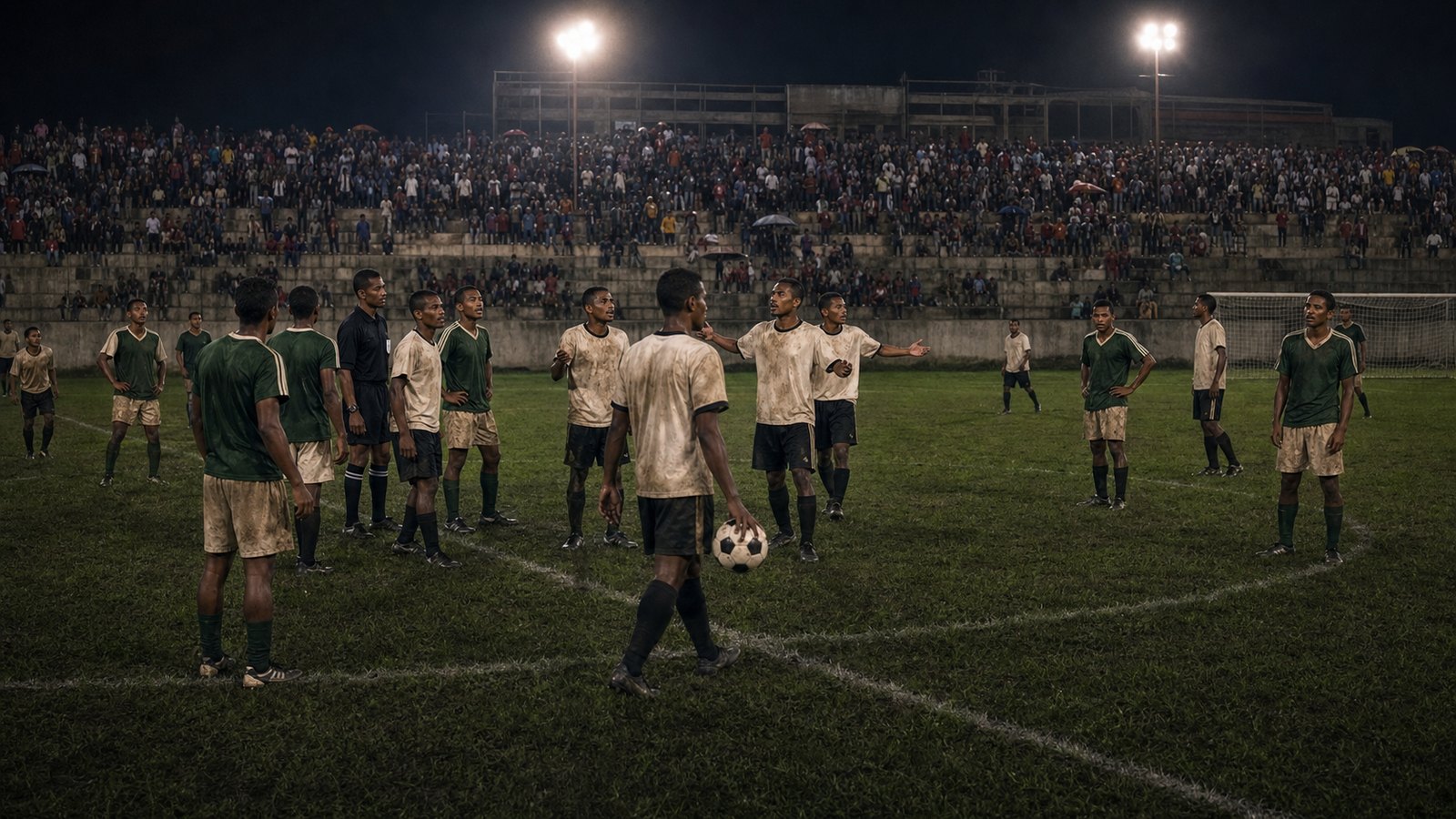
The ball crossed the line, returned to the centre circle and crossed the same line again. No opponent had created either goal. On 31 October 2002, players from Stade Olympique de l’Emyrne kept restarting a football match in Toamasina, Madagascar, then deliberately sent the ball into their own net. AS Adema watched. The referee watched. By full time, the scoreboard said 149–0.
The number made the match famous, but it can also hide what happened. This was not an afternoon when one attack overwhelmed one defence. It was a protest performed through the most basic unit in football: the goal. SOE had already lost its chance to retain the Malagasy championship after a disputed late penalty in an earlier fixture. In the season’s final match, the players made the score unusable as a measure of competition.
The result entered record lists. The sequence behind it reveals something stranger: a match can continue under the Laws while every participant knows its sporting purpose has collapsed.
A four-team finish left no room to recover
Madagascar’s top competition in 2002 was known as the THB Champions League. Its final phase brought together four clubs for a double round-robin: SOE, AS Adema, DSA Antananarivo and Union Sportive Ambohidratrimo. The arrangement compressed the title race into six matches for each team. One disputed moment could therefore alter the whole table.
SOE entered as the defending champion. The previous year it had beaten Adema 1–0 in the national final, then represented Madagascar in the 2002 African Champions League. That campaign reached the second round before Costa do Sol of Mozambique eliminated SOE 3–2 on aggregate. Adema, the domestic runner-up, entered the CAF Cup and reached the quarter-finals.
Adema beat Union Sportive Ambohidratrimo. SOE led DSA 2–1 and required victory, only for a late penalty to be awarded against it. DSA converted and the match finished 2–2. Adema had secured the championship before the final round. The penalty did not occur during the 149–0 match, an important distinction that short retellings often blur. It supplied the grievance; the own goals came later.
The first own goal changed the job of everyone on the pitch
AS Adema took the opening kick-off at Barikadimy Stadium. Once SOE gained possession, contemporary reports say Adema did not regain it. SOE’s players began scoring into their own goal, restarting and repeating the action. At an average across ninety minutes, 149 goals would mean a completed cycle roughly every 36 seconds.
That rhythm stripped away almost everything normally carried by a scoreline. There was no duel between striker and goalkeeper, no tactical adjustment and no suspense about the winner. The physical actions remained recognisable—kick-off, pass, shot, goal—but their direction had been reversed. SOE used compliance with the restart procedure to refuse meaningful competition.
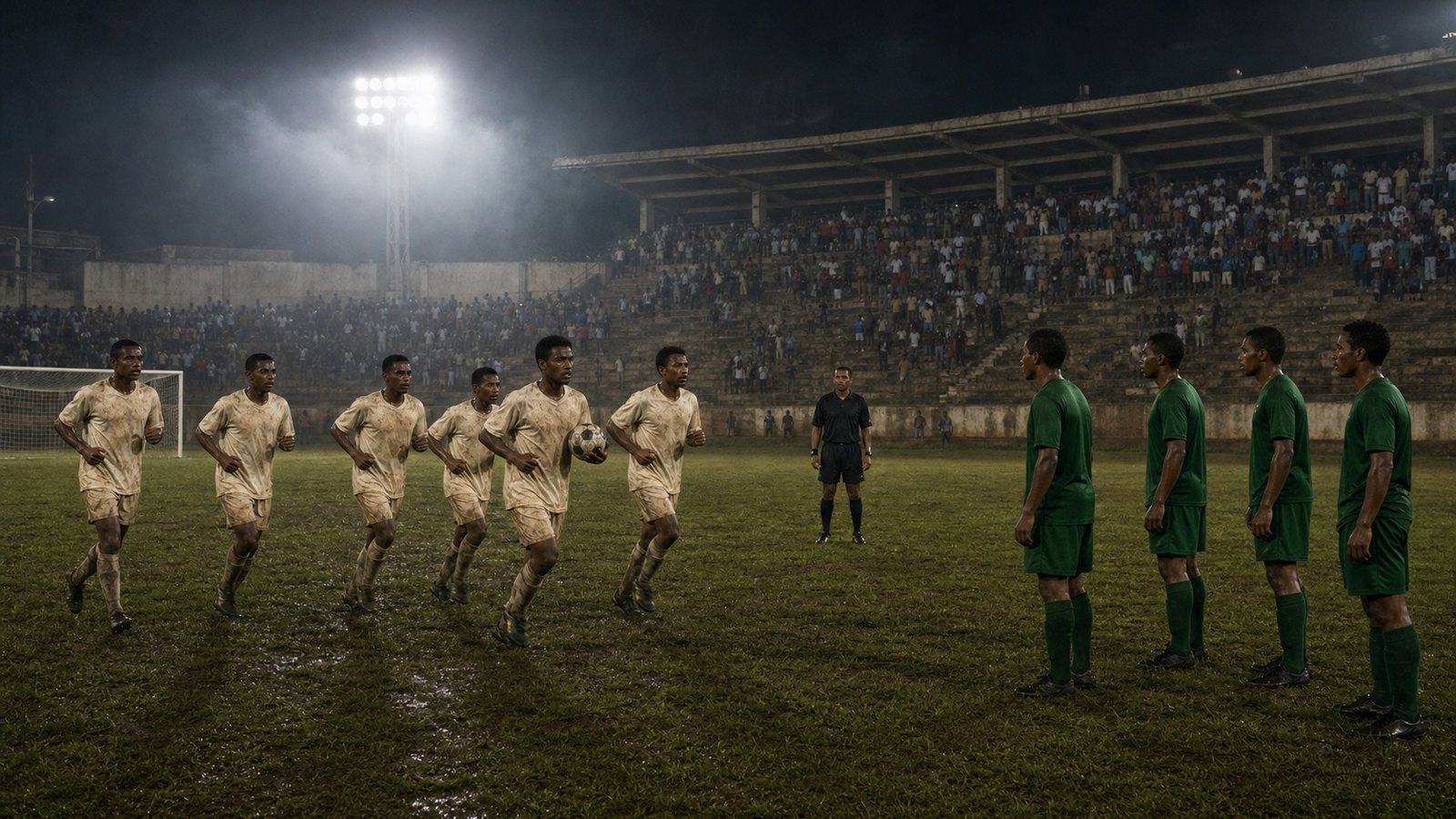
The referee faced a match that was still moving and a protest that had no ordinary endpoint. Adema’s players were present but could not restore a contest by themselves. Accounts describe them and the officials looking on while the own goals continued. Spectators reportedly sought refunds. Each group could recognise the breakdown, yet none could manufacture the missing willingness to compete.
That is what separates the afternoon from a freak scoring record. A very weak team can concede repeatedly while trying to resist. Here the losing side controlled the ball and controlled the score’s acceleration. The scoreboard recorded legal outcomes one by one, even as the match ceased to communicate sporting superiority.
The protest was aimed backward at a penalty decision
The act was not designed to help SOE climb the table. The title had already gone. Reports at the time connected the protest to refereeing decisions, especially the late penalty in the draw with DSA that ended SOE’s remaining championship chance. Coach Ratsimandresy Ratsarazaka was identified as the figure who directed the team’s response.
Because the grievance belonged to an earlier match, the final fixture became a stage rather than a tactical problem. SOE could not reverse the DSA result, replay the penalty or recover the title. It could make the competition’s closing image impossible to ignore. A normal defeat might have become a footnote beneath Adema’s championship. A 149-goal self-destruction forced the federation to address the protest.
Football has produced other moments when teams deliberately attacked the wrong goal because a competition’s incentives became distorted. In Barbados against Grenada in 1994, an unusual two-goal golden-goal rule made an own goal part of a frantic qualification calculation. The Madagascar match was different. SOE was not exploiting a route to advance. It was destroying the evidential value of the result after its route had closed.
The federation punished authorship rather than the number alone
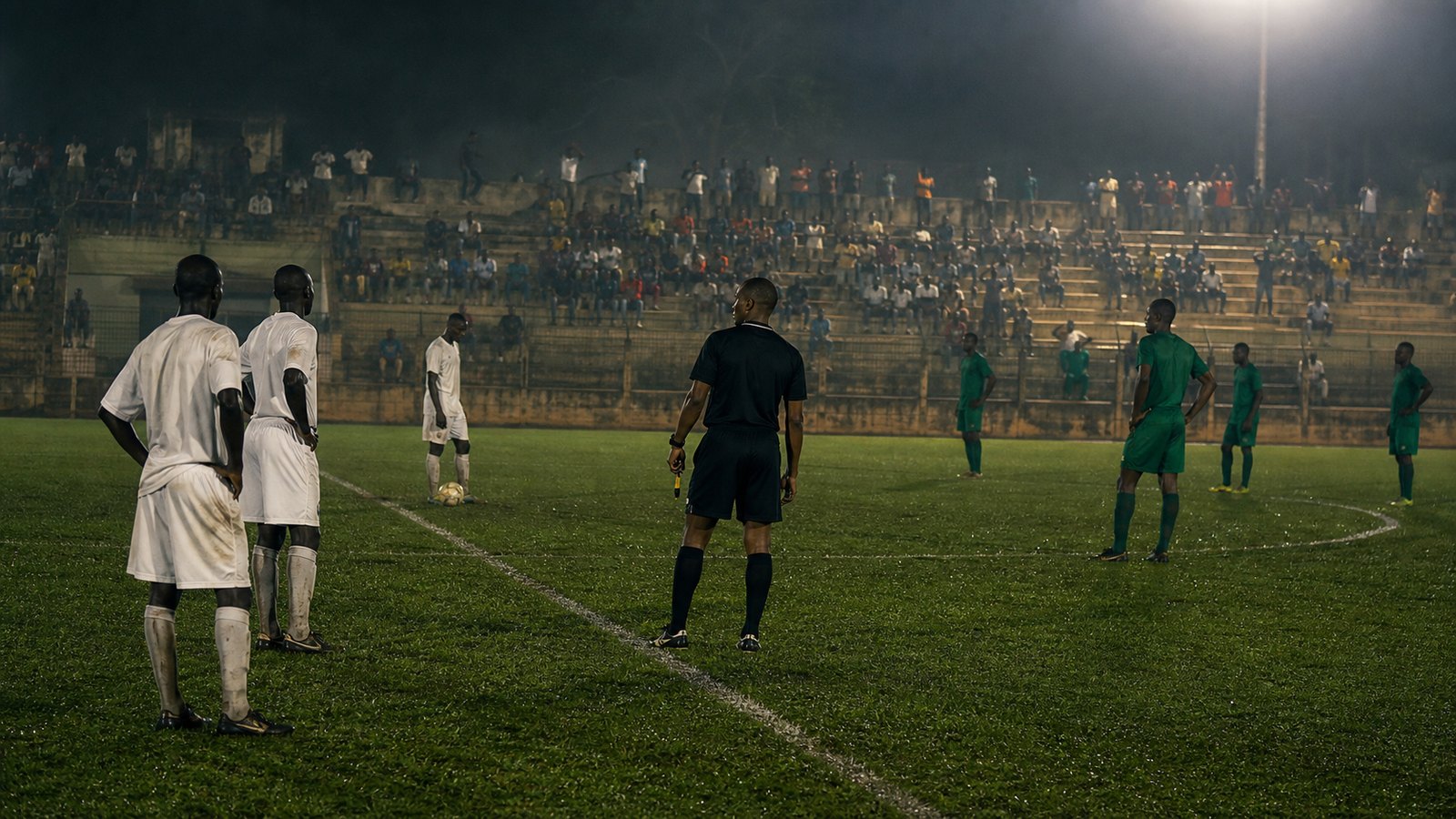
The Malagasy Football Federation’s response arrived in late November. Ratsarazaka received a three-year suspension and was barred from stadiums during that period. Four SOE players were suspended until the end of the 2003 season: captain Manitranirina Andrianiaina, goalkeeper Mamisoa Razafindrakoto, Dominique Rakotonandrasana and Nicolas Rakotoarimanana.
That final decision exposes the governing problem. A referee can enforce restarts, fouls and misconduct, but a football match also depends on an assumption that both sides are trying to pursue a sporting objective. Once a team converts possession into a repeated public refusal, the referee’s authority has limits. Ending the spectacle, allowing it to continue or disciplining individual kicks would each require a judgment about collective intent.
The federation also had to protect more than one result. A championship table asks every club to accept that its matches belong to a common competition. SOE’s protest attacked that common frame. The sanctions therefore treated the 149 own goals as coordinated conduct, not merely as an embarrassing defensive performance.
The record is accurate and still tells the wrong football story
Before 2002, the famous benchmark for a huge senior score was Arbroath’s 36–0 Scottish Cup victory over Bon Accord in 1885. AS Adema’s 149–0 displaced it in record discussions, but the comparison is awkward. Arbroath scored against an opponent it was trying to beat. SOE supplied every goal in Madagascar. The two numbers measure different kinds of event.
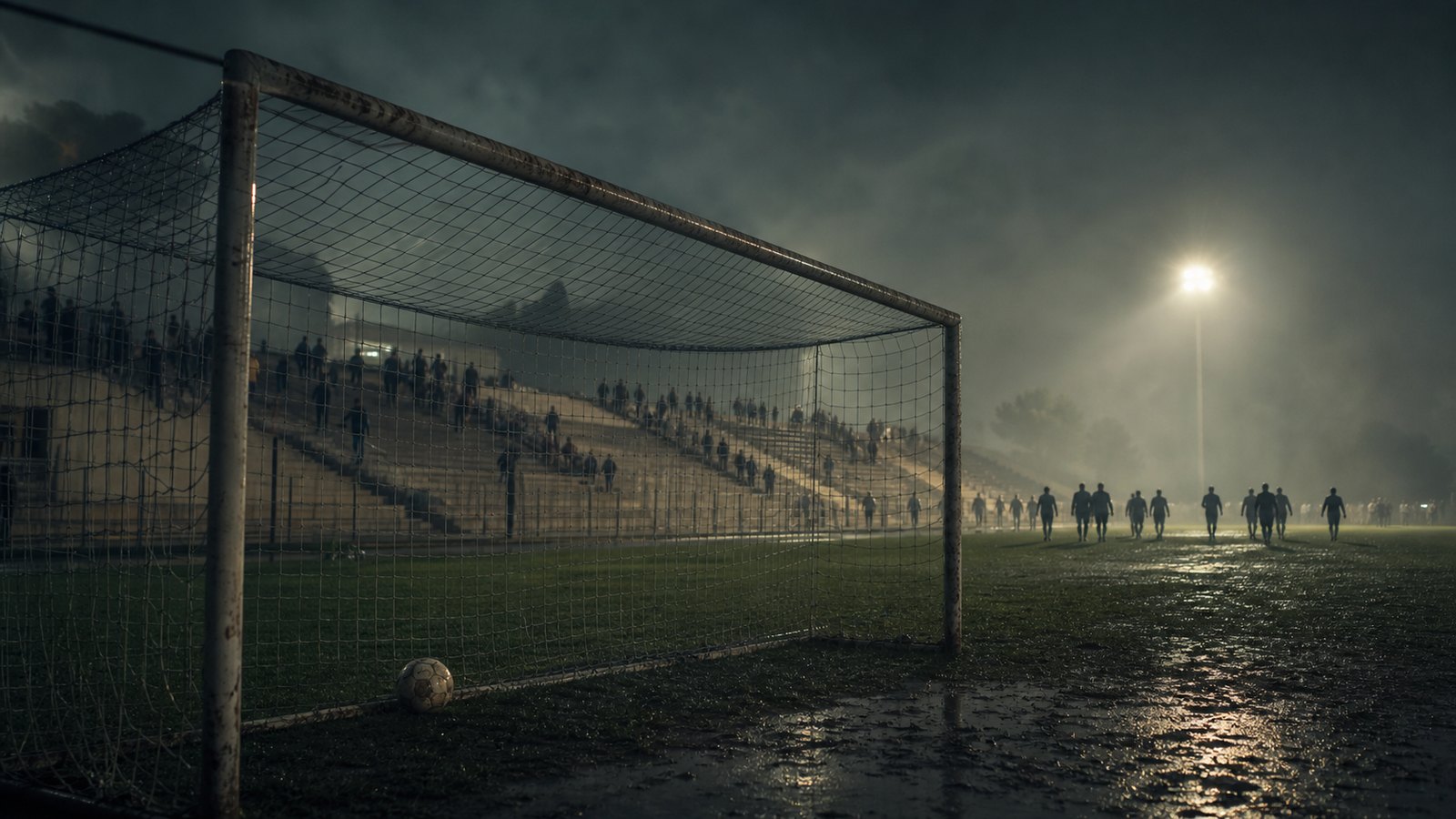
AS Adema remained the 2002 champion and advanced to the following season’s African Champions League. SOE carried the punishments. The championship was not reassigned by the final spectacle because Adema had clinched it before the match began. In one sense, the protest changed nothing in the table. In another, it became the only result from that season known around the world.
That imbalance is the afterlife of 149–0. The score travels easily because it is shocking, searchable and simple. The cause requires a longer explanation: a compact title phase, a late penalty in a separate match, a championship already decided, and a team choosing repetition as accusation. Remove those details and the event becomes a novelty. Restore them and it becomes a case study in what rules cannot guarantee.
A scoreboard can count goals but cannot certify a contest
Football’s administrative systems worked throughout the afternoon. Kick-offs followed goals. The official recorded a result. The federation later investigated and punished participants. None of those procedures could make the ninety minutes competitive once SOE withdrew its sporting intent without withdrawing its players.
The protest succeeded as communication because it appropriated football’s own language. A banner could be removed. A statement could be ignored. One hundred and forty-nine own goals had to appear in the record before the authorities could explain why the record should not be read normally. SOE made the competition publish its grievance as a score.
This does not settle whether the disputed penalty was wrong, nor does it make the protest fair to Adema, spectators or the other clubs. The available reports establish the sequence and the sanctions more securely than they establish every thought inside the dressing room. What survives is enough to show the mechanism: the players repeated a valid action until its normal meaning broke.
That is why 149–0 remains more revealing than a list of football’s largest victories suggests. It is an official score without the sporting claim scores usually make. The number is real. The contest it appears to describe never took place.
Sources
BBC Sport; The Guardian; Rec.Sport.Soccer Statistics Foundation.