
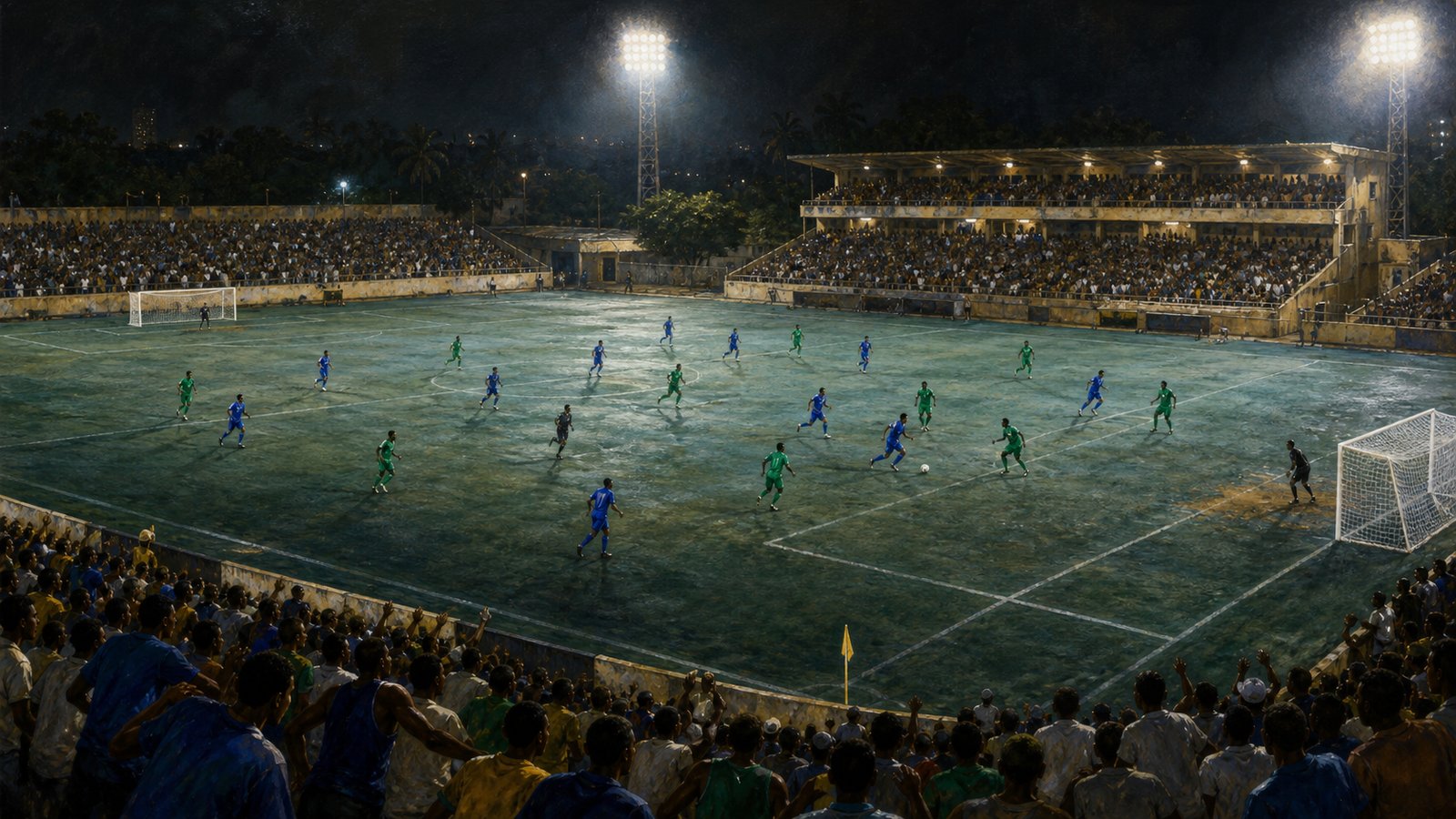
For three minutes in Bridgetown, the normal geography of football stopped making sense. Grenada could advance by putting the ball into either net. Barbados had to protect both of them. Players changed direction, attackers became emergency defenders, and a qualification match ended with one team guarding the full length of the pitch.
This was not a prank or a protest. It was the logical result of a real tournament rule. On 27 January 1994, Barbados met Grenada in Caribbean Cup qualifying at the Barbados National Stadium. The hosts needed to win by two goals. A special version of the golden-goal rule offered a strange route to that margin: the first goal in extra time would end the match and count as two.
Once Barbados lost its two-goal lead late in the second half, the rule changed every calculation on the field. The deliberate own goal that followed is the famous part. The more revealing story is what came next, when Grenada understood the same arithmetic and tried to escape the trap by scoring at whichever end Barbados left exposed.
A Table With One Narrow Exit
The preliminary group contained Barbados, Grenada and Puerto Rico. RSSSF’s competition record lists Barbados losing 1-0 to Puerto Rico on 23 January. Two days later Grenada beat Puerto Rico in a match decided in sudden-death extra time. Because those sudden-death goals counted double in the goals-for and goals-against columns, Barbados entered the final group match needing a victory by at least two goals to qualify.
The unusual accounting mattered more than the label attached to the score. A tied match did not proceed to ordinary extra time in which every goal retained its usual value. It went to a sudden-death period where one successful attack ended play and supplied a two-goal swing in the standings. That rule had already operated elsewhere in the qualifying competition. It was not invented during the Barbados-Grenada match, and neither team could pretend it was irrelevant.
Barbados initially solved the problem in the conventional way. The home side moved 2-0 ahead, exactly the margin it required. At that score, no puzzle remained: protect the lead and advance. Then Grenada scored in the 83rd minute. The margin fell to one, which meant Grenada would go through if the result stayed 2-1.
The Goal That Broke Direction
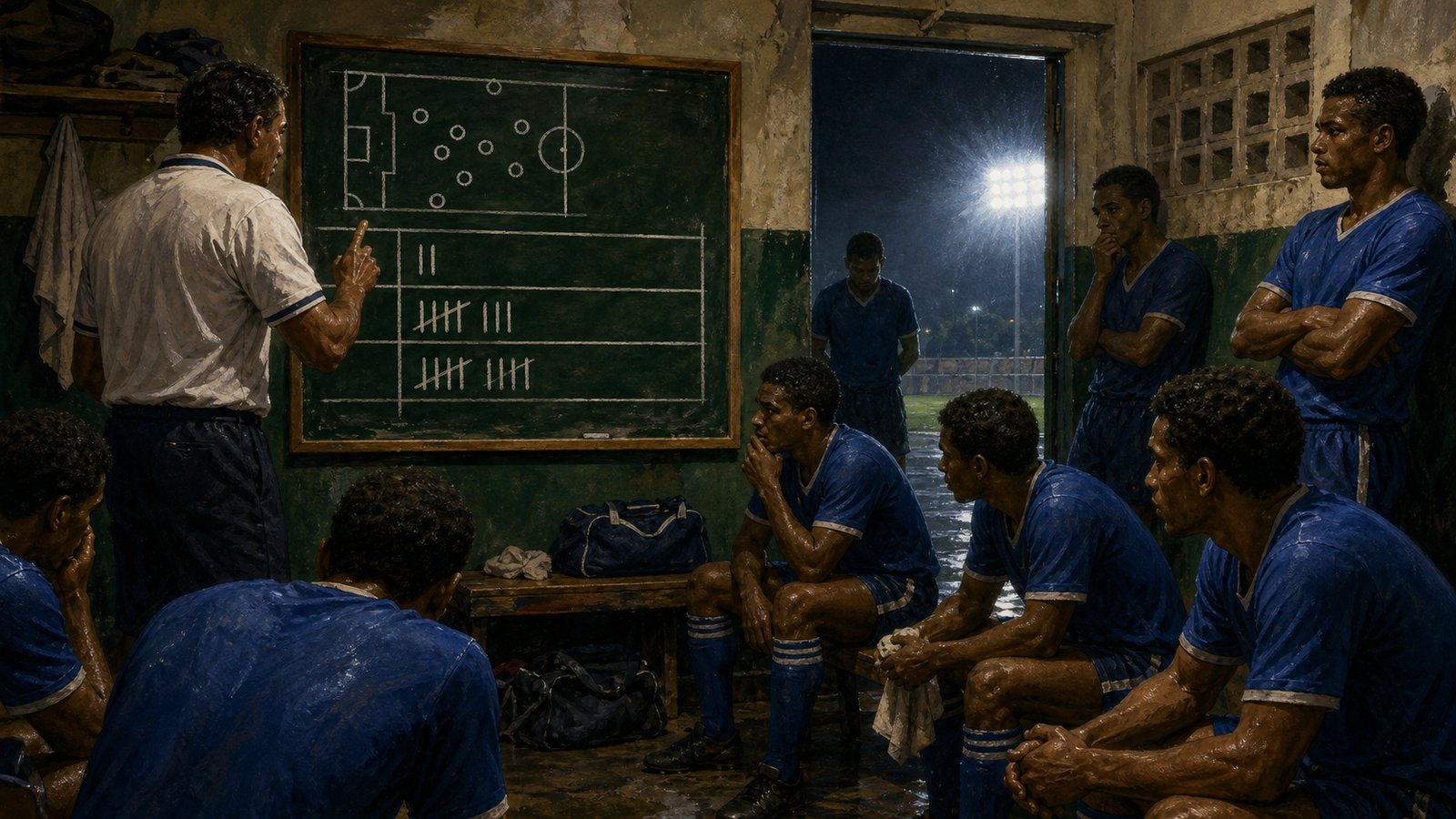
Barbados spent the next few minutes seeking a third goal at the proper end. Time kept shrinking. A normal equal score would usually be useless to a team that needed a two-goal win, but this competition’s rule made 2-2 potentially better than 2-1. A draw could unlock extra time; one sudden-death goal there would be recorded as the margin Barbados needed.
In the 87th minute, defender Sealy and goalkeeper Stoute exchanged the ball near their own goal. Sealy then put it into the Barbados net deliberately. The score was 2-2. The act looked self-destructive only if viewed through ordinary football incentives. Under this rule, it exchanged a near-certain one-goal win that eliminated Barbados for a chance to win by the artificial two-goal margin in extra time.
Grenada needed only a moment to see the other side of the calculation. If Grenada scored against Barbados, it would lead 3-2 and advance. If it scored an own goal, Barbados would lead 3-2 but still fall short of the required two-goal victory. Either net could therefore produce the outcome Grenada wanted. A game designed around two opposing directions had created a team for which direction no longer mattered.
Three Minutes on a Two-Goal Pitch
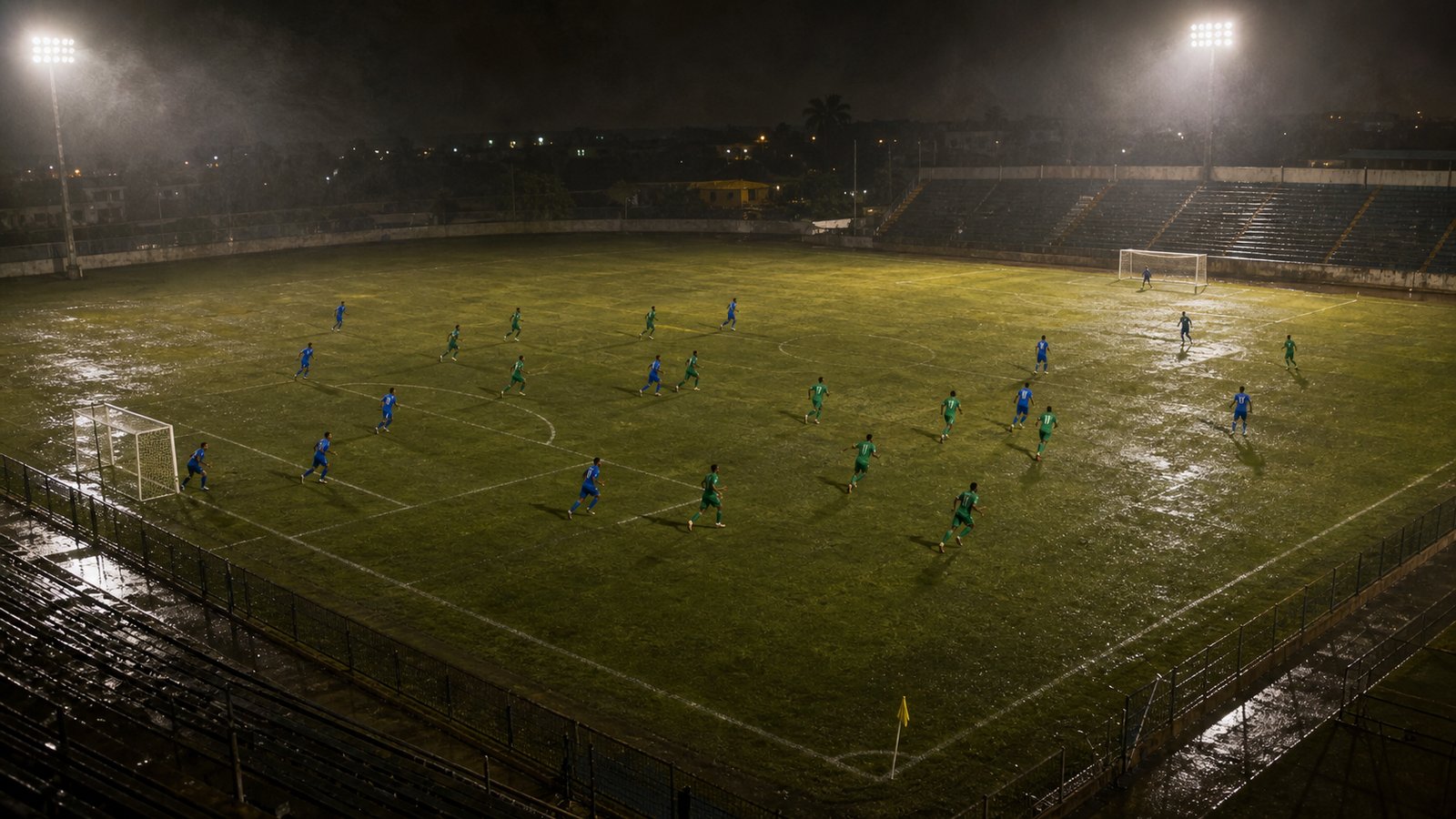
The last three minutes of normal time became a tactical problem with no familiar shape. Barbados needed the score to remain 2-2. Its players had to prevent Grenada from attacking the Barbados goal while also stopping Grenadian players from turning toward their own. The defending team’s territory suddenly stretched from one penalty area to the other.
The Guardian later described Grenada trying to score at either end while Barbados defended both penalty areas. This was not aimless chaos. Each movement had a clear incentive, but the incentives no longer matched the conventions spectators and players rely on. A Grenadian run toward its own goal could be an attack. A Barbadian challenge near the Grenada goal could be an act of defence. Possession alone no longer revealed what either team intended.
Barbados survived until the whistle. The score stayed 2-2, so the match entered sudden-death extra time. The hosts had reached the second half of their improvised plan, but they still had to score. Creating the opportunity had not guaranteed the result.
Grenada coach James Clarkson later said his players had not known which direction to attack. His complaint captured the spectacle, although the arithmetic itself was precise. The rule had made conduct that looked absurd strategically rational. It asked players to solve a standings equation in real time and then punished whichever side reacted more slowly.
The Rule Pays Out
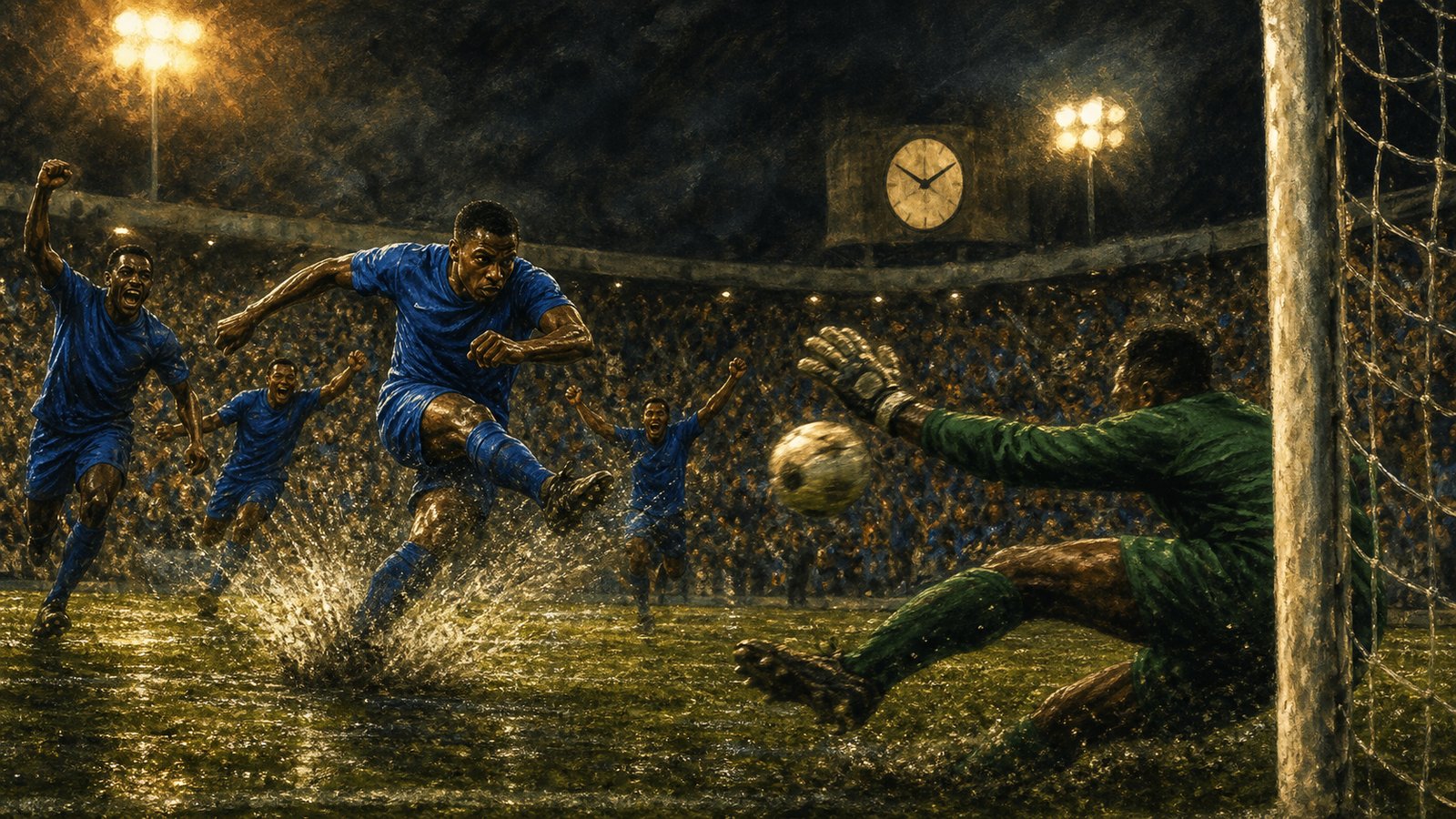
Four minutes into extra time, Trevor Thorne scored for Barbados in the Grenada net. Under ordinary scoring, that made the result 3-2. Under the tournament rule, the sudden-death goal counted double, producing the official 4-2 margin and sending Barbados through. Only then did the scoreboard arithmetic and the direction of play point toward the same winner again.
That ending separates the match from a simple story about a clever own goal. Sealy’s intervention did not win qualification by itself. It bought a new state of play: three minutes of defending both goals, followed by an extra-time attack that still had to succeed. Had Grenada scored at either end before the end of normal time, the plan would have failed. Had Barbados not found the sudden-death winner, the deliberate equaliser would have led nowhere.
The match also shows why experiments with scoring rules can reach far beyond the behaviour they are meant to encourage. Golden goal was intended to reward attacking initiative by ending extra time immediately. This variant added a second incentive by doubling the value of that goal. Combined with a group decided by goal difference, it made a deliberate own goal and two-goal defending the best available choices.
What Happened After the Puzzle
RSSSF records Barbados advancing to the final tournament in Trinidad and Tobago, where the team drew with Guadeloupe and Dominica and lost 2-0 to the hosts. Trinidad and Tobago eventually won the competition. The double-value sudden-death rule appeared five times during qualifying, but organisers abandoned it after the tournament.
Barbados had not secretly altered the terms or ignored an instruction. The team found the path the published rules created, while criticism focused on the design that had made the final minutes possible. The episode has since circulated so widely that it is sometimes treated like an urban legend, yet contemporary newspaper reporting, the competition record and later analysis all preserve the same central sequence.
It also makes a useful companion to the later history of football’s golden-goal experiment. Most memories of sudden death concern the tension of one decisive shot. Barbados against Grenada exposes a different layer: tournament rules do not merely decide what a goal is worth after it happens. They shape which goal a team wants, which direction it runs, and even which net it must defend.
For three minutes, the answer was both. Barbados protected one goal from Grenada’s attack and the other from Grenada’s escape route. The strangest image from the night was not the deliberate own goal. It was an entire pitch becoming a defensive zone because the standings had made either net dangerous.
Sources
The Guardian Knowledge; RSSSF, Shell Caribbean Cup 1994; The Times, “Absurd Cup Rule Obscures Football’s Final Goal”; Graham Kendall and Joerg Loffhagen, “When Sports Rules Go Awry.”