
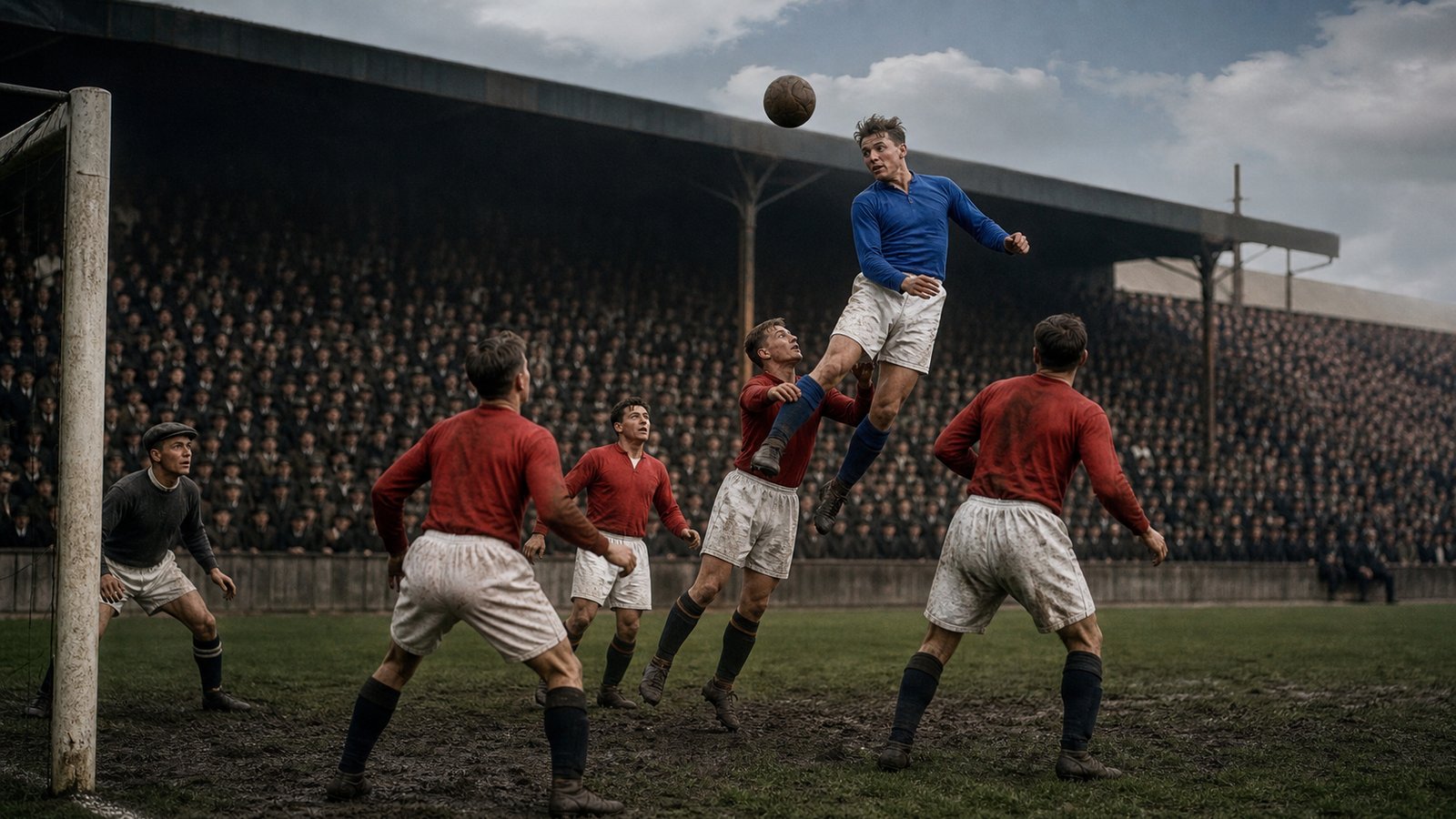
Seven minutes remained at Goodison Park on 5 May 1928, and Dixie Dean was still one goal short. He had started Everton’s final league match against Arsenal on 57 goals, scored twice within the opening minutes, and then spent most of the afternoon stranded on 59. Arsenal goalkeeper Bill Paterson had saved from him repeatedly. The woodwork and a crowd of defenders had joined the resistance. One more goal would break George Camsell’s Football League record; no goal would leave the two men level.
The pressure was public and unusually precise. Around 60,000 people had come to see Everton receive the First Division trophy and to watch Dean chase a number printed into the day’s expectations. Yet the finish that settled it was not a heroic solo run. Alec Troup took a corner, Dean rose inside a knot of players, and his header entered the right-hand corner. The crowd cheered for more than five minutes. A boy escaped the police, reached Dean, shook his hand and ruffled his hair. The record became unforgettable because the last goal looked like a tiny version of the whole season: service from a teammate, Dean attacking the ball, and Goodison briefly losing its composure.
A record chase squeezed into ninety minutes
Dean’s predicament had been created only twelve months earlier. Middlesbrough’s George Camsell scored 59 league goals in 1926–27, a total that appeared almost unreachable. Dean arrived at the last match of 1927–28 with 57. Everton were already champions, but the personal contest remained open: he needed a hat-trick against Arsenal to pass Camsell rather than merely equal him.
The occasion carried a second round number. Everton entered the afternoon on 99 league goals, so the team needed one more to reach 100. Contemporary reporting previewed both targets together. Dean was the central figure, but the championship trophy was also due to appear on the field. This was celebration with unfinished business attached.
Arsenal scored after two minutes through James Shaw. One minute later, Everton answered. Ted Critchley’s corner reached George Martin, whose touch supplied Dean for a low header past Paterson. The sequence mattered. It was neither a loose-ball accident nor an isolated piece of brute force; a winger, another attacker and the centre-forward combined to produce Dean’s 58th goal.
Minutes later, Dean drove between defenders and fell hard on the bare ground under Bob John’s challenge. The referee awarded a penalty. The crowd called for Dean, and he converted it for 59. He had more than eighty minutes to find one further goal. The apparent difficulty of the assignment had collapsed almost immediately; the emotional difficulty had only begun.
Bill Paterson made the number feel heavier
The long middle of the match gives the record its real drama. Dean did not disappear. Everton kept supplying him, while Paterson kept intervening. The Arsenal goalkeeper punched clear with Dean close to him, blocked shots, gathered a drive near the line and benefited when another effort met the frame of the goal. Defenders clustered around the centre-forward. The Football Express compared them to “flies around honey.”
That resistance also corrects a simple picture of record scoring. Dean’s 60 were not accumulated in an empty channel. On the decisive afternoon, Arsenal knew exactly where the danger would be and committed bodies to it. Everton knew the same thing and continued to feed him from both wings. The contest became concentrated around one player without becoming a one-player game.
The physical detail is important. Dean stood about 5 feet 10½ inches and weighed roughly 12 stone 7 pounds in a contemporary profile quoted by EFC Statto. His aerial dominance did not come from exceptional height by modern centre-forward standards. Sir Matt Busby, who played against him, later said that when Dean went up for the ball he was “almost unstoppable.” Timing, elevation, balance and the willingness to enter crowded spaces made heading a repeatable weapon.
That method connects Dean to a longer history of specialised forwards. The Ghost Goal’s story of Billy Meredith’s three-decade career shows an earlier star extending football’s idea of longevity. Dean extended its sense of scoring scale. Like the tactical detail behind Blackpool’s 1953 final, his record becomes more revealing when the support around the famous name remains visible.
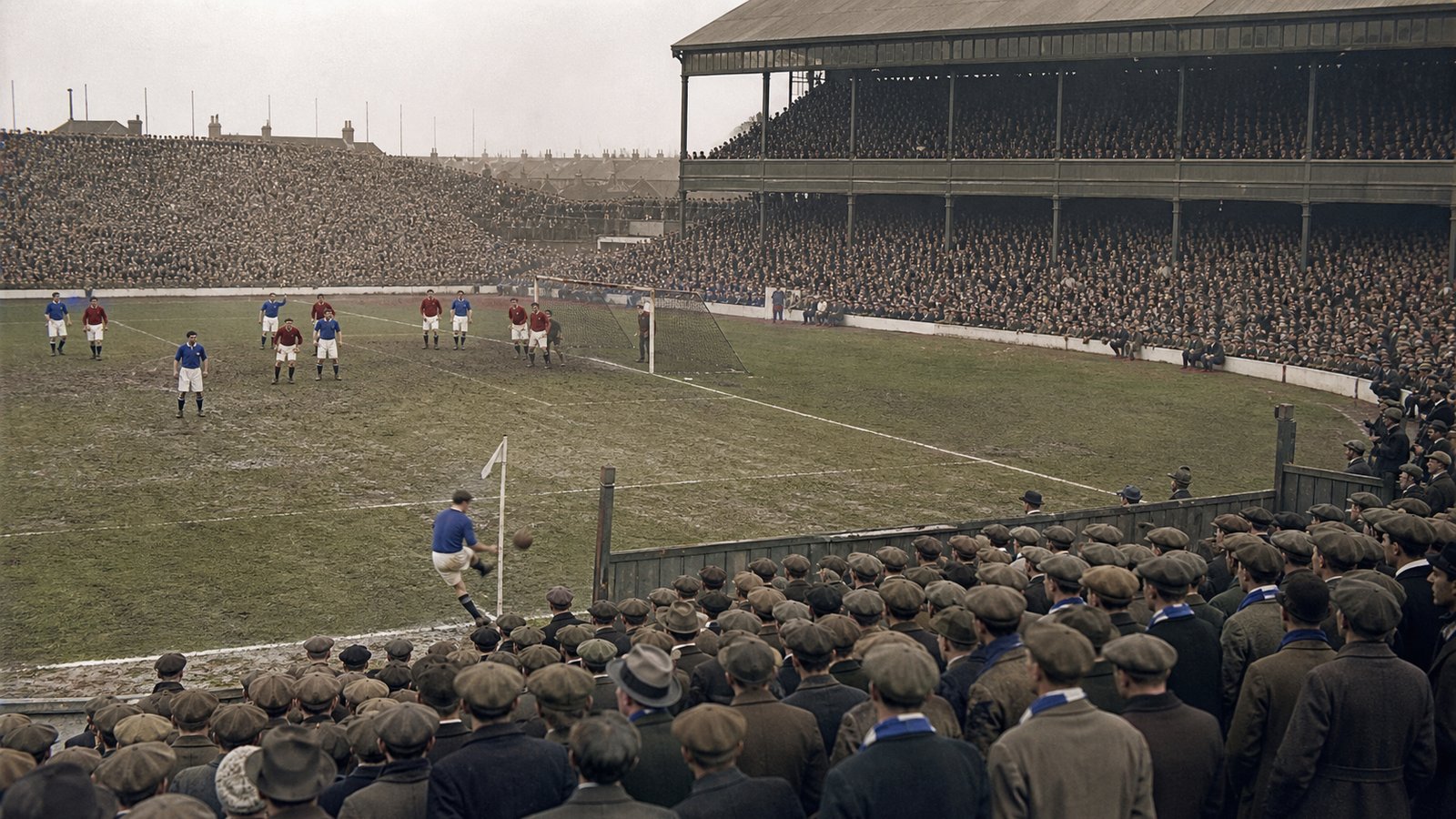
The corner that released Goodison
With seven minutes remaining, Paterson saved from Tony Weldon. George Martin then struck a high drive that the goalkeeper pushed behind. Troup walked to the corner flag. Dean entered the familiar crowd in front of goal.
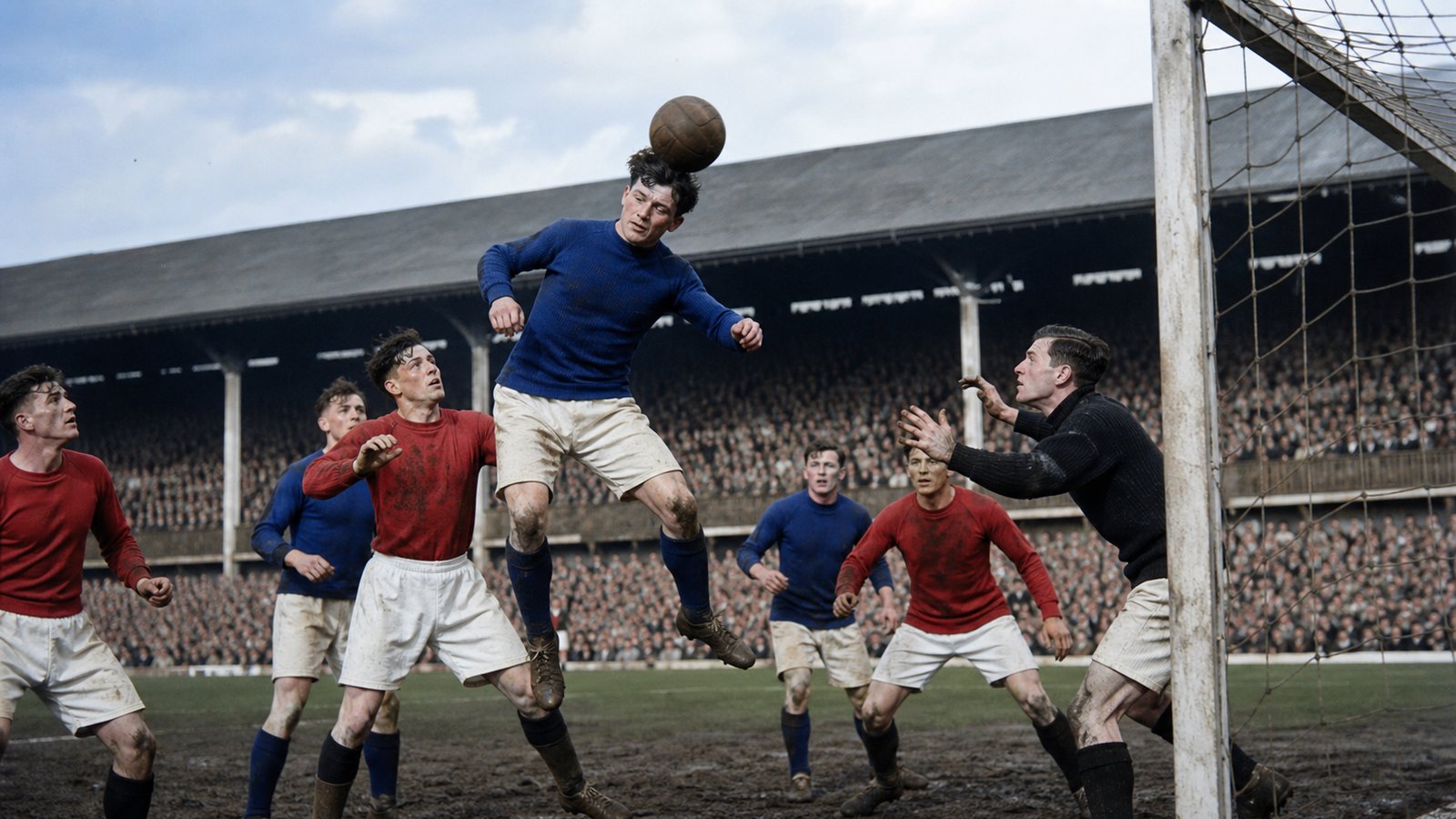
The contemporary account is striking because it describes no mystery. The ball arrived from the corner; several players could challenge; Dean reached it first and nodded it into the right-hand side of the net. The move was characteristic enough to feel inevitable only after it had succeeded. Paterson had delayed him for most of the match, but another aerial contest finally produced the difference.
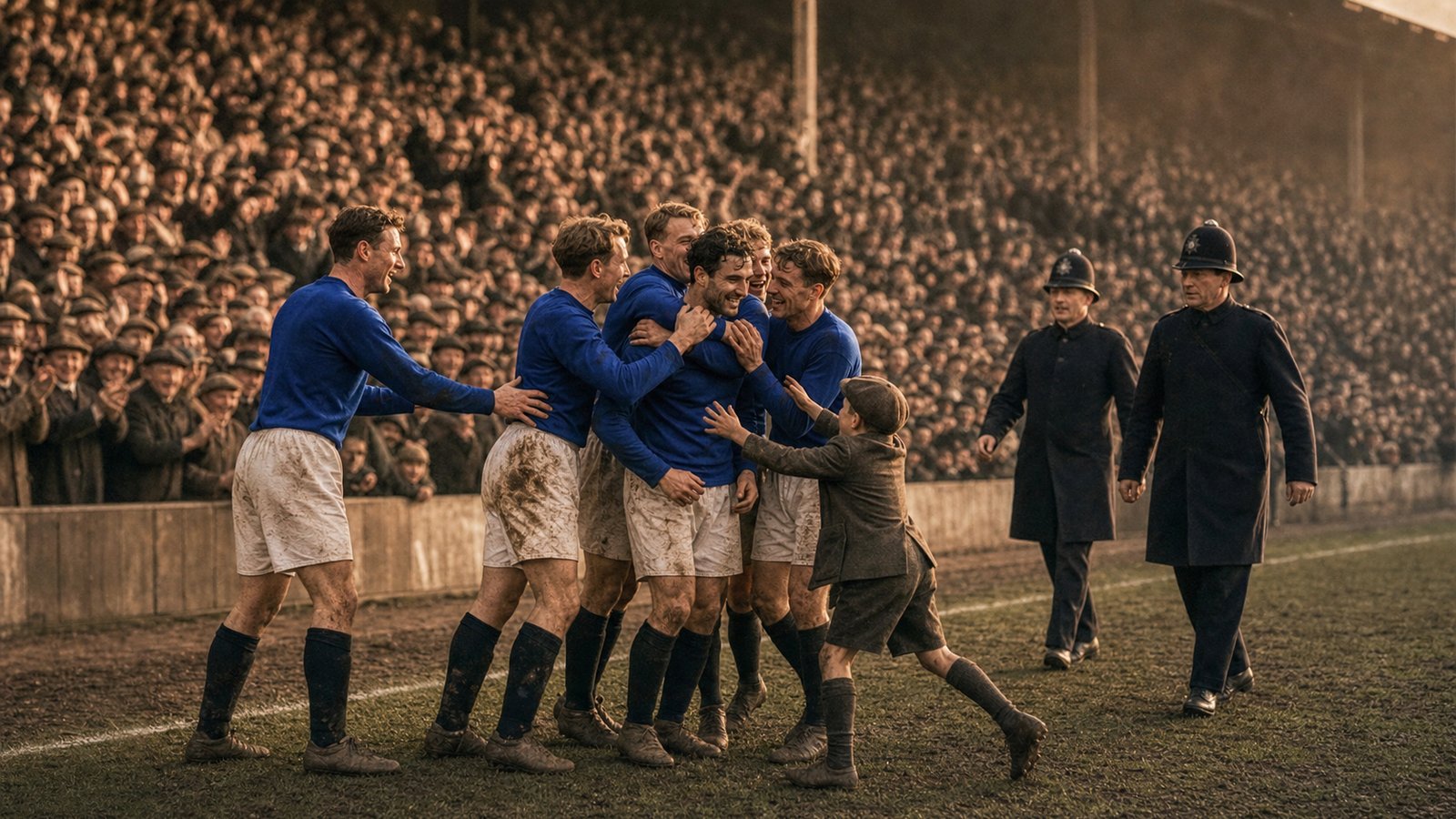
Then the orderly record chase broke open. Teammates surrounded Dean. Cheering continued for several minutes, and reports feared the crowd might spill across the ground. A small boy managed what the Arsenal defence had spent the afternoon preventing: he reached Dean. He shook the scorer’s hand and tousled his hair before officials escorted him away.
That mini-scene gives the number a human scale. Sixty can look abstract in a record book. At Goodison it meant a child running past policemen, a referee trying to restart a match, and tens of thousands of people sustaining a roar. Dean’s hat-trick completed a 3–3 draw rather than a comfortable victory. The championship had been secured, but Arsenal refused to become scenery for the ceremony.
Sixty belonged to a season, not one afternoon
The final-day header was Dean’s 60th league goal in 39 appearances. Everton played 42 league matches and scored 102 times, which means Dean supplied well over half of the champions’ total. Contemporary career records show that he was only 21 during the season. He scored 85 goals in all appearances during the 1928 calendar year, a reminder that the league record sat inside an even wider run of production.
The path to 60 was not a smooth weekly metronome. Dean scored in Everton’s opening match and the next eight league games. He hit five against Manchester United in October. He also endured scoreless matches, then accelerated again. The Liverpool Echo’s match-by-match reconstruction preserves the variety: headers redirected from crosses, close-range finishes after a teammate’s dribble, penalties, angled shots and forceful drives. The repeated outcome came through several routes.
His teammates appear everywhere in those reports. Critchley crosses and takes corners. Martin flicks or shoots. Alec Troup supplies from the left. Hunter Hart and others move the ball into attacking positions. Dean’s exceptional gift was to convert a high volume of service into a historic total, especially in the air. After the record fell, he thanked the squad and stressed that football was a team game.
The number survived because the scene did
Dean’s wider career would have secured his place without the final day. Career records credit him with 473 goals in 502 appearances for club and country. He scored 18 times in 16 England appearances, finished as the First Division’s leading scorer twice, and Everton won the championship on both occasions. He stayed when the club was relegated between the titles of 1928 and 1932, and later added an FA Cup.
But 60 remains the shorthand because it joins statistical extremity to a perfectly preserved climax. There was a previous record holder in Camsell. There was a visible target of three goals. There was an early rush to 59, a long delay, and a final corner with seven minutes left. There was even a pitch invader small enough to turn awe into comedy.
Dean’s death at Goodison Park in March 1980 after watching Everton play Liverpool deepened his identification with the ground, though it should not obscure the football itself. He was not merely a local emblem who happened to score often. The record rests on a specific craft: finding space in crowded penalty areas, judging the flight of crosses, rising early enough to command the ball and surviving the contact that followed.
Sources
EFC Statto, “The 60th Goal”; Liverpool Echo, “How Everton legend Dixie Dean’s 60 goals were reported … on the day”; Dixie Dean career records.