
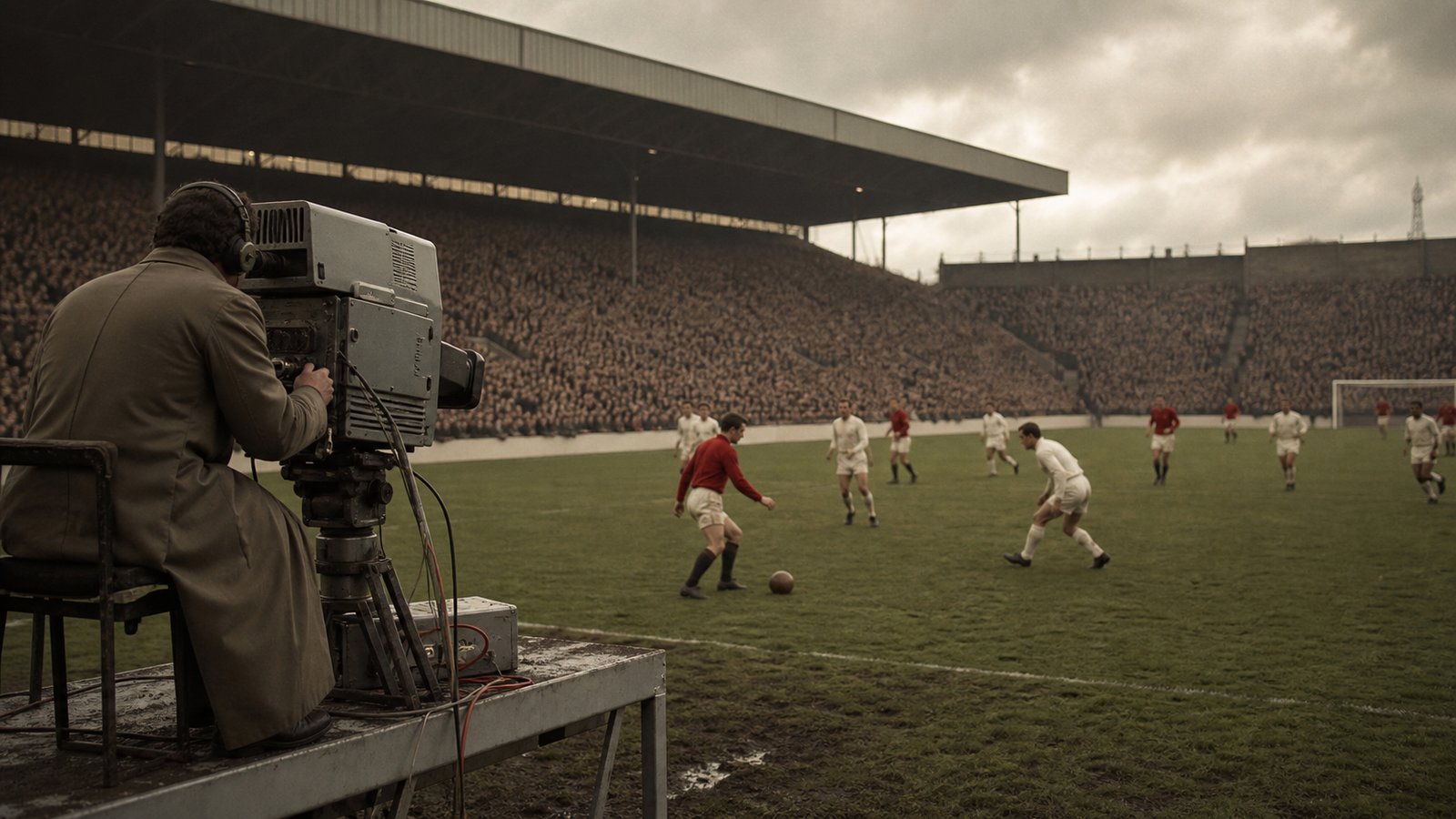
At Anfield on 22 August 1964, a Beatles record rolled across the public-address system while Kenneth Wolstenholme faced a television camera. Liverpool and Arsenal were about to open the First Division season, but most people outside the ground did not know this was the match the BBC had chosen. The identity of the fixture had been kept quiet until 4pm. Football’s gatekeepers feared that advance notice might persuade supporters to trade a turnstile for a sofa.
What followed looked modest: black-and-white highlights on the young BBC Two, watched by an estimated 20,000 people. More than twice as many were inside Anfield. Yet this nervous broadcast established a durable way of seeing football—not live, not through the next morning’s report, but as an edited Saturday-night story assembled while the day was still warm.
The Match Stayed Hidden Until Four
The Football League’s caution shaped the first programme before a ball was shown. BBC History records that Liverpool against Arsenal remained secret until 4pm by agreement with the league. The concern was commercial and physical: club football depended on people passing through gates, and a televised alternative appeared capable of thinning the crowd.
That secrecy created a peculiar opening scene. Viewers could not plan their afternoon around the selected game. Only after the traditional 3pm fixtures had begun did the BBC reveal where its cameras were working. At Anfield, Wolstenholme welcomed the audience to “Beatleville” as “She Loves You” played in the stadium. Walley Barnes shared commentary duties. Liverpool then won 3–2, giving the experiment five goals and a home victory without any producer having been able to promise either.
The programme showed nearly an hour of highlights. This was not a tiny newsreel glimpse. It offered enough time for a match to acquire rhythm, reversals and personalities, but it still depended on selection. Ninety minutes had to become a coherent account for viewers arriving later that evening. The editors had to decide which attacks explained the score, how long a spell of pressure deserved, and where commentary could bridge a cut without making the action feel discontinuous. Their choices created a second chronology: faithful to the result, yet deliberately faster than the match experienced by the Anfield crowd.
Twenty Thousand Viewers Against a Full Ground
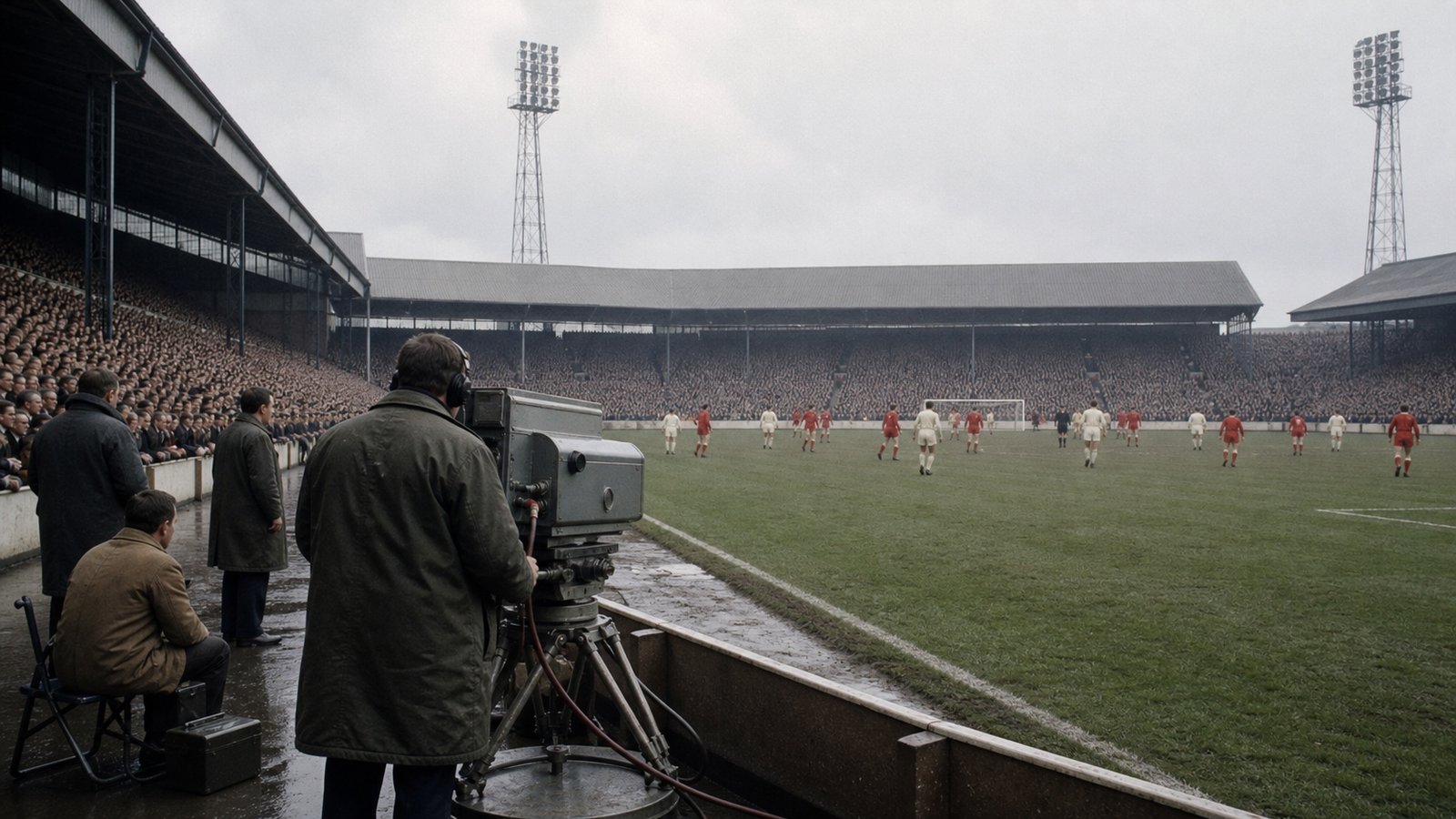
The first audience was estimated at only 20,000. Contemporary BBC retrospectives place it at less than half the attendance inside Anfield. BBC Two was still a limited service, available to far fewer households than BBC One, so the small number said as much about reach as appetite. Even so, the comparison captured the tension at the centre of televised football: every person watching at home could be imagined as a person who had not bought a ticket. The measurement itself was striking. Football now had a crowd that could be counted without appearing on a terrace, and its size could be set beside the official attendance as a competing measure of reach.
The economics looked almost comic from a later vantage point. The Guardian’s 50th-anniversary account estimated that each Football League club received £136 from the highlights arrangement. The clubs were being asked to expose their product to a new medium while the familiar gate remained their dependable source of cash. Suspicion was therefore more than old-fashioned hostility to technology. It was a response to an uncertain exchange: television wanted football’s atmosphere, but nobody could yet prove that the screen would enlarge the audience rather than relocate it.
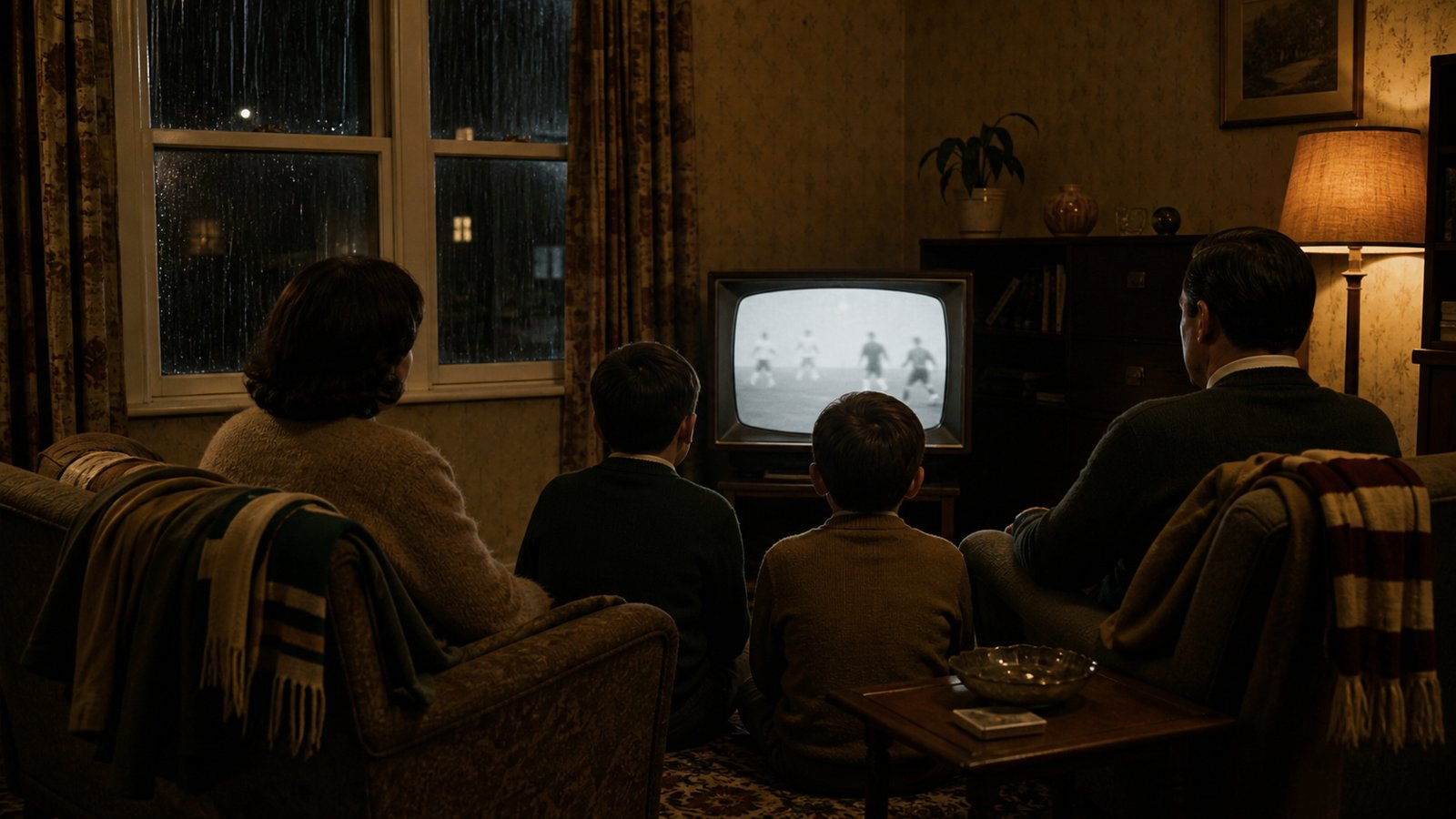
That first night offered an answer without settling the argument. The ground had outnumbered the television audience by more than two to one. Television had not emptied Anfield. What it had done was create a second crowd, scattered across living rooms and able to experience the match after the spectators had left.
Videotape Gave Saturday a Second Version
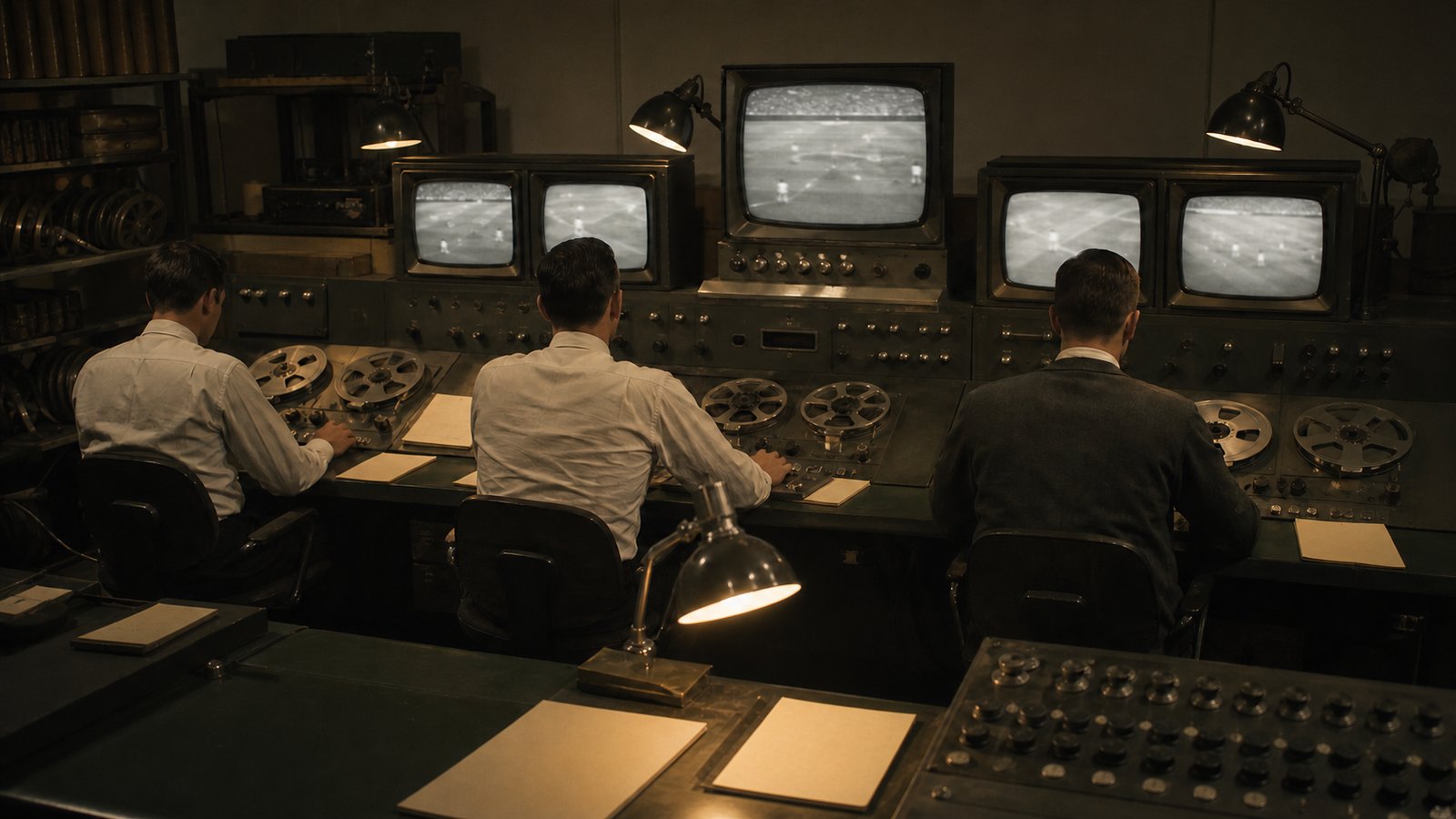
The breakthrough was technical as well as editorial. Electronic cameras and videotape allowed an outside broadcast to be sent back for rapid editing. BBC Two’s 625-line picture also made the ball easier to follow in wide shots, reducing the need to trap football inside a sequence of close-ups. The same sport could now be reconstructed quickly enough to retain the urgency of the day.
This distinguished Match of the Day from both live coverage and cinema newsreels. A live match asks viewers to accept dead time, missed angles and the uncertainty of the event. A next-day report asks them to imagine movement from words and still photographs. Edited highlights compressed the afternoon but preserved bodies, noise and consequence. A tackle could lead to a free kick; pressure could accumulate; a goal could arrive with enough preparation to feel earned.
The programme belonged to a longer story of football becoming visible through technology. A decade earlier, Molineux’s floodlit match with Honvéd had demonstrated the spectacle of live European football on television. The 1964 experiment solved a different problem: how to make the whole domestic Saturday available after the turnstiles had closed, while protecting the afternoon itself.
The Clubs Tested the Boundary Again
One successful debut did not remove the clubs’ anxiety. In 1965, several tried to block a move to BBC One because the larger network could put many more potential ticket-buyers within reach. The eventual compromise preserved the programme but restricted information: the featured Saturday match would not be disclosed until the day’s play had finished.
That agreement mattered because it separated highlights from substitution. The BBC could show league football to a national audience, but it could not advertise a particular televised fixture as an alternative destination before kickoff. The screen was positioned after attendance rather than against it. For years, the late reveal became part of the programme’s grammar. Viewers did not choose the match; editors did, and the selection arrived as part of Saturday evening.
The fear also influenced what the programme meant. Match of the Day was not simply a camera pointed at football. It was a negotiated space between broadcasters seeking access and clubs defending local revenue. Its familiar pace—selected games, delayed transmission, compressed action—emerged from that bargaining. The format carried the imprint of the turnstile even when watched miles from any stadium.
A World Cup Rehearsal Became a Ritual
The BBC also had another purpose. Its history of the programme describes Match of the Day as a training ground for camera crews preparing for the 1966 World Cup. The first series was treated as an experiment, allowing production teams to practise following a fast, wide game and shaping recorded material under time pressure. Domestic league football provided a weekly laboratory before England hosted the world.
After England won the 1966 World Cup, the programme moved into a peak-time place on BBC One. By 1969 it had become live and studio-based, with two featured matches each week. Colour followed, and Barry Stoller’s famous theme arrived in 1970 rather than at the 1964 debut; the first programme had opened with Arnold Stock’s “Drum Majorette.” Those changes made the broadcast more recognisable, but the essential invention was already present on opening night.
The legacy is not merely longevity. Match of the Day taught generations to receive football in two forms: the match as lived in the ground, and the match as edited into memory. The second form can sharpen a comeback, isolate an error or give a crowded afternoon a clean narrative line. It changes which minutes survive.
In 1964, that power reached only 20,000 viewers and had to hide its destination until four o’clock. The secrecy, the narrow audience and the anxious league agreement reveal how unproven the idea remained. Yet once Liverpool’s five-goal game had been cut into an evening programme, Saturday football had acquired a repeatable second life.
Sources
BBC History of the BBC; BBC Sport, History of Match of the Day; BBC Sport, Match of the Day: 50 Years of Broadcasting; BBC Press Office timeline; The Guardian.