
Total Football is easy to turn into a poster: orange shirts, Johan Cruyff gliding between lines, and opponents chasing shadows. The phrase sounds like freedom. It suggests that every player could simply go wherever he wanted and the game would somehow become more beautiful. That is the myth. The reality was more demanding. Total Football worked because the freedom had reference points.
The Netherlands team that reached the 1974 World Cup final made the idea famous, but the roots sat in a wider Dutch football culture shaped by Ajax, Rinus Michels, and players who understood space as a shared responsibility. Cruyff made the system visible because he moved like the pitch belonged to his imagination. But the movement only made sense because someone else knew which space had to be filled when he left it.
The myth starts with the movement
The seductive version of Total Football is the simplest one: defenders attacked, forwards defended, midfielders appeared everywhere, and positions dissolved. There is truth in that, but it is only the surface. If all eleven players abandon their zones at once, the result is not revolution. It is a traffic jam.
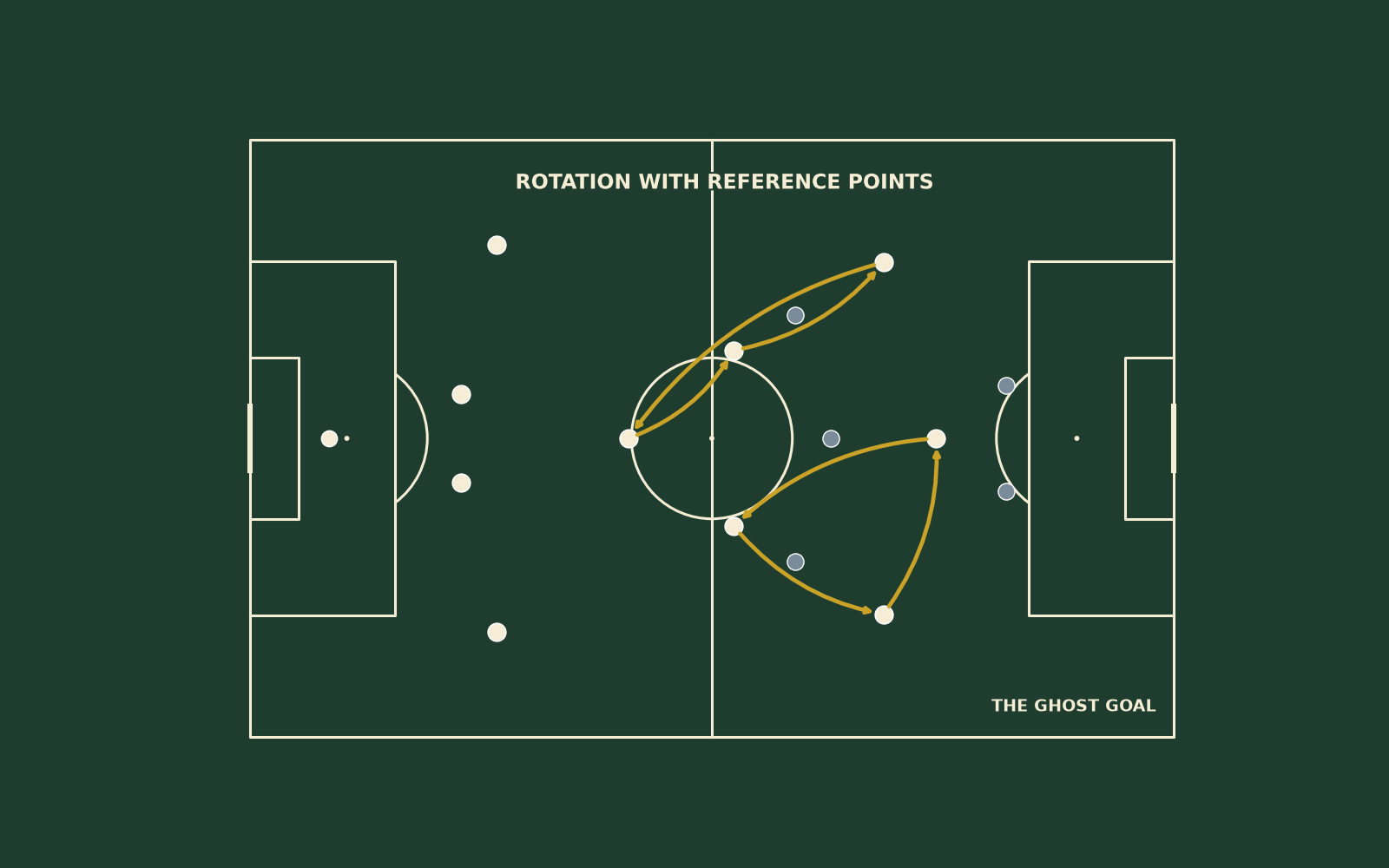
The actual principle was exchange. A player could leave a position if another player understood the new balance. The winger could come inside, the full-back could advance, the centre-forward could drop, and the midfielder could run beyond him. But those actions needed connection. The team was not escaping structure. It was carrying structure with it.
Cruyff made the system visible
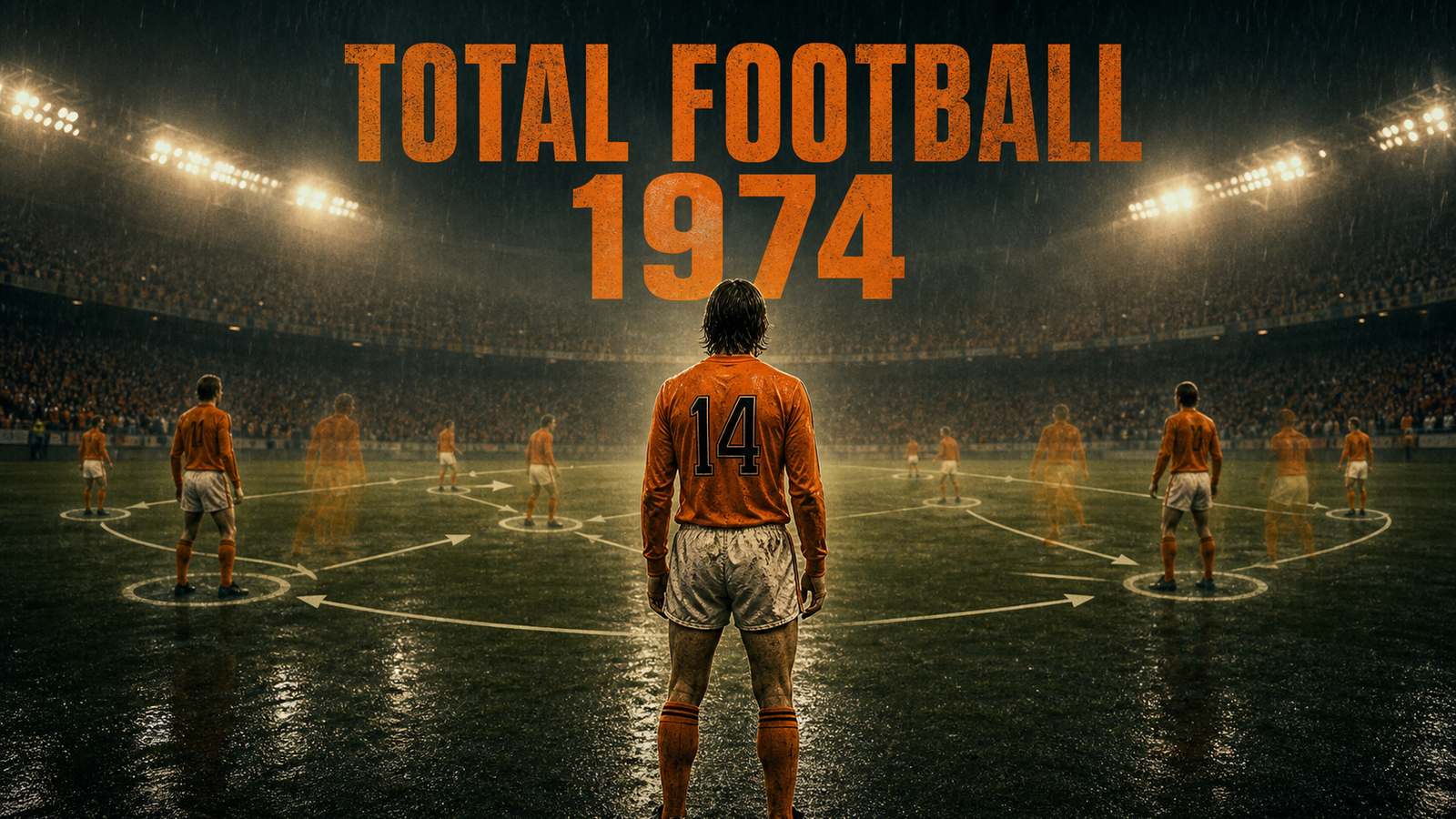
Johan Cruyff became the face of the idea because his movement made the hidden logic feel obvious. He could start as a forward, drift into midfield, pull a defender with him, and create space for someone else to attack. He did not need to touch the ball for the structure to change. His position was already a question the opponent had to answer.
The number 14 therefore became more than a shirt number in the memory of 1974. It stands for a way of making the pitch unstable. But Cruyff alone is not the explanation. Michels’ teams needed collective understanding around him. The player who moved was only half the story. The player who covered the movement was the other half.
The 1974 final complicates the legend
The final against West Germany is the perfect warning against turning Total Football into a fairy tale. The Netherlands began as if the legend were writing itself. They moved the ball from kickoff, pulled Germany around, and won a penalty before West Germany had properly touched the ball. Johan Neeskens scored from the spot in the second minute. For a moment, the future seemed to have arrived fully formed.
Then the match became football again. Paul Breitner equalised with a penalty, and Gerd Müller scored before half-time. West Germany won 2-1. That result does not destroy the idea, but it does make the idea more interesting. The most influential tactical image of the tournament came from a team that did not lift the trophy.
Freedom only worked because the reference points stayed alive
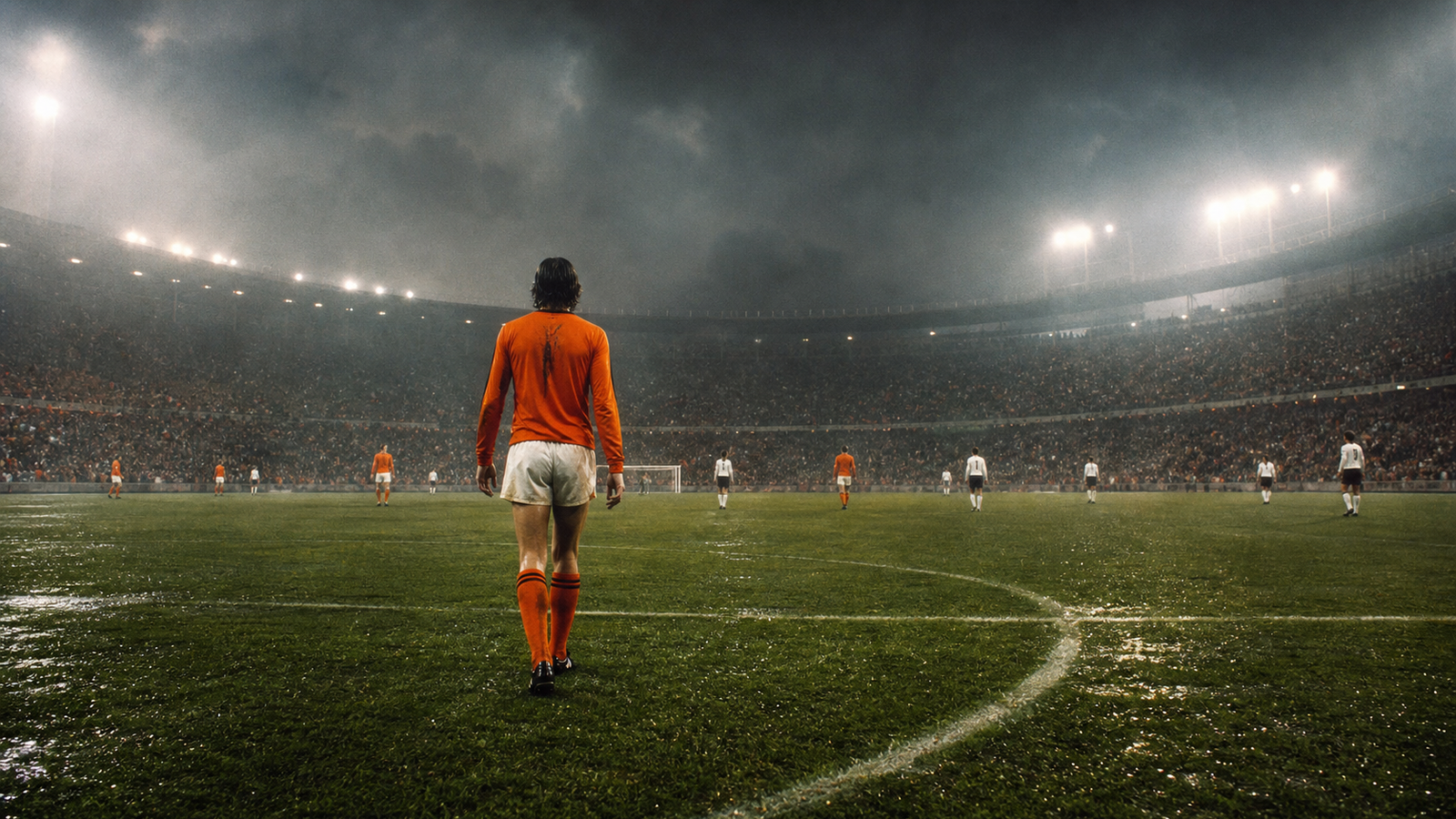
The most useful correction is that Total Football was not anti-position. It was anti-static. The reference points were still there: the ball, the nearest opponent, the nearest teammate, the open lane, the defensive rest structure behind the attack. Players could exchange roles because those references kept the team from losing its shape.
That matters for modern readers because the costume is easy to copy and the mechanism is not. A full-back stepping into midfield looks brave. A centre-forward dropping deep looks clever. A winger coming inside looks modern. But if the team behind those movements does not adjust, the rotation opens the pitch for the opponent instead of closing it.
Why losing made the story stronger
Winning can make a tactical idea look inevitable. Losing can make it feel haunted. The Netherlands in 1974 became larger in memory partly because they did not finish the story with a trophy. The defeat left room for argument: were they too idealistic, too confident, too exposed, or simply beaten by a West German side that solved the match better?
That argument kept the idea alive. Total Football became less a closed chapter than a reference point. Coaches, supporters, and writers could return to it whenever they wanted to discuss whether football should be about control, beauty, risk, or collective intelligence.
The danger of copying the costume
The reason Total Football is so often misunderstood is that its visible parts are tempting. A coach can ask a full-back to appear inside, a centre-back to carry the ball forward, or a forward to drop into midfield. Those are the movements people recognize from the old Dutch clips. But movement by itself is not the inheritance. The inheritance is the responsibility attached to the movement.
That is why Total Football still punishes shallow imitation. If the player leaving a position does not know who protects the space, the team becomes open. If the player covering the space does not understand where the next pass is supposed to go, the rotation becomes decorative. The best versions of the idea make the opponent feel as if the pitch is changing shape. The worst versions make the team’s own defenders feel that way.
The real modern lesson
The modern lesson is not that everyone should roam. It is that roles can be flexible if responsibilities are clear. A team can rotate without becoming loose. A player can leave a zone if the team understands what the movement changes. The beauty is not the abandonment of order. The beauty is order moving at speed.
That is also why the 1974 Netherlands remain useful even after football has changed so much physically and tactically. The pressing is faster now, the defensive lines are drilled differently, and the data around spacing is far more detailed. But the old question survives: can a team move as one organism without losing the reference points that make the movement safe?
The corrected version of the myth is better than the easy one. Total Football was not eleven players doing whatever they wanted. It was eleven players trying to make the same idea arrive in different places before the opponent could name it.
Seen this way, Total Football was not a rejection of positions but a demand that positions become alive. The Netherlands gave the world an image of players trading spaces quickly enough to make fixed labels feel too slow. The loss in Munich kept the image from becoming a simple victory myth. It left something more durable: a beautiful idea with a warning label attached for every copycat coach chasing the costume.
Sources
- FIFA match archive — 1974 World Cup final, West Germany 2-1 Netherlands
- FIFA and UEFA historical profiles of Johan Cruyff, Rinus Michels, and the Netherlands 1974 side
- UEFA and Ajax historical material on Michels, Cruyff, and the Dutch positional tradition