
The easy version of Arrigo Sacchi is that he made Milan press. That is true in the same way saying a clock tells time is true. It misses the machinery. Sacchi’s Milan pressed because the whole team understood the same distances, the same triggers, and the same risk. The point was not to run harder than everyone else. The point was to make the pitch smaller before the opponent realized it had happened.
Sacchi coached Milan from 1987 to 1991, a short spell by dynasty standards and a huge one by influence. In that period Milan won the European Cup in 1989 and again in 1990. Those trophies are the clean proof that the idea worked under the brightest lights. But the real inheritance was more slippery: the belief that a 4-4-2 could defend forward, squeeze space, and make a great opponent feel hurried even before a tackle arrived.
The press was not just pressure
Pressure can be emotional. A forward sprints at a centre-back because the crowd wants effort. A midfielder charges at the ball because the pass looked loose. Sacchi’s 4-4-2 needed something more disciplined. The first runner had to know what pass he was blocking. The second runner had to know where the mistake was being invited. The back four had to step at the same time, or the whole idea became a gift to anyone quick enough to play behind it.
The famous Milan names made the theory believable. Franco Baresi organized the defensive line with the authority of a conductor. Paolo Maldini, Alessandro Costacurta, Mauro Tassotti, and the rest of that back line did not simply retreat toward their own goal. They held a line, stepped together, and trusted that the midfield and forwards were closing the ball in front of them. Ruud Gullit, Marco van Basten, and Frank Rijkaard arrived from Dutch football and gave the team a technical and athletic edge that made the system feel less like dogma and more like a complete football language.
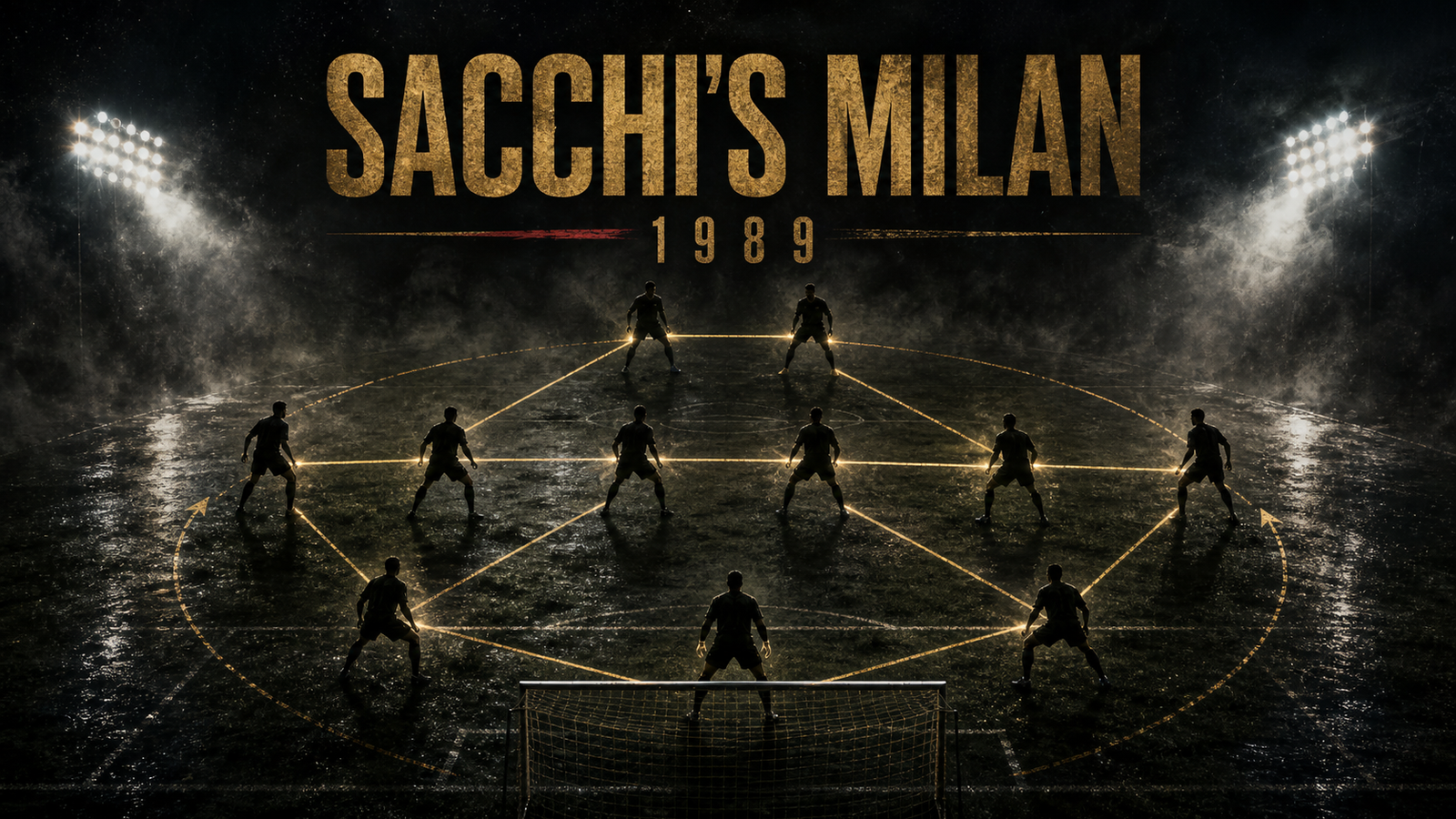
Space became the opponent
The most important change was psychological. Older defensive habits often began with the opponent: mark him, follow him, stop him, win your duel. Sacchi made space feel like the first opponent. If Milan controlled the space around the ball, the duel became easier. If the team lost that space, even an elite defender could look exposed.
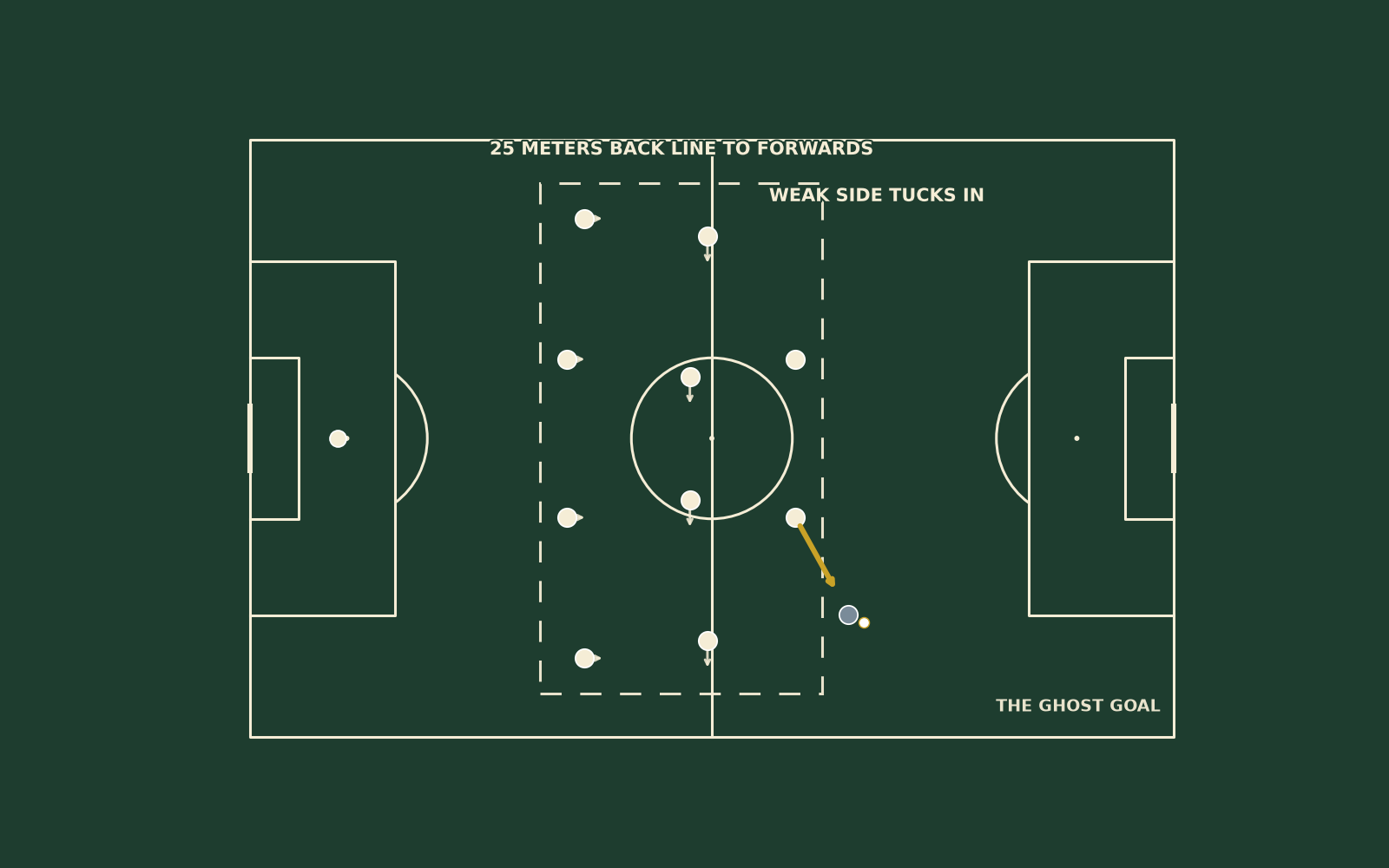
This is where Sacchi’s compactness principle matters. He has often been associated with the demand that the distance from the back line to the forwards should stay around 25 meters. Whether repeated as a coaching rule, a memory, or a simplified lesson from the training ground, the number captures the idea. A team spread over 45 meters can look organized on a freeze-frame and still be too open to press. A team kept near 25 meters gives the ball carrier fewer seconds, fewer angles, and fewer comfortable passes.
The offside line was a weapon, not a refuge
Baresi’s line was not just a defensive line. It was part of the attack on time. When Milan’s back four stepped up, they shortened the game for everyone else. The midfield could press because there was less grass behind them. The forwards could curve their runs because the next pass was being crowded. The opponent could not simply wait for Milan to drop into a safe block, because the block kept advancing.
That is what made the high line feel dangerous in two directions. It risked the ball behind, especially if the timing was wrong. But when the timing was right, it turned every hesitant touch into pressure. The line was not a refuge near Milan’s goal. It was a blade pushed up the pitch.
The ball was a trigger
Pressing systems need triggers because nobody can sprint forever. The ball moving toward the touchline, a receiver taking a heavy first touch, a pass played backward, or a player receiving with his body closed can all become invitations. Sacchi’s Milan made those invitations visible. The team did not press every second with the same intensity. It waited for the shape of the game to say now.
That is why the best pressing sides do not look frantic when they are working properly. They look calm until the trap closes. The ball goes into the selected zone, one player jumps, the others steal the exits, and suddenly the opponent is not choosing among passes. He is choosing among bad ideas.
It looked new because it was rehearsed
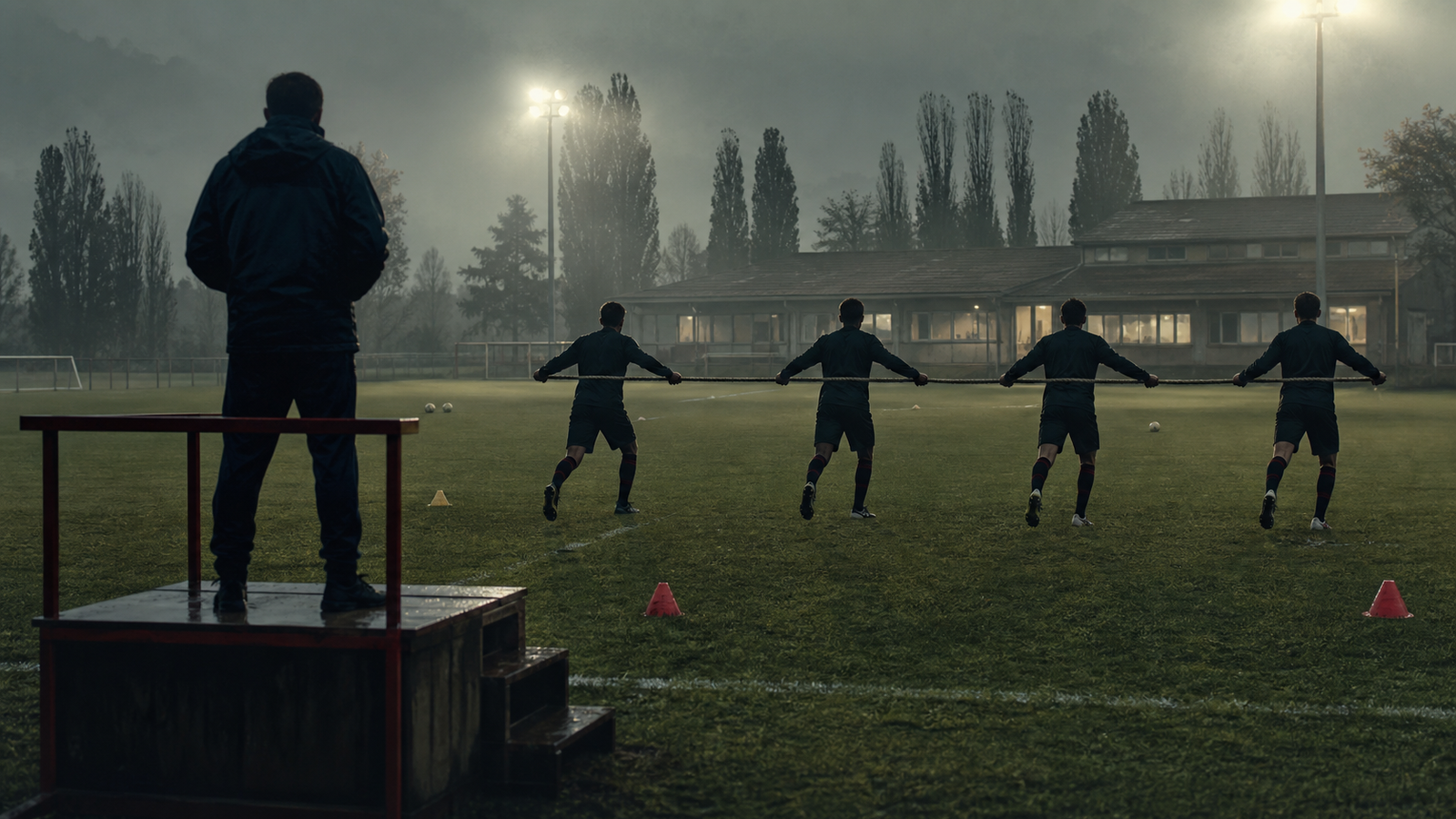
The myth of pressing often makes it sound like hunger. Sacchi’s version was closer to choreography. Training mattered because the team needed shared reactions. A player could not stop to ask whether the winger should jump, whether the full-back should follow, or whether the centre-back should step. The answer had to live in the distances.
One training-ground story has become inseparable from Sacchi because it explains his authority. When critics pointed out that he had not played professional football at the highest level, Sacchi is widely quoted as replying: “I never realised that to be a jockey you had to be a horse first.” The line is funny, but it also describes his real claim. He was not selling memories of playing greatness. He was selling a model of how the team should move.
Why the idea travelled
Sacchi’s Milan did not invent every ingredient in modern pressing. Football rarely changes through one clean invention. Dutch positional ideas, Italian defensive discipline, zonal marking, athletic preparation, and European competition all mattered. What Milan did was make the package persuasive at the highest level. It showed that a team could be compact, aggressive, and elite without treating defending as retreat.
The European Cups of 1989 and 1990 made that argument impossible to dismiss. A theory that wins in training can be called eccentric. A theory that wins Europe twice becomes a reference point. Later coaches used different formations and different languages, but the central thought survived: do not wait for the opponent to finish playing. Make the opponent play inside your plan.
The real legacy
The legacy is not a formation, even though the 4-4-2 shape matters to the story. It is a way of seeing the pitch. The question is not only who has the ball. It is where the ball is, which passes are still alive, how far the nearest support is, and whether the team can turn one opponent’s touch into a collective signal.
That is why Sacchi belongs in the history of football ideas. His Milan made pressing look less like emotion and more like architecture. The team did not merely chase. It arranged the pitch so that chasing became the last visible part of a decision already made.
The press also changed who got to think
Sacchi’s Milan are usually remembered for the back four moving like one line, but the more disruptive idea sat higher up the pitch. The press changed the amount of time opponents were allowed to feel clever. A deep playmaker could still see the pass he wanted, yet the window to play it became smaller. A full-back receiving near the touchline could still control the ball, but his first touch now arrived with a red-and-black shirt already closing the angle.
That mattered because elite football had long treated possession as a kind of breathing space. Sacchi made possession feel like a test. The opponent had to decide quickly, with the passing lane, body shape, and support angle all being attacked at once. Milan did not need every press to win the ball. They needed enough presses to make the next pass worse, the next clearance rushed, and the next attack start from a less comfortable place.
Sources
- UEFA — AC Milan European Cup / Champions League history
- FIFA — Arrigo Sacchi interview and career retrospective
- The Coaches’ Voice — Arrigo Sacchi tactical profile