
Red Star Belgrade’s 1991 European Cup win can sound, from a distance, like a clean football achievement. A great side reached Bari, survived Marseille, won the penalty shootout, and became champions of Europe. But the story does not sit cleanly because the timing does not sit cleanly. It was a triumph on the edge: a team at its peak while the country around it was moving toward fracture.
That is why the final has a strange afterlife. Red Star were not an accidental winner. They had talent, structure, and continental experience. They had already shown enough in Europe to be taken seriously. Yet the victory did not become the start of a long dynasty. It became something closer to a last photograph before the room changed forever.
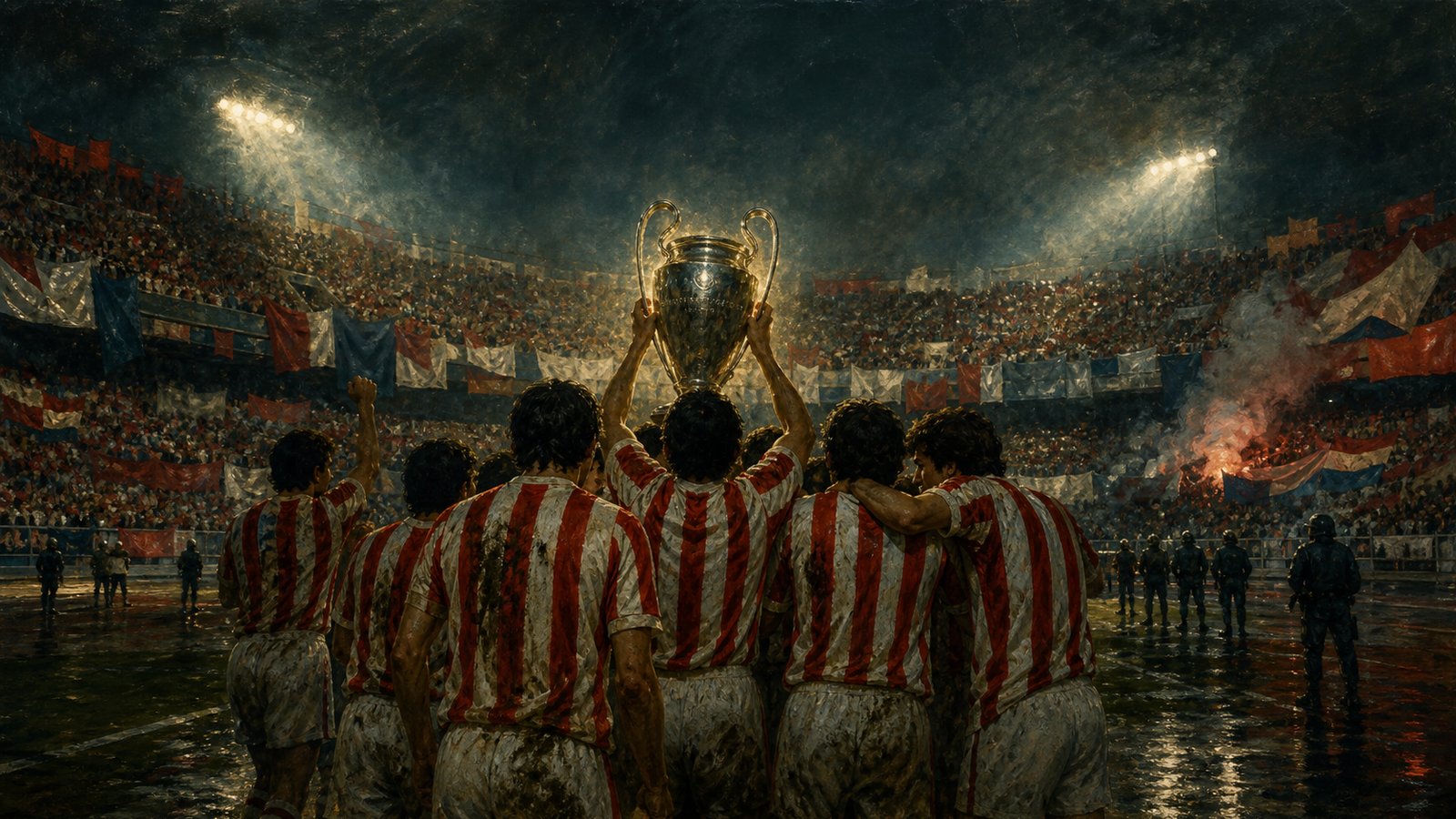
The team was built before the moment closed
The Red Star side of 1990-91 had the feel of a club that had gathered its best pieces at exactly the right time. The names mattered, but so did the balance. There was technical quality, defensive seriousness, and enough tactical restraint to survive Europe’s hardest evenings. They did not need to win every match as a romantic storm. They could manage danger.
That restraint is part of why the final against Marseille can be misunderstood. A cautious final is easy to mock if the only measure is entertainment. But Red Star were not playing a league exhibition. They were playing for the European Cup against a powerful opponent. The decision to control risk was not a betrayal of talent. It was a recognition of what one mistake could cost.
Bari turned pressure into a shootout
The 1991 final finished goalless after extra time. That fact can make the night sound empty. It was not empty. It was tense in the way finals often are tense: not because chances arrive every minute, but because every small shift feels irreversible. Marseille carried threat. Red Star carried the knowledge that penalties could turn discipline into history.
When the shootout came, the story narrowed to technique and nerve. Penalties can look like a lottery only when the ball is already in the net. Before that, they are a private negotiation between fear, routine, and the goalkeeper’s guess. Red Star held themselves together. In the official record, that is enough. In the emotional record, it mattered that a Yugoslav club had reached the summit just as Yugoslav football’s shared ecosystem was coming apart.
The trophy arrived without the usual future
European champions usually receive a second story. What happens next? Can they defend it? Can they add players? Can the manager refresh the side? Can the club turn victory into institutional power? Red Star’s next chapter was blocked by forces bigger than football planning. Conflict, sanctions, and the breakup of Yugoslavia altered the conditions in which the club and its players could operate.
That does not make the victory smaller. If anything, it makes it sharper. The usual football machine that converts a European Cup into sponsorship momentum, transfer leverage, and dynasty talk did not function in the normal way. A team that should have been discussed as a continental power became a symbol of a football world that could no longer hold together.
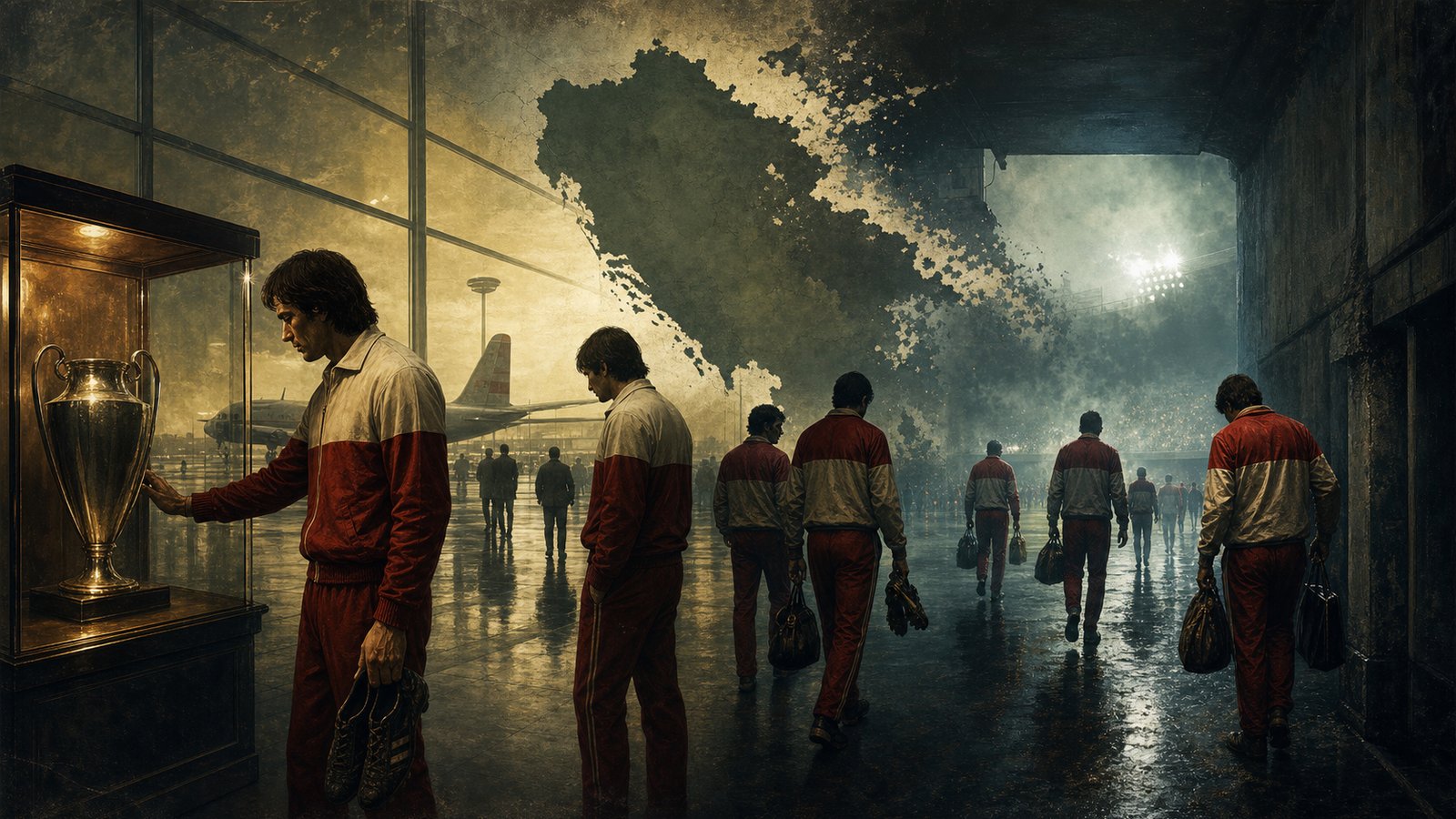
The players became proof of a wider system
One reason the side still fascinates is that its talent did not vanish in memory. Players from that Yugoslav football culture were technically educated, competitive, and adaptable. The Red Star team showed what the system could produce when its best elements were concentrated. The tragedy, in football terms, is that the system’s next stages were interrupted before they could be tested at club level in the usual way.
That is different from saying Red Star would definitely have dominated Europe. Football does not owe dynasties to anyone. Money, injuries, form, and opponents all interfere. But the possibility was real enough to haunt the story. The club had reached the top. The question was not whether they belonged there. The question was what kind of future they were allowed to have.
The final survives because it is not only about the final
If the 1991 European Cup were only a penalty shootout, it would be a narrow memory. It survives because it carries a double image. On one side, players in red and white are lifting the greatest club trophy in Europe. On the other, the map beneath that achievement is shifting. The same night can be sporting glory and historical unease.
That is the weight of Red Star’s triumph. It was not a fairy tale and not a footnote. It was a brilliantly assembled football team winning the biggest match available to it, then being denied the ordinary luxury of becoming boringly powerful. The cup still shines. The shadow around it is why people keep looking.
Memory made the team larger, not smaller
Because the side did not get a normal long reign, memory has sometimes done the work that seasons usually do. Supporters can imagine the title defence, the next recruitment cycle, the bigger nights that might have followed. That imagining should not replace the record, but it explains the fascination. Red Star’s victory contains both evidence and absence: what they did, and what football never got to measure.
The result is a club story with unusual emotional range. It belongs to European Cup history, Balkan football history, and the history of teams interrupted by forces outside the pitch. That mixture is why the trophy does not feel like an isolated object in a cabinet. It feels like a witness.
The timing made the triumph feel fragile
Red Star’s 1991 European Cup win sits in football history with a strange emotional weight because it arrived at the edge of a political world that was already breaking apart. On the pitch, the team had the quality to be remembered simply as champions: technical midfielders, dangerous attackers, and enough control to survive the pressure of a final. Around the club, the context made the achievement feel less like the start of an empire and more like the last photograph before the room changed forever.
That timing matters because great sides are normally measured by what they build next. Red Star did not get the usual future. The team’s best players became part of the European transfer flow, the region’s politics darkened, and the conditions for sustaining that football project disappeared. The cup therefore carries two stories at once: sporting excellence and historical interruption.
Why the final became a memory test
The final itself is often remembered as tense and cautious, especially because penalties decided it. But reducing the achievement to one nervous night misses the larger campaign. European champions are not made only by finals; they are made by surviving rounds, hostile stadiums, and the psychological squeeze of expectation. Red Star’s victory asks a difficult question: how should football remember a team whose peak was real, but whose aftermath was swallowed by events beyond football?
Sources
- IFAB Laws of the Game archive
- FIFA World Cup technical reports
- UEFA competition records
- Contemporary newspaper and agency reports
- Club and league historical records