
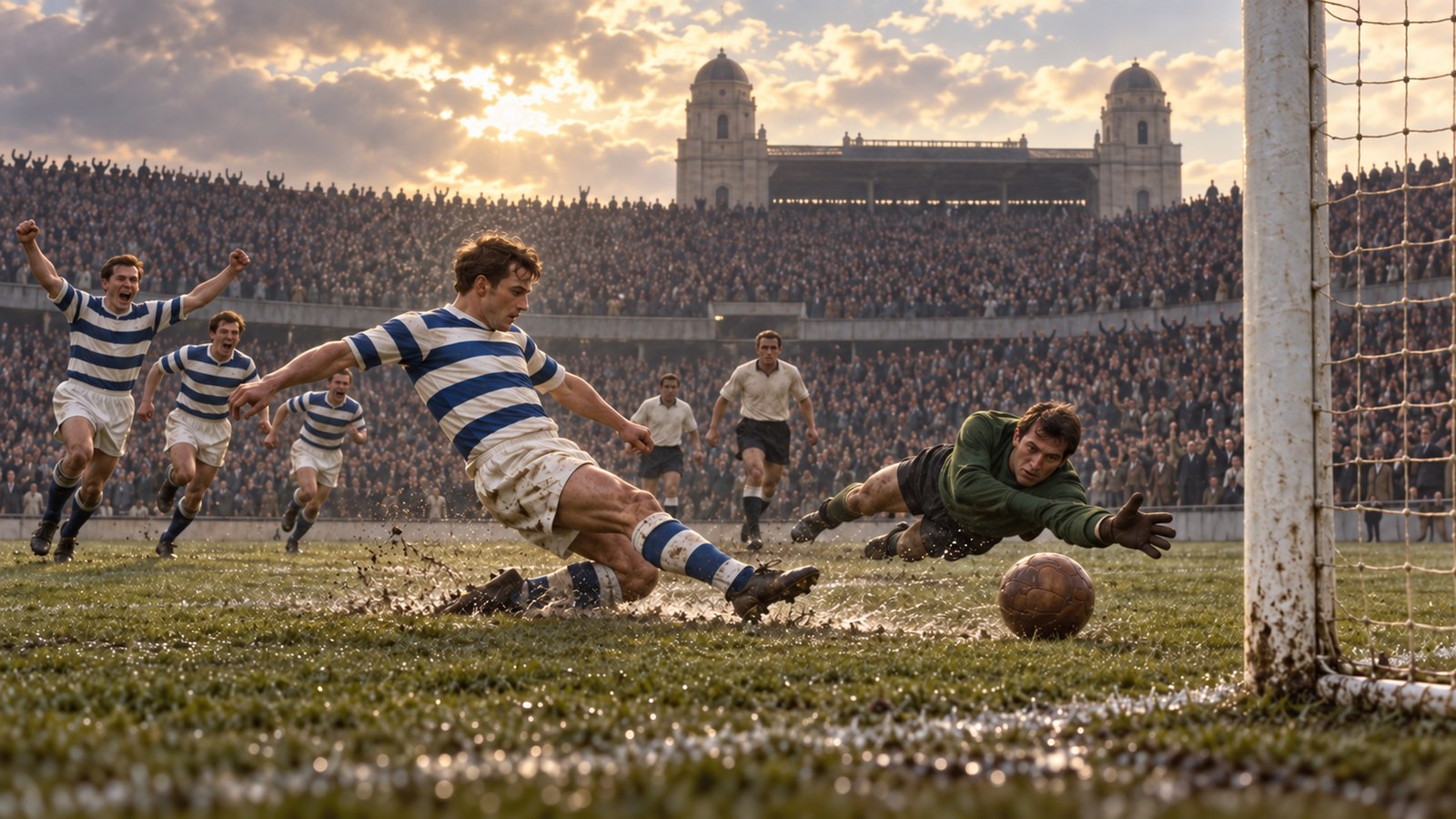
At half-time, the shape of Wembley’s first League Cup final looked reassuringly familiar. West Bromwich Albion, the First Division holders, led 2–0. Clive Clark had scored both goals against his former club. Queens Park Rangers had brought a Third Division team to a national stage, but the hierarchy still appeared intact.
It lasted for about another quarter of an hour. Then Roger Morgan headed in, Rodney Marsh drove an equaliser against the post and Mark Lazarus reached the ball that won the cup. Three QPR goals arrived between the 63rd and 81st minutes. The comeback did more than decorate an underdog story: it showed how quickly authority can leave a match once the stronger side begins protecting what it has.
The new Wembley final arrived with an old hierarchy
The League Cup was only in its seventh season. Its first six finals had been played over two legs, a format that gave each club a home match but denied the competition one concentrated national occasion. In 1967 the Football League moved the final to Wembley and reduced it to a single game. A crowd of 97,952 supplied the scale the young tournament had been missing.
The finalists made the experiment look uneven. West Brom were defending the trophy they had won in 1966 and belonged to the First Division. QPR were managed by Alec Stock and captained by Mike Keen, but they operated two levels lower. Their attacking personality came from Rodney Marsh; their campaign’s consistency came from a side also driving toward promotion.
QPR had needed the long route. They began with a 5–0 win over Colchester United, drew at Aldershot and won the replay, then removed Swansea Town, Leicester City and Carlisle United. The semi-final was supposed to expose the limit. Instead, Rangers beat Birmingham City 4–1 away and 3–1 at Loftus Road. A 7–2 aggregate victory made Wembley feel earned rather than borrowed.
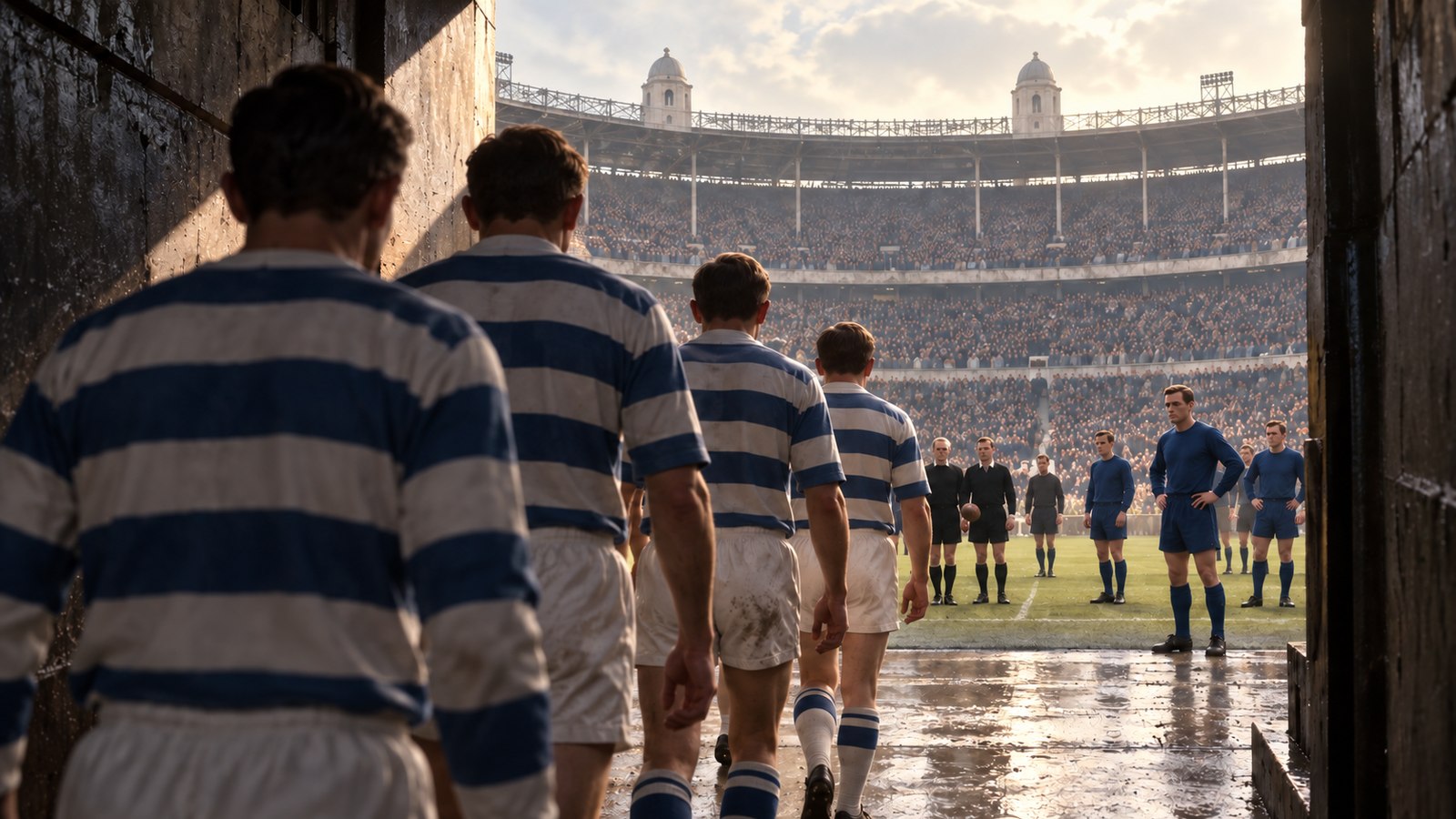
Keen’s contribution was concrete. He scored the decisive goal at Swansea and found the net again in the home semi-final. His authority did not come from cup-week speeches alone: from March 1962 until September 1968, he did not miss a QPR game. Wembley placed a durable Third Division team opposite an established top-flight one, even if the programme cover could not make them equals.
Clive Clark made the gap visible before the interval
West Brom began as the more powerful and organised side. Clark sharpened the contrast because his history connected the teams. The former Rangers winger scored twice in the first half, giving the holders a 2–0 advantage and QPR supporters the particular discomfort of watching a familiar player enforce the division between them.
The match report later quoted by the Guardian described West Brom as harder, faster, better organised and fitter for roughly an hour. They had not stolen a lead through two isolated breaks. They had established control, created further opportunities and reached a position from which ordinary defensive order should have been enough.
That detail matters. A comeback from 2–0 can be retold as though the losing team had merely been waiting to reveal its true level. QPR had not. They were being beaten by a side whose superiority was visible in the movement and pressure of the game. The eventual reversal began from an uncomfortable fact: Rangers first had to survive long enough for West Brom’s certainty to become caution.
The holders carried the lead beyond half-time. Every minute removed from the clock appeared to confirm that Wembley would reward seniority. Yet a two-goal margin can change the psychology of both teams. The leader begins deciding which risks no longer seem necessary. The pursuer has fewer choices, and that narrowing can produce clarity.
Morgan’s header altered where the match was being played
Roger Morgan scored in the 63rd minute. The winger’s header mattered first because it changed the arithmetic, but its deeper effect was territorial. QPR no longer needed two goals merely to force a conversation. They needed one. The crowd could see a route where there had been only resistance.
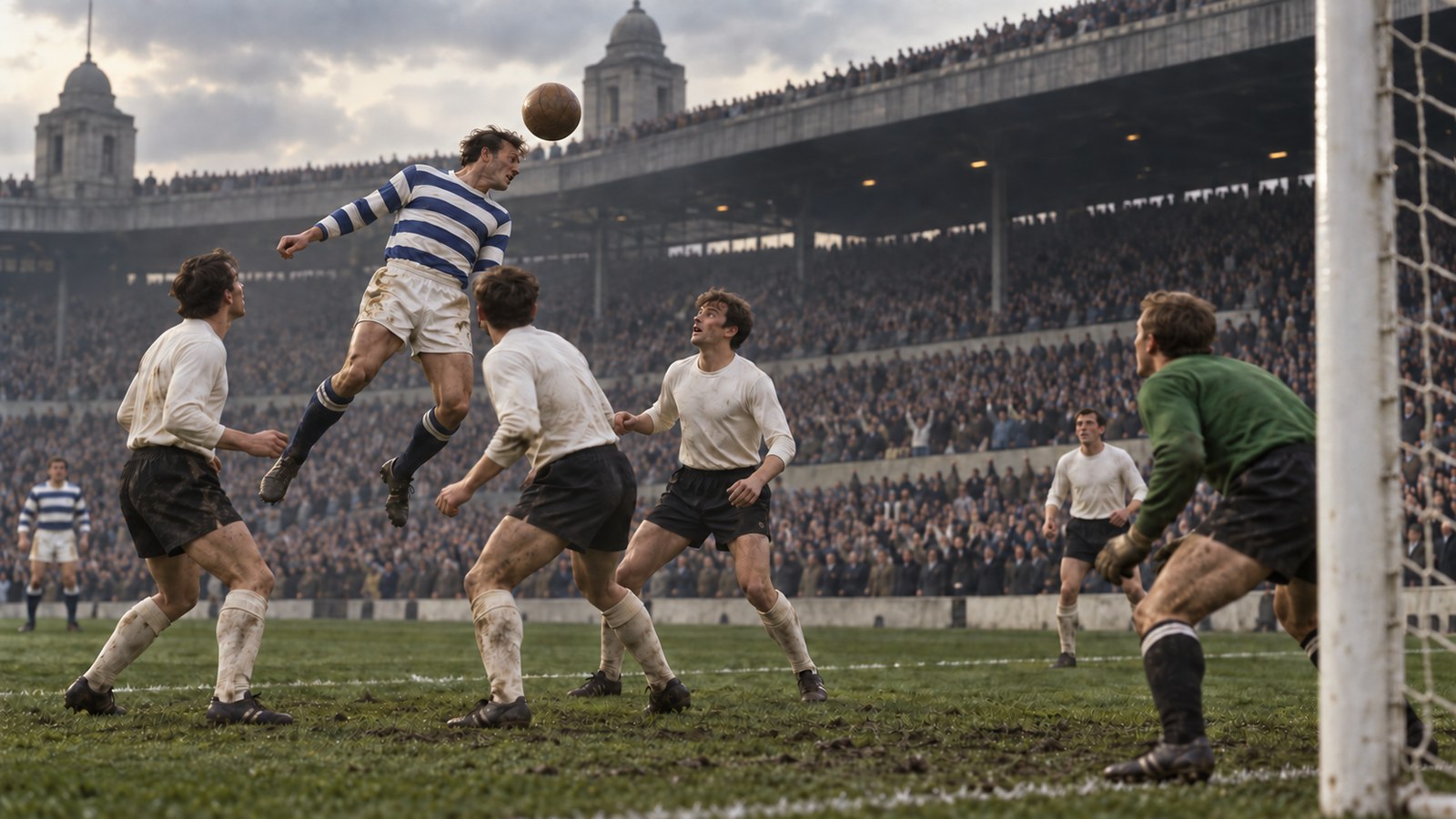
West Brom’s earlier control had depended on playing as the team entitled to set the terms. After Morgan’s goal, every clearance invited the ball back and every retreat strengthened the impression that the holders were now responding. QPR’s lower-division status did not disappear. It became useful emotional fuel: the pressure of expectation sat almost entirely with the side in front.
Twelve minutes later, Marsh supplied the piece of individual invention that a collective surge still required. He carried the ball through a run, shifted his balance and clipped the finish in off the post. The equaliser in the 75th minute did not resemble a patient, low-risk attack. It came from a player accepting that the opening might last only as long as he could keep moving through it.
Marsh was 23. His goal has endured because the action compressed his appeal—deception, balance and nerve—into a Wembley moment. More important to this match, it completed a transfer of belief. West Brom had led for almost an hour; QPR had erased the lead in 12 minutes. With the score 2–2, the nominal favourite no longer possessed the emotional safety of being ahead.
Lazarus reached the loose future first
The winner came nine minutes from time. Mark Lazarus attacked a crowded area and finished the chance that placed QPR in front for the first time all afternoon. His surname offered later writers an irresistible metaphor, but the football was direct: a team that had spent the first hour beneath the match now reacted fastest when the decisive ball became available.
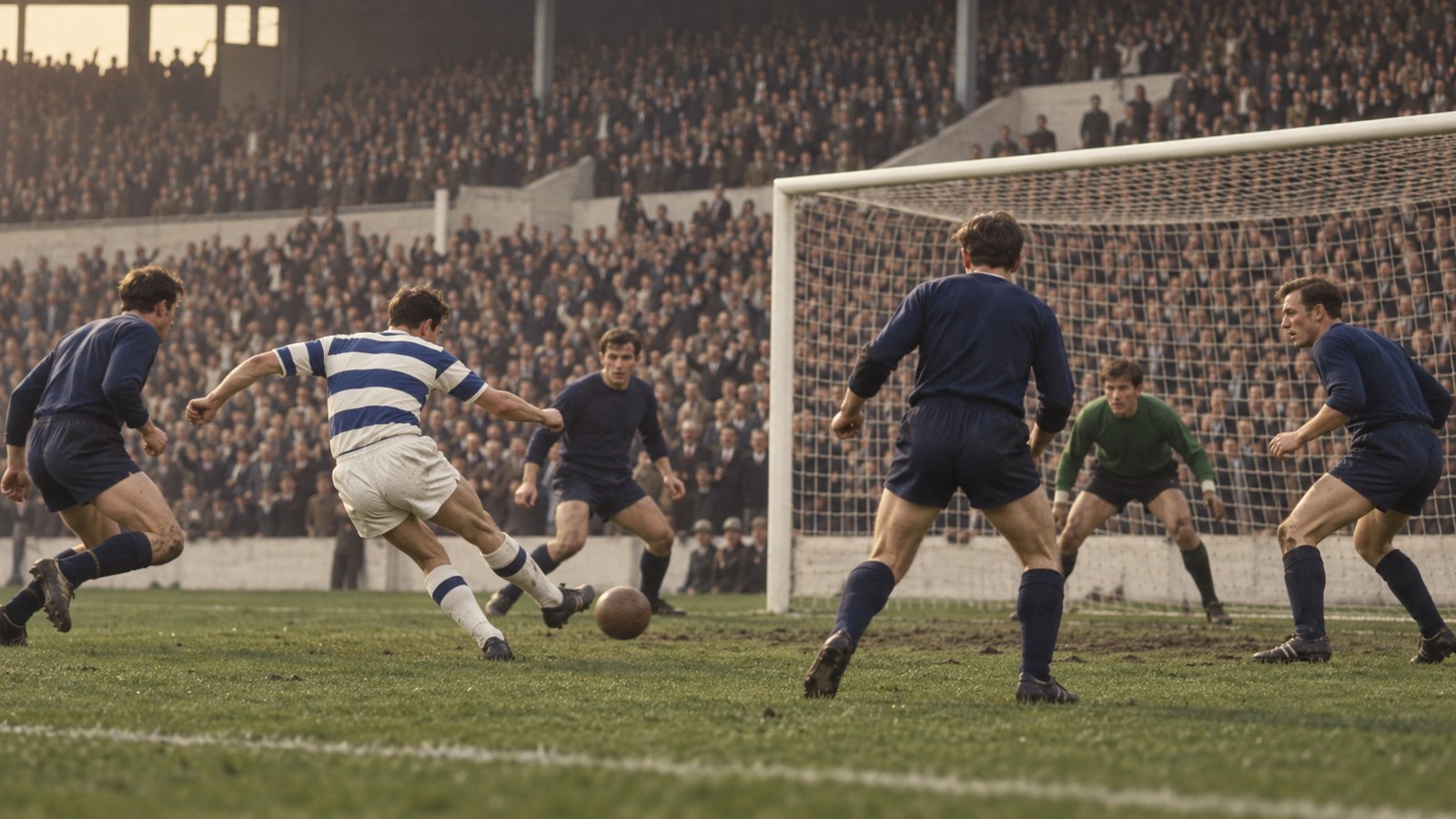
There were only 18 minutes between Morgan’s first goal and Lazarus’s third. That interval is the mechanism of the upset. QPR did not gradually reduce West Brom through a full match of equal pressure. They created one breach, used the crowd and Marsh’s invention to widen it, then struck before the holders could rebuild their previous order.
The final score, 3–2, made QPR the first third-tier team to win a major English trophy. It also vindicated the League Cup’s move to Wembley in the most dramatic way available. A routine victory by the holders might have confirmed the venue. A five-goal comeback final gave the competition a founding memory for its new format.
QPR’s players were not anonymous props in a cup fairy tale. Morgan had provided the first opening, Marsh the equalising incision, Lazarus the winner and Keen the captaincy that linked the cup run to years of week-by-week work. The result belonged to a team with distinct roles, not to a vague force called romance.
The medal came with promotion—and a closed European door
The Wembley victory was the brightest afternoon of QPR’s season, but not its only proof. Rangers won the Third Division by 12 points and moved into the Second Division. The cup run and league campaign therefore reinforced each other: this was an upward-moving side capable of repeated performance, even if one extraordinary final became the permanent image.
Success exposed an institutional contradiction. League Cup victory normally brought a place in the Inter-Cities Fairs Cup, yet QPR were barred because they were not a top-flight club. The same status that made their Wembley win historic disqualified them from the European reward attached to it.
The climb continued. QPR reached the First Division the following season, although their first stay ended with a bottom-place finish and relegation in 1968–69. That later fall does not reduce 1967. It clarifies how quickly the club was travelling: from Third Division fixtures to Wembley, then upward again before the structure caught up with the ambition.
Other League Cup stories would join promotion and a trophy in different ways. Oxford United later climbed two divisions and won the competition within three seasons. QPR’s version remains singular because it unfolded in the first one-match Wembley final and because the comeback itself redrew the game so suddenly.
The enduring image is not simply an underdog lifting silverware. It is the moment a settled match became unstable. West Brom had the stronger first hour, two goals and the authority of holders. Morgan’s header made the stadium ask a new question. Marsh and Lazarus answered it before the favourite could recover.
- The Guardian: “The Joy of Six: League Cup final upsets”
- The Independent obituary of Mike Keen
- Rec.Sport.Soccer Statistics Foundation English League Cup results archive