
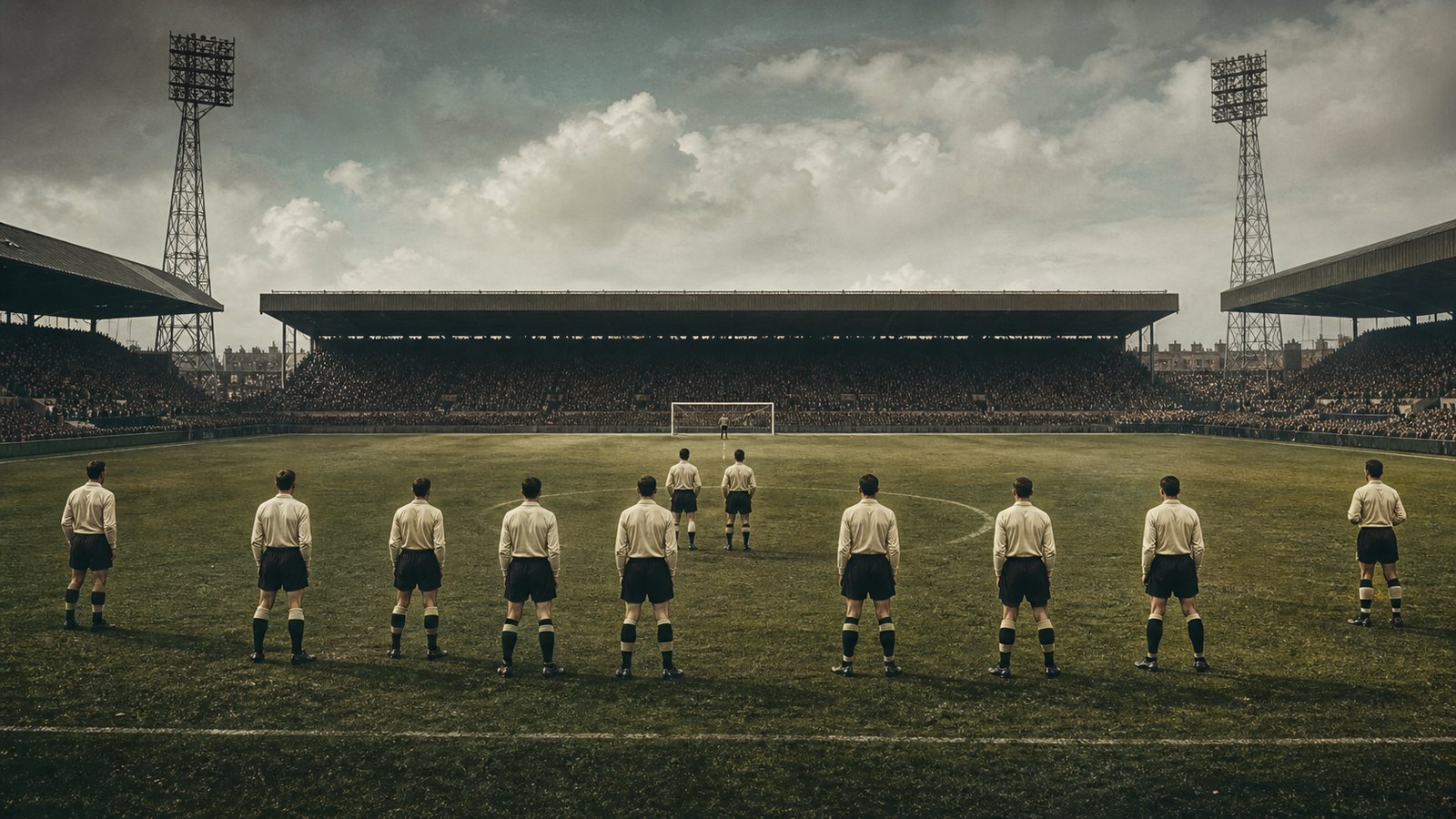
Before England became world champions, Wembley gave them a warning. Uruguay held Alf Ramsey’s side to a 0–0 draw in the opening match of the 1966 World Cup, and the host nation left the field without the reassuring burst of goals expected from a favourite. Ramsey did not answer by reaching for more attacking specialists. Across the group stage he tested three different wingers, then removed the position from his starting shape for the knockout rounds.
The team later labelled the “Wingless Wonders” was not simply a defensive England with the touchlines erased. Ramsey exchanged fixed wide attackers for midfielders who could travel inside, help without the ball and still arrive near the penalty area. The trade changed the work demanded from Alan Ball and Martin Peters, protected Nobby Stiles, released Bobby Charlton and asked the full-backs to judge when width was worth the risk. England’s six matches became a practical argument about control: how much attacking threat could be created without surrendering the centre?
The goalless opening forced a selection experiment
Ramsey had taken the England job in 1963 after guiding Ipswich Town from the Third Division South to the league championship. He also insisted on control over selection, breaking with an older committee culture around the national side. That authority mattered in July 1966 because the opening draw created pressure without dictating his response. He could alter roles from match to match rather than wait for a panel to rescue the original plan.
England began the tournament in a 4–3–3. John Connelly played against Uruguay, Terry Paine replaced him against Mexico, and Ian Callaghan took the role against France. The results improved: England beat Mexico 2–0 and France 2–0, finishing the group with four goals scored and none conceded. Yet the rotating cast on the wing was also evidence that Ramsey had not found the final balance. Each choice supplied width, but a specialist winger could leave one fewer player available for the compact central exchanges Ramsey trusted.
The France match changed more than the group table. Jimmy Greaves was injured, while Nobby Stiles drew criticism after a tackle. Ramsey defended Stiles against pressure to remove him from the side and chose the younger Geoff Hurst to replace Greaves. These were connected decisions. Stiles anchored the midfield, Hurst offered a central reference point, and the manager could now shape the team around the spaces between them rather than around a touchline runner.
Removing the winger created four different midfield jobs
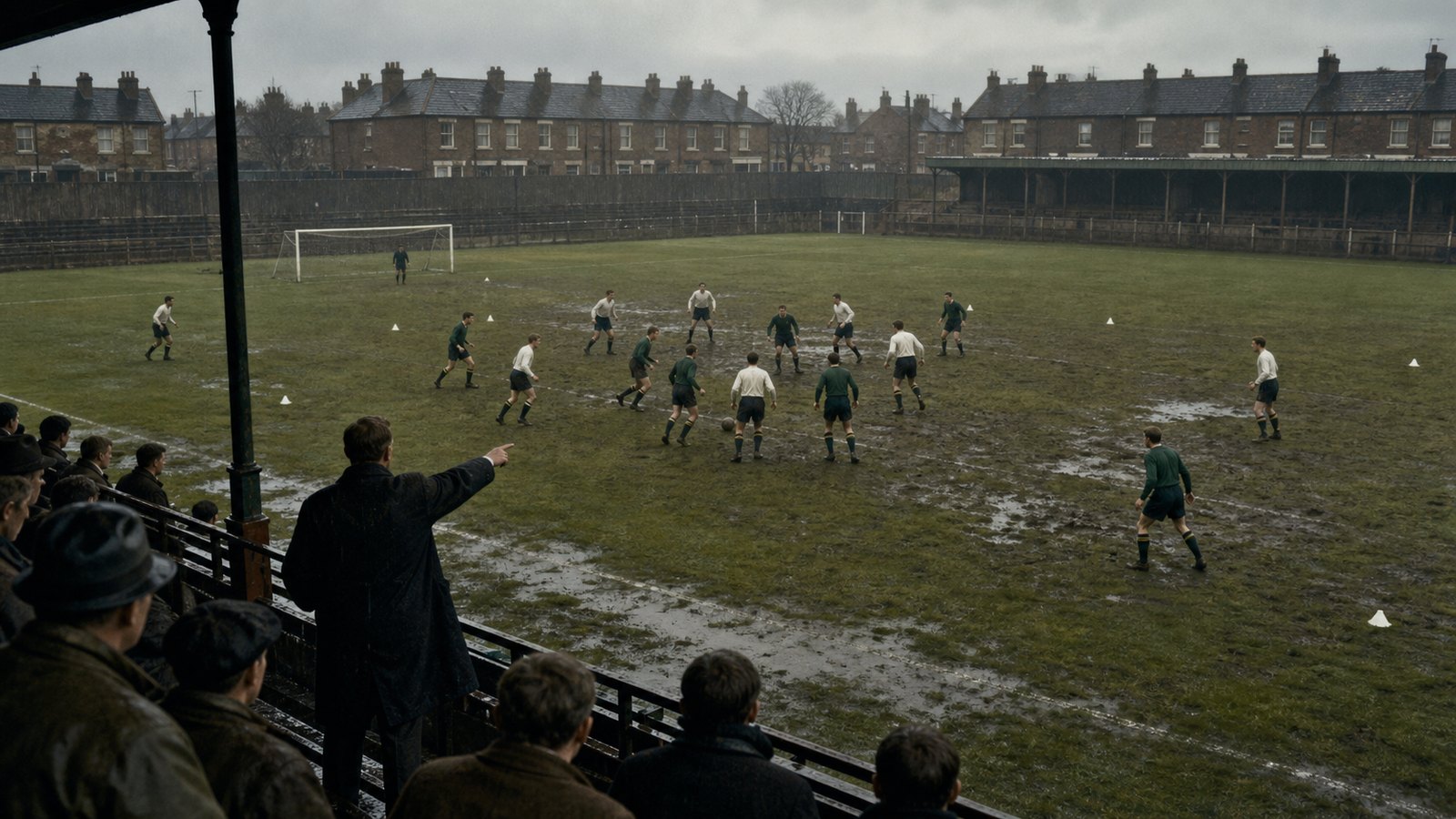
For the quarter-final against Argentina, Ramsey shifted to a narrow 4–3–1–2, a shape often described more loosely as 4–4–2. The labels matter less than the asymmetry of the work. Stiles was the holder in front of the defence. Bobby Charlton carried the main creative and shooting threat from central areas. Ball and Peters operated from the sides of the midfield but were not asked to remain on the chalk. They could close inward, combine through traffic and then appear beyond the forwards.
This arrangement did not make England permanently narrow in possession. George Cohen and Ray Wilson could advance from full-back when the moment was safe, while Ball’s running could pull the structure toward the right. The key was that width became an action rather than a fixed occupation. A winger waiting high and wide stretches a defence, but he can also be bypassed when possession is lost. Ramsey preferred players whose first position after a turnover was close enough to affect the next pass.
The bargain gave Bobby Charlton a platform. He did not need to form a flat midfield line or chase every run toward a corner flag. Stiles screened behind him, Peters read the gaps ahead, and Ball supplied repeated movement around the ball. Charlton could receive facing forward and attack the decisive central corridor. England had not added a classic playmaker; the team had reorganised the labour around the playmaker it already possessed.
Argentina showed the value of a crowded centre
The quarter-final was scoreless when Argentina captain Antonio Rattín was dismissed. The long interruption and angry atmosphere can obscure the football problem England still had to solve. More possession against ten men did not automatically open a compact opponent. The winning goal arrived only twelve minutes from the end, when Peters crossed and Hurst headed in.
That sequence exposed a useful feature of the new shape. Peters began as a midfielder rather than a winger, yet he could still reach a delivery position. Hurst occupied the box, while the central structure behind the move reduced the distance England had to travel if the attack broke down. The system did not prohibit a cross; it tried to ensure that a failed cross would not split the team in half.
England’s restraint also limited the emotional damage of a chaotic match. Stiles remained the disciplined screen Ramsey had fought to keep. Ball could press and recover. Charlton waited for moments when the game opened instead of forcing every possession. The 1–0 score was narrow, but it sent England into the semi-final without having conceded in four matches.
Portugal forced the shape to attack
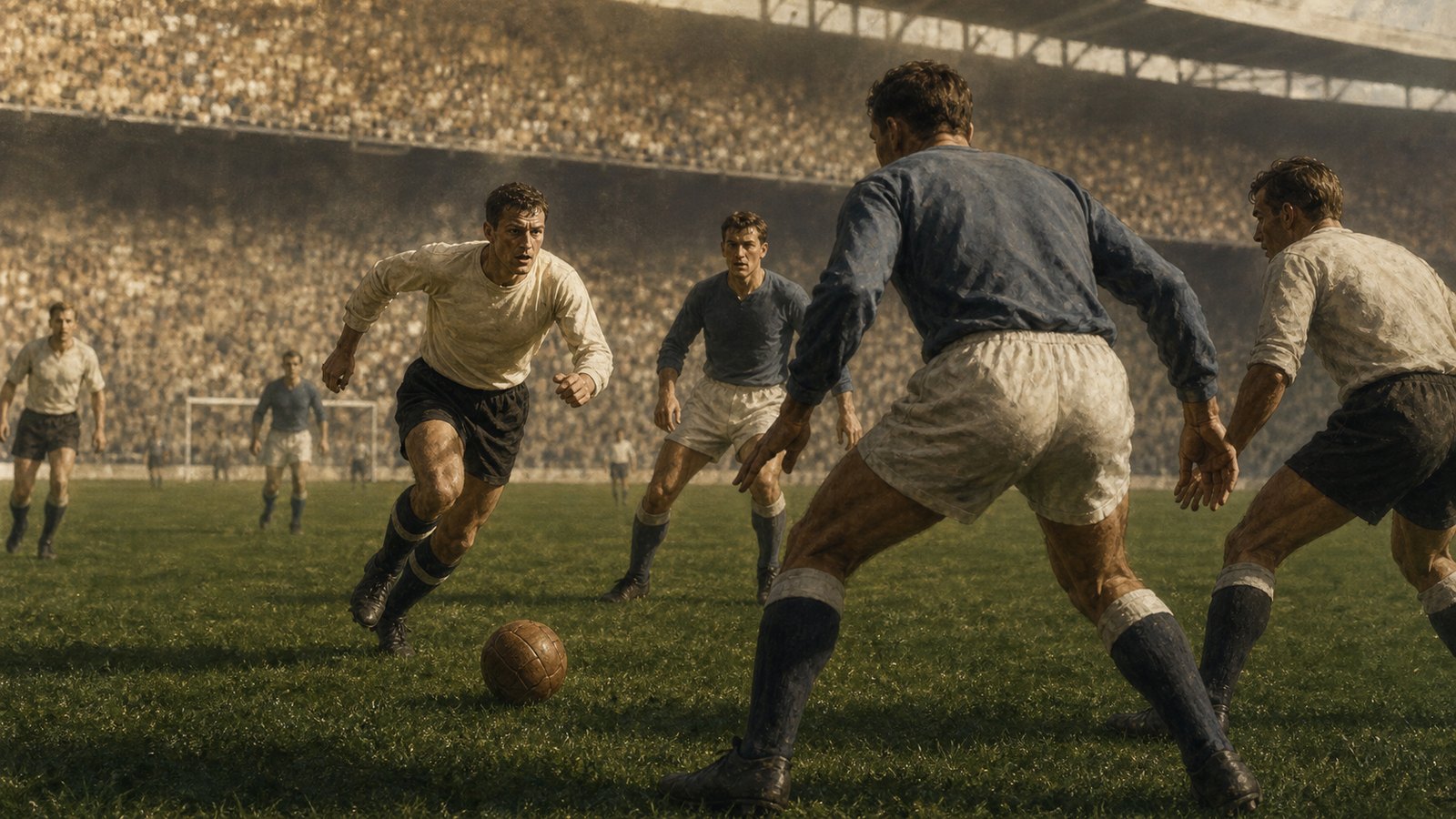
Portugal presented a different examination. Eusébio would finish the tournament with nine goals, and the debutants had overturned a 3–0 deficit against North Korea in the quarter-final to win 5–3. England could not treat the semi-final as another exercise in patiently surrounding a deep defence. They needed the midfield to control transitions and produce goals of its own.
Bobby Charlton scored twice in a 2–1 victory. His output was not separate from Ramsey’s caution; it was enabled by it. Stiles accepted the close, often thankless defensive work around the most dangerous Portuguese zones. Ball and Peters kept offering angles and recovery runs. With those tasks covered, Charlton could arrive where his shooting became decisive. Portugal’s late penalty made the finish tense, but it did not erase the mechanism England had demonstrated.
The semi-final also clarified what “wingless” did not mean. England were not trying to freeze the match into a central scrum. They wanted flexible players to reach wide or advanced spaces from deeper starting points. The movement was harder to mark because it was not announced by a forward standing beside the opposing full-back from the first minute. Ramsey had traded constant width for timed width, and against Portugal the exchange produced enough threat to reach the final.
The final turned midfield energy into extra-time leverage
West Germany scored first at Wembley through Helmut Haller. Hurst equalised four minutes later, and Peters put England ahead in the 78th minute. Wolfgang Weber then made it 2–2 near the end of normal time. The match had escaped the low-scoring script that had carried England through the group, but Ramsey kept the same functional balance. He did not respond to every swing by tearing open the midfield.
Extra time revealed the physical side of the design. Alan Ball was 21, the youngest player in England’s final team, and his running continued as opponents tired. He supplied the ball before Hurst’s disputed second goal. Peters still threatened the box, Stiles still guarded the route through midfield, and Charlton still occupied German attention. The team’s narrow structure had conserved no one completely; it had distributed exertion so that the most useful runs could continue late.
Hurst completed his hat-trick as England won 4–2, becoming the first player to score three times in a World Cup final. The spectacle of the last goal can make the victory feel like one afternoon of momentum. England’s tournament totals tell a steadier story: eleven goals scored in six games and three conceded, all of those concessions coming in the semi-final and final. Four clean sheets built the runway for two knockout matches in which the midfield supplied both control and scoring support.
The lasting lesson sits in the trade, not the nickname
The “Wingless Wonders” nickname makes Ramsey’s England sound like an oddity: a champion defined by something it lacked. The more useful reading is that every formation choice transfers responsibility. Remove a specialist winger and somebody else must create width. Push a full-back forward and a midfielder must cover the vacated lane. Free Charlton to attack and Stiles must absorb defensive work that rarely reaches a highlight reel.
Ramsey’s success came from making those transfers explicit. Cohen and Wilson were not merely defenders waiting behind the midfield. Ball and Peters were not wingers with a new label. Stiles was not an ornamental destroyer, and Charlton was not given freedom without a supporting bill. Their jobs interlocked closely enough for England to change the location of its width without losing its defensive distances.
There were limits. The quarter-final’s dismissal shaped the contest, the final contained the enduring dispute over Hurst’s extra-time goal, and home advantage meant England played all six matches at Wembley. None of those facts needs to be hidden to understand the team. A tactical mechanism does not erase circumstance; it explains how a side was prepared to use the circumstances it received.
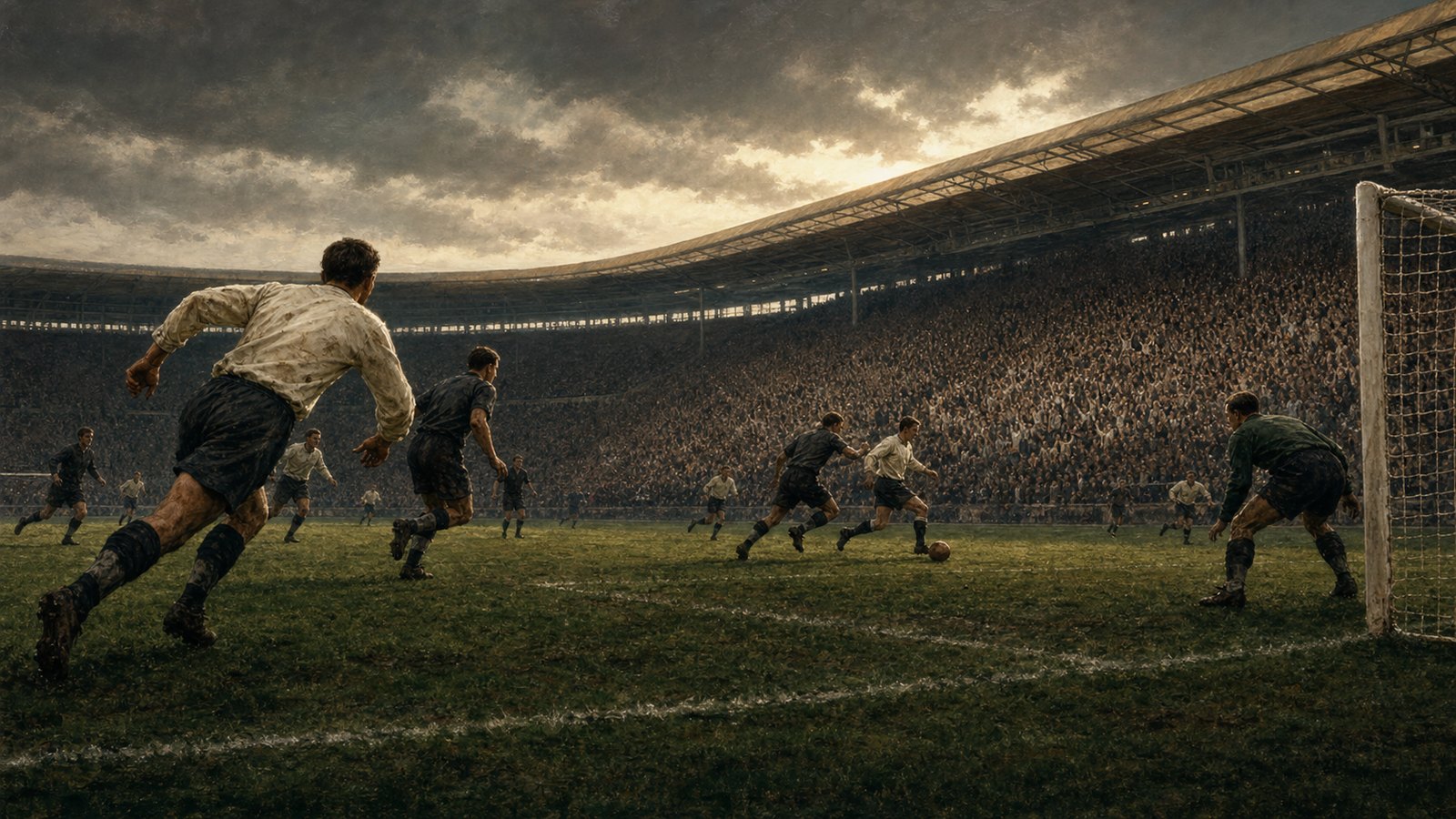
England’s 1966 title therefore survives as more than a frozen image of Hurst, Moore and a crowded Wembley. It was a month-long selection process in which a goalless opening encouraged Ramsey to sharpen his central bargain. Three wingers were tried, none started the knockout rounds, and four midfield roles became the operating core of the champions. The trick was not that England played without width. It was that width, cover, creativity and running were reassigned until each appeared at the moment the team needed it.
Sources
- FIFA, 1966 England tournament archive
- The Football Association, 1966 World Cup final 50th-anniversary archive
- 1966 FIFA World Cup tournament record
- 1966 FIFA World Cup final match record
- Alf Ramsey biographical and managerial record