
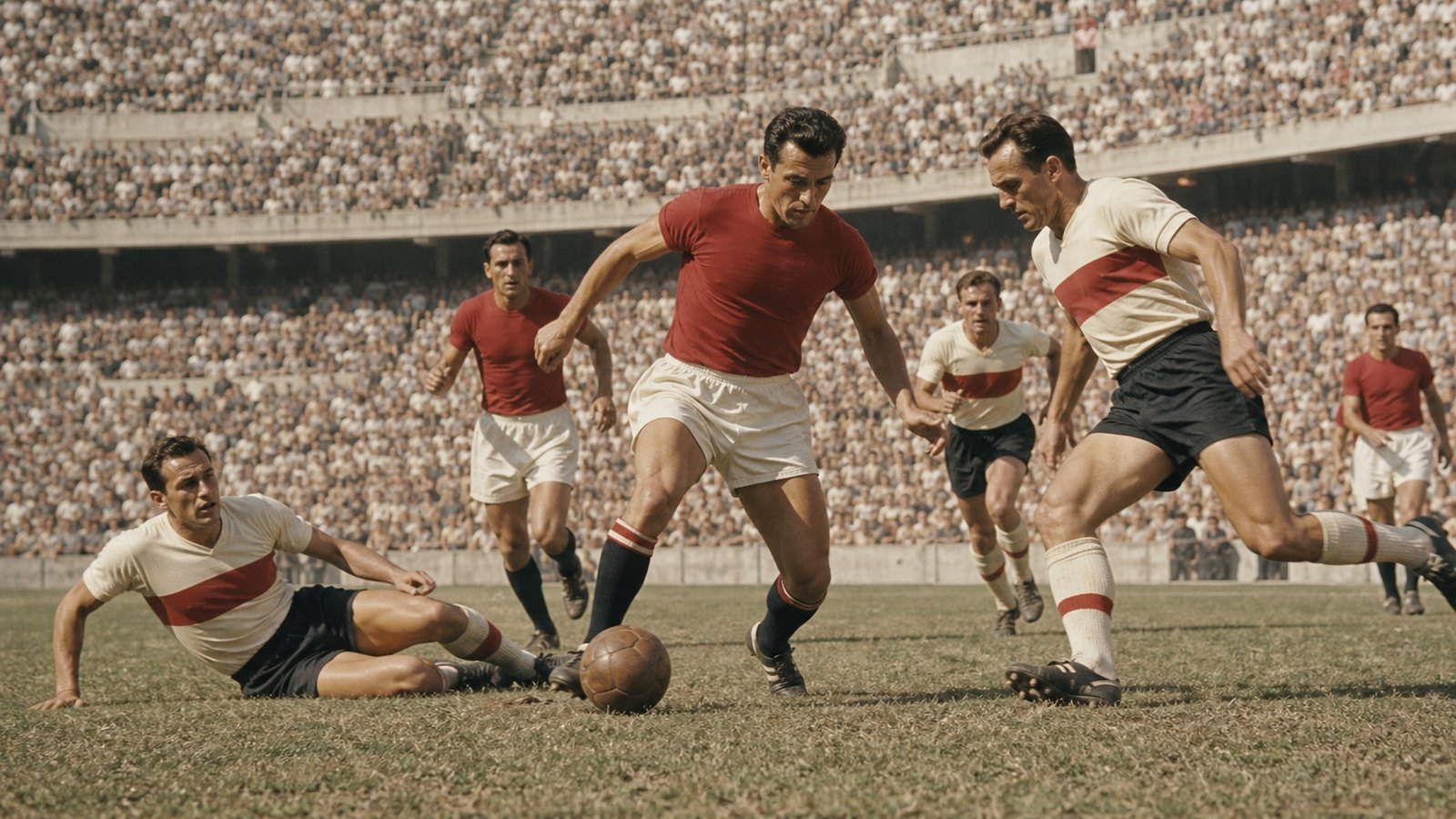
At 5 p.m. in Lausanne, the score began behaving like a broken instrument. Switzerland struck three times before Austria had found its first goal. Austria then answered with five before half-time. A missed penalty appeared between the ninth and tenth goals of the opening period, and neither side reached the interval with anything resembling control.
The quarter-final on 26 June 1954 ended Austria 7–5 Switzerland, still the highest-scoring match in men’s World Cup history. The total is famous; the order is stranger. Twelve goals were not spread evenly through a reckless afternoon. Nine arrived before half-time, six of them inside an 18-minute surge. In roughly 40°C heat, the scoreboard kept forcing players to solve a new match before they had recovered from the previous one.
La Pontaise offered no gentle way into the afternoon
The setting mattered before the first shot. The Stade Olympique de la Pontaise held roughly 32,000 spectators for a 17:00 kick-off. FIFA’s retrospective describes extreme heat, while later match records commonly give the figure as around 40°C, the reason German-language memory gave the match its durable label: the Hitzeschlacht von Lausanne, the heat battle of Lausanne. There were no modern drinks breaks, five substitutions or long tactical pauses. The same eleven players had to keep processing the game as the air and the score changed around them.
Both teams arrived with evidence that they could score. Austria had beaten Czechoslovakia 5–0 in the group stage, with Erich Probst completing a hat-trick by the 24th minute. Switzerland had defeated Italy 2–1 and then 4–1 in a group play-off. The hosts carried Josef Hügi, Robert Ballaman and Jacques Fatton in their forward line. Austria had captain Ernst Ocwirk behind a front five that included Theodor Wagner, Probst and the brothers Alfred and Robert Körner.
The tournament format also sharpened the stakes. This was a straight quarter-final. There was no second leg and no route back through a group table. Austria’s generation had inherited the reputation of the pre-war Wunderteam without reproducing its exact style or mythology. Switzerland were the hosts, playing a knockout match in their own country. Heat did not remove tactical intention; it made every failed intention more expensive.
Three Swiss goals created a lead that lasted two minutes
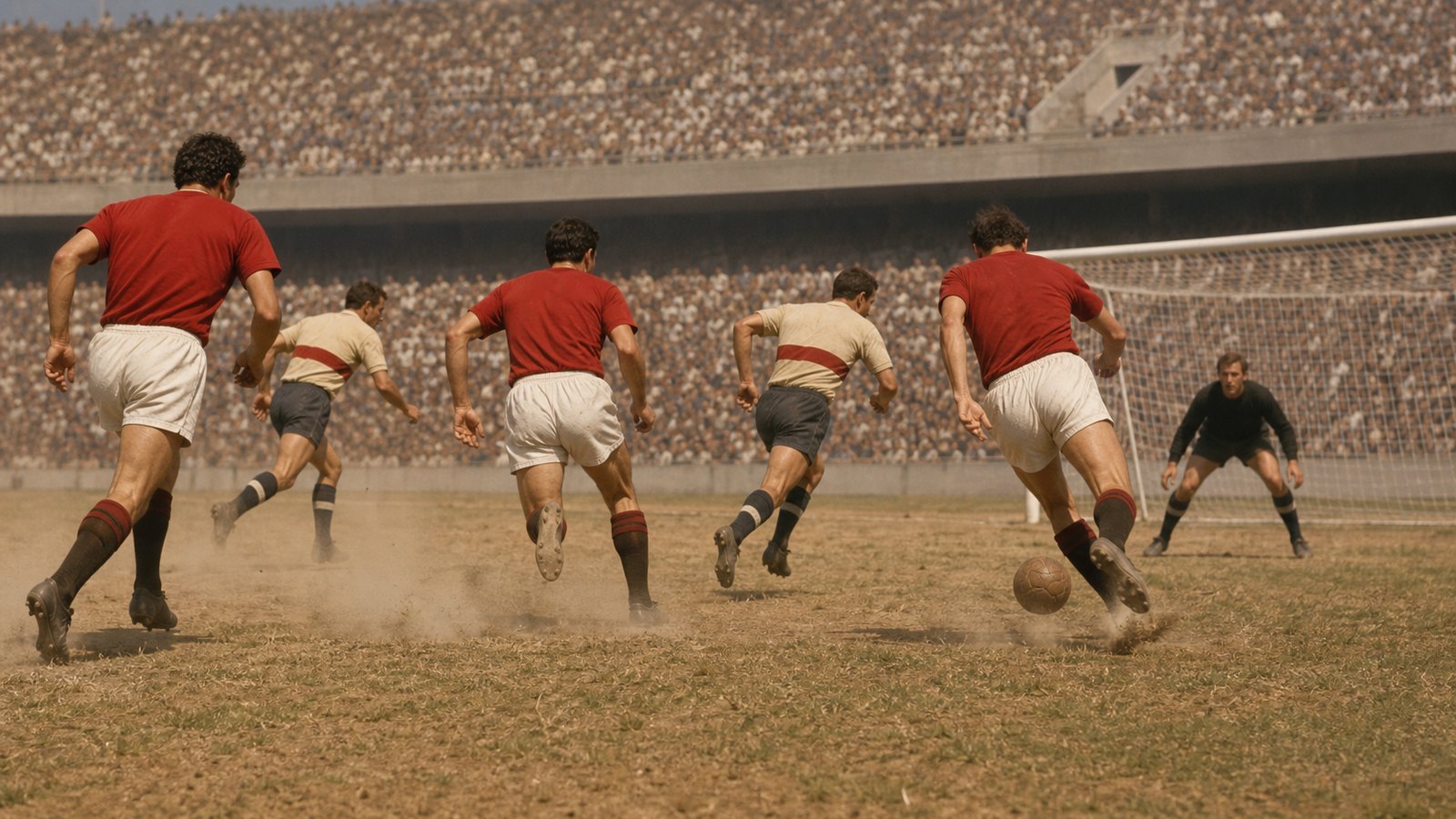
For fifteen minutes, the match remained scoreless. Then its first shape appeared with startling speed. Ballaman put Switzerland ahead in the 16th minute. Hügi scored a minute later. When Hügi struck again in the 23rd, the hosts led 3–0 and Austria seemed to be falling out of the World Cup before the first half had reached its midpoint.
A three-goal advantage normally allows the leading side to decide where risk belongs. Switzerland never received that quiet period. Wagner answered in the 25th minute. Alfred Körner scored in the 26th. Two minutes later Wagner struck again. Austria had erased 3–0 in about five minutes, and the score was level before Switzerland could build a defensive phase around its lead.
The sequence is easier to remember as arithmetic than to imagine as football. Each restart came while the previous celebration, instruction or mistake was still fresh. Defenders could not retreat into a stable block because another attack was already forming. Midfielders who might have slowed possession were working in oppressive heat while the emotional direction reversed with every goal. At 3–3, the match had used only 28 minutes.
The comeback was not yet complete. Ocwirk, Austria’s captain and central organiser, scored in the 32nd minute. Alfred Körner added another in the 34th. Austria had gone from three behind to 5–3 ahead in eleven minutes. The scoreboard had crossed four distinct states—Swiss command, Austrian rescue, parity and Austrian command—without granting either team time to live in any of them.
A penalty miss could not close the first-half ledger
Ballaman scored his second in the 41st minute, bringing Switzerland back to 5–4. Swiss goalkeeper Eugène Parlier then faced another crisis when Austria received a penalty in the 42nd minute. Alfred Körner had already scored twice, but the attempt did not become Austria’s sixth. A match with almost no resistance on the scoreboard briefly produced a missed spot kick instead.
Even that did not provide emotional closure before the interval. Minute conventions in old records can place individual events slightly differently, but the half-time total is not in dispute: nine goals, one missed penalty and a one-goal Austrian lead.
The 5–4 score concealed how little continuity remained. Switzerland had scored the first three and the last goal of the half. Austria had supplied five in between. Wagner and Alfred Körner had two each; Hügi and Ballaman had two each for the hosts. Four different players had braces before the teams entered the dressing rooms. Ocwirk’s goal was the only first-half interruption to that pattern.
The second half became a contest for the last reliable action
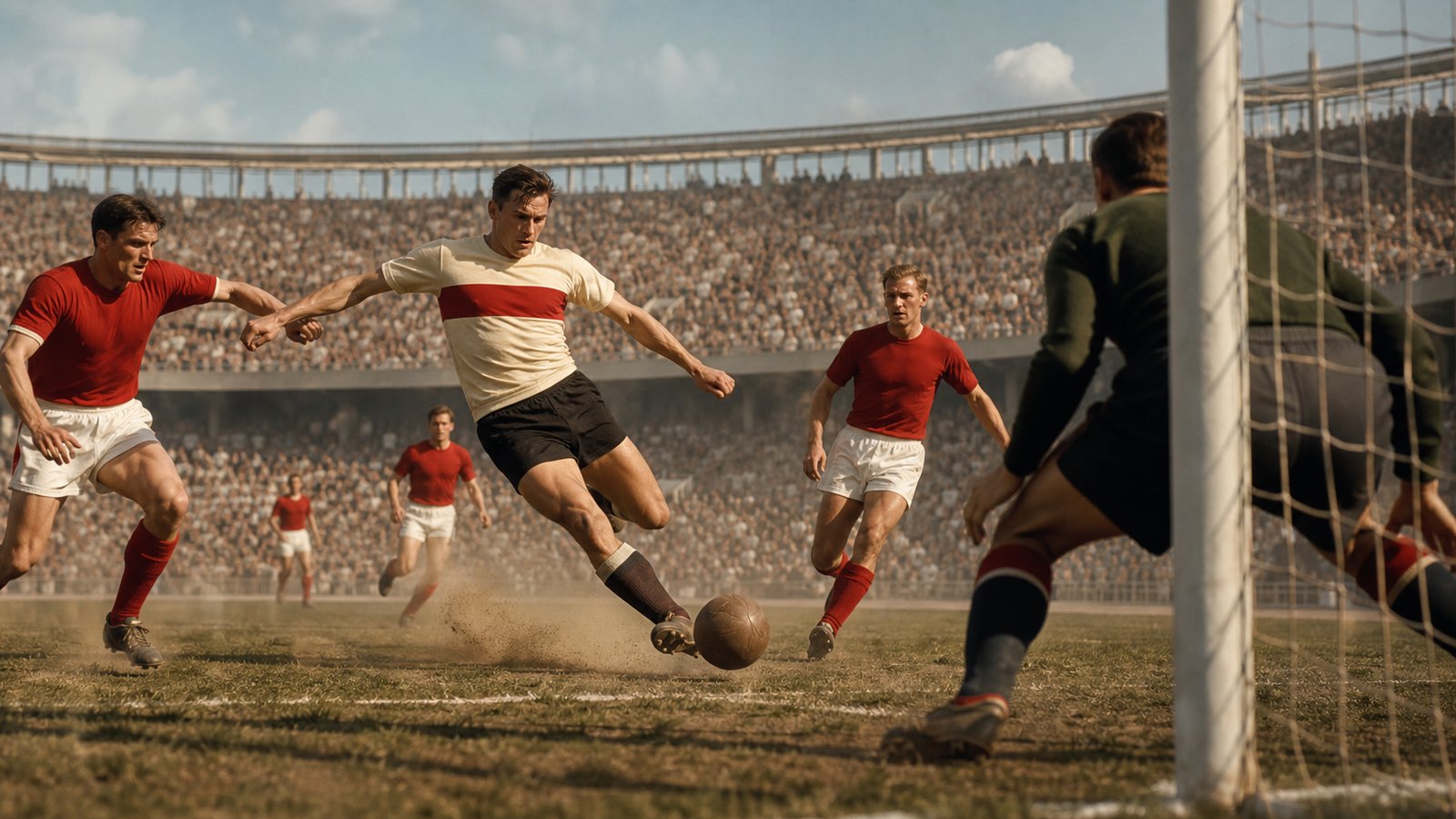
After nine first-half goals, the second period produced only three. “Only” is relative. Wagner completed his hat-trick in the 52nd minute and restored Austria’s two-goal margin at 6–4. Eight minutes later Hügi completed his own hat-trick, cutting the gap to one. The match now contained two hat-tricks, two other two-goal scorers and 11 goals with half an hour still available.
That remaining half-hour is the key to understanding the afternoon. The opening had been a cascade, but the finish became an endurance test. Switzerland needed one goal to force extra time. Austria needed to keep enough structure to prevent it. Every forward run carried the possibility of the twelfth goal and the physical cost of leaving space behind.
Probst supplied the final reliable action in the 77th minute. Austria’s leading scorer in the group stage made it 7–5. The timing feels almost restrained beside the opening half, yet it determined the record that survives: twelve goals, with no thirteenth in the final minutes. Probst’s finish separated the competitive question from the statistical spectacle. Switzerland could still chase, but Austria finally held a margin the match did not overturn.
The scorers tell their own compact story. Wagner scored three for Austria; Hügi scored three for Switzerland. Alfred Körner and Ballaman each scored twice. Ocwirk and Probst supplied one each. Twelve goals were distributed among six players, and the two hat-tricks landed on opposite sides. The spectacle had symmetry even though the result did not.
The record survived because the match was more than a total
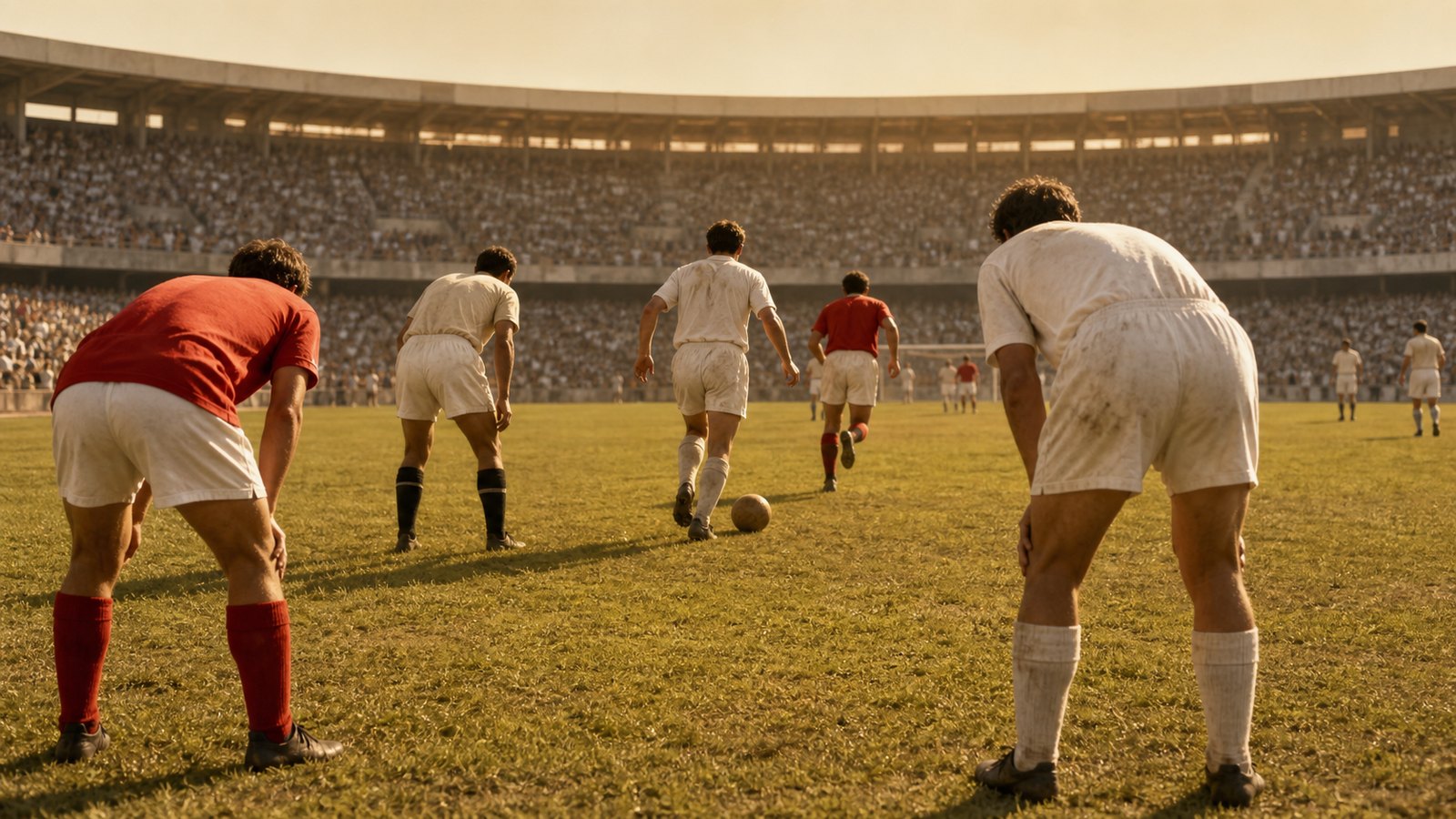
Austria advanced to face West Germany four days later in Basel and lost 6–1. They recovered to beat Uruguay 3–1 in the third-place match, securing Austria’s best men’s World Cup finish. Switzerland have not returned to a World Cup quarter-final since 1954; Austria have not gone beyond the last eight since that tournament either. The afternoon in Lausanne stands at the high point of both countries’ World Cup knockout histories.
The tournament around it was unusually rich in volatile matches. Hungary beat Brazil 4–2 in a quarter-final remembered for dismissals and disorder, while Hungary and Uruguay required extra time in a 4–2 semi-final. Earlier in the same competition, Hungary’s first seven minutes against Brazil had already shown how rapidly a knockout plan could disappear. Yet none of those matches reached twelve.
Calling Austria–Switzerland a defensive failure is accurate but incomplete. The goal order made it a sequence of psychological emergencies. Switzerland’s 3–0 lead disappeared almost immediately. Austria’s five-goal reply still left only a one-goal half-time margin. A missed penalty did not calm the scoring. Two hat-tricks did not decide the game until Probst added the final goal.
The heat is therefore not decorative background, and the record is not merely trivia. Together they explain the match’s peculiar rhythm: quick decisions, shrinking recovery time and a scoreboard that refused to stay useful. The 7–5 survives because every number contains a reversal. Lausanne did not produce one comeback. It produced a succession of leads that expired before the players could trust them.
Sources
FIFA World Cup archive; Rec.Sport.Soccer Statistics Foundation 1954 World Cup match record; World Football Index; Historical Soccer match archive.