
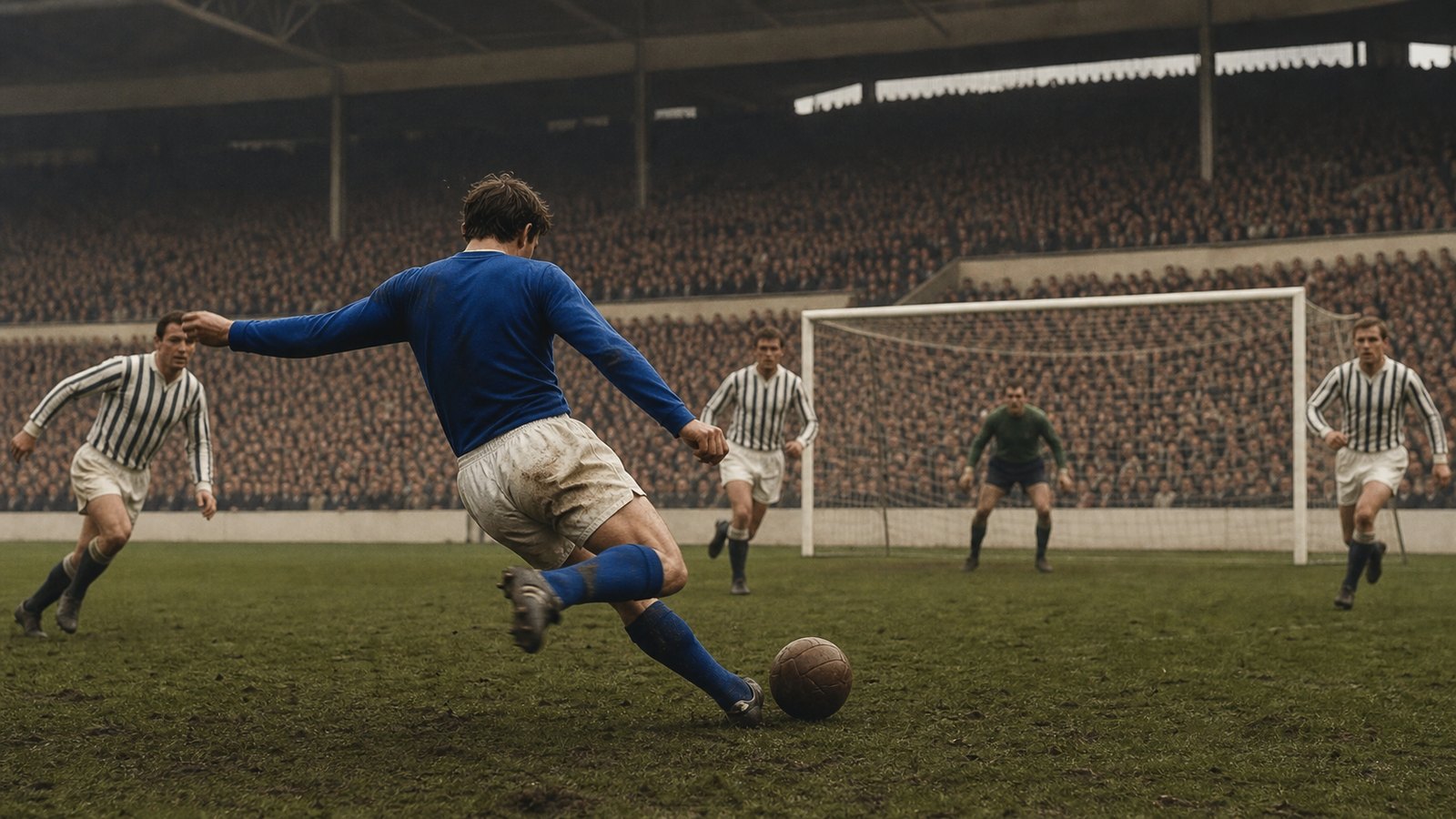
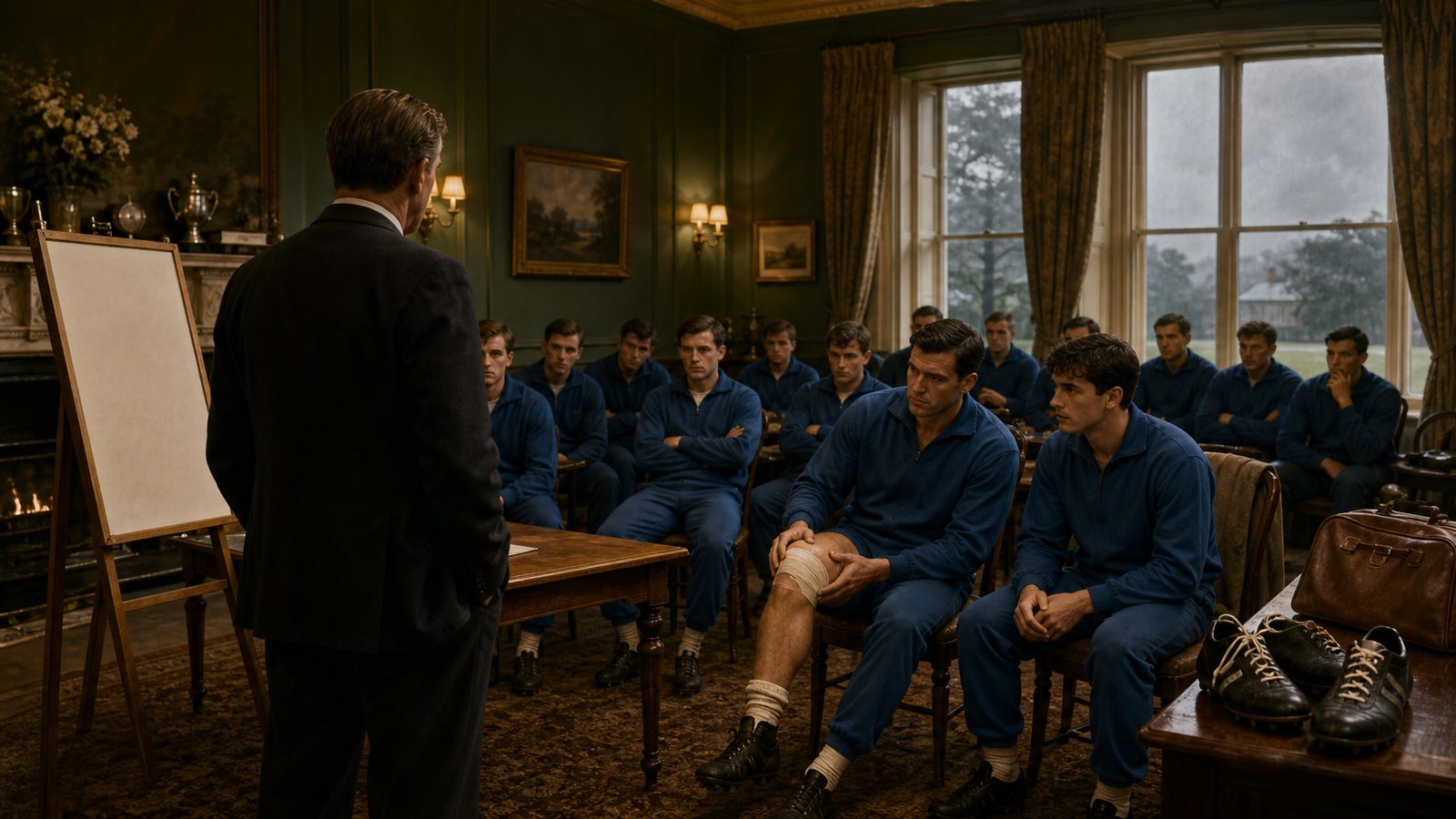
On Friday morning at Selsdon Park Hotel, Harry Catterick told two Everton players they would not start the FA Cup final. Sandy Brown lost the right-back place to Tommy Wright. Fred Pickering lost the centre-forward place because his knee could not be trusted for ninety minutes at Wembley. The second decision put Mike Trebilcock, a slight Cornish forward with only one previous appearance in that season’s cup run, into the biggest match of his career.
Twenty-four hours later, Sheffield Wednesday led 2–0 and the selection looked like a footnote to an Everton defeat. Then Trebilcock scored twice in five minutes. Derek Temple added a third, and a final that had seemed to confirm Wednesday’s control became Everton’s first FA Cup victory for thirty-three years. The useful way to remember the match is through the risks that preceded the goals: a damaged knee, a manager unwilling to carry an injured star, and a replacement whose first job was to justify his name on the team sheet.
The final began with a name left out
Pickering’s absence was not a dramatic surprise invented on match day. Knee trouble had followed him through Everton’s run. He returned for the second replay against Manchester City and scored in a 2–0 win at Molineux, but Catterick left him out of the semi-final against Manchester United. Pickering admitted that he could have cried when told he would miss that match, though he also understood the calculation: if the knee failed, Everton would effectively be reduced to ten men.
Trebilcock played in the semi-final while Alex Young moved to centre-forward. Colin Harvey’s 79th-minute goal beat Manchester United 1–0 at Burnden Park and took Everton to Wembley. Pickering still hoped to recover for the final. Temple later recalled that the players could see he was struggling and that Wembley’s turf and the strain of the occasion made the risk worse. Catterick stayed with Trebilcock.
The choice disturbed the hierarchy of the team. Pickering was the established scorer, a powerful finisher nicknamed “Boomer.” Trebilcock was smaller, lighter and far less proven. Temple’s memory of him is specific rather than romantic: he hit the net in training, he was quick enough to seize an opening, and his finishing made him likely to score if the chance came. Catterick was not selecting a symbolic underdog. He was exchanging Pickering’s damaged certainty for a healthy player with one narrow, valuable gift.
Four minutes made Everton chase the match
Everton arrived as favourites and with a remarkable cup record: they had not conceded in the competition. Sheffield Wednesday had travelled through every round away from home. At Wembley on 14 May 1966, that contrast lasted four minutes. Jim McCalliog met David Ford’s square pass, and his shot took a deflection that sent it beyond Gordon West. A defence that had crossed the entire cup campaign untouched was behind almost as soon as the final had settled.
Everton did create first-half pressure. Alex Young had an effort disallowed for offside and appealed for a penalty after contact with goalkeeper Ron Springett. Neither moment changed the score. Wednesday carried the lead to half-time, then enlarged it in the 57th minute when Ford made it 2–0. The timing was brutal: Everton had spent most of an hour trying to undo an early accident, only to find the deficit doubled.
Everton needed the replacement forward to do more than participate. They needed him to finish immediately.
Trebilcock used five minutes to remove two goals
The first reply came in the 59th minute. Temple directed the ball down in front of Trebilcock, who struck it first time toward the bottom corner. Springett was left reaching across the goal. Everton had scored within two minutes of going 2–0 down, before Wednesday could fully arrange themselves around the larger lead.
Five minutes later, a free-kick outside the penalty area created a different test. Alex Scott sent the ball toward the far side, where Brian Labone challenged among defenders. Trebilcock met the loose delivery from about fifteen yards and hit a right-footed half-volley that swerved beyond Springett. His two finishes were not copies: the first rewarded his run onto Temple’s touch; the second demanded balance and control while the ball arrived out of a crowded aerial contest.
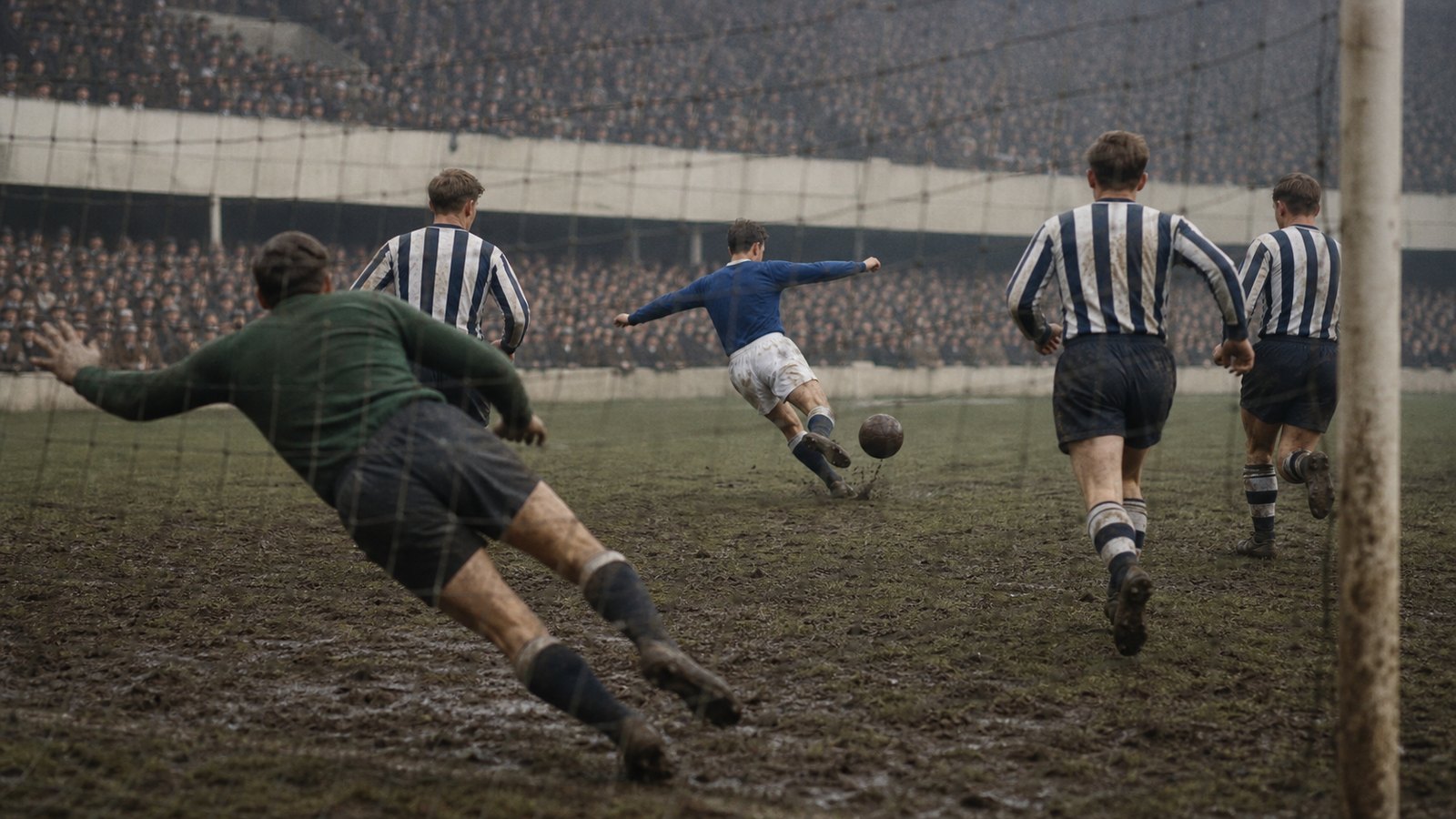
The match report reduces the transformation to three timestamps—57, 59 and 64—but the spacing explains its force. Wednesday’s second goal should have opened the comfortable phase of the final. Instead, it started a seven-minute passage in which their control disappeared. Trebilcock did not slowly bring Everton back. He denied Wednesday enough quiet possession to make the score feel secure.
Temple moved inside before the mistake arrived
At 2–2, Everton no longer needed only rescue. Both sides had a final to win. Temple had spent much of the afternoon against Wilf Smith on Everton’s left, but he began wandering into an inside-right position. Smith did not follow him across. The movement mattered before anyone mishandled the ball: it placed Temple where he could attack the central space rather than wait for another winger’s service.
Colin Harvey sent a long ball forward. Gerry Young, playing as Wednesday’s last defender, failed to control it cleanly. Temple had already been running toward him in case the touch went wrong. He later described the habit as one repeated throughout a match even though the ball might break free only once in twenty attempts. On this occasion it did.
Temple was away with Springett advancing. He looked up, judged that the goalkeeper could not cover every corner, and struck early from the edge of the penalty area. The ball went low beyond Springett in the 74th minute. Temple would joke that if people thought he shot too soon, it was fortunate he mishit it so well. His account also strips the winner of inevitability: anticipation created the race, a defensive error opened it, and a quick decision ended it.
Wednesday still pushed after falling behind. Everton used the corner flag and the remaining minutes rather than finding a fourth. The recovery therefore occupied sixteen minutes, from Trebilcock’s first goal to Temple’s finish, but the match remained alive until the whistle. Like Wimbledon’s Wembley final against Liverpool twenty-two years later, its memory rests on specific actions under pressure rather than on the reputation each side carried into the stadium.
The cup took a day to feel real
Captain Brian Labone collected the trophy from Princess Margaret and came down the tunnel asking a reporter to pinch him so he would know it was true. Catterick, still remembering angry supporters confronting him after a league defeat at Blackpool earlier in the season, offered a sharper line: “They’re not kicking me now.” Pickering appeared in the photographs with the pain of a man whose absence had helped make another player famous.
Temple remembered less of the medal ceremony than he expected. The euphoria blurred the evening banquet at the Grosvenor House Hotel and the reunion with the players’ wives. For him, victory became tangible the next day. Everton travelled by train to Allerton and then by bus toward St George’s Hall. Supporters filled streets and windows. A team that had last brought the FA Cup to Goodison Park in 1933 returned with it in 1966.
Trebilcock’s afternoon became the obvious tale of the unexpected hero, but it was never detached from Pickering’s knee or Catterick’s decision. The injured forward had contributed during the run and wanted desperately to play. The replacement had shown his finishing in training but had little Wembley history to recommend him. The final joined their stories without distributing its reward equally.
Everton were the second side after Blackpool in 1953 to recover from two goals down and win an FA Cup final without extra time. That record gives the comeback its place in competition history. The team-sheet story gives it its human shape. On Friday, one forward learned that his body had cost him the final. On Saturday, the man selected in his place needed five minutes to score twice. By Sunday, Liverpool’s streets were full, and the choice no longer looked like a gamble at all.
Sources
Everton FC Heritage Society, Derek Temple and the Story of Everton’s 1966 Cup Glory; Everton Encyclopedia, match record for Everton v Sheffield Wednesday, 14 May 1966.