
At about 12:10 on Sunday, 20 March 1966, guards inside Westminster Central Hall found an empty display case. The rare stamps around it were still there. The object missing was the Jules Rimet Trophy, the prize England was supposed to present to the winners of the World Cup four months later. A locked cabinet, uniformed officers and an insurance policy had not kept football’s most recognisable object in the building.
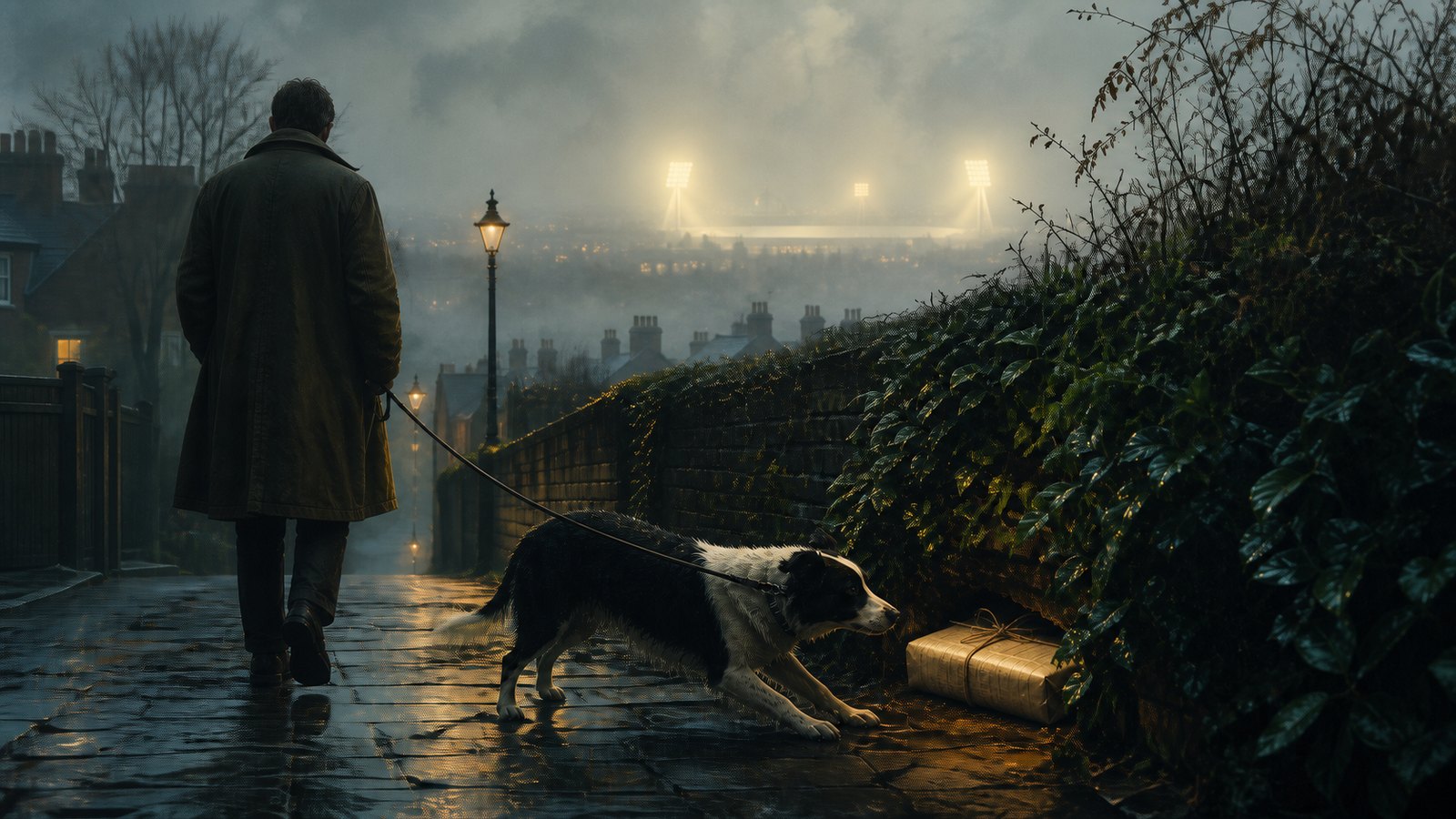
The recovery did not begin with a master detective or an elaborate police operation. One week later, a black-and-white collie called Pickles pulled toward a newspaper parcel during an ordinary walk in south London. Inside was the trophy. The contrast explains why this episode has survived as more than a crime story: football’s grandest symbol disappeared from a formal exhibition and returned because a dog stopped at a hedge.
A silver-gilt prize among £3 million of stamps
The Football Association had received the trophy in January, ahead of the tournament scheduled for July. It normally remained at the FA’s Lancaster Gate headquarters, but the Stanley Gibbons stamp company obtained permission to include it in the Stampex exhibition at Westminster Central Hall. The show opened on 19 March. Its organisers placed the cup in a glass cabinet as the sporting centrepiece of an event otherwise built around rare stamps.
The security arrangements looked serious on paper. The trophy was insured for £30,000 even though its official value was listed as £3,000. Two uniformed officers covered the building around the clock, with plainclothes officers added during the day. When the exhibition was open, more guards stood near the cabinet. Yet the coverage was a pattern of patrols rather than an unbroken pair of eyes on the prize.
Sunday altered the building’s rhythm. Westminster Central Hall was also used for Methodist services, and the exhibition area was closed. Around noon, guards began a circuit. Roughly ten minutes later they found that a rear door and the cabinet had been forced. A wooden bar had been removed from the door, the cabinet’s padlock was gone, and the trophy had left by the same route. No guard reported hearing the break-in.
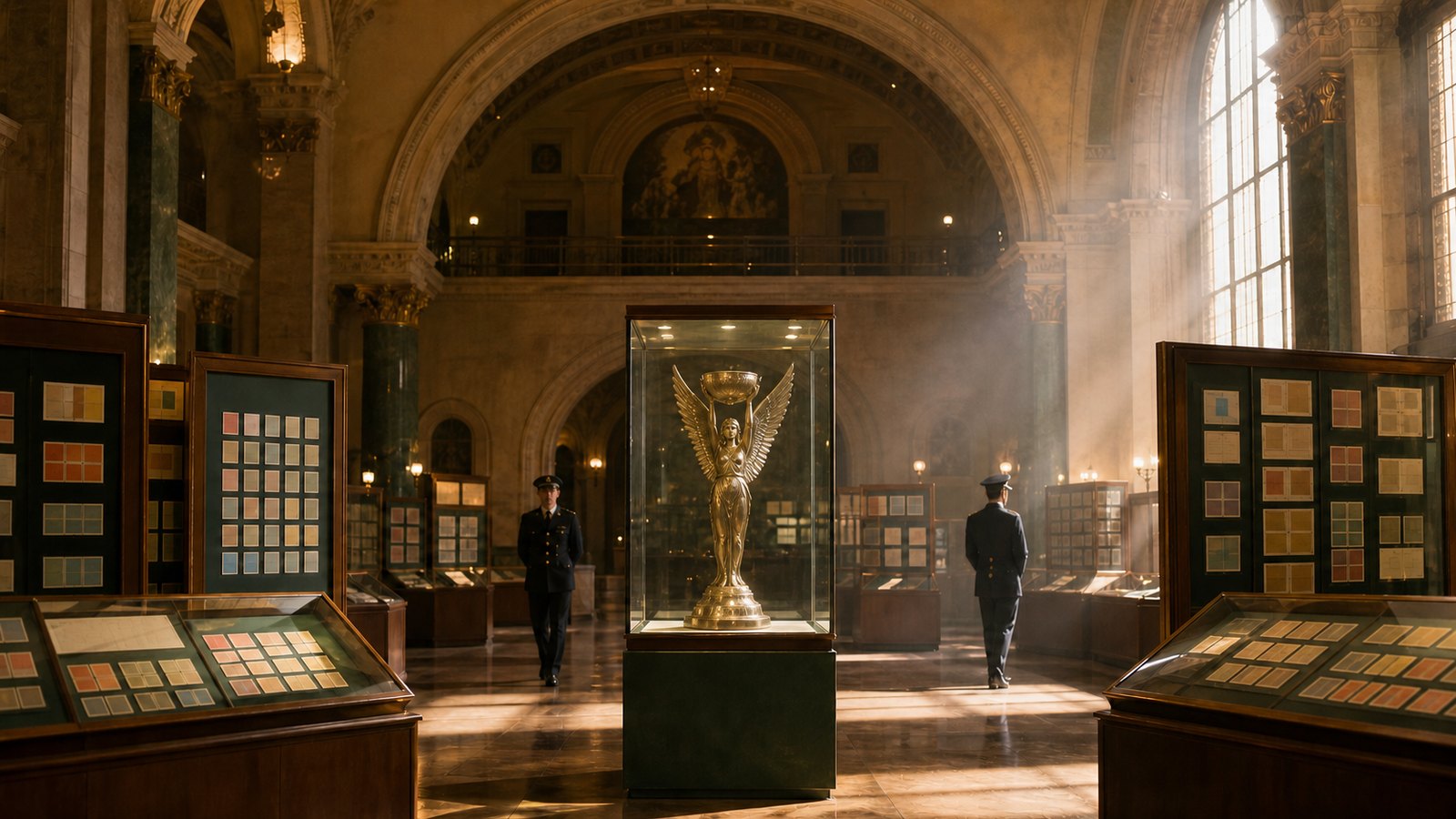
The choice of target made the theft stranger. According to contemporary accounts later gathered around the case, the stamps in the hall were worth about £3 million. The intruder ignored them. What mattered was an awkward, famous cup whose value came from recognition rather than melt weight. That decision ensured the disappearance would become international news before the tournament had even begun.
The ransom parcel carried a piece of the cup
Scotland Yard’s Flying Squad took charge. Witness descriptions did not align neatly, and press reports added their own version of the suspicious man seen in the building. Then the case shifted from a silent break-in to a ransom plot.
On Monday, 21 March, Football Association chairman Joe Mears received a telephone call telling him to expect a parcel. It arrived at his home and contained the removable lining from the top of the trophy. That physical detail proved the sender was connected to the missing object. The accompanying note demanded £15,000, initially specifying £1 and £5 notes, and threatened that the trophy would be melted if police or newspapers were told.
Mears contacted the police. Detective Inspector Charles Buggy prepared a suitcase in which ordinary paper sat between real banknotes at the top and bottom. A caller using the name “Jackson” arranged a meeting at Battersea Park. Buggy posed as an assistant and insisted that he see the trophy before releasing the money.
The exchange became a pursuit. “Jackson” noticed police vehicles, left Buggy’s car, returned, then jumped from the moving vehicle and ran. Buggy caught him in a garden. Police identified him as Edward Betchley, a used-car dealer with previous convictions. Betchley said he was only a middleman for someone he called “The Pole.” He was later convicted of demanding money with menaces, but the theft itself remained much less tidy than the arrest.
Pickles stopped at a parcel in Beulah Hill
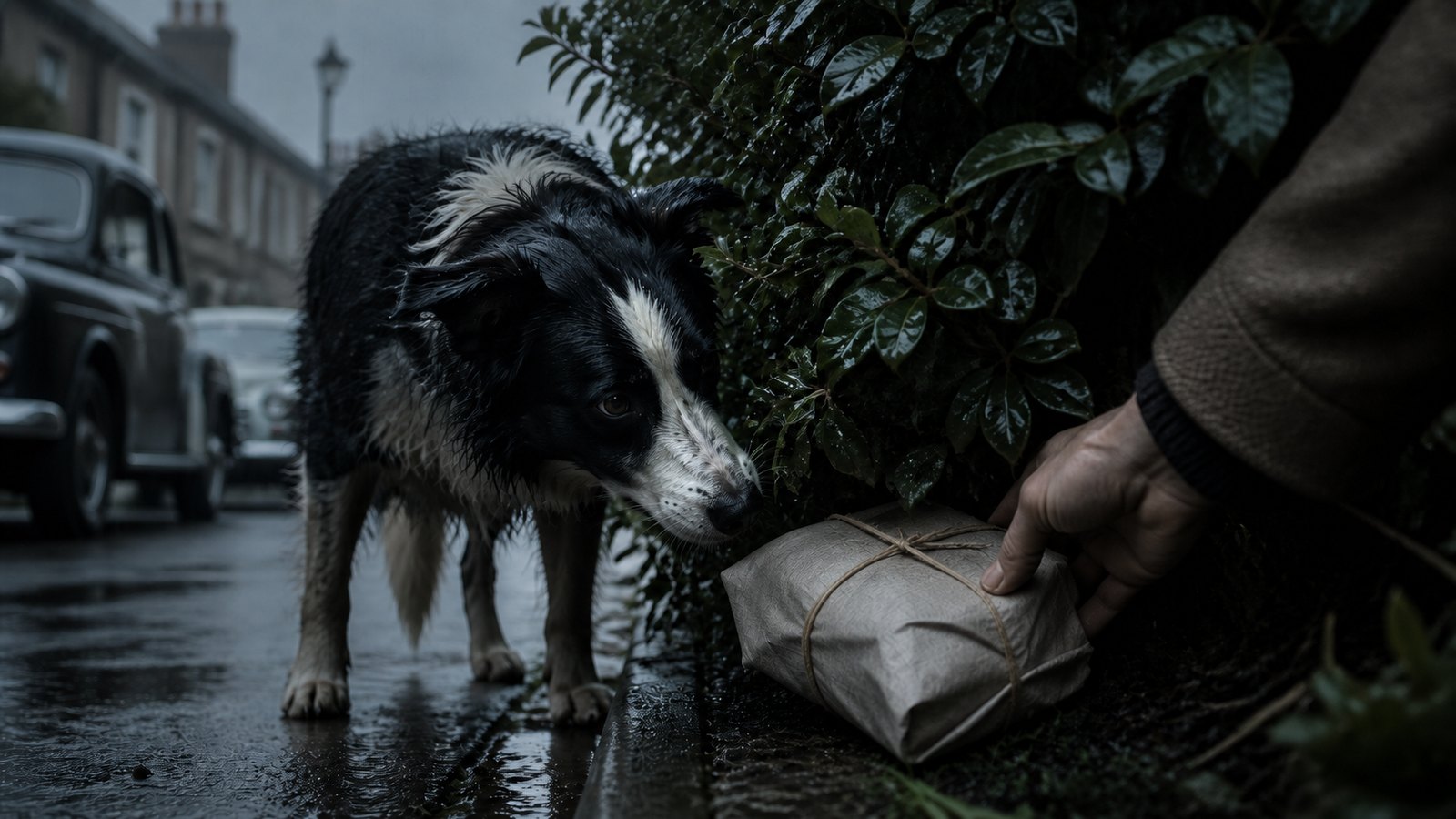
Seven days after the cabinet was opened, David Corbett took Pickles out near his home in the Beulah Hill area of south London. Pickles was a four-year-old mixed-breed collie. During the walk, he became interested in a parcel lying beneath a hedge near Corbett’s house. It was wrapped in old newspaper and tied with string.
Corbett opened it. The shape was unusual, but the engraved names around the base removed the doubt: the parcel held the Jules Rimet Trophy. He took it to Gipsy Hill police station. Officers then moved Corbett and the cup to Cannon Row, where the Football Association’s Harold Mayes identified it.
The finder did not instantly pass from helpful citizen to national hero. Police briefly treated Corbett as a possible suspect and checked his account. The caution was understandable: the most wanted object in British sport had appeared beside his route home, and the ransom inquiry was still active. Corbett had an alibi. On the following morning, police announced that the cup was safe.
The trophy remained evidence until 18 April before being returned to the FA. That delay placed an odd bureaucratic pause between discovery and celebration. England still had a World Cup to organise, while its trophy sat inside a criminal case file.
A dog entered the World Cup’s public ceremony
Pickles became the face of the recovery because he gave the story a clean ending that the investigation could not. The wider network behind the theft was never conclusively established. Betchley’s “Pole” stayed out of reach. The dog, by contrast, could be photographed beside the object he had found, rewarded in public and folded into the tournament’s festivities.
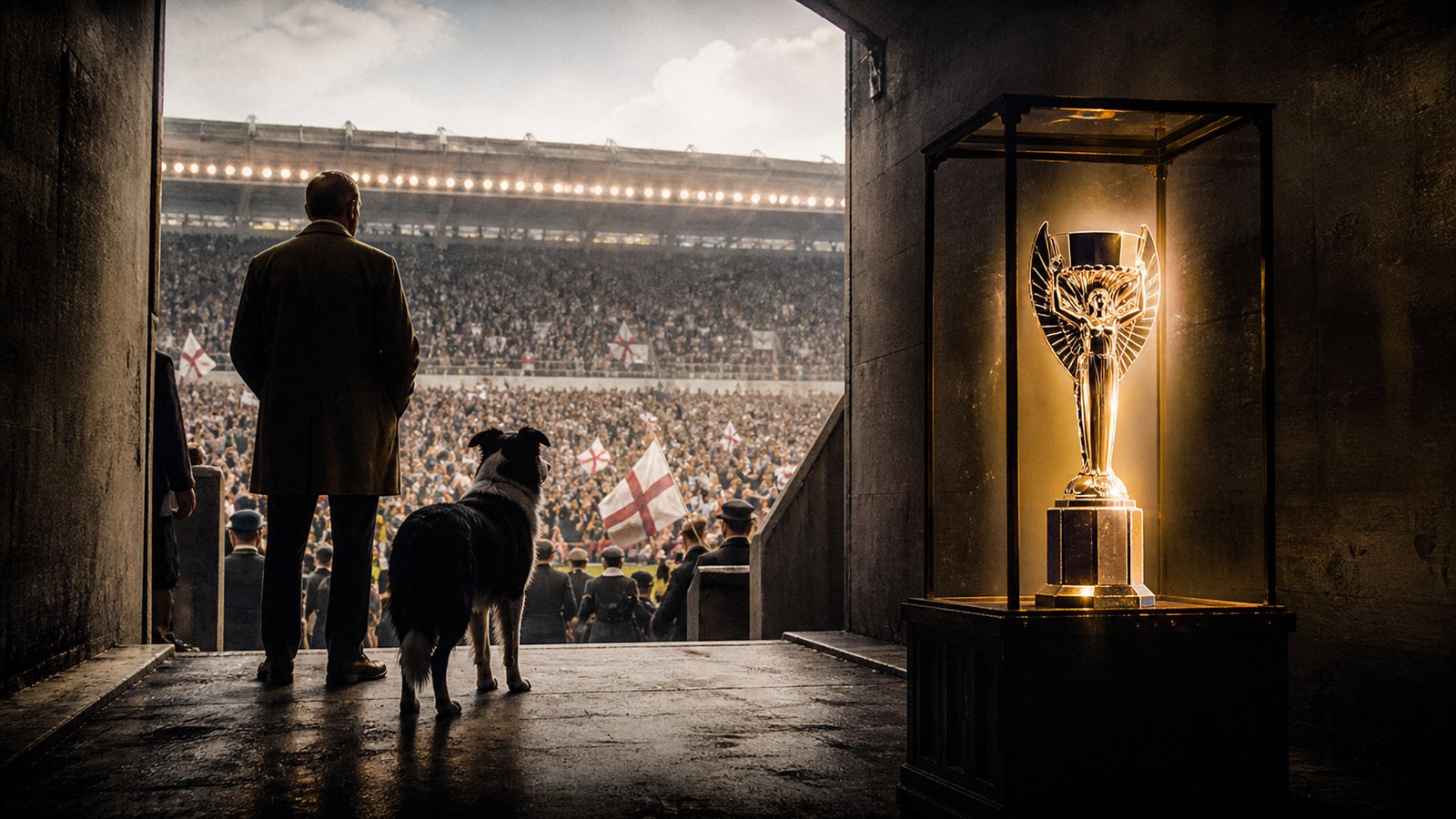
He received a silver medal from the National Canine Defence League and appeared on television. After England beat West Germany in the final on 30 July, Pickles was invited into the celebrations, while Corbett attended the players’ banquet. Accounts of the rewards differ in their exact breakdown, but Corbett received several thousand pounds—enough for the recovery to alter his family’s circumstances as well as football folklore.
The prize had acquired a second identity. Before March, it represented the chain of World Cup winners dating back to 1930. After March, it also carried the marks of a forced cabinet, a ransom note and seven days under concealment. When Bobby Moore lifted it at Wembley, viewers were seeing an object that had already produced one national drama that year.
The replica outlived the recovered original
The FA commissioned a replica for public appearances so the original could be protected. That precaution produced another twist. Brazil won the Jules Rimet Trophy permanently after its third World Cup victory in 1970. In December 1983, the original was stolen again, this time from the Brazilian football federation’s headquarters in Rio de Janeiro, and it was never recovered.
The English replica survived. It later appeared at auction and was acquired by FIFA in 1997. Pickles’ collar also endured as a museum object. The physical remnants of the 1966 episode therefore became a replica cup and a dog’s collar, while the authentic trophy disappeared.
That reversal sharpens the story’s appeal. Security officers, locks, insurers, detectives and a prepared ransom suitcase all belonged to the official response. None located the cup. Pickles had no idea what the parcel represented. He simply noticed something that did not belong beneath a hedge.
Football often protects its important objects with ceremony: velvet, glass, uniforms, plinths and rehearsed presentation. In March 1966, those signals also advertised exactly what was worth taking. The trophy came back through the least ceremonial route imaginable—newspaper, string, wet ground and a curious dog on a routine walk. Four months before England’s players carried the cup around Wembley, Pickles had already made its survival feel improbable.
Sources
FIFA; The New Yorker, “The World Cup” by Alastair Reid; Wikipedia, “1966 theft of the Jules Rimet Trophy” and “Pickles (dog)”.