
The first shock was not the scoreline. It was the shape of the pitch once Brazil started to breathe. Sweden scored first in the 1958 World Cup final, and for a few minutes the old order still looked believable: European hosts in front, the crowd alive, Brazil asked to answer a final rather than decorate it. Then the answer stopped looking like improvisation. It came from where the players stood, from how quickly the front line could stretch the field, and from how calmly a team full of individual brilliance accepted a shared geometry.
The familiar memory is Pelé at seventeen, a boy genius arriving early enough to make history seem personally chosen. That memory is true, but it is too small. Brazil’s 5-2 win over Sweden was also the moment when 4-2-4 became visible to the world as a working tournament language: four defenders giving the side stability, two midfielders carrying enormous responsibility, and four attackers making the opponent defend the full width of fear. The formation did not win because numbers on a blackboard are magic. It won because Brazil made those numbers move.
The final began with Sweden asking a hard question
On 29 June 1958, at Råsunda Stadium in Solna, Sweden did the one thing that could have turned Brazil’s freedom into anxiety. Nils Liedholm scored in the fourth minute, putting the hosts ahead before Brazil had settled into the final’s rhythm. That early goal matters because it prevents the story from becoming a parade. Brazil had to chase a World Cup final away from home against a European side with the first punch already landed.
The response came quickly. Vavá equalised in the ninth minute and scored again before half-time. Brazil went from crisis to command not by throwing men forward without order, but by keeping enough rest-defense behind the attack for the next wave to feel possible. Sweden had shown the door; Brazil showed why a door can become a corridor when the spacing is right.
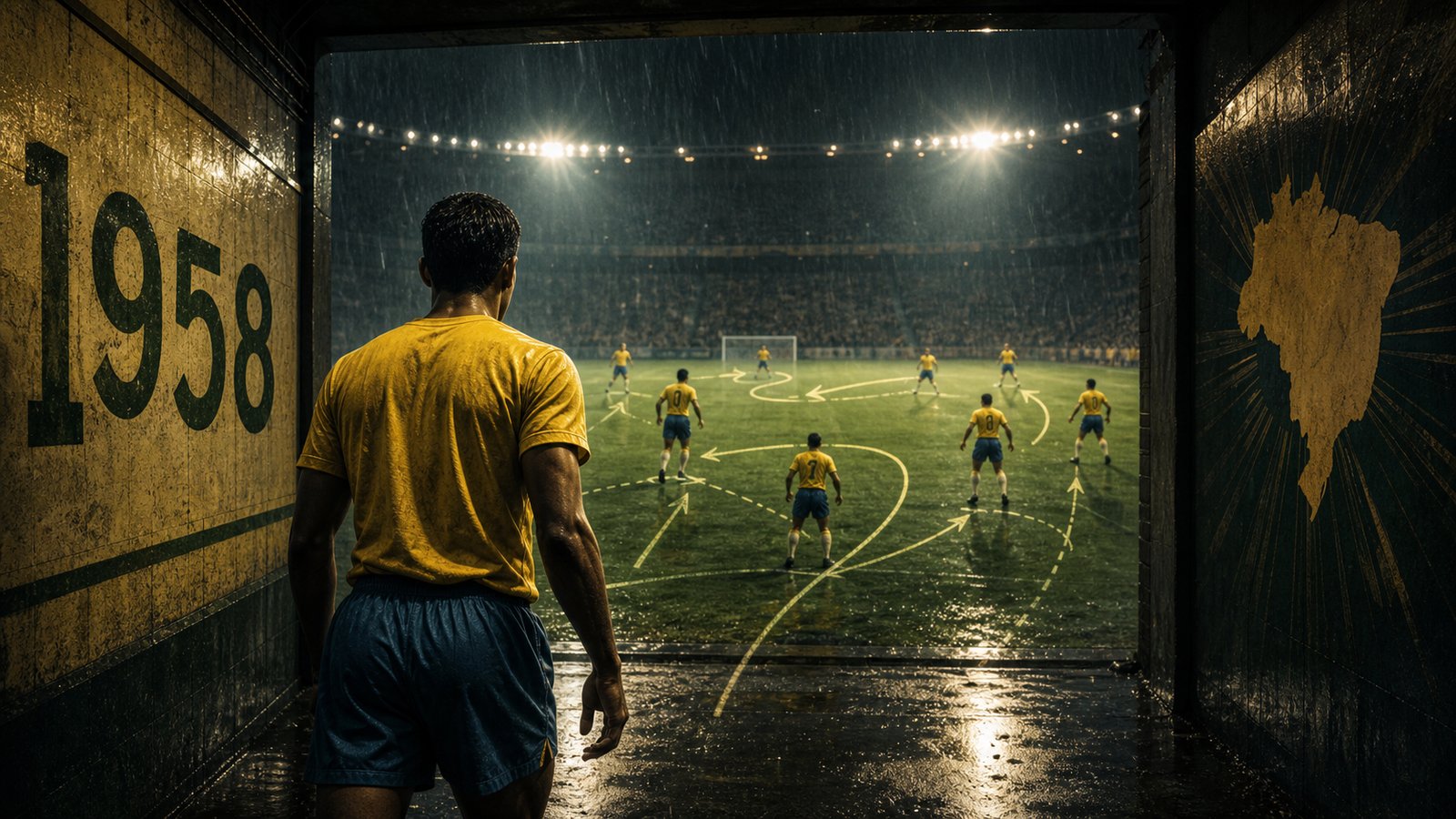
4-2-4 was a risk-management system, not a carnival costume
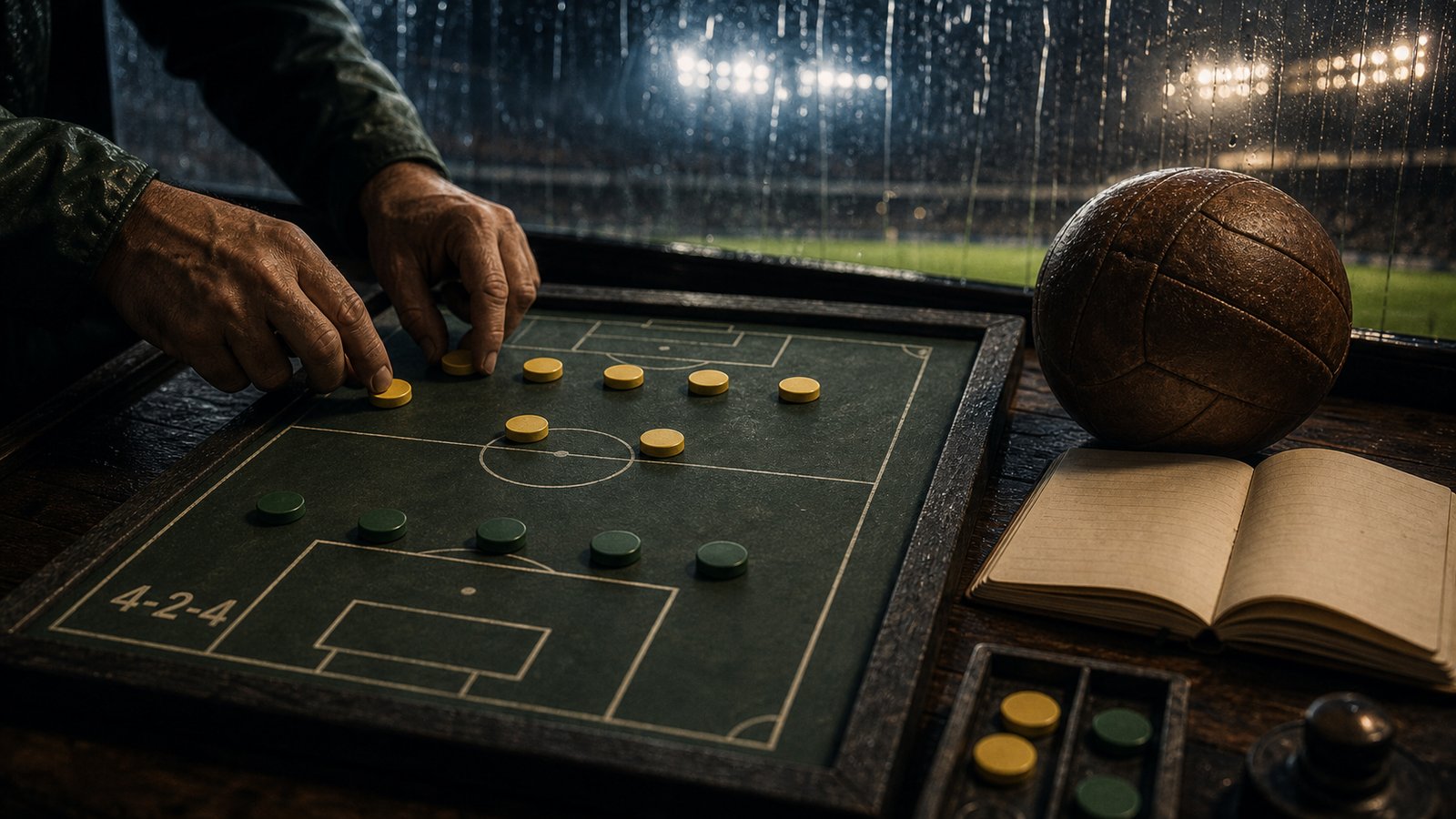
The phrase 4-2-4 can sound naive from a modern distance. Four forwards appears almost reckless when viewed through later eras obsessed with midfield control. In Brazil’s hands, though, the shape was not a refusal of structure. It was a way to distribute risk. The back four protected the team from being pulled apart. The two central midfielders had to read danger early and feed the attack before the opponent could reset. The four ahead of them were not merely waiting for service; they were creating angles, dragging markers, and turning each loose ball into a new decision for Sweden.
That is the part the myth often flattens. The team did not simply put gifted forwards on the field and ask them to solve everything. It gave those forwards a platform. A winger could stay high because a full-back and covering defender had reference points behind him. A centre-forward could attack the six-yard box because another forward could arrive in the next lane. The shape made individual acts repeatable enough to survive tournament pressure.
Pelé became the symbol because the system gave him scenes
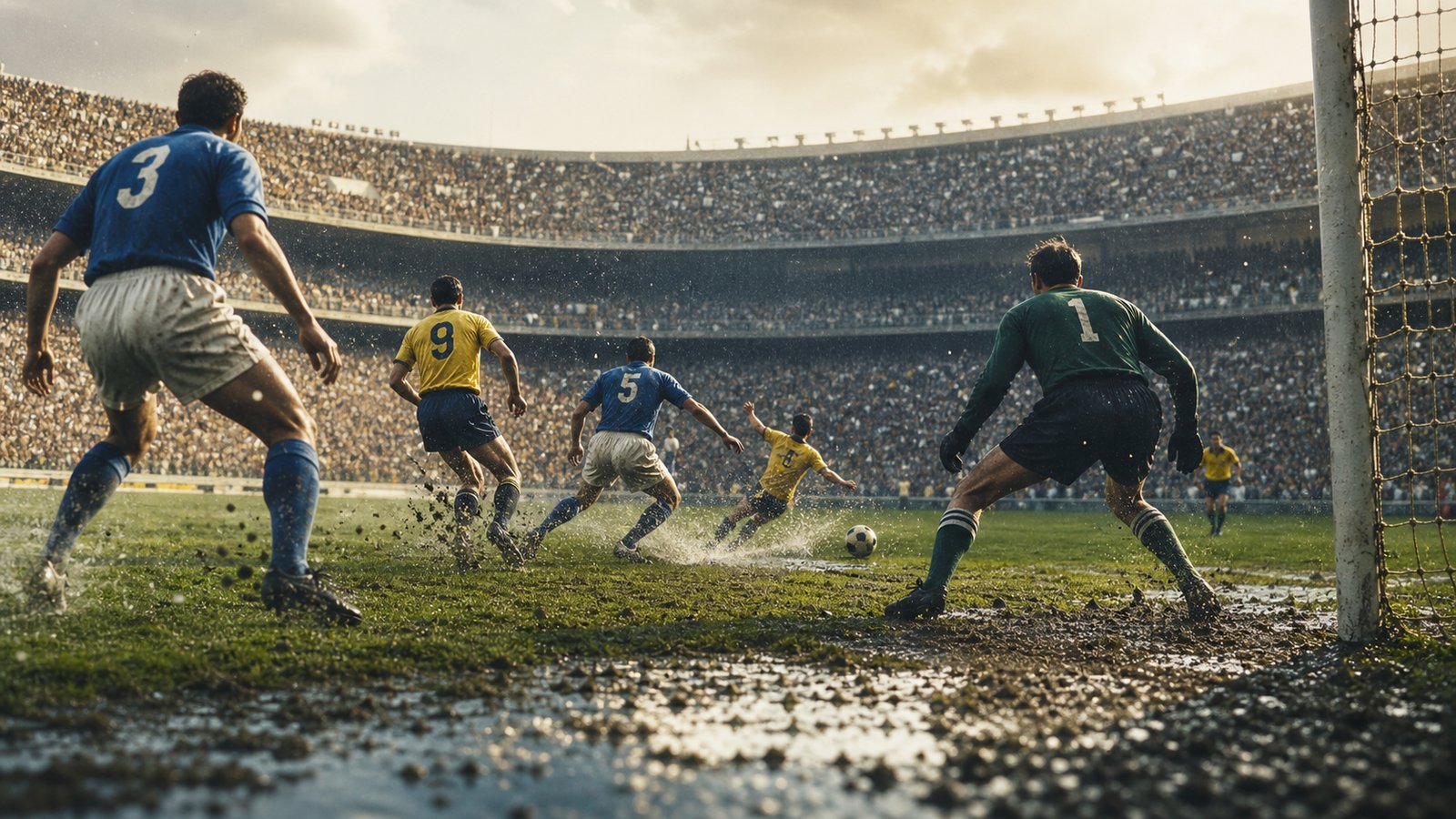
Pelé was seventeen in Sweden, and the final gave him the kind of images that become football inheritance. He scored twice, including the famous second-half goal that has lived for decades as proof of impossible calm: the ball lifted, the defender beaten, the finish delivered before the moment had time to become doubt. The danger in retelling it is to make the goal float outside the team that produced it.
Brazil’s structure created the scene before Pelé completed it. Sweden’s defensive line had been stretched by repeated wide and central threats. Vavá’s first-half goals had already forced the hosts to respect the penalty area. Garrincha’s dribbling threat demanded attention outside the frame. Didi’s passing and game-management kept the rhythm from turning wild. Pelé was not less extraordinary because the system helped him; he was more frightening because the system kept delivering him moments worth deciding.
Vavá and Zagallo explain why the score was not just genius
If the final were only a Pelé story, the score would be harder to understand. Vavá scored twice before the break, converting Brazil’s early recovery into scoreboard pressure. Zagallo added the fourth in the second half, a reminder that the side’s attacking power was spread across roles rather than concentrated in one headline. Sweden pulled one back through Agne Simonsson, but by then the game had already become a demonstration of different speeds: Sweden could still play, while Brazil could change the pitch’s shape between one phase and the next.
The names matter because they keep the article honest. Pelé supplied the emblem. Vavá supplied the immediate answer. Zagallo supplied the proof that the far side of the attack also carried consequence. Didi conducted large parts of the rhythm. Garrincha forced the kind of one-against-one anxiety that changes a full-back’s body shape before the ball even arrives. A system with only one star is a spotlight; Brazil had built a stage.
The first Brazilian title changed the direction of authority
Brazil had carried a different kind of memory into 1958. The 1950 defeat to Uruguay at the Maracanã had become a national wound, and another final could have tightened that wound rather than healed it. Winning in Sweden did not erase 1950; it changed what could be built on top of it. Brazil became world champion for the first time, and it did so in Europe, in a tournament where the final’s facts were too loud to ignore: 5-2, five Brazilian goals after falling behind, and a teenage forward becoming the youngest scorer in a World Cup final.
That last detail is why the victory still feels young. The old football map did not vanish in one afternoon, but its centre of gravity moved. Brazil showed that an international team from South America could travel, absorb a final’s first blow, and then make European opposition solve a problem it had not fully seen before. The authority was no longer only tactical respectability in a European accent. It could speak Portuguese, widen the field, and still be disciplined.
The lesson was copied badly because the movement was the real point
After a famous tournament, numbers are easier to copy than habits. A coach can write 4-2-4 on a board in seconds. The harder work is teaching when the full-back holds, when the winger stretches, when the inside forward drops, when the midfield pair must delay rather than chase, and when the team can gamble because the next player has already covered the failed gamble. Brazil’s 1958 lesson was not that four forwards automatically overwhelm opponents. It was that attacking abundance needs a safety net to remain brave.
That is why the final still matters beyond nostalgia. It sits at the meeting point of joy and calculation. The images are joyful: yellow shirts, quick feet, a teenager lifting the game into myth. The mechanism is colder: spacing, repeatable lanes, fast recovery, enough defensive structure to let imagination survive mistakes. Brazil did not choose between art and system. It made the system carry the art.
Brazil’s 5-2 was a future arriving early
The cleanest way to misunderstand Brazil 1958 is to call it innocence. The football was beautiful, but it was not innocent. It carried design. It carried the memory of a previous World Cup wound. It carried the burden of a final that began with the host nation scoring first. What followed was not a carefree response; it was a team using a new attacking shape with enough confidence to turn pressure into rhythm.
That is the real power of the match. Brazil did not merely win a trophy. It gave world football a picture of how attacking numbers, collective spacing, and individual genius could belong to the same sentence. Pelé became the face because faces survive better than formations. But behind the face was the shape, and behind the shape was the idea that beautiful football could be engineered without losing its beauty.
Sources
- FIFA, 1958 FIFA World Cup Sweden tournament archive
- RSSSF, World Cup 1958 full results and final lineups
- Encyclopaedia Britannica, Pelé biography
- Jonathan Wilson, Inverting the Pyramid