
Deportivo La Coruna’s 2000 La Liga title still feels like a glitch in the Spanish football order, but it was not a lucky season floating outside history. Super Depor became possible because a coastal club built a serious competitive machine around recruitment, continuity, Riazor pressure and the confidence to challenge institutions that usually treated the table as their private property. The title did not come from one superstar dragging a small side into sunlight. It came from a squad whose parts made each other harder to play against.
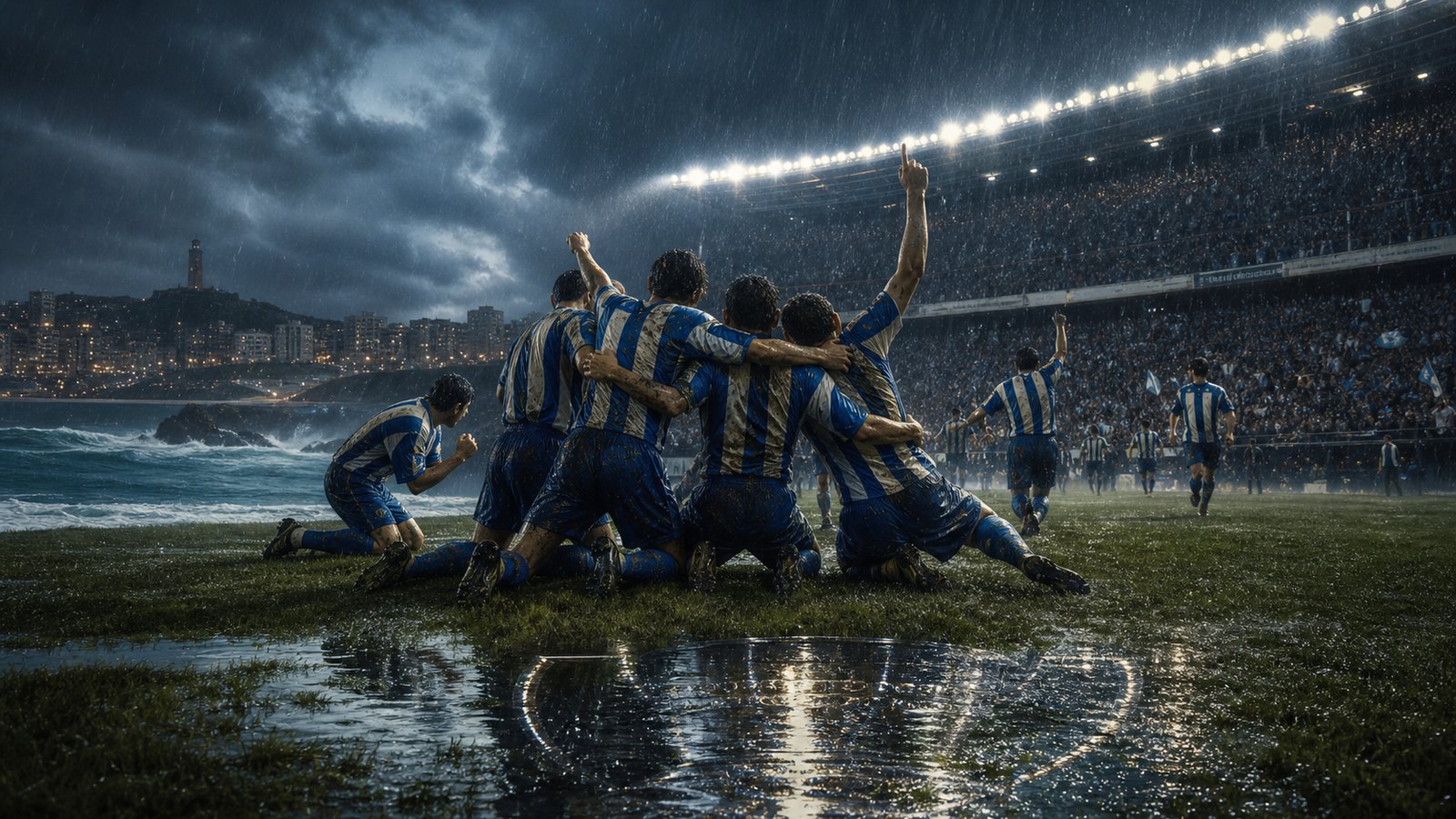
A contender with scar tissue
The context is essential. Spain’s league was already shaped by the gravitational pull of Real Madrid and Barcelona, with Atletico Madrid and Valencia also carrying larger traditional profiles. Deportivo came from Galicia, not from the centre of Spanish football power. Their rise during the 1990s had already included near misses, European nights and the painful memory of the 1993-94 final-day penalty that could have delivered the league earlier. By 1999-2000, the club was no longer an innocent surprise. It was a contender with scar tissue.
Javier Irureta’s side won the league with structure before romance. Deportivo had the attacking imagination of Djalminha, the finishing and penalty-box timing of Roy Makaay, the midfield force of Mauro Silva and Flavio Conceicao, and the defensive reliability of players such as Donato, Naybet and Manuel Pablo. The squad mixed local connection, South American intelligence and hard European competitiveness. It was not built to win possession beauty contests every week. It was built to survive different kinds of matches.
Riazor was more than atmosphere
That variety mattered because La Liga was not waiting politely for an underdog story. Deportivo needed to handle the emotional swings that had broken earlier challengers. They had to win at Riazor, take points from direct rivals, and avoid turning every difficult away match into a referendum on whether the old hierarchy was returning. The title race tightened, but Deportivo finished five points clear of Barcelona. That margin was not enormous, yet it was enough to make the achievement feel earned rather than gifted.
Riazor was part of the mechanism. The ground could feel close, damp and awkward for visitors, especially on nights when Deportivo’s tempo rose and the crowd sensed that a giant was uncomfortable. Home advantage in football is often discussed as atmosphere, but for Super Depor it was also tactical. The team could press moments, attack in waves, and make opponents defend second balls in an environment that did not feel neutral even before the first whistle.
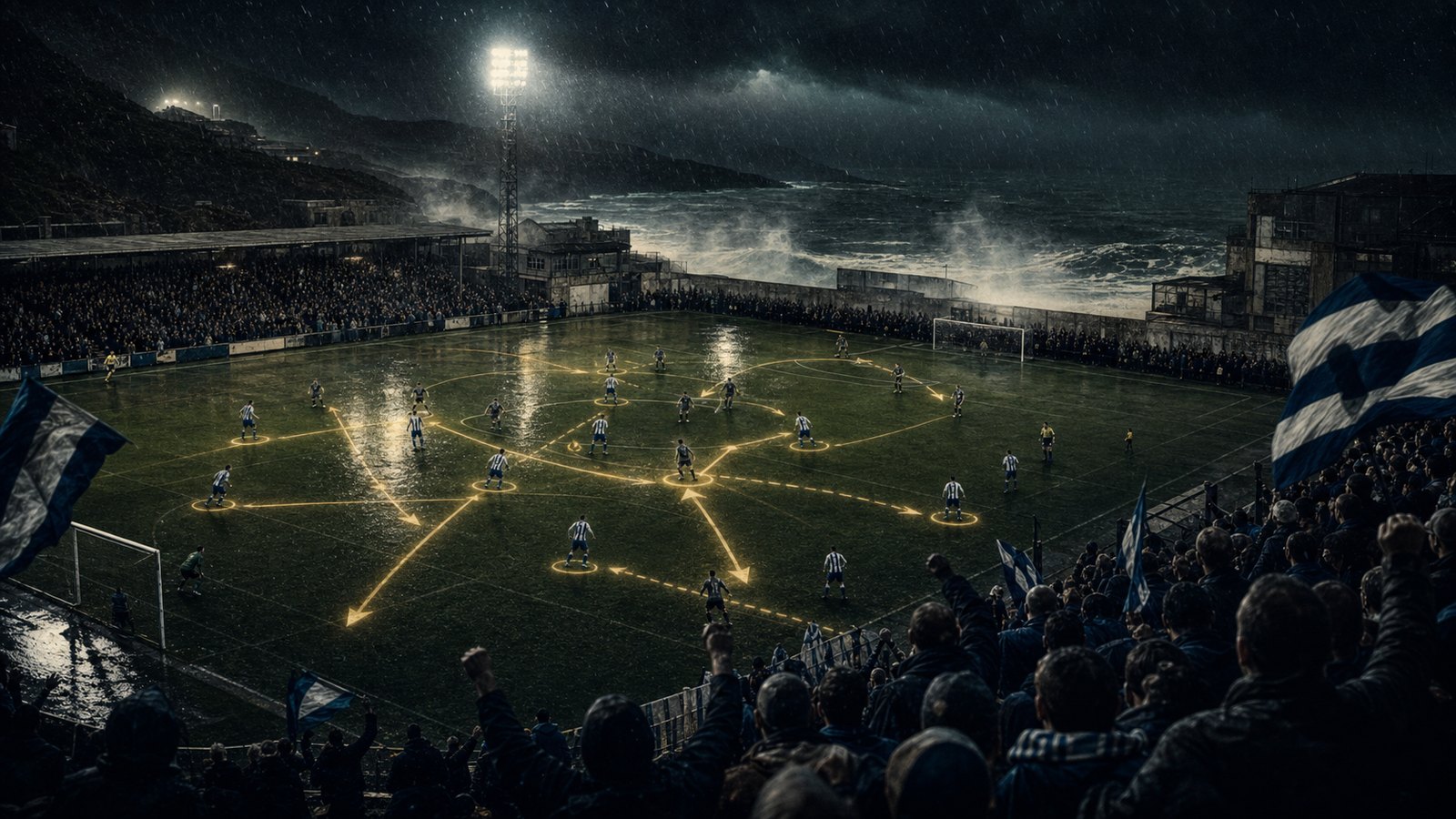
Europe proved the level was real
The club’s European performances in the surrounding years helped prove that the league title was not a domestic accident. Deportivo reached the Champions League regularly and produced famous nights, including the comeback against Milan in 2004, when a 4-1 first-leg deficit became a 5-4 aggregate victory. That match came after the league title, but it revealed the same deeper truth: Deportivo had built a football culture capable of making bigger names doubt their own authority.
The financial side gives the story its warning edge. Deportivo’s rise depended on ambition, investment and the belief that elite competition could sustain a club operating above its traditional weight. For a while, the bet worked. The squad stayed relevant, the stadium lived through European drama, and supporters watched a Galician club force itself into conversations usually reserved for richer institutions. Later decline and debt did not erase the title, but they changed how the era should be read.
The warning inside the rise
Super Depor was not a fairy tale because fairy tales do not need maintenance. Deportivo’s achievement came from years of building, losing, returning and spending carefully enough to compete but boldly enough to risk the future. The 2000 title was the reward for that balance while it held. It also showed how small-margin challengers often have to live with less room for error than the giants they beat.
The lesson is not that underdogs should avoid ambition. Without ambition, Deportivo would have remained a nice regional story outside the main argument. The lesson is that a club breaking into an elite order must build several advantages at once: recruitment, coaching, home pressure, tactical adaptability and emotional memory. One advantage can create a good season. Several working together can create a title.
Why Super Depor still matters
That is why Deportivo’s title still matters. It was not merely Spain having a strange year. It was proof that a club from outside the two biggest gravitational fields could assemble enough competence and belief to make the table tell a different story. The blue-and-white shirts did not just interrupt Madrid and Barcelona. For one season, they made everyone else play inside Galicia’s argument.
The sadness of the later decline may even strengthen the memory. If Deportivo had become a permanent superclub, the 2000 title might feel like the first chapter of a predictable ascent. Instead it remains sharper: a moment when a well-built outsider reached the summit, showed the giants the view from another angle, and then discovered how hard it is to keep living at that altitude.
The economics of staying high were brutal
Deportivo also show why the space beneath the giants can be so unforgiving. A superclub can miss on signings, finish below expectation, and still sell the next season as a correction. A challenger operating above its historical weight has less insulation. If Champions League money drops, if a recruitment cycle weakens, or if older leaders cannot be replaced at the same value, the whole machine begins to lose height. That does not make the original rise reckless by default. It explains why the achievement required so many things to line up at once.
The human memory of the team is therefore warmer than the balance-sheet memory. Supporters remember Fran’s connection to the club, Mauro Silva’s control, Djalminha’s imagination, Makaay’s goals, and the sense that Riazor could pull a richer opponent into uncomfortable weather. Those details matter because they stop the story becoming an abstract case study. Super Depor were not just numbers briefly outperforming expectation. They were a recognisable football side with personality, rhythm and a home crowd that believed pressure could be manufactured.
That is the part modern football should not miss. The giants usually have more money, deeper squads and greater tolerance for mistakes, but they can still be disturbed by a club that knows exactly what it is. Deportivo knew the value of their ground, the strengths of their spine, and the emotional fuel of earlier near misses. Their title was not the death of hierarchy. It was a season in which hierarchy had to work harder than usual and still could not catch them.
The European comeback against Milan in 2004 is useful here because it was not the title season, yet it confirmed the same temperament. Deportivo could absorb a famous name, a heavy first-leg deficit and the assumption that the tie was finished, then turn the second leg into a storm of pressure. That later night helps explain why the 2000 league was not a statistical accident. The club had built a competitive environment that could make elite opponents feel trapped.
Sources
- La Liga historical standings
- UEFA Champions League archive
- Deportivo La Coruna club history
- Sid Lowe, Spanish football reporting archive