
Lazio’s 2000 Scudetto is usually told as a Roman football explosion: blue flags, last-day chaos, and a squad too talented to be denied. The more interesting version is also the more uncomfortable one. Lazio were champions because they had built one of Europe’s most impressive teams, but that team was tied to a spending model that made glory and fragility look almost identical.
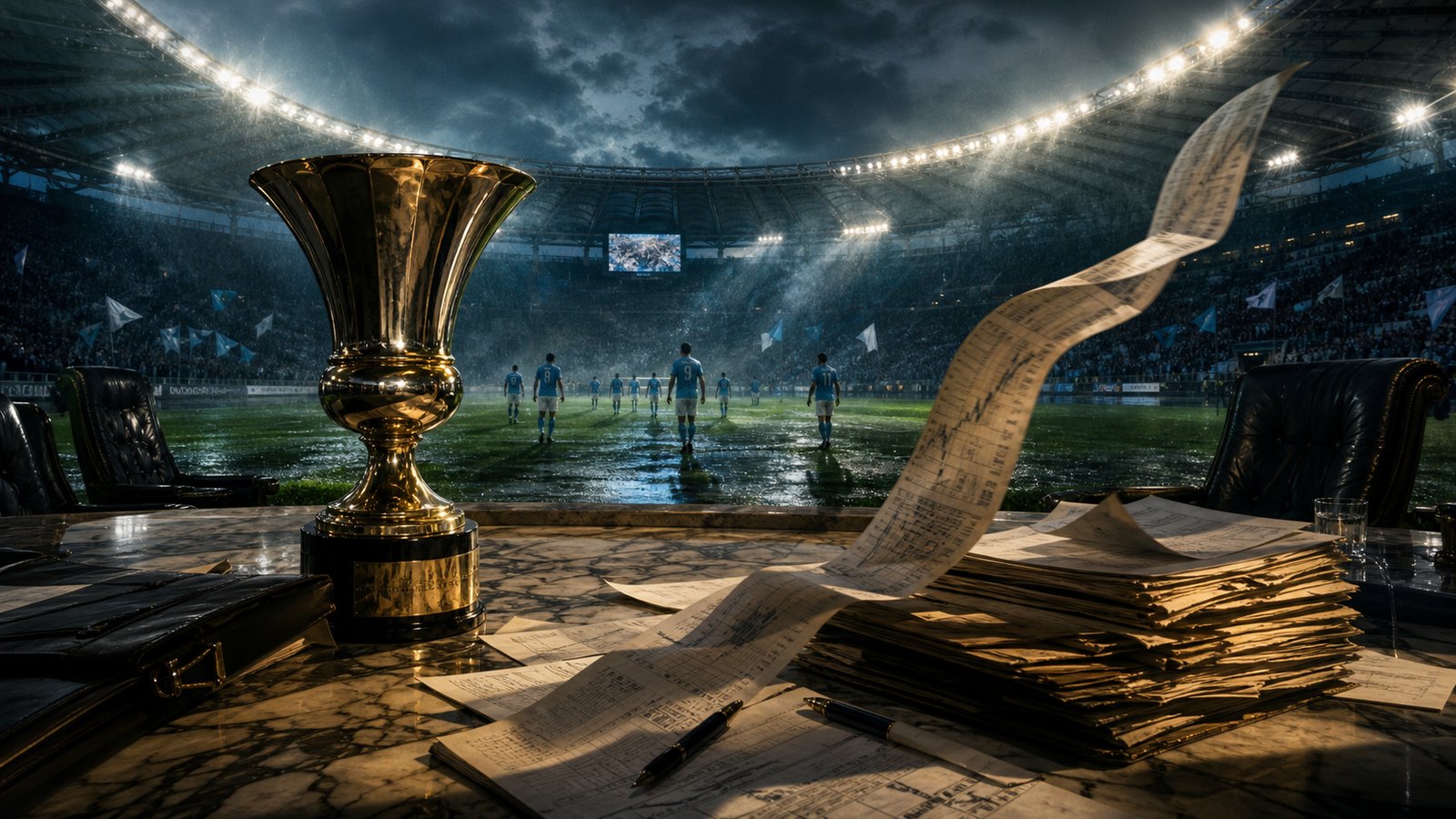
The trophy came from a machine that was already expensive
Lazio’s 2000 Scudetto is remembered for the release: Sven-Goran Eriksson’s side overturning the last-day tension, Juventus losing in Perugia rain, and Rome’s blue half receiving a title it had waited twenty-six years to see again. But the title was not a fairy tale that happened to use famous players. It was the visible peak of a financial and transfer machine built under Sergio Cragnotti, whose food company Cirio and football ambition turned Lazio into one of Europe’s most aggressive buyers.
The names still sound like a statement of intent: Alessandro Nesta from the academy as the defensive symbol, Pavel Nedved, Juan Sebastian Veron, Marcelo Salas, Sinisa Mihajlovic, Diego Simeone and later Hernan Crespo. Lazio did not stumble into that squad. It assembled star power with the confidence of a club behaving as if access to money, prestige and Champions League football would keep reinforcing one another.
Cragnotti made the transfer window feel like corporate theatre
The late 1990s were perfect for this kind of football gamble. Television money was rising, Italian clubs were still magnets for elite players, and owners could sell ambition as proof of seriousness. Cragnotti’s Lazio used the market not only to strengthen positions but to announce scale. The club broke transfer records, paid elite wages and treated the squad as a signal to rivals that the old hierarchy could be bought into if the timing and appetite were big enough.
That made Lazio thrilling and fragile at the same time. Every expensive player increased the pressure to qualify, win and remain attractive. Every trophy seemed to justify the machine. The 1998 Coppa Italia, the 1999 Cup Winners’ Cup and UEFA Super Cup, then the 2000 league title made the model look like controlled acceleration. In reality, success was covering the fact that the club’s sporting rhythm and financial rhythm had become dangerously tied together.
Perugia rain hid the balance-sheet weather
The final day of the 1999-2000 Serie A season supplied one of Italian football’s great images: Juventus delayed by a storm at Perugia, Lazio waiting and then exploding as the title swung south to Rome. It was perfect drama because it made the Scudetto feel like fate. But fate is a bad accountant. The players had earned the title on the pitch; the club had also committed itself to a cost structure that demanded the good years continue.
The detail that matters is not simply that Lazio spent a lot. Big clubs spend a lot all the time. The difference was the dependency chain. Transfer fees, salaries, owner backing, corporate health and Champions League expectation sat on top of one another. When the wider business structure weakened, the football club could not pretend its squad had been assembled in a separate world.
The Crespo deal showed both power and danger
Hernan Crespo’s 2000 move from Parma to Lazio became one of the emblematic deals of the era. It underlined the club’s ambition immediately after the Scudetto, but it also showed how a champion can respond to success by increasing the load rather than reducing the risk. Lazio were not behaving like a side that had reached a sustainable summit. They were behaving like a side that needed to keep climbing because stopping would reveal how steep the slope had become.
On the pitch, the quality remained obvious. The problem was not that the players were frauds or the title was hollow. The problem was that elite football can make real victories part of an unsustainable story. A trophy can be deserved and still be financed by assumptions that later collapse.
Collapse changed the meaning of the Scudetto
By the early 2000s, Cirio’s financial crisis and Lazio’s debts forced a different kind of football. Stars left, wages were cut, ownership changed and supporters had to watch a title-winning project become a cautionary tale. Nesta’s 2002 sale to Milan was emotionally brutal because he was not just another asset. He was the Roman academy captain, the proof that the spending machine still had a local soul. Selling him made the financial emergency visible in human form.
The 2000 Scudetto therefore carries two truths at once. It was a brilliant sporting achievement by a loaded, balanced and ruthless team. It was also a warning about how quickly a club can confuse financial velocity with permanent power. Lazio did not win because of a spreadsheet, but the squad that won could not be separated from the money story that built it.
The lesson is not anti-ambition
Football sometimes turns these collapses into morality plays, as if ambition itself was the crime. Lazio’s story is more useful than that. Ambition made the club relevant at the very top of Europe. It gave supporters unforgettable nights and a title that cannot be repossessed. The lesson is about concentration of risk: when owner wealth, transfer inflation, wage commitments and sporting qualification all depend on one another, a club can look strongest just before it becomes vulnerable.
That is why Lazio 2000 still feels modern. The details belong to Serie A’s last imperial age, but the mechanism belongs to every era that believes the next revenue leap will justify today’s bill. The Scudetto was real. So was the debt weather gathering behind it.
Why this was a Serie A story, not only a Lazio story
Lazio’s rise also belonged to the wider landscape of Italian football at the turn of the millennium. Serie A had the global players, the television attention and the owner-driven confidence to make spectacular spending feel normal. Parma, Fiorentina, Roma, Milan, Inter and Juventus all operated inside an environment where ambition was measured through transfer-market force. Lazio’s version stood out because the swing from triumph to vulnerability was so dramatic, but the ingredients were recognizable across the league.
That context matters because it stops the story becoming a simple lecture about one reckless club. Lazio were responding to an era that rewarded boldness and punished hesitation. The Champions League was becoming more important, squads needed depth, and supporters expected owners to prove seriousness with names. Cragnotti delivered those names. Eriksson then turned them into a functioning side rather than a collector’s cabinet, which is why the football achievement deserves respect even when the financial structure invites criticism.
The warning is sharper precisely because the team was good. Bad spending stories are easy to dismiss. Lazio’s story is harder: intelligent coaching, elite players, real trophies and an unsustainable backing model existed together. That combination is still one of football’s most dangerous illusions. When results are excellent, the structure behind them can look healthier than it is. Only later, when sales begin and debts surface, does the bill become visible to everyone who thought the trophy had settled the argument.
Sources
- Lega Serie A historical records
- UEFA Cup Winners’ Cup and Super Cup archive
- Reuters Cirio and Lazio financial reporting
- BBC Sport Lazio archive