
Hellas Verona winning Serie A in 1984-85 still feels like a sentence from an alternate football map. The league around them was crowded with giants: Juventus with Michel Platini, Internazionale, Roma, Milan beginning to stir again, Napoli newly attached to Diego Maradona. Italian football in that decade was expensive, tactically severe, and culturally certain that power belonged in familiar hands. Then Verona finished first, and the table briefly looked as if somebody had opened a window in a sealed room.
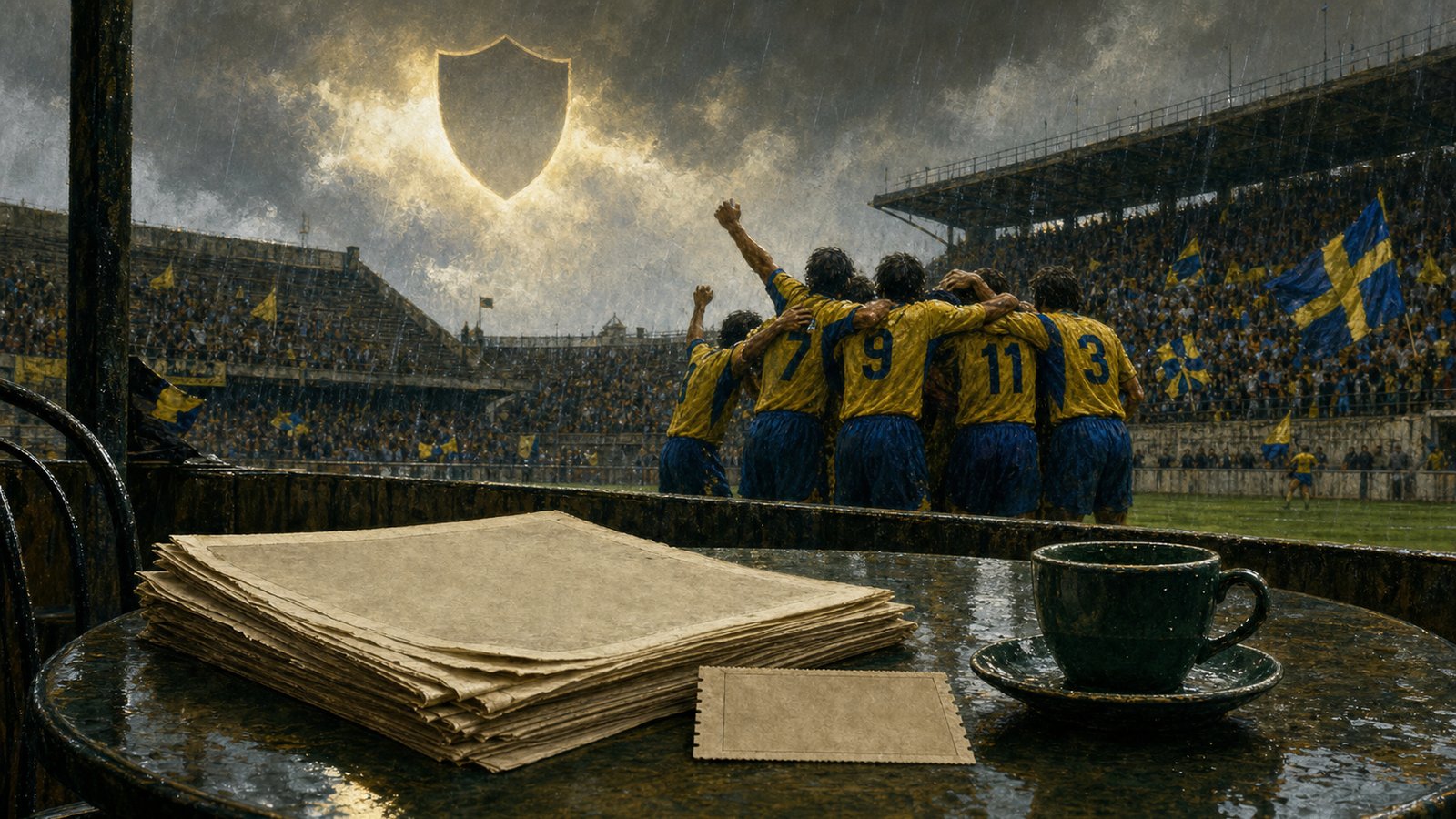
The temptation is to turn the title into a pure underdog postcard. That misses why it happened. Verona did not float above Serie A’s logic. They exploited a specific version of it. The league was low-scoring, tactically detailed, and often decided by margins small enough for organization to become a form of ambition. A team that could stay compact, trust its spine, and collect points without panicking had room to make a supposedly impossible season real.
Serie A was powerful, but not simple
Mid-1980s Serie A had the glamour that modern memory loves: Platini in Turin, Zico recently at Udinese, Maradona arriving at Napoli in 1984, foreign stars threaded through a league of hard defending and huge expectations. Yet that glamour did not make the league easy to dominate. The tactical culture was demanding, the scoring environment could be tight, and even elite teams had to grind through matches where one mistake changed the weekend.
That context helped Verona. A smaller club in a wide-open, high-scoring league might need to outgun richer opponents over months. In Serie A, Verona could win by being hard to move. Osvaldo Bagnoli’s side did not need a weekly carnival. They needed structure, defensive trust, fast enough attacking moments, and the nerve to keep believing that a one-goal match was not a lottery if you controlled enough of its details.
Bagnoli gave the team a practical imagination
Bagnoli is central because Verona’s title was not the work of chaos. His team could defend with discipline but still carry menace. They understood when to retreat, when to press into a duel, and when to release the forwards early. The football was pragmatic without being small-minded. That distinction matters. Verona were not merely trying to survive games against richer opponents; they were trying to drag those opponents into a contest where Verona’s habits were stronger than their reputations.
The side had a memorable balance. Hans-Peter Briegel brought German power and timing from midfield, giving Verona a physical presence that could change both penalty areas. Preben Elkjaer offered a rough, direct attacking threat that suited the league’s bruising environment. Giuseppe Galderisi supplied movement and finishing instincts. Around them was a team coherent enough that the foreign stars did not feel like luxury pieces. They were weapons inside a system.
The refereeing draw gave the season a strange frame
One detail often attached to Verona’s title is the referee assignment system. For the 1984-85 season, Serie A used a random draw for referees rather than the normal appointment process. It would be lazy to say that alone produced Verona’s championship. It would also be dishonest to ignore how strongly the fact has stayed in Italian football memory. The title arrived in a season when suspicion about influence and pressure had less room to attach itself to assignments.
That does not mean Verona were handed a trophy by administrative design. It means the environment around the competition felt slightly different. In a league where the largest clubs carried enormous institutional weight, even the perception of a cleaner field mattered. Verona still had to win matches, manage injuries, and survive pressure. But the random draw became part of the title’s mythology because it matched what the table seemed to say: for once, the usual gravity did not pull everything back to the same planets.
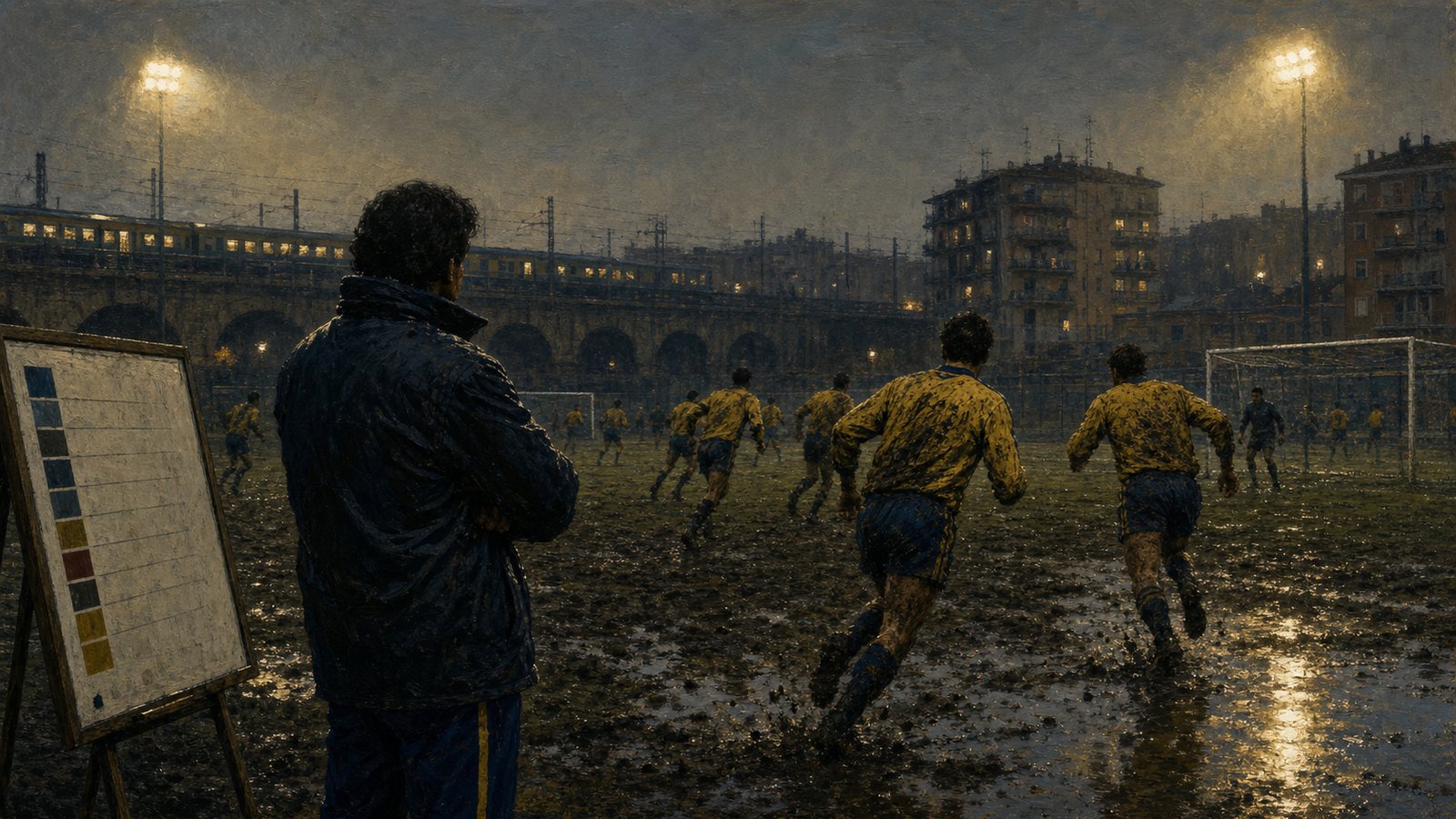
The decisive strength was emotional durability
Surprise title runs often fail when the outsider begins to understand the size of the opportunity. Every ordinary match becomes a referendum. Every away draw invites the old hierarchy to return. Verona had to live through that psychological stretch while the names below them remained more famous. Their achievement was not only technical. It was the ability to keep taking the next fixture seriously without treating the table as a museum exhibit to be admired.
That is where the league’s low margins helped and hurt. Helped, because Verona were comfortable in tight contests. Hurt, because tight contests leave no emotional holiday. One error can turn a controlled match into a public question: are they finally collapsing? Bagnoli’s team kept answering with the same language. Stay organized. Trust the spine. Make the opponent earn every clean chance. Let the table become real by behaving as if it already is.
The giants were not absent
The title becomes more impressive when the giants are put back into the picture. Juventus were still Juventus, even if they were balancing European ambitions and domestic strain. Inter had the weight of expectation. Roma were close enough in the broader era to remind everyone that this was not a weak football country. Napoli had Maradona, though the southern revolution would need time before the 1987 scudetto. Milan had not yet become Sacchi’s machine, but the club’s future power was beginning to assemble.
Verona did not win because Italy temporarily ran out of serious clubs. They won because those clubs were all dealing with their own timing, transition, or pressure while Verona found the narrow line where unity could beat status. A league season does not ask who has the best brochure. It asks who collects the most weekends. Verona collected them with ruthless modesty, especially on afternoons when the match seemed designed to reward patience rather than celebrity, and the league table rewarded that repeatable seriousness across spring as well as winter, under real pressure.
The aftermath made the title brighter and sadder
Verona never turned the 1985 title into a dynasty. That is part of its force. Some championships feel like the start of an era. This one feels like proof that an era briefly malfunctioned. The club remained beloved for the achievement, but Italian football’s wealth and institutional gravity did not permanently shift toward Verona. The superclubs continued to draw stars, attention, and commercial oxygen. The window closed.
But a title does not need to become a dynasty to be historically important. Verona’s scudetto remains a reminder that football power is not only about having the largest resources. It is about whether a group can make its own constraints useful at exactly the right moment. Bagnoli’s side turned compactness into ambition, physicality into control, and a skeptical league into a witness.
Why the season still matters
The 1985 scudetto survives because it resists easy packaging. It was romantic, but not naive. It was tactical, but not dry. It was helped by circumstance, but not explained away by it. In one of Europe’s hardest leagues, at a time when Italian football was becoming a magnet for global stars, Verona made the table say something nobody expected and nobody could fully dismiss.
That is the legacy. Not that every smaller club should dream lazily of becoming champion, but that the right team, in the right tactical ecosystem, with the right emotional temperature, can turn a single season into a historical argument. For one year, Verona were not asking permission from Serie A’s superclubs. They were answering them.
Sources
Lega Serie A historical records; RSSSF Italy 1984-85 table; Guerin Sportivo season accounts; World Soccer archive; UEFA club profiles.