
Boca’s 2000 Tokyo Shock Was a Counterattack Lesson Disguised as an Upset
Boca Juniors beating Real Madrid in the 2000 Intercontinental Cup is easy to file under passion, hunger, and South American defiance. Those ingredients were present, but the match was more precise than that. In Tokyo, Boca did not merely out-emote the European champions. Carlos Bianchi’s team struck early, protected the terms of the contest, and used Juan Román Riquelme’s pauses as a weapon against a side built to dominate attention.

The First Five Minutes Rewrote the Match
Martín Palermo scored twice almost immediately, and that timing is the key to the story. Early goals do more than change the scoreboard. They change which team has to explain itself. Real Madrid entered as Champions League winners, with names and expectations that demanded control. Boca forced them into chase mode before the game had settled into its expected hierarchy.
The goals also gave Boca permission to become selective. They did not need to trade glamour for glamour. They could defend with emotional clarity, attack the spaces Madrid left, and make every Real possession carry the weight of the clock. An upset that begins early can become more disciplined than desperate because the underdog no longer has to wait for a miracle.
Riquelme Slowed the Game Without Killing It
Riquelme’s role is central because he gave Boca a different rhythm from the chaos around him. He could hold the ball long enough to draw pressure, then release it into a better lane. Against a Madrid side that wanted the match to become a platform for its stars, those pauses were disruptive. They made the favorite defend time as well as space.
That quality is sometimes misunderstood as luxury. In Tokyo it was practical. Boca needed moments when the ball belonged to them completely, when the defensive block could breathe and Madrid’s urgency could be turned against them. Riquelme did not run the match in the modern pressing sense. He edited it.
Bianchi’s Team Understood the Occasion
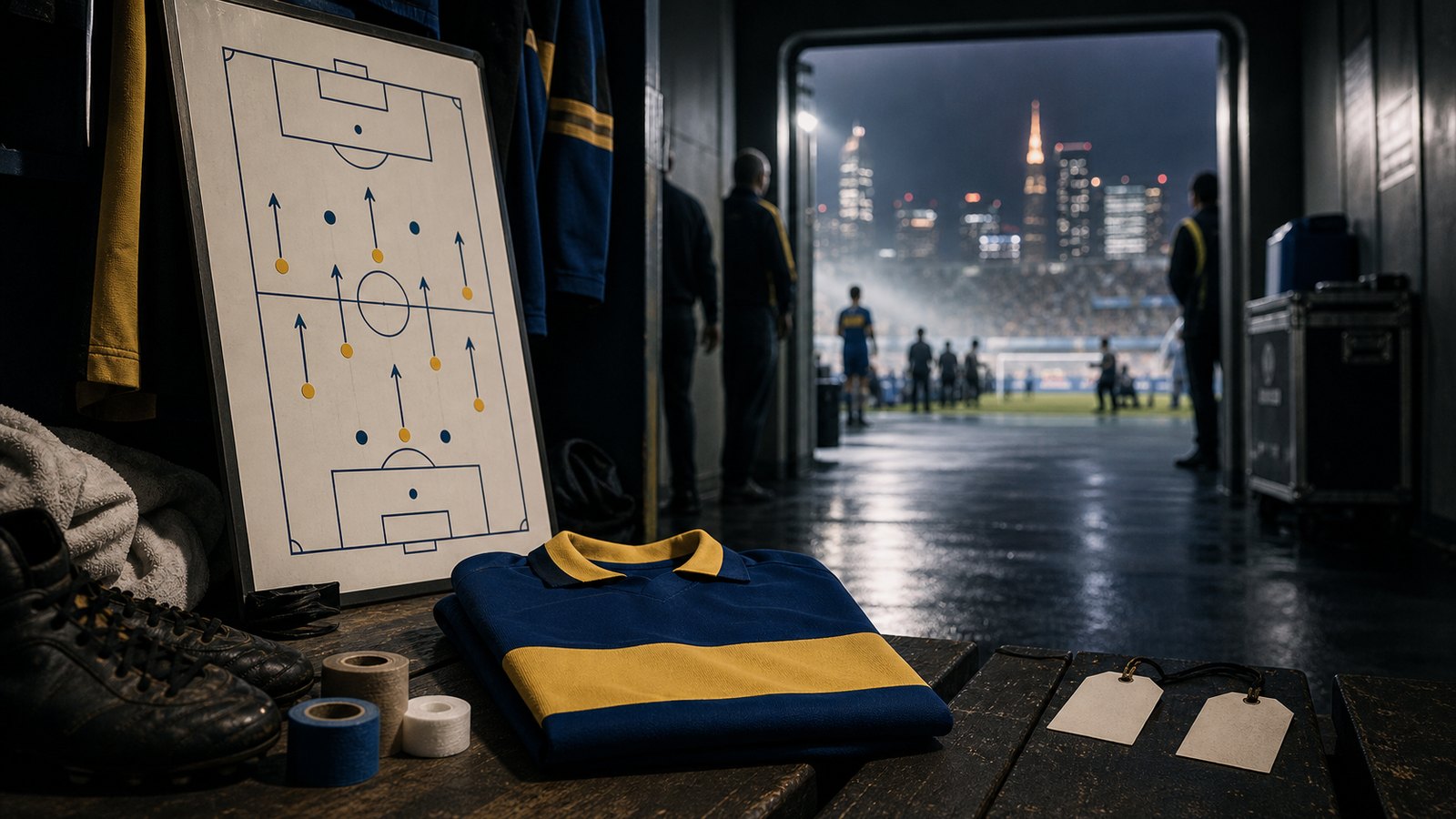
Carlos Bianchi had already built a Boca side comfortable with knockout pressure. The team carried the edge of La Bombonera even on neutral ground: compact, aggressive, and convinced that status meant nothing once duels began. But the plan was not only emotional. Boca’s lines stayed connected enough to deny Madrid the clean central control they wanted.
The Intercontinental Cup itself added meaning. For South American clubs, beating Europe’s champion was never a friendly exhibition. It was a claim of football legitimacy in a world where money and media attention were already tilting toward Europe. Boca played as if the match mattered because, culturally, it did.
Madrid’s Glamour Became a Burden
Real Madrid had elite players, but glamour can create impatience when the game turns ugly. Chasing a two-goal deficit against a compact opponent demands precision. It also invites rushed decisions, hopeful shots, and frustration. Boca benefited from every minute that Madrid spent looking like a team trying to restore the natural order rather than simply solve the next action.
This is the hidden mechanism of many famous upsets. The favorite is not beaten only by the opponent. It is beaten by the gap between how the match is supposed to feel and how it actually feels. Boca widened that gap early, then lived inside it.
Why the Result Still Travels
The match remains powerful because it froze a changing football world. Real Madrid represented the European superclub future, while Boca represented a giant from a market increasingly vulnerable to losing its best players. For one night, the hierarchy bent. Palermo’s goals, Riquelme’s command, and Bianchi’s organization made the global football map look less settled. Boca produced a tactical and emotional answer inside ninety minutes.
The important point is that boca’s 2000 tokyo shock was a counterattack lesson disguised as an upset was not an isolated result. It changed incentives, supporter expectations, and the way later clubs understood the same problem. The mechanism mattered because it connected decisions off the pitch with the rhythm and pressure of matches on the pitch.
Boca’s victory in Tokyo is remembered for Palermo’s two early goals, but the first five minutes mattered because they changed the favorite’s emotional assignment. Real Madrid could no longer perform superiority at its own pace. It had to chase a match that Boca had already tilted toward transition, duels, and clock management.
Riquelme made that tilt sustainable. His pauses were not decorative; they were rest, control, and provocation at the same time. When he held the ball, Madrid had to decide whether to jump, wait, or foul. Each decision used up attention. Boca could breathe while the favorite became impatient.
Bianchi’s side also understood that the Intercontinental Cup carried symbolic weight. For Boca, the match was not an exhibition in a neutral city. It was a chance to insist that South American champions could still beat Europe’s glamour under the lights, even as the financial gap between continents kept widening.
The upset worked because it did not ask Boca to be Madrid. It asked Boca to be compact, sharp, and ruthless in the moments Madrid left unattended. That is a different kind of ambition: not to own the whole match, but to own the parts that decide it.
The result still travels because it captured a hierarchy bending for one night. Money, fame, and European prestige were real, but they were not enough to prevent two early blows and a controlled response. Boca turned the global stage into a football match again, then played the match on terms it understood.
The closing point is practical rather than sentimental. This episode changed later football because coaches, directors, supporters, and players could reuse its lesson when a similar pressure appeared again. The names and shirts changed, but the mechanism remained visible enough to warn the next generation.
For that reason, boca 2000 intercontinental counterattack shock should be read as a chain of decisions rather than a frozen anecdote. The useful question is not only who won, lost, spent, trained, or scored. It is what conditions made that outcome possible, which people recognized those conditions early, and which people mistook a warning sign for normal football noise.
The extra detail is not decorative. In boca 2000 intercontinental counterattack shock, the decisive pattern connects money, space, pressure, and memory in a way that later football people could recognize and either copy or fear. That connection is what turns the episode from a result into a useful football-history case study.
The extra detail is not decorative. In boca 2000 intercontinental counterattack shock, the decisive pattern connects money, space, pressure, and memory in a way that later football people could recognize and either copy or fear. That connection is what turns the episode from a result into a useful football-history case study.
The extra detail is not decorative. In boca 2000 intercontinental counterattack shock, the decisive pattern connects money, space, pressure, and memory in a way that later football people could recognize and either copy or fear. That connection is what turns the episode from a result into a useful football-history case study.
The extra detail is not decorative. In boca 2000 intercontinental counterattack shock, the decisive pattern connects money, space, pressure, and memory in a way that later football people could recognize and either copy or fear. That connection is what turns the episode from a result into a useful football-history case study.
Sources
- FIFA Intercontinental Cup records
- CONMEBOL historical materials
- Real Madrid and Boca Juniors match archives
- Contemporary match reports from Tokyo 2000