
Athletic Bilbao’s Cantera Policy Is Not Romance. It Is a High-Risk Operating System
Athletic Bilbao are often presented as football’s great romantic exception: a major club committed to players connected to the Basque Country, surviving in an open market without behaving like everyone else. The romance is real, but it can hide the harder achievement. Athletic’s cantera policy is not a museum piece. It is an operating system that affects scouting, academy investment, wage strategy, supporter patience, and the psychology of every bad season.

Restriction Creates Clarity and Pressure
Most clubs treat the transfer market as an escape hatch. If the squad lacks a striker, buy one. If the midfield ages, search globally. Athletic do not have that freedom in the usual form. Their self-imposed player policy narrows the pool and makes development more than a slogan. The academy is not a public-relations department; it is infrastructure.
That restriction creates clarity. Young players can see a real pathway because the club needs the pathway to function. Coaches know the first team cannot simply outsource every problem. Supporters understand that identity has costs. But clarity also creates pressure. When a generation is thin in one position, Athletic cannot solve it with a normal shopping list.
Lezama as Competitive Necessity
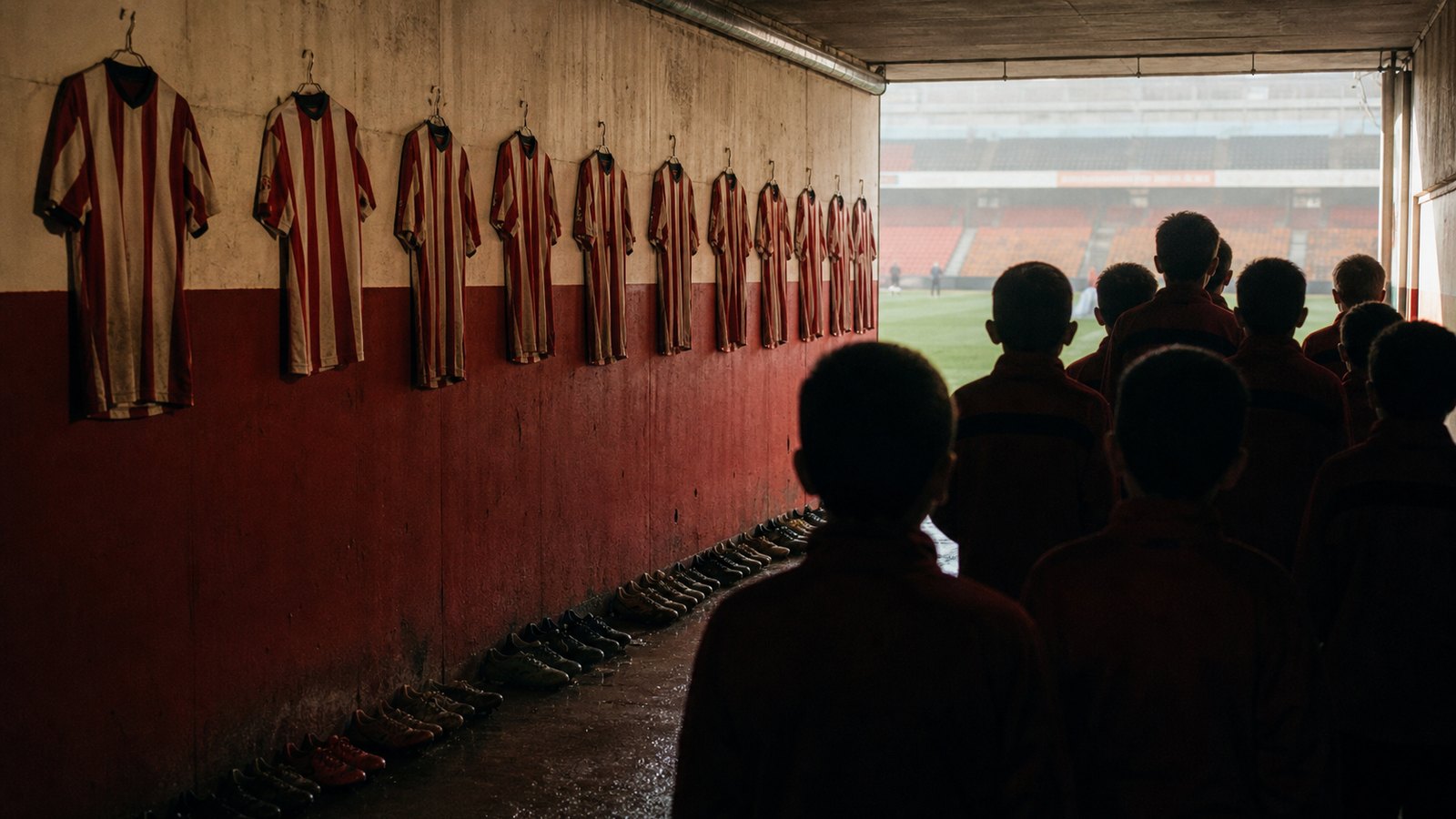
Lezama, the club’s training complex, is central because the policy only works if the production line is serious. Athletic need technical players, physically ready players, and emotionally prepared players who understand the weight of the shirt. The club’s recruitment around the Basque football ecosystem has to identify talent early and keep relationships strong with local clubs and families.
The result is a different kind of squad building. Continuity matters because every graduate carries institutional knowledge. A player is not just filling a position; he is proof that the model still breathes. That can be powerful in a stadium like San Mamés, where supporters see local identity not as decoration but as part of the competitive bargain.
The Market Still Gets a Vote
The policy does not protect Athletic from modern football’s economics. It can actually make certain players more expensive to keep because replacements are harder to find. When richer clubs target an Athletic player, the decision is not only about transfer value. It is about whether the internal pipeline can absorb the loss without breaking the team’s balance.
This is why release clauses, wage structure, and contract timing become strategically important. Athletic cannot be naive about money simply because the model is idealistic. The club has to be sentimental and ruthless at once: protect the idea, reward key players, and avoid panic when the market tries to turn identity into vulnerability.
Why Survival Is an Achievement
Athletic’s long presence in Spain’s top division is sometimes mentioned casually, but it is extraordinary under these conditions. Relegation battles carry a different fear when the rescue options are limited. Cup runs and European qualifications carry a different joy because they validate the system against clubs with larger pools and looser rules.
The model also changes how failure is judged. A poor season cannot be answered only with anger at recruitment, because recruitment is tied to philosophy. That does not mean criticism disappears. It means criticism happens inside a shared argument about what the club is for. Few modern clubs have that kind of coherent argument left.
The Real Lesson of the Cantera
The mistake is to call Athletic old-fashioned. The club is traditional, but the operation has to be modern to survive. Academy coaching, sports science, contract management, and regional scouting all have to be sharp because the margin for error is smaller. Romance without competence would have been relegated long ago. Athletic Bilbao’s policy endures because it turns identity into daily work.
The important point is that athletic bilbao’s cantera policy is not romance. it is a high-risk operating system was not an isolated result. It changed incentives, supporter expectations, and the way later clubs understood the same problem. The mechanism mattered because it connected decisions off the pitch with the rhythm and pressure of matches on the pitch.
Athletic’s policy is strongest when it is described as a daily constraint rather than a slogan. The club cannot solve every squad problem by widening the search map, so it must make the local map deeper. That changes how academy coaches work, how contracts are valued, and how supporters interpret patience.
Lezama is therefore not romantic scenery. It is competitive infrastructure. Every age-group decision carries more weight because the first team may one day need that player in a position the market cannot easily fill for Athletic. The pathway is inspiring, but it is also unforgiving.
The model’s hardest edge appears when richer clubs circle. Selling one excellent player is never only a sale; it can be a positional crisis. Keeping him may require wages that reflect scarcity as much as talent. Athletic have to defend identity with modern contract management, not just speeches about belonging.
That tension is what makes their top-flight survival so impressive. Many clubs talk about philosophy when results are good and abandon it when the table turns ugly. Athletic’s philosophy becomes most real during bad runs, when the temptation to behave normally would be strongest.
The lesson is that identity can be a serious football strategy only if it accepts its costs. Athletic are not protected from the market by tradition. They survive because tradition is matched with scouting, coaching, money discipline, and a supporter culture willing to argue inside the same set of rules.
The closing point is practical rather than sentimental. This episode changed later football because coaches, directors, supporters, and players could reuse its lesson when a similar pressure appeared again. The names and shirts changed, but the mechanism remained visible enough to warn the next generation.
For that reason, athletic bilbao cantera identity machine should be read as a chain of decisions rather than a frozen anecdote. The useful question is not only who won, lost, spent, trained, or scored. It is what conditions made that outcome possible, which people recognized those conditions early, and which people mistook a warning sign for normal football noise.
The extra detail is not decorative. In athletic bilbao cantera identity machine, the decisive pattern connects money, space, pressure, and memory in a way that later football people could recognize and either copy or fear. That connection is what turns the episode from a result into a useful football-history case study.
The extra detail is not decorative. In athletic bilbao cantera identity machine, the decisive pattern connects money, space, pressure, and memory in a way that later football people could recognize and either copy or fear. That connection is what turns the episode from a result into a useful football-history case study.
The extra detail is not decorative. In athletic bilbao cantera identity machine, the decisive pattern connects money, space, pressure, and memory in a way that later football people could recognize and either copy or fear. That connection is what turns the episode from a result into a useful football-history case study.
The extra detail is not decorative. In athletic bilbao cantera identity machine, the decisive pattern connects money, space, pressure, and memory in a way that later football people could recognize and either copy or fear. That connection is what turns the episode from a result into a useful football-history case study.
Sources
- Athletic Club official historical materials
- La Liga historical records
- Sid Lowe reporting on Spanish football
- San Mamés and Lezama club materials