
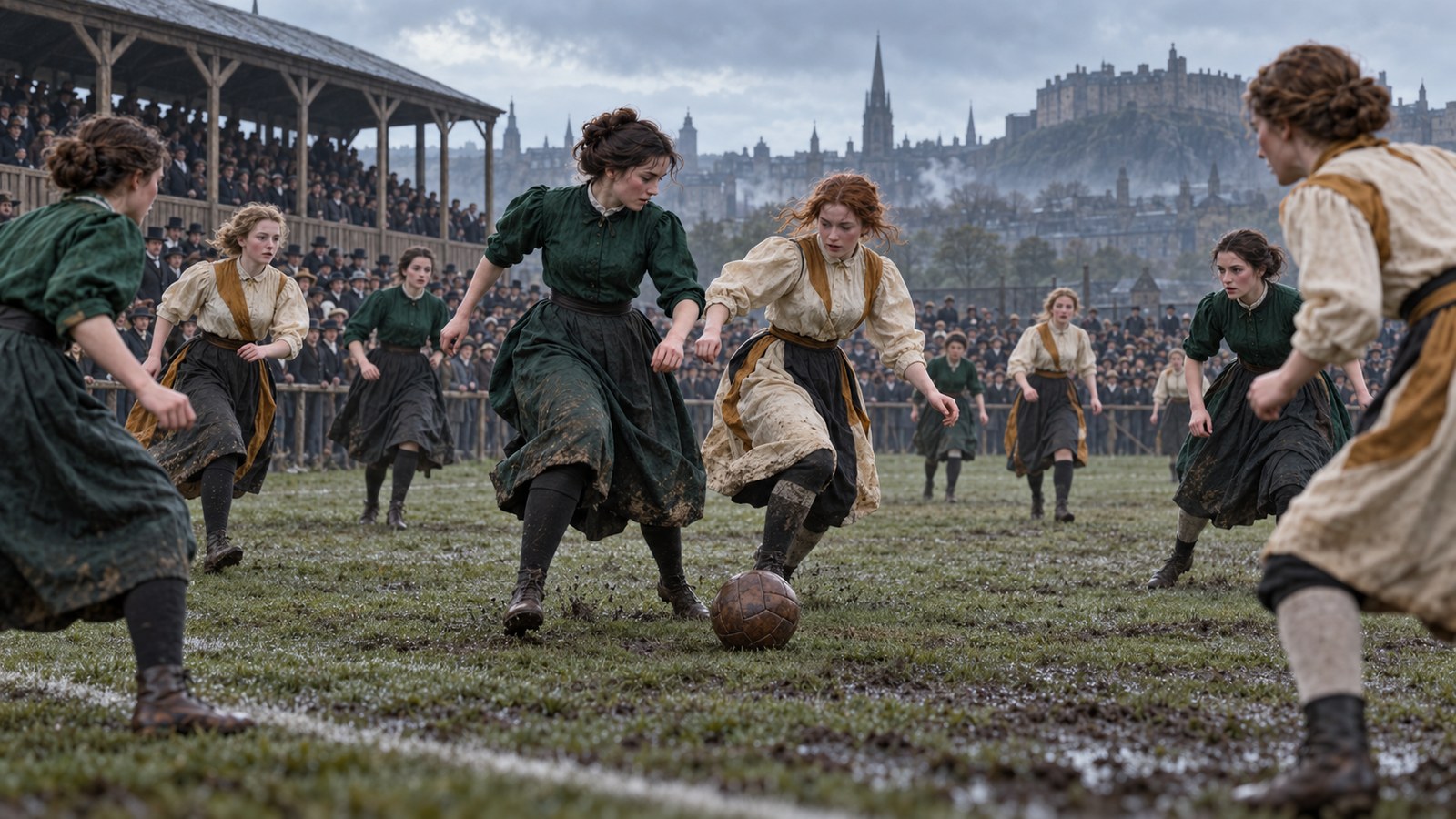
On 7 May 1881, eleven women billed as Scotland walked onto Hibernian Park in Edinburgh to face a side billed as England. Lily St Clair scored first. Scotland won 3–0. The result survives, but the more revealing story began after the final whistle: the players kept taking their football to new towns even when promoters failed them, grounds closed their gates and spectators crossed the touchline.
The tour reached Glasgow, Blackburn, Bradford, Manchester and Liverpool. Some matches finished normally. Two descended into invasions serious enough to stop play. A planned game at Kilmarnock lost its venue, a Liverpool appointment drew spectators but no teams, and one gatekeeper allegedly disappeared with the receipts. Yet the women repeatedly travelled on and played again.
Calling the fixtures internationals requires care. Contemporary reports presented them as Scotland against England, but a Blackburn newspaper said all the players came from Glasgow. They were a touring company before national associations administered women’s teams. Their importance lies less in official status than in the physical proof they supplied: women organised sides, played association football before paying crowds and tried to sustain a tour across hostile ground.
The Edinburgh scoreline opened a much harder itinerary
The first recorded match took place at Hibernian Park, the home Hibernian used from 1880 to 1891. A plaque erected in 2019 marks the site and describes Scotland’s 3–0 victory over England there as the first women’s international. The surviving team list gives the occasion texture. Ethel Hay, Bella Osborne, Georgina Wright, Rose Rayman, Isa Stevenson, Emma Wright, Louise Cole, Lily St Clair, Maud Riweford, Carrie Balliol and Minnie Brymner represented Scotland.
May Goodwin, Mabel Hopewell, Maud Hopewell, Maud Starling, Ada Everston, Geraldine Vintner, Mabel Vance, Eva Davenport, Minnie Hopewell, Kate Mellon and Nelly Sherwood were listed for England. Spellings shifted in later newspaper reports, one of several warnings against treating the record as a modern match database. The names still matter. They replace a vague phrase such as “Victorian ladies” with players who accepted public scrutiny under identifiable names.
Newspaper accounts collected by historian Patrick Brennan were surprisingly sympathetic to the Edinburgh event. One report observed that more than half the spectators had departed before the end, but there was no recorded invasion. The women had completed a public football match under association rules and had another date only nine days later.
At Shawfields, the boundary failed before either goal did
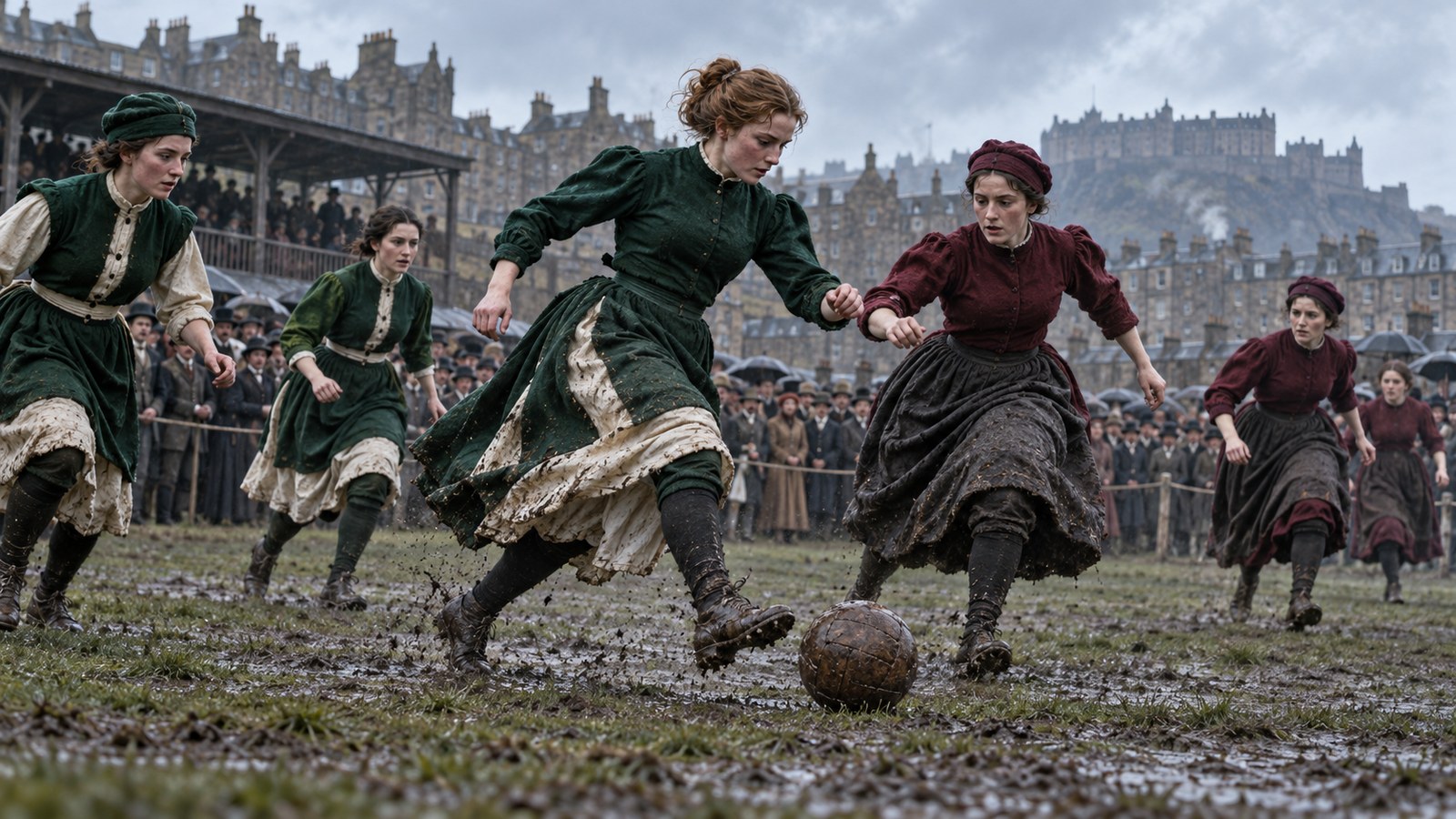
The second fixture, played at Shawfields in Glasgow on 16 May, drew more than 5,000 people. It remained 0–0 for 55 minutes. Then spectators invaded the pitch. Police reportedly drew their batons and charged the crowd while the players sought safety. The match could not continue.
Contemporary hostility attacked the football as well as the footballers. Bell’s Life in London and Sporting Times mocked the players and also criticised the male umpires for poor knowledge of association rules. Its complaint that defenders repeatedly sent the ball behind their own goal line without the expected corner restart reveals a match being judged against a developing code, not a costumed novelty outside football.
The disruption travelled ahead of the team. A further match had been planned for the next evening at Kilmarnock Portland’s ground. After hearing what had happened at Shawfields, the club refused access. One crowd had therefore stopped one game and helped erase the next before kick-off.
Four days after the Glasgow ordeal, the touring players appeared at Hole-i’th’-wall, Blackburn Olympic’s ground.
Blackburn showed what happened when spectators stayed outside
About 4,000 people attended at Blackburn on 21 May. The teams again carried the England and Scotland labels, although the Blackburn Standard reported that all the players were from Glasgow. That detail changes how the event should be read. These were representative identities used by a touring company, not selections certified by two national governing bodies.
The first half ended without a goal. Both sides then put the ball into the net early in the second half, but both efforts were disallowed. Near the end, a scrimmage developed in front of the Scottish goal and the ball was forced over the line. “England” won 1–0.
The crowd may have heckled, but the violent scenes from Glasgow were not repeated. The contrast is useful. When the boundary held, the players could produce the ordinary substance of a football report: a goalless half, disallowed goals, pressure around the goalmouth and a late winner. Disorder was not inherent to the matches. It was a choice made by spectators who refused to let the match remain theirs to play.
A Liverpool fixture scheduled for 28 May exposed a different weakness. A small audience arrived at Fairfield Athletic Grounds, but the teams did not. The surviving account does not explain the absence. The failed appointment later damaged attendance when the players eventually reached Liverpool, showing how fragile a touring operation could be when transport, promotion and trust all had to be rebuilt from town to town.
Manchester repeated the danger and added a missing gate
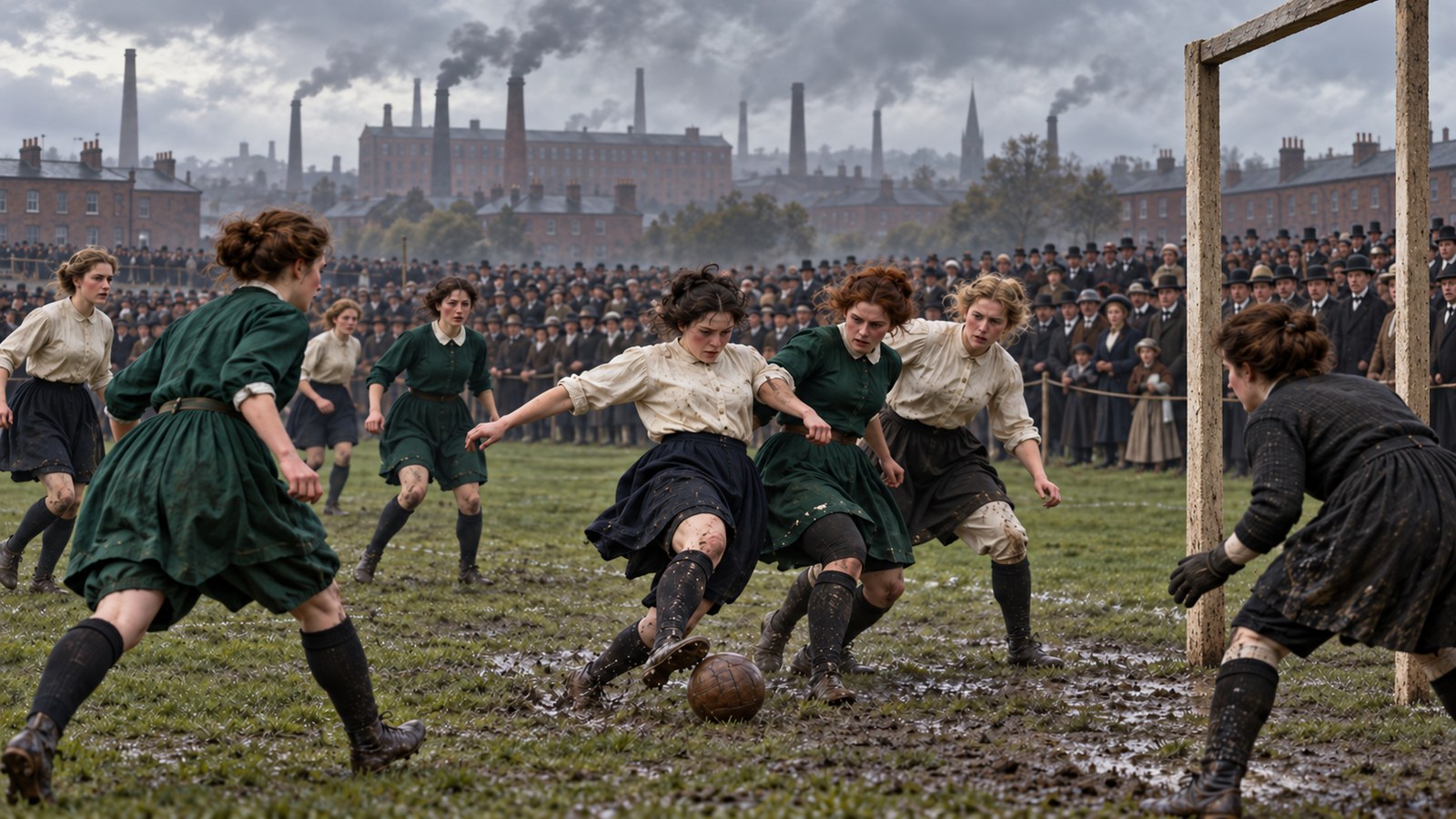
The company was reported at Windhill in Bradford on 13 June, where Scotland won 3–2. It then moved to Cheetham in Manchester. A match on 20 June produced no surviving score in Brennan’s summary. The following evening brought another abandonment, this time after about 60 minutes.
Accounts described behaviour even more riotous than the Shawfields invasion. The trouble reached beyond insult or mockery because it removed the players’ control of the ground and the event. The gatekeeper was also alleged to have made off with the proceeds. Cheetham FC’s secretary publicly distanced the club, explaining that it only leased the ground and had no connection with the women’s fixtures.
Those details expose the tour’s structure. A team might be ready to play, yet still depend on a promoter, a landlord, local officials, police and someone trusted to hold the gate money. Any broken link could cancel a date or turn a crowd into danger. The women were testing more than whether they could kick and organise positions. They were trying to occupy football’s commercial and physical infrastructure without the institutional protection men’s clubs were beginning to build.
The players left Manchester and continued directly to Liverpool. That decision came after two invasions in little more than a month. It is difficult to square with the patronising suggestion that the participants did not understand the seriousness of public football. Their response to disorder was to find another ground and meet the next advertised date.
Two Liverpool wins closed the surviving trail
The Cattle Market Inn Athletic Grounds at Stanley hosted matches on 25 and 27 June. Attendance at the first was small. The Liverpool Mercury linked that weakness to the earlier missed appointment and also noted an admission price of one shilling, an unusually expensive charge for a football crowd of the period.
The first match kicked off at 5 p.m. Scotland spent much of the opening period in England’s half. The report used both “touchdowns” and goals, suggesting either mixed terminology or uncertainty about the rules being applied. England scored during a spirited attack, but Scotland found a later goal and won 2–1.
More spectators came on the Monday. The newspaper observed that national feeling became strong among onlookers, even though those labels did not necessarily describe the players’ origins. Scotland won 2–0. A final match was announced for 28 June, but no report confirming that it happened has been found.
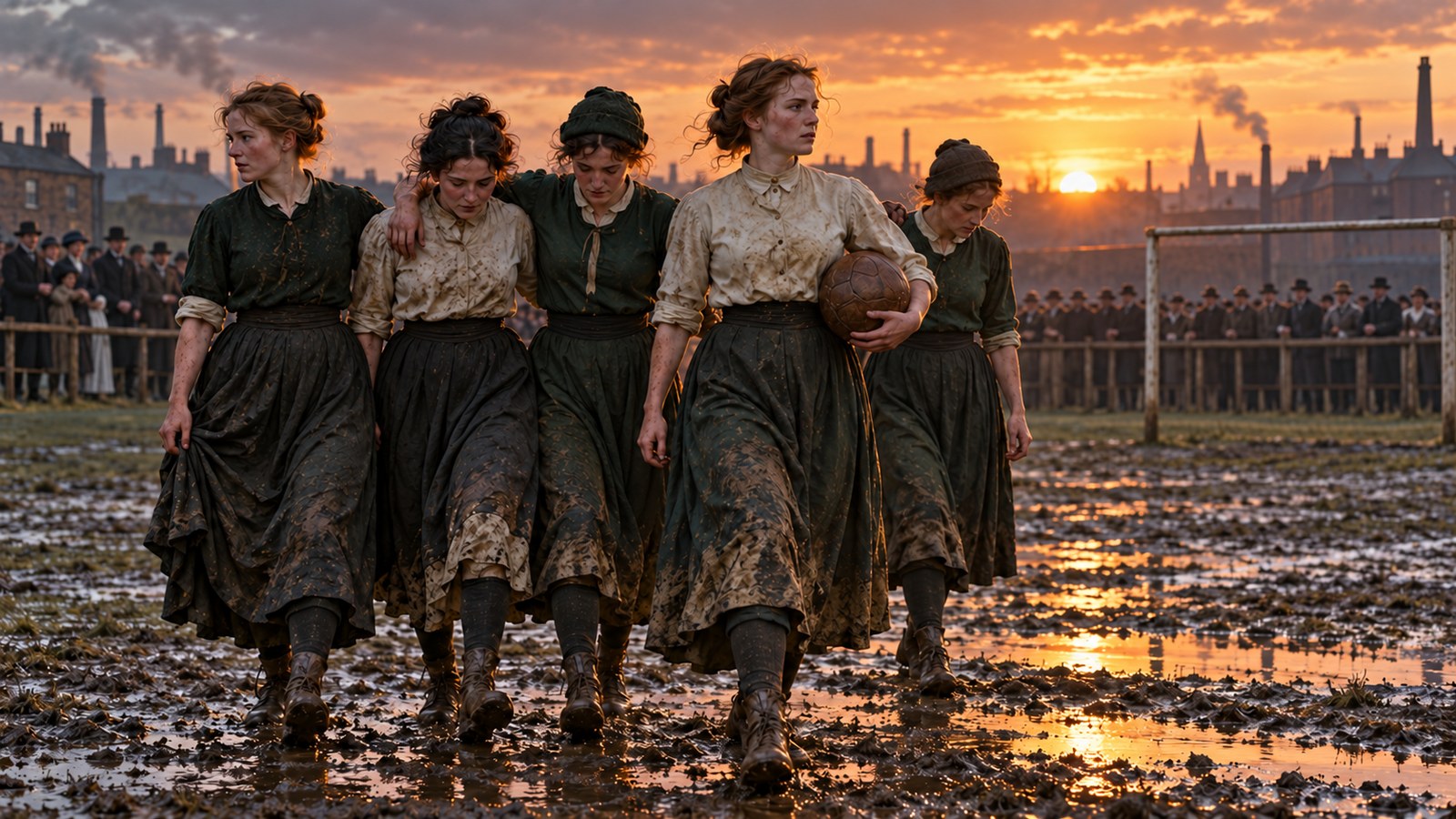
The trail then goes quiet. That silence should not be filled with invented biographies or motives. What the schedule proves is substantial enough. Across seven documented weeks, the company attempted a multi-city football tour, completed several matches, endured two abandoned games and returned to the pitch after each major disruption.
Women’s football on this site has later chapters, including the institutional exclusion examined in the FA’s 1921 ground ban. The 1881 tour belongs to an earlier and less settled world. The players did not yet have a recognised competition to join or a governing body prepared to defend their fixtures. They created the event each time they arrived—and sometimes had to watch the event disappear around them.
The Edinburgh plaque preserves the opener because first matches invite commemoration. The route after Edinburgh deserves equal attention. Glasgow, Blackburn, Bradford, Manchester and Liverpool reveal the cost of continuing. The achievement was not simply that eleven women won 3–0 on one May afternoon. It was that the players kept making the next match possible.
Sources
Patrick Brennan, “England v Scotland — 1881”; Glasgow Herald; Dunfermline Journal; Nottinghamshire Guardian; Blackburn Standard; Leeds Times; Manchester Guardian; Manchester Evening News; Liverpool Mercury; Mapping Memorials to Women in Scotland.