
Fiorentina’s bankruptcy was not just a fall from Serie A glamour. It was a lesson in how football identity survives only when the institution behind it is rebuilt.
A collapse bigger than a league table
Fiorentina’s 2002 disaster was not just a bad season that ended with relegation. It was a rupture in the identity of a club that had carried Batistuta goals, purple shirts, European nights, and a city-sized sense of style into the late 1990s. The team did not simply fall down the table. The institution itself buckled under debt, administrative failure, and the brutal realization that football romance does not pay overdue bills.
The story still feels sharp because it happened in a period when Italian football was selling glamour to the world. Serie A had been the league of stars, television, and tactical sophistication. Fiorentina’s collapse showed the other side of that ecosystem. If wages, expectations, and ownership promises were built on unstable money, a famous name could become fragile very quickly.
The purple shirt survived the company

When the old company failed, supporters were forced to separate the club they loved from the legal shell that had carried it. That distinction sounds dry until it happens to your own ground, your own colors, and your own weekend ritual. A badge can be protected, sold, withheld, or revived. A fixture list can disappear. The memory of a club continues in people, but the right to compete belongs to paperwork.
That is why Fiorentina’s rebirth matters. The new entity started again under a different name and had to climb back through the system. The romantic version says the city simply refused to let the club die. The harder version says that refusal needed registration, ownership, league approval, players willing to join a wounded project, and supporters willing to treat smaller matches as part of the same story.
Bankruptcy changed what supporters had to understand
Football fans often prefer to talk about strikers, managers, and referees because those are the visible dramas. Fiorentina 2002 dragged the invisible drama into daylight. Debt became a match event. Courtrooms and league offices mattered as much as corners and penalties. The most important result was not always on Sunday; it could be a ruling, a deadline, or a document that decided which version of the club could exist next month.
The emotional cruelty was that supporters had done nothing to cause the accounts. They had bought tickets, sung the songs, and watched the team. Yet the punishment landed in their routine. The stadium did not forget how to sound like Fiorentina. The legal and financial system simply made that sound travel through a different category of football for a while.
The climb back was not instant nostalgia
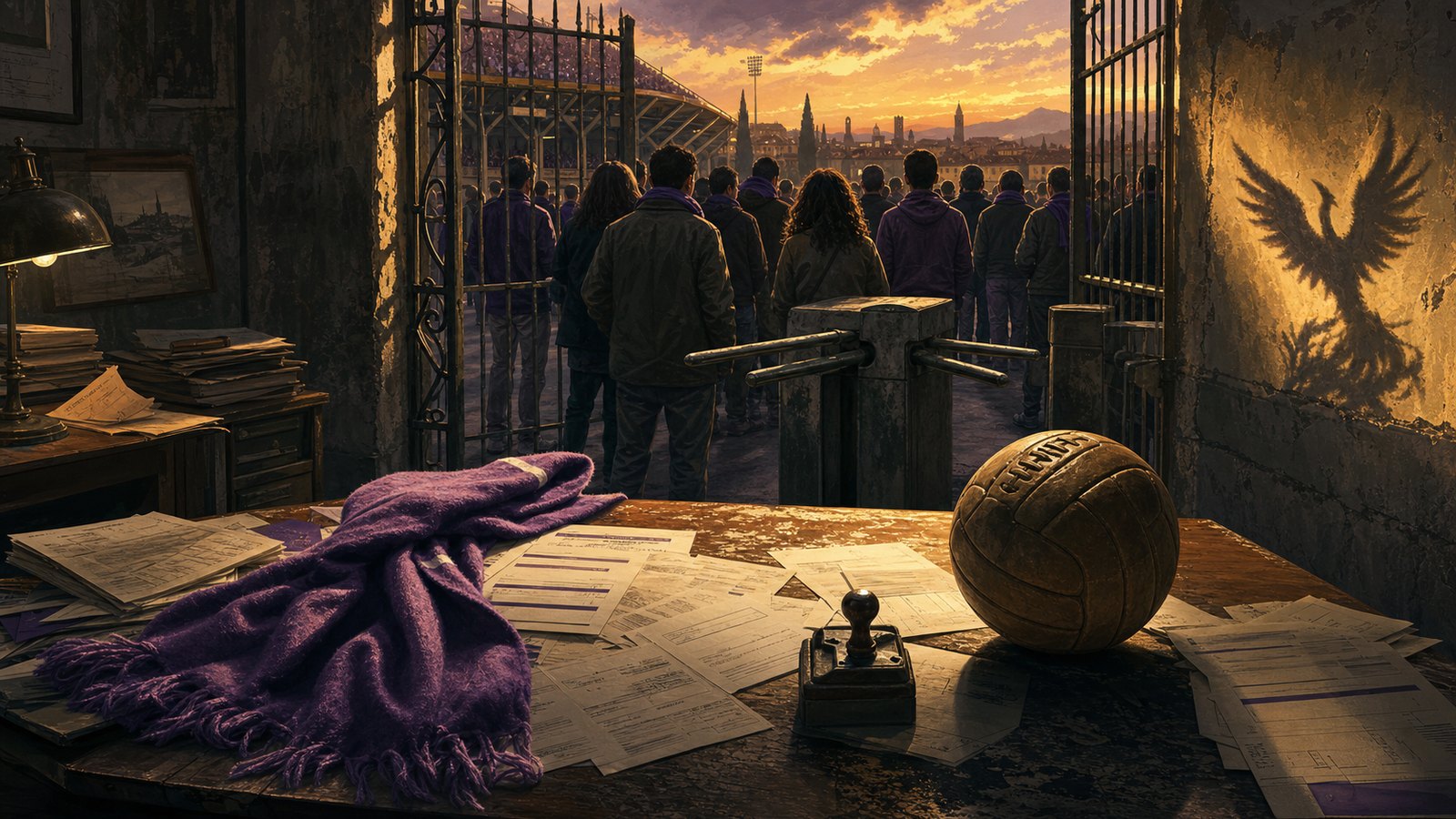
Rebirth stories are often edited into a montage: empty ground, loyal crowd, quick promotion, old name restored, everyone smiles. Fiorentina’s path was messier because a club rebuilding after insolvency has to reassemble trust as well as points. Players needed to know the project was real. Sponsors and administrators needed guarantees. Supporters needed to believe that the new structure would not repeat the old failure in a prettier shirt.
The return of the Fiorentina name and identity carried symbolic force because it suggested continuity had been stitched back together. But continuity after collapse is never automatic. The rebuilt club had to prove that the purple shirt could mean both memory and discipline. It had to be a football team again, not only a legal rescue vehicle.
Why the case still echoes
Modern football has become even more financialized than it was in 2002. Takeovers, leveraged ownership, wage inflation, and licensing rules now sit inside every serious discussion of club health. Fiorentina’s collapse is useful because it refuses the comforting idea that tradition alone protects a club. Stadium noise, historic colors, and past heroes all matter, but they do not create solvency by themselves.
The case also explains why supporters around the world now read balance sheets with more suspicion. A fan may not know every line of a club’s accounts, but Fiorentina taught a broader lesson: when the institution behind the team fails, the consequences are not abstract. They affect division, name, squad, calendar, and the dignity of turning up to watch your club play.
The rebirth was a warning, not a fairy tale
Fiorentina’s recovery should not make the collapse seem harmless. The club survived in a recognizable form, but survival was not the same as avoiding damage. Years of sporting trajectory were broken. A generation of supporters saw how quickly elite memories can become legal problems. The purple identity endured, but it endured because people fought to carry it through a system that had no obligation to be sentimental.
The real blueprint is demanding. Not every club gets rescued by history. Rebirth requires money, governance, league permission, and a support base prepared to keep meaning alive during undignified fixtures. Fiorentina 2002 remains powerful because it shows both truths at once: football clubs can be more than companies, and yet companies can still bring football clubs to their knees.
Why Florence made the fall feel different
The setting intensified the wound. Florence does not treat Fiorentina as a detachable entertainment product. The club sits inside local identity, color, conversation, and a civic pride that can be elegant one minute and furious the next. When a club like that collapses, the damage is not confined to a company ledger. It enters bars, families, neighborhoods, and the weekly rhythm by which a city recognizes itself.
The purple shirt had already carried eras of glamour and frustration. Gabriel Batistuta’s years gave supporters an image of defiant excellence, a striker who made Fiorentina feel larger than the standings around them. That memory made 2002 more painful, because the distance from star power to administrative ruin was so short. The same sport that had sold emotion so effectively now demanded that supporters learn the cold vocabulary of insolvency.
The rebuilt club’s climb therefore had to answer more than sporting questions. It had to make people believe the new structure could hold the old feeling without becoming a museum piece. Every step upward was also an argument about continuity: whether the club on the fixture list was the club in the heart, whether a changed legal identity could still carry the songs, and whether a rescued badge could avoid repeating the errors that had made rescue necessary.
The important point is not that this episode supplies a neat morality play. It shows how football history usually moves through several layers at once: tactics, money, regulation, identity, and the stubborn habits of matchgoing people. When those layers line up, a result can look inevitable in hindsight. When they collide, even a famous club or famous season becomes fragile. The detail worth keeping is that these turning points are made by mechanisms, not slogans: deadlines, training patterns, league procedures, contracts, debts, and match states that ordinary highlights rarely explain. That is what makes the story useful now, long after the original headlines have faded.
Sources
- Italian Football Federation competition records
- Lega Serie A historical records
- Contemporary Italian press coverage of Fiorentina’s insolvency
- Club histories of Fiorentina’s 2002 refoundation